Ich
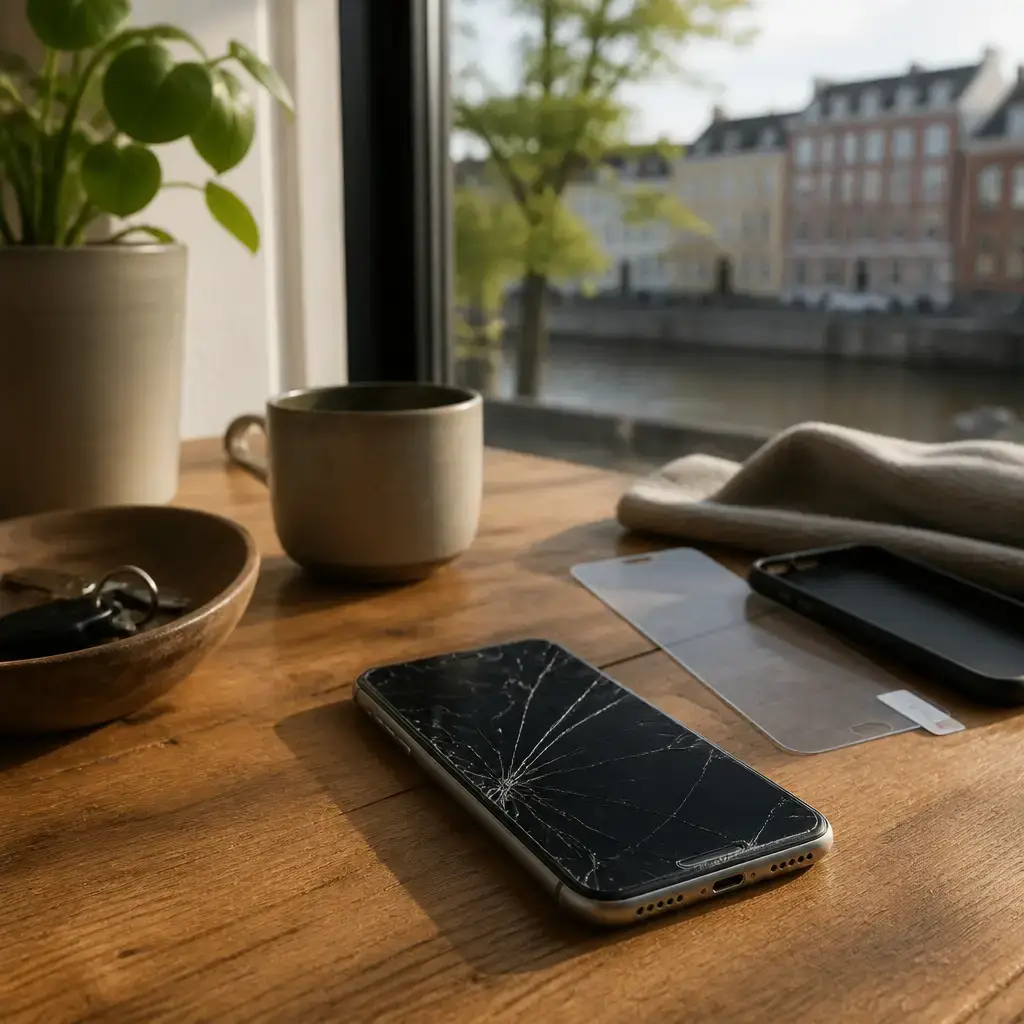
“Ich” means “I” here and identifies speaker A as the person who dropped the phone and will take action. It is commonly used as the subject when talking about your own actions, plans, or situation.
habe
“Habe” is the form of “haben” used with “Ich” in “Ich habe mein Handy fallen lassen.” Here it helps form the completed action of dropping the phone, and “haben” commonly combines with a past participle in such completed-action constructions.
mein
“Mein” means “my” in “mein Handy,” identifying the phone as belonging to the speaker. It is placed directly before the noun it describes, as in a possessive phrase.
Handy
“Handy” means mobile phone in this dialogue. It is the object in “Ich habe mein Handy fallen lassen” and is also referred to later with “das Handy.”
fallen
“Fallen” contributes the idea of falling in the exact expression “fallen lassen,” which means to drop something. The expression keeps the object between “lassen” and “fallen” when used in the completed-action sentence here.
lassen
“Lassen” means “let” on its own, but in “mein Handy fallen lassen” it forms the expression meaning “drop my phone.” This construction uses another verb in its infinitive form to describe what is allowed or caused to happen.
und
“Und” connects the statement about dropping the phone with the statement about the screen. It is used to join related words, phrases, or complete clauses.
der
“Der” means “the” before “Bildschirm” in “der Bildschirm.” Here it introduces the screen as the specific part of the phone being discussed.
Bildschirm
“Bildschirm” means screen, specifically the phone screen in this dialogue. It is the subject of the description “der Bildschirm ist gesprungen” and can be used for a device’s display.
ist
“Ist” is the form of “sein” used with the singular subject “der Bildschirm.” In “der Bildschirm ist gesprungen,” it combines with “gesprungen” to describe the screen’s damaged state.
gesprungen
“Gesprungen” describes the screen as cracked in “der Bildschirm ist gesprungen.” It is the form used with “ist” in this completed or resulting state, and the phrase “ist gesprungen” expresses that the screen has developed a crack.
funktioniert
“Funktioniert” means “works” here: despite the crack, the screen still operates. It is used with the singular subject “der Bildschirm,” as in “der Bildschirm funktioniert.”
aber
“Aber” means “but” and introduces the contrast between the cracked screen and the fact that it still works. It commonly connects two contrasting statements.
noch
“Noch” means “still” in “funktioniert aber noch,” showing that the screen continues to work despite the damage. It is placed with the verb to indicate that a situation continues.
Sichere
“Sichere” means “back up” in the direct instruction “Sichere deine Daten.” It is a command to one person and is used directly before the data being backed up.
deine
“Deine” means “your” in “deine Daten,” referring to the listener’s data. It comes before the noun and shows possession in this instruction.
Daten
“Daten” means data, such as the information stored on the phone. In “Sichere deine Daten,” it is the thing that should be backed up.
bevor
“Bevor” means “before” and introduces the time condition “bevor der Schaden schlimmer wird.” It connects an action with something that may happen later, with the verb at the end of the subordinate clause.
Schaden
“Schaden” means damage in “der Schaden.” Here it refers to the phone damage becoming worse, and it is the subject of “schlimmer wird.”
schlimmer
“Schlimmer” means “worse” in “der Schaden schlimmer wird.” It describes an increase in the seriousness of the damage and is used with “wird” to express that the situation becomes worse.
wird
“Wird” means “gets” or “becomes” in “der Schaden schlimmer wird.” Together with “schlimmer,” it describes a change in the damage, and it appears at the end because the clause follows “bevor.”
Das
“Das” means “that” in “Das mache ich jetzt,” referring back to the suggested data backup. Here it is a pronoun referring to an earlier action, not the article before a noun.
mache
“Mache” means “do” in “Das mache ich jetzt,” referring to carrying out the backup. The fronted “Das” is followed by the verb, while “ich” identifies who will do it.
jetzt
“Jetzt” means “now” and shows that the speaker will carry out the action immediately. It can be used to specify when an action is happening or will happen.
kaputte
“Kaputte” means “broken” in “das kaputte Glas.” It describes the glass directly before the noun and identifies it as the damaged glass that is causing concern.
Glas
“Glas” means glass in “das kaputte Glas,” referring to the broken material on the phone. It is the subject of “macht mich nervös” in the next part of the sentence.
macht
“Macht” means “makes” in “Das kaputte Glas macht mich nervös.” It connects the cause, “das kaputte Glas,” with the effect on the speaker, “mich nervös.”
mich
“Mich” means “me” as the person affected in “macht mich nervös.” It follows the verb in the pattern where something causes a feeling or reaction in another person.
nervös
“Nervös” means nervous in “macht mich nervös.” It describes the speaker’s resulting feeling and comes after the person affected by the verb.
Bringe
“Bringe” contributes the instruction “apply” in the separable expression “Bringe eine vorübergehende Schutzfolie an.” The complete expression means to put a screen protector onto something, and the object comes between “Bringe” and “an.”
eine
“Eine” means “a” in “eine vorübergehende Schutzfolie,” introducing one temporary screen protector. It comes before the adjective and noun in this noun phrase.
vorübergehende
“Vorübergehende” means “temporary” and describes “Schutzfolie” in “eine vorübergehende Schutzfolie.” It identifies the protector as something intended for temporary use while the phone awaits repair.
Schutzfolie
“Schutzfolie” means protective film or screen protector. In “eine vorübergehende Schutzfolie,” it is the item to be applied to the damaged screen.
an
“An” is the separable part of the expression “Bringe eine vorübergehende Schutzfolie an.” Together, “Bringe ... an” means apply or attach the protector, so “an” moves to the end of the command.
drücke
“Drücke” means “press” in the instruction “drücke nicht stark darauf.” It is a direct command telling the listener how not to handle the protected screen.
nicht
“Nicht” means “not” and negates the instruction to press hard. In “drücke nicht stark darauf,” it tells the listener to avoid that action.
stark
“Stark” means “hard” or “strongly” in “drücke nicht stark darauf.” Here it describes the force of pressing and is used with the verb “drücke.”
darauf
“Darauf” means “on it” in “drücke nicht stark darauf,” referring to the screen protector or screen just mentioned. It lets the speaker refer back to that surface without repeating the noun.
Soll
“Soll” means “should” or “am I supposed to” in the question “Soll ich es weiter benutzen?” It asks whether continuing to use the phone is advisable, and it is placed before the subject in this yes-or-no question.
es
“Es” means “it” and refers to the phone in “Soll ich es weiter benutzen?” It is the object of “benutzen,” replacing the already mentioned “Handy.”
weiter
“Weiter” means “continuing” in “es weiter benutzen,” so the question is about continuing to use the phone. It commonly appears with an activity to show that it does not stop.
benutzen
“Benutzen” means “use” in “es weiter benutzen.” It remains in the infinitive form after the modal verb “Soll” and takes the phone as its object.
bis
“Bis” means “until” and introduces the point at which the repair service checks the phone. In “bis ein Reparaturdienst es überprüft,” it begins a subordinate time clause.
ein
“Ein” means “a” in “ein Reparaturdienst,” introducing one repair service. It comes before the noun that performs the checking action.
Reparaturdienst
“Reparaturdienst” means repair service. In “bis ein Reparaturdienst es überprüft,” it is the service that will check the phone.
überprüft
“Überprüft” means “checks” or “examines” in “ein Reparaturdienst es überprüft.” It describes the repair service inspecting the phone and appears at the end of the clause after “bis.”
Benutze
“Benutze” means “use” in the direct instruction “Benutze es nur für einfache Aufgaben.” It is a command to one person and takes “es,” the phone, as its object.
nur
“Nur” means “only” and limits the phone’s use to simple tasks. In “Benutze es nur für einfache Aufgaben,” it is placed before the purpose or activity being limited.
für
“Für” means “for” in “für einfache Aufgaben,” introducing the tasks the phone may still be used for. It commonly connects an action with its intended purpose or object.
einfache
“Einfache” means “simple” and describes “Aufgaben” in “einfache Aufgaben.” It limits the permitted use to tasks that are not demanding or complex.
Aufgaben
“Aufgaben” means tasks in “für einfache Aufgaben.” It names the activities for which the speaker says the damaged phone may still be used.
weil
“Weil” means “because” and introduces the reason for limiting phone use. In “weil loses Glas deinen Finger schneiden kann,” it begins a subordinate clause with the finite verb at the end.
loses
“Loses” means “loose” in “loses Glas,” describing glass that is no longer firmly attached. It identifies the kind of glass that may cause an injury.
deinen
“Deinen” means “your” in “deinen Finger,” referring to the listener’s finger. It comes directly before the noun it describes in the warning.
Finger
“Finger” means finger in “deinen Finger.” It is the body part that loose glass could cut, making the warning practical and specific.
schneiden
“Schneiden” means “cut” in “loses Glas deinen Finger schneiden kann.” It remains in the infinitive form after “kann” and describes the possible effect of the loose glass.
kann
“Kann” means “can” in “loses Glas deinen Finger schneiden kann,” expressing a possible danger. It is used with the infinitive “schneiden,” which appears earlier in the subordinate clause.
in
“In” means “in” in “in einer Hülle,” describing the place where the phone can be kept. With a fixed location here, it introduces the container holding the phone.
einer
“Einer” means “a” in “in einer Hülle,” introducing one phone case or cover. It follows “in” in the phrase describing where the phone is kept.
Hülle
“Hülle” means case or cover in “in einer Hülle.” Here it is a protective container for the phone while the damaged screen is awaiting repair.
aufbewahren
“Aufbewahren” means “keep” or “store” in “Ich kann es in einer Hülle aufbewahren.” It remains in the infinitive form after “kann” and describes keeping the phone in a safe place.
vorsichtig
“Vorsichtig” means “carefully” in “vorsichtig tragen.” It describes the manner of carrying the phone and signals that extra care is needed because of the damage.
tragen
“Tragen” means “carry” in “vorsichtig tragen.” It remains in the infinitive form after “kann” and describes moving the phone carefully.
sollte
“Sollte” means “should” in “Das sollte das Risiko senken,” expressing an expected or recommended result. It is used with the infinitive “senken” to say that keeping the phone protected is expected to reduce the danger.
Risiko
“Risiko” means risk in “das Risiko senken.” It refers to the possibility of injury or further damage while the repair is being arranged.
senken
“Senken” means “lower” or “reduce” in “Das sollte das Risiko senken.” It follows “sollte” in the infinitive form and takes “das Risiko” as the thing being reduced.
während
“Während” means “while” and connects the risk-reduction action with the period when the repair is being arranged. In “während du die Reparatur organisierst,” it introduces a subordinate clause.
du
“Du” means “you” and identifies the person arranging the repair. It is the subject of “organisierst” in the clause introduced by “während.”
die
“Die” means “the” before “Reparatur” in “die Reparatur.” It introduces the specific repair being arranged for the damaged phone.
Reparatur
“Reparatur” means repair in “die Reparatur organisierst.” Here it refers to arranging the service needed to fix the phone.
organisierst
“Organisierst” means “arrange” in “während du die Reparatur organisierst.” It is used with “du” and takes “die Reparatur” as the thing being arranged.
werde
“Werde” is the form of “werden” used with “Ich” in “Ich werde eine Reparatur vereinbaren.” Here it helps express the speaker’s future intention, with the main action in the infinitive at the end.
vereinbaren
“Vereinbaren” means “arrange” or “book” in “eine Reparatur vereinbaren.” It remains in the infinitive form after “werde” and takes “eine Reparatur” as the thing being arranged.
statt
“Statt” means “instead of” in “statt zu warten,” contrasting booking the repair with waiting. Here it introduces an infinitive phrase with “zu.”
zu
“Zu” marks the infinitive in “zu warten” after “statt.” Together, “statt zu warten” means “instead of waiting,” so the action is presented as the alternative being avoided.
warten
“Warten” means “wait” in “statt zu warten.” It appears with “zu” after “statt” to name the alternative action.
Kleine
“Kleine” means “small” in “Kleine Risse,” describing the size of the cracks. It comes before the plural noun at the beginning of the warning.
Risse
“Risse” means cracks in “Kleine Risse können sich ausbreiten.” It is the subject of the warning about cracks spreading when the phone continues to be used.
können
“Können” means “can” in “Kleine Risse können sich ausbreiten,” expressing possibility. It is used with the infinitive phrase “sich ausbreiten” to describe what the cracks may do.
sich
“Sich” is the reflexive pronoun used with “ausbreiten” in “Kleine Risse können sich ausbreiten.” Together, the expression means that the cracks can spread, with the cracks themselves undergoing the change.
ausbreiten
“Ausbreiten” means “spread” in “sich ausbreiten.” It remains in the infinitive form after “können” and is used with “sich” for something spreading across a surface or area.
wenn
“Wenn” means “if” in “wenn du das Handy weiter benutzt,” introducing the condition under which the cracks may spread. It begins a subordinate clause with the finite verb at the end.
benutzt
“Benutzt” means “use” in “wenn du das Handy weiter benutzt.” It is the form used with “du” and appears at the end of the conditional clause introduced by “wenn.”