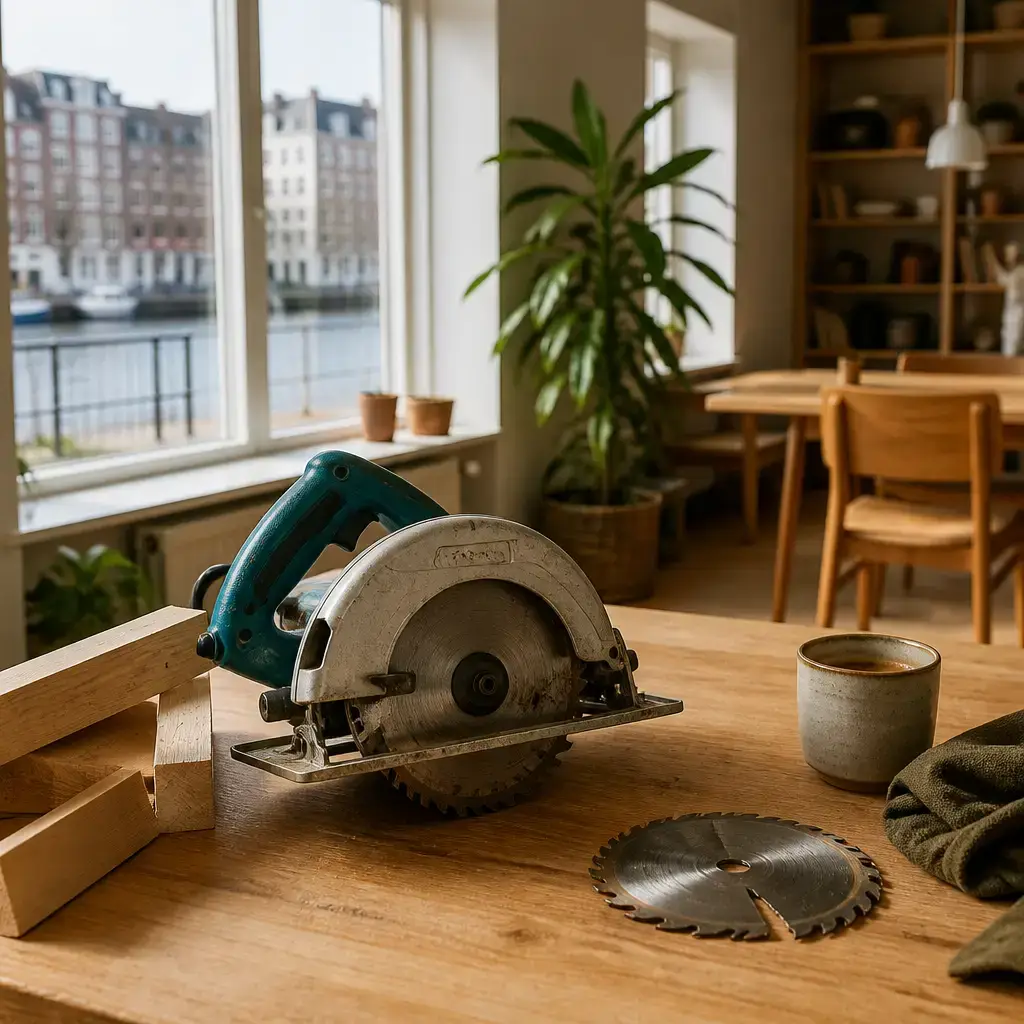
Ich
“Ich” means “I” and identifies the speaker in “Ich muss ehrlich über die Säge sprechen”. The same pronoun appears in “während ich dickes Holz geschnitten habe”; use “Ich” as the subject of a statement.
muss
“muss” expresses “must” or “need to” in “Ich muss ehrlich über die Säge sprechen”. With this form, the main action appears as “sprechen” at the end; reuse “Ich muss” with an infinitive.
ehrlich
“ehrlich” means “honest” or “honestly” in “Ich muss ehrlich über die Säge sprechen”. It describes speaking openly about a matter; “ehrlich über etwas sprechen” is a useful pattern.
über
“über” means “about” in “über die Säge sprechen”. With “sprechen”, it introduces the topic being discussed; reuse “über etwas sprechen”.
die
“die” means “the” before “Säge” in “über die Säge sprechen”. It points to the specific saw being discussed, rather than introducing a new one.
Säge
“Säge” means “saw” in “die Säge”. Here it is the borrowed tool that was used and will later be returned; reuse it with an article when referring to a specific saw.
sprechen
“sprechen” means “speak” or “talk” in “Ich muss ehrlich über die Säge sprechen”. It is the infinitive used after “muss”; “über etwas sprechen” means to talk about something.
ausgeliehen
“ausgeliehen” means “borrowed” in “die ich ausgeliehen habe”. The phrase identifies the saw as one the speaker borrowed; “etwas ausleihen” is used when borrowing an item.
habe
“habe” means “have” in “die ich ausgeliehen habe”. Together with “ausgeliehen”, it describes the completed borrowing in the relative clause; the auxiliary appears after the other clause elements here.
Kannst
“Kannst” means “can” or “are you able to” in “Kannst du erklären, was passiert ist?”. It forms an informal question with “du”; reuse “Kannst du” followed by an infinitive.
du
“du” means “you” for one person in the informal question “Kannst du erklären, was passiert ist?”. It is the person being asked to explain; reuse it as the subject in an informal question.
erklären
“erklären” means “explain” in “Kannst du erklären, was passiert ist?”. It is the infinitive after “Kannst”; the question asks for an explanation of an event.
was
“was” means “what” in “was passiert ist”. It introduces the information being requested inside the question; reuse “was” to ask what happened or what something is.
passiert
“passiert” refers to what “happened” in “was passiert ist”. Together with “ist”, it describes the event being asked about; reuse the pattern “was passiert ist” when asking about an event.
ist
“ist” means “is” and helps complete the event expression “was passiert ist”. It appears at the end of this subordinate clause; the full phrase means “what happened” here.
Das
“Das” means “the” in “Das Sägeblatt wurde beschädigt”. It introduces the specific saw blade whose condition is being reported.
Sägeblatt
“Sägeblatt” means “saw blade” in “Das Sägeblatt wurde beschädigt”. It is the part of the saw that was damaged and later needs replacing; reuse “das Sägeblatt ersetzen”.
wurde
“wurde” means “was” or “got” in “wurde beschädigt”. Together with “beschädigt”, it presents the blade as receiving the damage, without naming who caused it.
beschädigt
“beschädigt” means “damaged” in “Das Sägeblatt wurde beschädigt”. Together with “wurde”, it describes the result that happened to the blade; reuse “etwas wurde beschädigt” for a damaged item.
während
“während” means “while” in “während ich dickes Holz geschnitten habe”. It connects the damage with an action happening at the same time; a clause after “während” places its verb at the end.
dickes
“dickes” means “thick” in “dickes Holz”. It describes the wood being cut; reuse the combination “dickes Holz” when referring to thick wood.
Holz
“Holz” means “wood” in “dickes Holz geschnitten habe”. It is the material being cut; “Holz schneiden” is a useful combination.
geschnitten
“geschnitten” means “cut” in “dickes Holz geschnitten habe”. Together with “habe”, it describes the completed cutting action; reuse it when saying that something was cut.
War
“War” means “was” in the question “War das Holz zu dick für diese Säge?”. It asks about the wood’s condition or suitability at that time; reuse “War ... zu ...?” for a past question.
zu
“zu” means “too” in “zu dick”. It marks that the degree described by “dick” was beyond what was suitable for the saw; reuse “zu” before an adjective.
dick
“dick” means “thick” in “zu dick für diese Säge”. The question asks whether the wood exceeded the saw’s suitable capacity; reuse “zu dick für ...” when describing something as too thick for a purpose.
für
“für” means “for” in “zu dick für diese Säge”. It connects the thickness of the wood with the saw for which it may not have been suitable; reuse “für” to identify suitability or purpose.
diese
“diese” means “this” in “diese Säge”. It points to the particular saw under discussion; reuse it directly before a noun when identifying a specific item.
Wahrscheinlich
“Wahrscheinlich” means “probably” in “Wahrscheinlich, und ich hätte vorher fragen sollen”. It signals that the speaker considers the explanation likely rather than certain; it can be placed at the start of a reply.
und
“und” means “and” in “Wahrscheinlich, und ich hätte vorher fragen sollen”. It links the likely explanation with the speaker’s admission about what should have happened; reuse it to join related statements.
hätte
“hätte” contributes a hypothetical past perspective in “ich hätte vorher fragen sollen”. Together with “sollen”, the construction expresses that asking beforehand would have been advisable; reuse the complete pattern when referring to an action that should have happened.
vorher
“vorher” means “beforehand” in “vorher fragen sollen”. It places the asking before the attempted action; reuse “vorher” with the action that should happen earlier.
fragen
“fragen” means “ask” in “ich hätte vorher fragen sollen”. It names the action the speaker recognizes as advisable before trying; reuse it when requesting information or permission.
sollen
“sollen” contributes the meaning “should” in “ich hätte vorher fragen sollen”. Together with “hätte”, it expresses an advisable action that was not carried out; reuse this construction when reflecting on what should have happened.
weiß
“weiß” means “know” in “Ich weiß es zu schätzen”. In this fixed expression, it helps convey appreciation rather than simple knowledge; reuse the full phrase when acknowledging someone’s helpful action.
es
“es” means “it” in “Ich weiß es zu schätzen”. Here it refers generally to the openness being appreciated; the phrase “weiß es zu schätzen” is used to express appreciation.
schätzen
“schätzen” means “appreciate” in “Ich weiß es zu schätzen”. Together with “weiß es zu”, it forms the expression for valuing someone’s action or attitude; use the complete expression rather than assigning this meaning to “schätzen” alone.
dass
“dass” means “that” in “dass du offen damit umgehst”. It introduces the content of what is appreciated; a clause after “dass” places its verb at the end.
offen
“offen” means “open” or “upfront” in “offen damit umgehst”. It describes dealing honestly with the damage instead of concealing it; reuse it to describe an open way of handling a matter.
damit
“damit” means “with it” or “about it” in “offen damit umgehst”. It refers back to the damage or situation already being discussed; “damit umgehen” means to deal with that matter.
umgehst
“umgehst” means “deal with” or “handle” in “dass du offen damit umgehst”. The form is used with “du” and describes how someone handles a situation; reuse “damit umgehen” when referring back to a matter.
statt
“statt” means “instead of” in “statt es zu verheimlichen”. It introduces the alternative action that was not chosen; reuse “statt” before an action when contrasting two options.
verheimlichen
“verheimlichen” means “hide” or “conceal” in “statt es zu verheimlichen”. The object “es” refers to the damage or situation; reuse “etwas verheimlichen” when concealing information.
kann
“kann” means “can” in “Ich kann eine Reparatur organisieren”. It presents an available option or ability; reuse “Ich kann” followed by an infinitive.
eine
“eine” means “a” in “eine Reparatur organisieren”. It introduces one repair as a possible action without identifying a specific repair; reuse it before a singular feminine noun in a similar phrase.
Reparatur
“Reparatur” means “repair” in “eine Reparatur organisieren”. It refers to the work needed to fix the damaged tool; reuse “eine Reparatur organisieren” when arranging repair work.
organisieren
“organisieren” means “arrange” or “organize” in “eine Reparatur organisieren”. It is the infinitive after “kann” and describes arranging the repair; reuse it with an event, service, or other task that needs arranging.
oder
“oder” means “or” in “eine Reparatur organisieren oder das Sägeblatt ersetzen”. It connects two alternative solutions; reuse it between options.
ersetzen
“ersetzen” means “replace” in “das Sägeblatt ersetzen”. It is the infinitive after “kann” and names the alternative solution of putting in a new blade; reuse it with the item being replaced.
des
“des” means “of the” in “des Sägeblatts”. It links the action of replacing with the specific blade involved; it is part of the phrase “Das Ersetzen des Sägeblatts”.
Sägeblatts
“Sägeblatts” means “saw blade” in “des Sägeblatts”. Its ending shows its relationship to “Ersetzen” in the phrase “Das Ersetzen des Sägeblatts”; reuse this construction when naming the item affected by an action.
sollte
“sollte” means “should” in “Das Ersetzen des Sägeblatts sollte ausreichen”. It expresses the expectation that replacing the blade will be sufficient; reuse “sollte ausreichen” when assessing whether something will be enough.
ausreichen
“ausreichen” means “be enough” or “suffice” in “sollte ausreichen”. It is the infinitive after “sollte” and evaluates the replacement as sufficient; reuse “sollte ausreichen” for a likely sufficient solution.
kümmere
“kümmere” contributes “take care” in “Ich kümmere mich heute darum”. Together with “mich” and “darum”, it means that the speaker will handle the matter; reuse the complete expression when taking responsibility for a task.
mich
“mich” means “myself” in the reflexive expression “Ich kümmere mich heute darum”. It links the action back to the speaker in “Ich”; use it as part of “sich um etwas kümmern” when someone takes care of something.
heute
“heute” means “today” in “Ich kümmere mich heute darum”. It specifies when the speaker will handle the matter; reuse it with an action planned for the current day.
darum
“darum” means “about it” or “to that” in “Ich kümmere mich heute darum”. It points back to the repair or replacement already discussed; “sich darum kümmern” means to take care of that matter.
Sag
“Sag” means “tell” in “Sag mir Bescheid”. It is an informal command addressed to “du”; reuse “Sag mir Bescheid” when asking someone to inform you.
mir
“mir” means “to me” in “Sag mir Bescheid”. It identifies the person who should receive the information; reuse it after a verb of telling when specifying the recipient.
Bescheid
“Bescheid” is part of the fixed expression “Sag mir Bescheid”, meaning “let me know” or “inform me”. Use the whole expression when asking someone to report information or an update.
wenn
“wenn” means “when” in “wenn das Sägeblatt ersetzt ist”. It introduces the point at which the requested information should be given; a clause after “wenn” places its verb at the end.
ersetzt
“ersetzt” means “replaced” in “wenn das Sägeblatt ersetzt ist”. Together with “ist”, it describes the blade’s state after replacement; reuse it when confirming that an item has been replaced.
bevor
“bevor” means “before” in “bevor du die Säge zurückbringst”. It sets the return of the saw after the required information or condition; reuse “bevor” to order two actions in time.
zurückbringst
“zurückbringst” means “bring back” or “return” in “bevor du die Säge zurückbringst”. It describes returning the saw to the shared space or owner; reuse it with the object being returned.