Kann
In “Kann” asks whether something is possible or permitted. Here it begins a polite request to borrow the pan. Use this question pattern when asking another person for permission.
ich
“ich” means “I” and is the person asking to borrow the pan. It is the subject of the request and also appears with the cooking action. Use “ich” when describing your own action or intention.
mir
In “mir” refers to the person receiving the benefit of borrowing something for themselves. Together with “leihen”, it shows who is borrowing the pan. The reusable pattern is “sich etwas leihen” with the borrower marked by this form.
deine
“deine” means “your” and identifies the pan as belonging to the person being addressed. Its form matches the feminine noun “Pfanne” in this phrase. Use it before a noun when addressing someone informally.
beschichtete
“beschichtete” describes the pan as coated, here meaning non-stick. It modifies “Pfanne” and gives the important property of the object being borrowed. Use this form before the noun for a coated pan in this context.
Pfanne
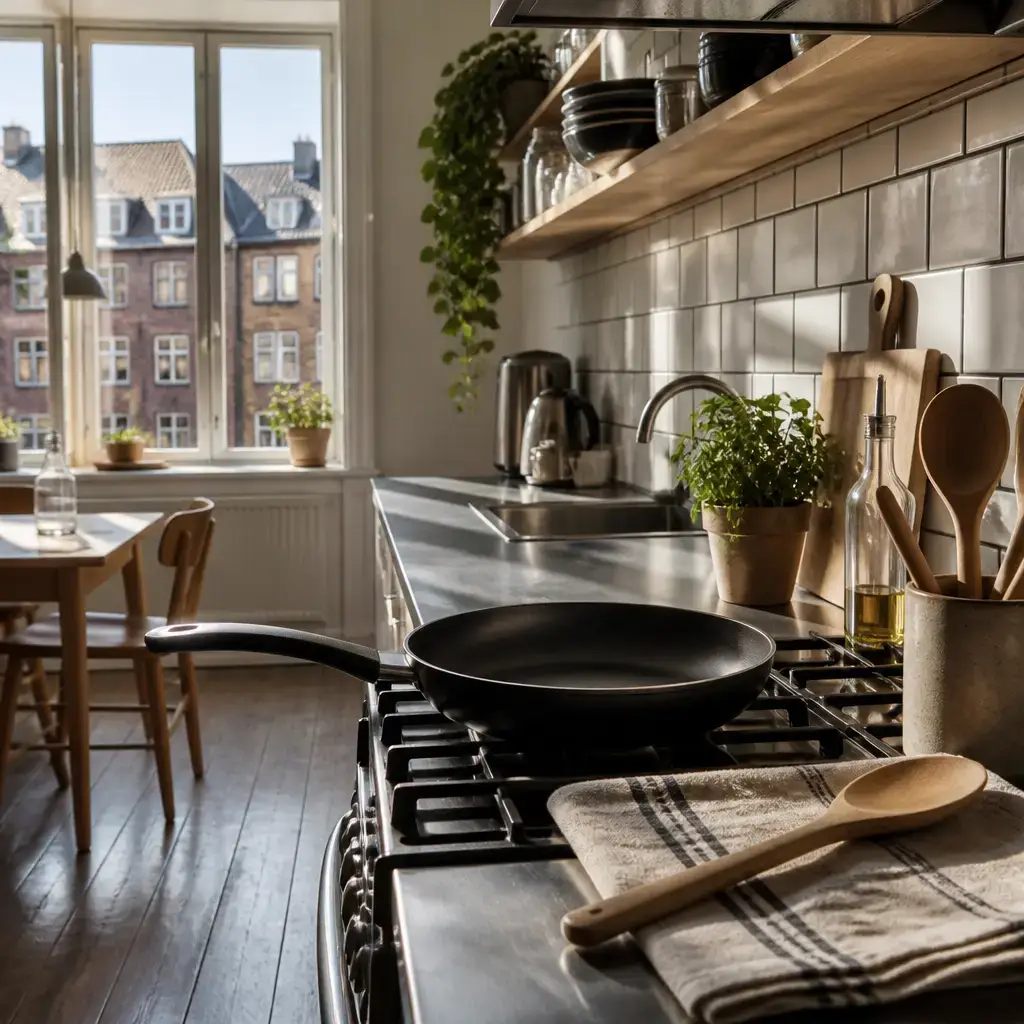
“Pfanne” means “pan”, the cooking item being borrowed, used, washed, and returned. It is also the object later referred to by “sie”. Use this noun when talking about the item used for cooking.
für
In “für” introduces what the pan is being borrowed for. Here it connects the pan with “etwas”, an unspecified cooking purpose. Use “für” to state the purpose or intended use of something.
etwas
“etwas” means “something” and keeps the thing being cooked unspecified. It is followed by a clause explaining what that something is. Use it when referring to an indefinite thing or activity.
leihen
“leihen” means “borrow” in this dialogue. It is the infinitive after “Kann” and appears with “mir” in the construction for borrowing something for oneself. Use the pattern “sich etwas leihen” when asking to borrow an item.
das
In “das” refers back to “etwas” and introduces the clause describing what is being cooked. It connects the unspecified thing with the information “ich gerade koche”. Use this form to link a noun-like reference to a following description.
gerade
“gerade” means “currently” or “right now” and shows that the cooking is happening at this time. It gives the action in “koche” a current, ongoing context. Use it with an action that is taking place now.
koche
“koche” means “cook” in the clause “ich gerade koche”; the subject is “ich”. It describes what the speaker is currently preparing. Use this first-person form when saying that you are cooking something.
Ja
“Ja” means “yes” and accepts the request to borrow the pan. Here it is immediately followed by a condition introduced by “aber”. Use it as an affirmative reply before adding a qualification.
aber
“aber” means “but” and introduces a limitation on the permission just given. It contrasts agreement to lend the pan with the instruction not to use metal utensils. Use “aber” to add an important condition or restriction.
bitte
“bitte” means “please” and softens the instruction that follows. In “bitte benutze keine Metallutensilien”, it makes the request more polite. Use it with a request or instruction to another person.
benutze
“benutze” means “use” and directly tells the person being addressed what to do. It is the informal singular imperative in this instruction. Use it before the object that should be used or avoided.
keine
“keine” means “no” or “none” and negates the plural object “Metallutensilien”. It makes the instruction prohibit any metal utensils in the pan. Use “keine” before a plural noun when saying that none of those things should be used.
Metallutensilien
“Metallutensilien” means “metal utensils”, the objects that should not be used in the pan. It is the object of “benutze”. The phrase “keine Metallutensilien” is useful when giving this specific care instruction.
darin
“darin” means “in it” and refers to the pan. It describes where the prohibited metal utensils would be used. Use it to refer back to an object or container when something is inside it.
werde
In “werde” expresses the speaker’s intention to do something in the future. Together with “benutzen”, it forms the statement about using a wooden spoon. Use the pattern “Ich werde” followed by an action when making a future intention.
einen
“einen” means “a” before the masculine object “Holzlöffel” in this sentence. It introduces the particular type of spoon the speaker intends to use. Use this form before a masculine object in a phrase like the one in the dialogue.
Holzlöffel
“Holzlöffel” means “wooden spoon”, the utensil chosen to protect the pan’s surface. It is the object of “benutzen”. Use this compound noun when referring to a spoon made of wood.
benutzen
“benutzen” means “use” and is the action the speaker plans to carry out with the wooden spoon. It is the infinitive after “werde”. Use it with an object to describe using a tool or item.
damit
“damit” means “so that” and introduces the purpose of using a wooden spoon. The purpose is expressed by the following clause about not scratching the surface. Use “damit” to connect an action with its intended result.
die
In “die” means “the” and identifies the specific surface of the pan. It belongs to the noun “Oberfläche”, which is the thing that should not be scratched. Use it before a known feminine noun in a definite phrase.
Oberfläche
“Oberfläche” means “surface”, here the surface of the pan. It is the object affected by “zerkratze”. Use this noun when talking about the outer or top surface of an item.
nicht
“nicht” means “not” and negates the scratching action “zerkratze”. It states the result the speaker wants to avoid. Use it before the part of the sentence that should be denied or prevented.
zerkratze
“zerkratze” means “scratch” in the purpose clause. The speaker says that the surface should not be scratched by the utensil. Use it with a surface or object that may be damaged by scratches.
Halte
“Halte” means “keep” or “maintain” and gives an informal singular instruction. Here it tells the listener to keep the heat at a particular setting. Use it with a level or condition that should remain stable.
Hitze
“Hitze” means “heat”, specifically the heat used for cooking in this line. It is the thing whose level should be controlled. Use this noun when discussing the intensity of heat.
auch
“auch” means “also” or “too” and adds heat control to the earlier care instruction. It signals that this is an additional recommendation. Use it when adding another item or action to what has already been mentioned.
auf
In “auf” introduces the setting at which the heat should be kept. Together with “mittlerer Stufe”, it expresses a level or adjustment. Use this construction when specifying a setting or level.
mittlerer
“mittlerer” means “medium” and describes the level of the heat. It modifies “Stufe” in the phrase “auf mittlerer Stufe”. Use this expression when recommending a medium setting.
Stufe
“Stufe” means “level” or “setting”, here the heat setting on the cooker. It completes the phrase specifying medium heat. Use it when referring to an adjustable level or setting.
denn
“denn” means “because” or “for” and introduces the reason for keeping the heat medium. It connects the instruction with the warning about damaging the coating. Use “..., denn ...” to add a reason in a regular following clause.
hohe
“hohe” means “high” and describes the heat that can damage the coating. It contrasts with the recommended medium setting. Use it before a noun to describe a high level or intensity.
Beschichtung
“Beschichtung” means “coating”, here the protective coating on the pan. It is the object that high heat can damage. Use this noun when discussing a layer applied to a surface.
beschädigen
“beschädigen” means “damage” and describes what high heat can do to the coating. It is the infinitive after “kann”. Use it with an object that may be harmed or made less effective.
frage
“frage” means “ask” and describes the speaker choosing to ask for information. The speaker asks now to avoid guessing and ruining the pan. Use this first-person form when stating that you ask someone something.
lieber
“lieber” means “rather” or “preferably” and expresses the speaker’s preference for asking. It is part of the comparison with “als”. Use the pattern “lieber ... als ...” to state which action you prefer.
jetzt
“jetzt” means “now” and specifies the time of asking. It emphasizes that asking immediately is preferable to guessing. Use it when referring to the present moment or an immediate choice.
als
In “als” means “than” and introduces the alternative being compared with asking. It links the preferred action with “zu raten”. Use it in the preference pattern “lieber ... als ...”.
zu
In “zu” marks the infinitive in “zu raten” and “zu ruinieren”. These infinitives name the alternatives the speaker does not prefer. Use “zu” before an infinitive in this kind of comparison.
raten
“raten” means “guess” in this dialogue. It describes trying to decide how to care for the pan without asking. Use it after “zu” when referring to guessing in this construction.
und
“und” means “and” and joins the two infinitive actions “raten” and “ruinieren”. It shows that both actions belong to the alternative being avoided. Use it to connect two related actions or ideas.
ruinieren
“ruinieren” means “ruin” and refers to seriously damaging the pan through incorrect use. It is the second infinitive after “zu”. Use it with an object when careless action could make that object unusable.
hilft
“hilft” means “helps” and evaluates the decision to ask as useful. In “Das hilft”, it says that the information or action is helpful. Use this form to say that something is useful or improves a situation.
Sie
In “Sie” means “it” and refers to the feminine noun “Pfanne”. It is the subject of the statement about how long the pan should last. Use “sie” to refer back to a feminine noun such as the pan.
sollte
“sollte” means “should” and expresses an expected result if the pan is handled carefully. It is followed by the infinitive “halten”. Use “sollte” when giving or describing an expectation or likely outcome.
länger
“länger” means “longer” and refers to the pan lasting for a longer period. It modifies the duration expressed by “halten”. Use it when comparing how long something lasts.
halten
“halten” means “last” in “länger halten”; it describes the pan continuing to remain usable. It is the infinitive after “sollte”. Use it with an object when discussing how long that object lasts.
wenn
“wenn” means “if” here and introduces the condition for the pan lasting longer. The condition is careful handling. Use “wenn” to connect a result with a condition.
man
“man” means “one” or “people in general” and makes the advice general rather than addressing only one person. It is the subject of the careful-handling clause. Use it for general instructions or observations about how people act.
vorsichtig
“vorsichtig” means “carefully” or “gently” and describes the manner of handling the pan. It emphasizes avoiding rough treatment. Use it with an action when care and caution are important.
mit
In “mit” means “with” and is part of the expression for handling something carefully. It introduces the object that is being handled. Use “mit” in the pattern “mit etwas umgehen”.
ihr
In “ihr” means “with it” and refers back to the pan after “mit”. It identifies the object that should be handled carefully. Use “mit ihr” when referring to a feminine object in this handling expression.
umgeht
“umgeht” means “handles” in the expression “mit ihr umgeht”. It describes the way someone treats or uses the pan. Use the pattern “mit etwas umgehen” when talking about handling an object.
Soll
In “Soll” asks whether the proposed action is advisable. Here the speaker asks for guidance about washing the pan. Use “Soll ich ...?” when asking whether you should do something.
von
In “von” is part of the fixed expression “von Hand”, meaning “by hand”. It identifies the method used for washing. Use this phrase when an action is done manually rather than with a machine.
Hand
In “Hand” refers to the hand in the expression “von Hand”. Together with “von”, it means that the pan should be washed manually. Use the complete phrase “von Hand” to describe hand work.
abwaschen
“abwaschen” means “wash” in the question about cleaning the pan. It is the infinitive after “Soll”. Use it with an object when asking or talking about washing something.
statt
“statt” means “instead of” and introduces the alternative of putting the pan in the dishwasher. It contrasts hand-washing with machine washing. Use “statt” when replacing one proposed action with another.
in
In “in” introduces the dishwasher as the destination into which the pan might be put. It describes movement into a place or container. Use it with a destination in a phrase about putting something somewhere.
Spülmaschine
“Spülmaschine” means “dishwasher”, the machine the speaker considers using instead of washing by hand. It is the destination in the phrase about putting the pan inside. Use this noun when referring to a dishwasher.
tun
“tun” means “put” or “place” in this context. It describes putting the pan into the dishwasher and is the infinitive after “zu”. Use it with a destination when saying that something is placed somewhere.
Wasch
“Wasch” means “wash” and gives an informal singular instruction to the person addressed. It begins the direct care instructions for the pan. Use it at the start of an informal command about washing something.
trockne
“trockne” means “dry” and tells the listener to dry the pan after washing it. With “ab”, it forms the instruction “trockne sie ab”. Use this form when giving an informal instruction to dry something.
ab
In “ab” is the separable part of the verb used in “trockne sie ab”. Together, the expression means to dry the pan off. Use it at the end of this informal instruction.
bevor
“bevor” means “before” and introduces the action that must happen before returning the pan. It connects drying the pan with bringing it back. Use it to order two actions in time.
du
“du” means “you” and is the informal singular subject of “zurückbringst”. It identifies the person who will return the pan. Use it when addressing one person informally.
zurückbringst
“zurückbringst” means “bring back” or “return” and describes returning the pan to its owner. In the clause after “bevor”, the separable verb appears together at the end. Use it when telling someone to return an item.
bringe
“bringe” means “bring” or “return” and describes the speaker’s own action. With “zurück”, it says that the pan will be brought back. Use this first-person form when promising to return something.
sauber
“sauber” means “clean” and describes the condition in which the pan will be returned. It completes the idea of bringing the pan back clean. Use it to describe an item’s condition after cleaning.
zurück
“zurück” means “back” and is the separable part of the verb in “bringe ... zurück”. It shows that the pan goes back to the person who lent it. Use it with a movement verb when something returns to its original place or owner.
nachdem
“nachdem” means “after” and introduces the action that must be completed first. Here the pan is returned after cooking has finished. Use it to connect an action with a later action.
Kochen
“Kochen” means “cooking” and names the activity that the speaker is finishing. It appears in the expression “mit dem Kochen fertig”. Use this noun-like form when talking about being done with cooking.
fertig
“fertig” means “finished” or “done” in “mit dem Kochen fertig”. It describes the completed cooking activity. Use it with “mit ... fertig sein” to say that you have finished an activity.
bin
“bin” means “am” and completes the expression “mit dem Kochen fertig bin”, meaning that the speaker is finished cooking. It is the form used with “ich”. Use “ich bin ... fertig” to state that you are done.
Sag
“Sag” means “tell” and is an informal singular command. In “Sag mir”, it asks the listener to give the speaker information. Use it with “mir” when asking someone to tell you something.
wie
“wie” means “how” and introduces the information the speaker wants to know about the dish. It asks about the result of the cooking. Use “wie” to ask about the manner, quality, or result of something.
Gericht
“Gericht” means “dish” or “meal” and refers to the food that has been cooked. It is the thing whose result is being discussed. Use this noun when talking about a prepared meal.
geworden
“geworden” means “turned out” in the expression about the dish. Together with “ist”, it asks about the result of the cooking. Use this expression when asking or saying how something turned out.
ist
In “ist” completes the expression “wie das Gericht geworden ist”, which asks how the dish turned out. It appears at the end because it belongs to the subordinate clause introduced by “wie”. Use this structure when reporting or asking about the result of something.