Könnte
In "Könnte ich einen Latte ... bekommen?", "Könnte" expresses a polite request: "Could I ...?" It softens the request when asking a service worker for something.
ich
"ich" means "I" and identifies the customer as the person making the request in "Könnte ich ... bekommen?" The same form can introduce another statement about yourself, such as "Ich vermeide heute normale Milch."
einen
In "einen Latte", "einen" means "a" or "one" and identifies the requested latte. It appears directly before "Latte" in the order.
Latte
"Latte" refers to the latte being ordered and later prepared. The word can be used with the drink details in "einen Latte mit Hafermilch".
mit
"mit" means "with" and connects the latte to the requested ingredient in "mit Hafermilch". A useful pattern is "mit" followed by what the drink or item includes.
Hafermilch
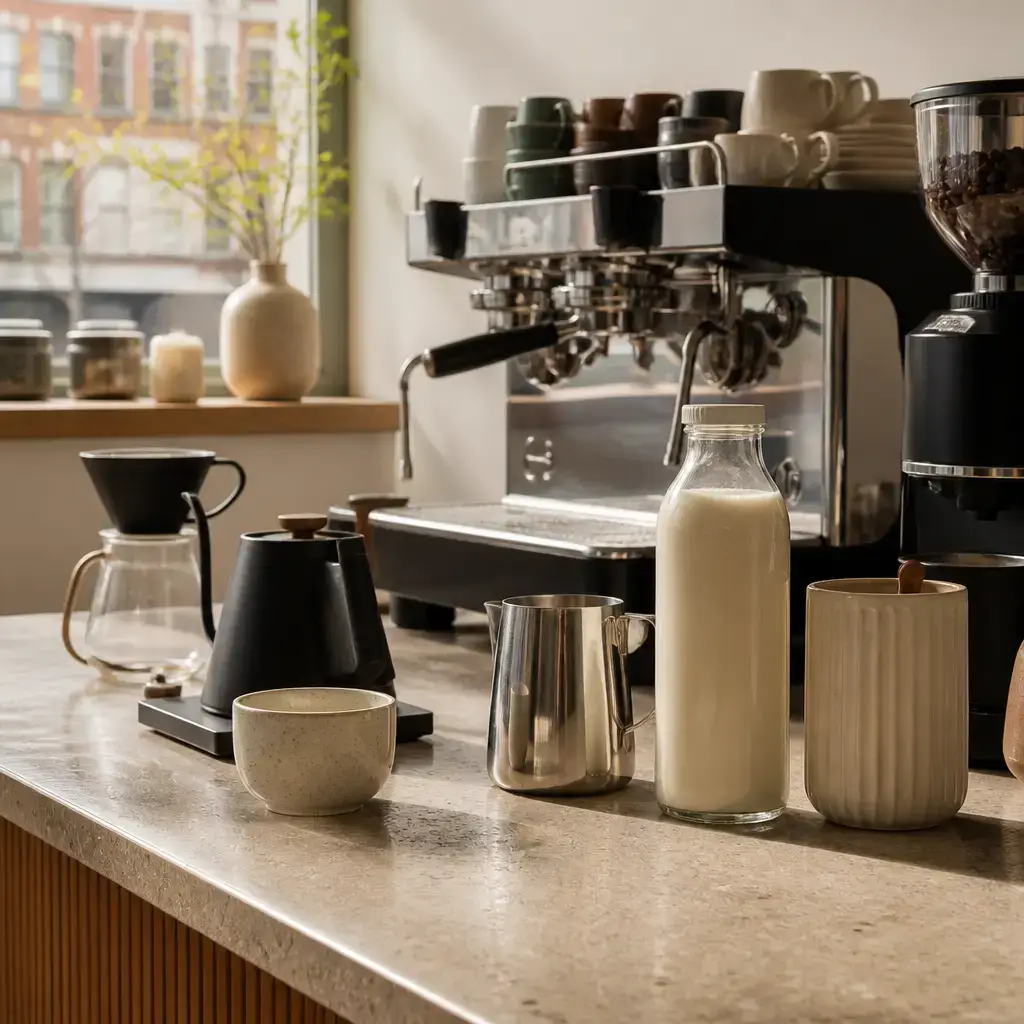
"Hafermilch" means oat milk, the milk option requested for the latte. In "einen Latte mit Hafermilch", it names what the latte should contain.
bekommen
In "Könnte ich einen Latte ... bekommen?", "bekommen" means "get" or "receive". The pattern "Könnte ich ... bekommen?" is useful for making a polite request for an item.
wenn
"wenn" means "if" here and introduces the condition "wenn Sie welche haben". It is useful for checking whether a requested option is available.
Sie
"Sie" means formal "you" and addresses the barista politely in "wenn Sie welche haben". This form is appropriate when speaking formally to a service worker.
welche
In "wenn Sie welche haben", "welche" means "some" or "some of them" and refers back to the oat milk. It avoids repeating "Hafermilch" when asking whether it is available.
haben
In "wenn Sie welche haben", "haben" means "have" in the sense of having the requested item available. Because it follows "wenn", it appears at the end of this clause.
Ja
"Ja" means "yes" and confirms that the cafe has the requested oat milk. It begins the answer "Ja, die haben wir."
die
In "Ja, die haben wir", "die" refers back to the oat milk and means "it" or "the one requested". It lets the speaker confirm availability without repeating "Hafermilch".
wir
"wir" means "we" and identifies the cafe staff as the people who have the oat milk in "die haben wir". A useful pattern is "Wir haben" followed by an available item.
Möchten
In "Möchten Sie die übliche Menge Milchschaum?", "Möchten" expresses "would like" in a polite service question. The pattern "Möchten Sie ...?" is useful when offering or checking a customer's preference.
übliche
"übliche" means "usual" or "customary" and describes the amount in "die übliche Menge Milchschaum". It helps ask whether the customer wants the standard amount.
Menge
"Menge" means "amount" and refers to how much foam is wanted in "die übliche Menge Milchschaum". It is useful when discussing the quantity of something that is measured rather than counted.
Milchschaum
"Milchschaum" means milk foam and identifies the foam on the latte. In "die übliche Menge Milchschaum", it specifies what the amount refers to.
Weniger
"Weniger" means "less" and indicates a smaller amount of foam in "Weniger Schaum wäre besser". The same quantity word appears in the request "mit weniger Schaum".
Schaum
"Schaum" means "foam" and refers to the foam requested on the latte. It combines with "weniger" in "Weniger Schaum" to specify the desired amount.
wäre
In "Weniger Schaum wäre besser", "wäre" means "would be" and presents less foam as the preferred option. The pattern "... wäre besser" can state a preference in a softened way.
besser
"besser" means "better" and says that less foam would suit the customer more in "Weniger Schaum wäre besser". It is useful for expressing that one option is preferable.
vermeide
In "Ich vermeide heute normale Milch", "vermeide" means "avoid" and states that the speaker is not choosing regular milk today. A useful pattern is "Ich vermeide ..." followed by the thing being avoided.
heute
"heute" means "today" and limits the avoidance of regular milk to the current day in "Ich vermeide heute normale Milch". It is a time word that can be placed with an activity or preference.
normale
In "normale Milch", "normale" means "regular" or "normal" and describes the type of milk the customer is avoiding. It appears directly before "Milch".
Milch
"Milch" means "milk" and is specified as "normale Milch" in the customer's explanation. It names the milk option being avoided, in contrast with the requested "Hafermilch".
bereite
In "Ich bereite ihn jetzt zu", "bereite ... zu" means "prepare" or "make". The form "bereite" is the first part of this separable verb, with "zu" completing it at the end.
ihn
"ihn" means "it" and refers to the latte in "Ich bereite ihn jetzt zu" and "bevor ich ihn Ihnen gebe". It is used for the latte because the drink is the item being prepared and handed over.
zu
In "Ich bereite ihn jetzt zu", "zu" completes the verb expression "bereite ... zu", meaning "prepare" or "make". With an object, the reusable pattern is "Ich bereite ihn ... zu."
Das
In "Das ist alles, was ich brauche", "Das" means "that" or "it" and refers to the requested order as a whole. It can point to a situation or result that has just been discussed.
ist
In "Das ist alles", "ist" means "is" and links "Das" with "alles". The pattern "Das ist ..." can identify or summarize something.
alles
In "Das ist alles, was ich brauche", "alles" means "everything" or "all" and indicates that the customer needs nothing more. It is followed by "was ich brauche", which specifies what that means here.
was
In "alles, was ich brauche", "was" means "what" or "that which" and introduces the clause explaining what "alles" refers to. This construction is useful for specifying the content of "alles".
brauche
In "was ich brauche", "brauche" means "need" and states what the customer requires. The pattern "was ich brauche" can specify the thing included in "alles".
jetzt
"jetzt" means "now" and shows that the barista will prepare the latte immediately in "Ich bereite ihn jetzt zu". It is useful for marking an action that is happening at the present moment.
und
"und" means "and" and joins the two actions in "jetzt zu und prüfe das Etikett": preparing the latte and checking the label. It is useful for connecting actions performed by the same person.
prüfe
In "prüfe das Etikett", "prüfe" means "check" or "inspect" and describes what the barista does to the label. A useful pattern is "prüfe" followed by the thing being checked.
Etikett
"Etikett" means "label" and is the item the barista checks before handing over the latte. In the dialogue, it appears in "prüfe das Etikett".
bevor
"bevor" means "before" and introduces the action that must happen first in "bevor ich ihn Ihnen gebe". It is useful for ordering two actions in time.
Ihnen
"Ihnen" means "to you" in the formal form and identifies the customer as the person receiving the latte in "ich ihn Ihnen gebe". It is appropriate for a polite service interaction.
gebe
In "bevor ich ihn Ihnen gebe", "gebe" means "give" or "hand over" and describes the barista passing the latte to the customer. Because it follows "bevor", it appears at the end of the clause.