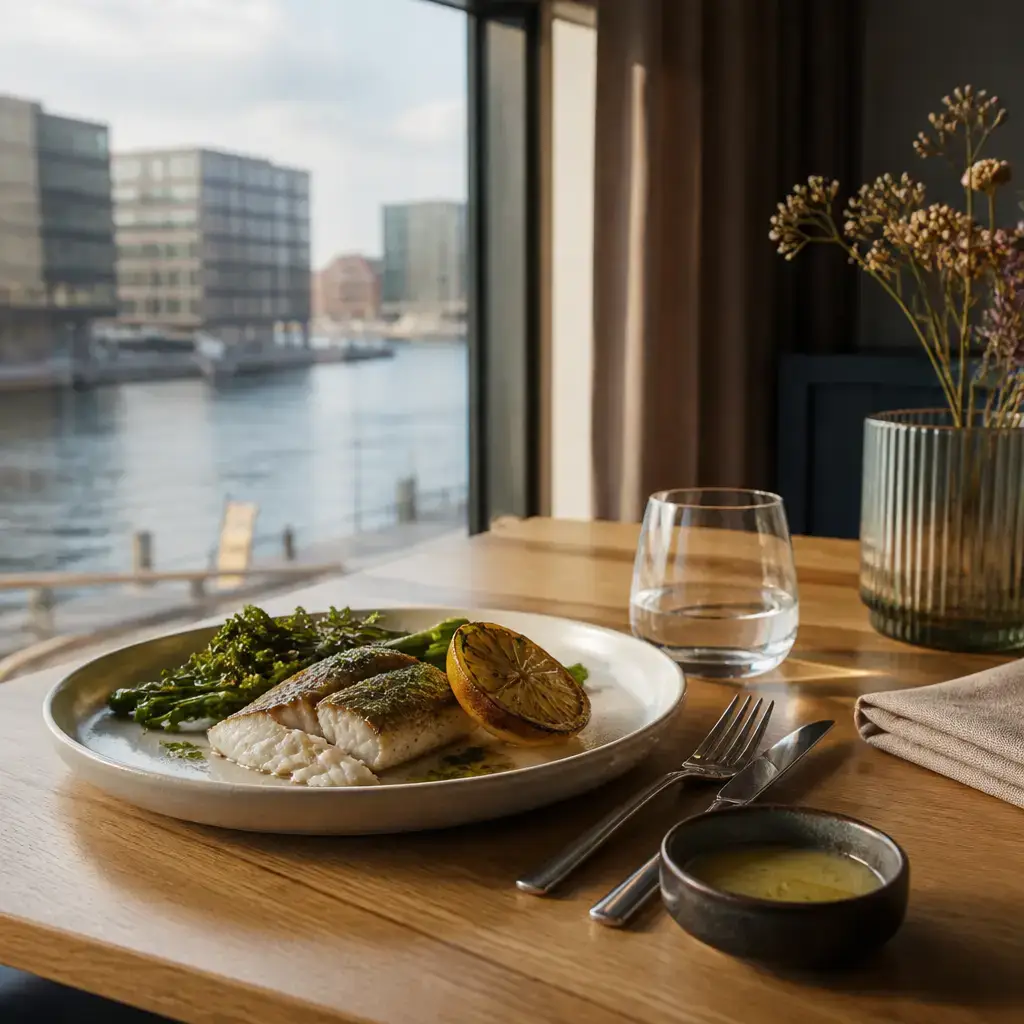
Entschuldigen
In Entschuldigen Sie, this is the polite way to get someone’s attention, equivalent to excuse me. It is useful when beginning a question to a server, colleague, or another person politely.
Sie
The capitalized Sie in Entschuldigen Sie and Möchten Sie is the formal you used when addressing the server or customer. In solange sie nicht zu schwer ist, the lowercase sie refers to the sauce, so capitalization distinguishes the two uses.
dürfte
In dürfte ich nach dem Fisch fragen, this expresses a very polite request: might I be allowed to ask about the fish? The pattern dürfte ich … fragen is useful when asking permission in a formal situation.
ich
In dürfte ich nach dem Fisch fragen, ich means I, the person asking the question. The same pronoun appears in ich frage in der Küche nach and identifies the speaker as the person taking the action.
nach
In nach dem Fisch fragen, nach means about as part of the expression for asking about something. This pattern is useful when asking a person for information about a particular subject.
dem
In nach dem Fisch, dem introduces the specific fish being discussed. It works directly before Fisch in the phrase nach dem Fisch fragen.
Fisch
Fisch means fish in nach dem Fisch fragen and identifies the dish the customer wants to discuss. It is used here as the object of the restaurant question.
fragen
In nach dem Fisch fragen, fragen means ask, specifically asking about the fish. The reusable pattern keeps the subject of the question before fragen and the topic after nach.
Er
Er means he or it here and refers back to the fish in Er ist etwas trocken. It lets the speaker describe the fish in a new sentence without repeating Fisch.
ist
In Er ist etwas trocken and immer noch trocken ist, ist connects the fish with its condition. Here it states that the fish is dry or remains dry.
etwas
In etwas trocken, etwas softens the description to somewhat or a little, so the complaint sounds measured. In etwas davon bringe, it instead means some of it and refers to an amount of the sauce.
trocken
Trocken describes the fish as dry in Er ist etwas trocken. In immer noch trocken ist, it describes the condition the server asks the customer to check after trying the sauce.
Das
In Das tut mir leid, Das refers to the situation that the fish is disappointing. Together with the rest of the expression, it introduces the server’s apology.
tut
In Das tut mir leid, tut contributes the verb in the fixed expression used to apologize. The whole expression means that the situation is regrettable, rather than tut alone meaning sorry.
mir
In Das tut mir leid, mir identifies the person to whom the regret belongs: to me. It is part of the standard apology used by the server.
leid
In Das tut mir leid, leid contributes the idea of regret or being sorry. The complete expression Das tut mir leid is used to apologize for the disappointing fish.
frage
In Ich frage in der Küche nach, frage means ask or check. The complete expression frage in der Küche nach describes checking with the kitchen about the customer’s complaint.
in
In in der Küche, in places the action inside or with the kitchen. This phrase is useful when describing where the server will check for information.
der
In der Küche, der introduces Küche; in Der Geschmack, the capitalized form introduces Geschmack at the beginning of a sentence. In both dialogue phrases, it is placed directly before the noun it belongs with.
Küche
Küche means kitchen in Ich frage in der Küche nach and der Küche Bescheid geben. The dialogue uses it for the restaurant staff or department that can respond to the complaint.
Geschmack
Geschmack means flavor or taste in Der Geschmack ist gut. It lets the customer distinguish the pleasant flavor from the disappointing texture.
gut
In Der Geschmack ist gut, gut describes the flavor positively as good or nice. It is useful when giving balanced feedback by praising one part of a dish while criticizing another.
aber
Aber means but in Der Geschmack ist gut, aber die Konsistenz ist nicht so, wie ich sie erwartet habe. It connects a positive observation with the customer’s contrasting criticism.
die
In die Konsistenz, die introduces the specific texture being discussed. It appears directly before Konsistenz in the phrase contrasting the texture with the expected result.
Konsistenz
Konsistenz means texture or consistency in die Konsistenz ist nicht so, wie ich sie erwartet habe. It is useful when describing how food feels rather than how it tastes.
nicht
In ist nicht so, wie ich sie erwartet habe, nicht makes the comparison negative: the texture is not as expected. It is useful for politely stating that something differs from an expectation.
so
In nicht so, wie ich sie erwartet habe, so means so or in that way and sets up the comparison with the speaker’s expectation. The complete pattern describes how something is compared with what was expected.
wie
In so, wie ich sie erwartet habe, wie introduces the comparison with the way the speaker expected the texture to be. It links the actual condition to that expectation.
erwartet
In wie ich sie erwartet habe, erwartet means expected and describes the speaker’s prior idea of the texture. It is useful when comparing an actual result with what someone anticipated.
habe
In wie ich sie erwartet habe, habe completes the speaker’s statement about what they expected. Together with erwartet, it refers to the expectation the speaker had before describing the dish.
Ein
In Ein wenig Soße, Ein means a and introduces a small amount of sauce. The same form appears as ein in ein kleines Schälchen Soße, where it introduces one small dish.
wenig
In Ein wenig Soße, wenig means a small amount or little. This phrase is useful when making a modest request for an ingredient or accompaniment.
Soße
Soße means sauce in Ein wenig Soße als Beilage and ein kleines Schälchen Soße. It is the proposed accompaniment that may make the dry fish easier to eat.
als
In als Beilage, als means as or for use as. The phrase explains the role of the sauce: it is offered as an accompaniment to the dish.
Beilage
Beilage means side dish or accompaniment in Soße als Beilage. It identifies the sauce as something served alongside the main fish rather than as the main dish itself.
könnte
In könnte helfen, könnte expresses a possible or tentative suggestion: it might help. This form is useful when offering a solution without claiming that it will definitely work.
helfen
In könnte helfen and Das würde helfen, helfen means help. Here the proposed sauce is described as something that may improve the eating experience.
Möchten
In Möchten Sie, dass ich etwas davon bringe, Möchten Sie means would you like and forms a polite offer. It is appropriate when a server asks whether the customer wants an additional item.
dass
In dass ich etwas davon bringe, dass introduces the content of the customer’s possible wish. The clause that follows explains what the server would bring.
davon
In etwas davon bringe, davon means some of it and refers back to the sauce. It avoids repeating Soße while keeping the reference clear in the offer.
bringe
In dass ich etwas davon bringe, bringe means bring and describes the server’s proposed action. The pattern expresses bringing some of a previously mentioned item.
würde
In Das würde helfen, würde presents the result as a conditional possibility: that would help. The phrase is a natural response when accepting a suggested solution cautiously.
solange
In solange sie nicht zu schwer ist, solange means as long as and sets a condition for accepting the sauce. It is useful when agreeing to something while adding a requirement.
zu
In zu schwer, zu means too or excessively and shows that the sauce should not be excessively heavy. It modifies the following description of the sauce.
schwer
In sie nicht zu schwer ist, schwer describes the sauce as too heavy or rich for the customer’s preference. This wording lets the customer request a lighter accompaniment.
kann
In Ich kann Ihnen ein kleines Schälchen Soße bringen, kann means can or am able to. The server uses it to offer a concrete action that is possible.
Ihnen
In kann Ihnen ein kleines Schälchen Soße bringen, Ihnen identifies the formal person who will receive the small dish. It is used when the server politely addresses the customer as the recipient.
kleines
In ein kleines Schälchen Soße, kleines describes the dish as small. It helps specify the limited amount the server offers to bring.
Schälchen
Schälchen means a small bowl or small dish in ein kleines Schälchen Soße. It refers to the container in which the server will bring the sauce.
bringen
In ein kleines Schälchen Soße bringen, bringen means bring and describes carrying the small dish to the customer. The phrase keeps the item being brought before bringen.
und
Und means and in Ich kann Ihnen ein kleines Schälchen Soße bringen und der Küche Bescheid geben. It joins the two actions the server offers to take.
Bescheid geben
In der Küche Bescheid geben, the whole expression means let the kitchen know or inform the kitchen. Bescheid contributes the information or notice, while geben contributes the idea of giving it; the phrase is used here as the second action alongside bringing the sauce.
wollte
In Ich wollte es ansprechen, wollte means wanted to and presents the customer’s intention to raise the problem. This wording is useful for introducing a concern in a measured, non-abrupt way.
es
In Ich wollte es ansprechen, es means it and refers to the problem with the fish. It allows the speaker to mention the issue without repeating the full description.
ansprechen
In es ansprechen, ansprechen means mention or raise an issue directly. The customer uses it for bringing up the disappointing fish before eating more of it.
bevor
In bevor ich noch mehr davon esse, bevor means before and places one action earlier than another. It introduces the reason the customer chose to mention the problem at that moment.
noch
In noch mehr davon, noch adds the idea of additional or more. It emphasizes that the customer wanted to speak before eating any further amount of the fish.
mehr
In noch mehr davon, mehr means more and refers to an additional amount of the fish. The phrase is useful when describing increasing or continuing an amount.
esse
In bevor ich noch mehr davon esse, esse means eat and describes the customer’s possible further action. It appears in the clause explaining what would happen before the complaint was raised.
Bitte
In Bitte sagen Sie mir, Bitte means please and makes the server’s request polite. It is used here when asking the customer to provide feedback after trying the sauce.
sagen
In Bitte sagen Sie mir, sagen means tell or say, with the message directed to the server. The complete phrase politely asks the customer to report the result.
ob
In ob der Fisch nach dem Probieren mit der Soße immer noch trocken ist, ob introduces an indirect whether-or-not question. It lets the server ask whether the fish remains dry after the customer tries it with sauce.
Probieren
In nach dem Probieren mit der Soße, Probieren refers to the act of trying or tasting the fish with the sauce. The phrase specifies that the assessment should happen after this tasting.
mit
In mit der Soße, mit means with and identifies the sauce used together with the fish during the tasting. It is useful for specifying what accompanies an action or item.
immer
In immer noch trocken, immer contributes to the meaning still in the expression still dry. Together with noch, it asks whether the same problem continues after the sauce is tried.
Wir
Wir means we in Wir können eine andere Lösung finden and refers to the server and restaurant working together with the customer. It presents the next step as a shared effort.
können
In Wir können eine andere Lösung finden, können means can or are able to. The server uses it to reassure the customer that another response is possible.
eine
In eine andere Lösung, eine means a or one and introduces the solution being considered. It is part of the phrase describing one possible alternative.
andere
In eine andere Lösung, andere means another or different. It shows that the proposed solution will differ from the sauce option already discussed.
Lösung
Lösung means solution in eine andere Lösung finden. It refers to a way of resolving the customer’s complaint if the sauce does not solve the problem.
finden
In eine andere Lösung finden, finden means find and describes working out an alternative solution. The phrase is useful when offering to resolve a problem together.