Kannst
“Kannst” means “can” in the polite request “Kannst du mir kurz helfen?”. It is the form of “können” used with “du”. Use “Kannst du ...?” when asking someone informally to do something.
du
“du” means “you” when speaking to one person informally. It is the person addressed in “Kannst du mir kurz helfen?”. Use “du” with friends, family, or other people you address informally.
mir
“mir” means “to me” in “Kannst du mir kurz helfen?”. It identifies the person receiving the help, and “helfen” commonly appears with “mir” or another person in this position. This form is useful when asking someone for help.
kurz
“kurz” means “briefly” or “for a moment” in “Kannst du mir kurz helfen?”. It makes the request sound limited to a short amount of time. Use it for a quick favor or brief interruption.
helfen
“helfen” means “to help” in “Kannst du mir kurz helfen?”. It stays in this form after “Kannst”, a modal verb. “Kannst du mir helfen?” is a common way to ask an informal addressee for help.
Was
“Was” means “what” in the question “Was brauchst du?”. It asks which thing or assistance the other person needs. Use “Was brauchst du?” when asking an informal person what they need.
brauchst
“brauchst” means “need” in “Was brauchst du?”. It is the form of “brauchen” used with “du”. The pattern “Was brauchst du?” is useful for asking someone informally what they need.
meinen
“meinen” means “my” before “Platz” in “meinen Platz freihalten”. It is the form of “mein” used with the masculine object “Platz” here. Use a possessive form before a noun when identifying whose place or thing it is.
Platz
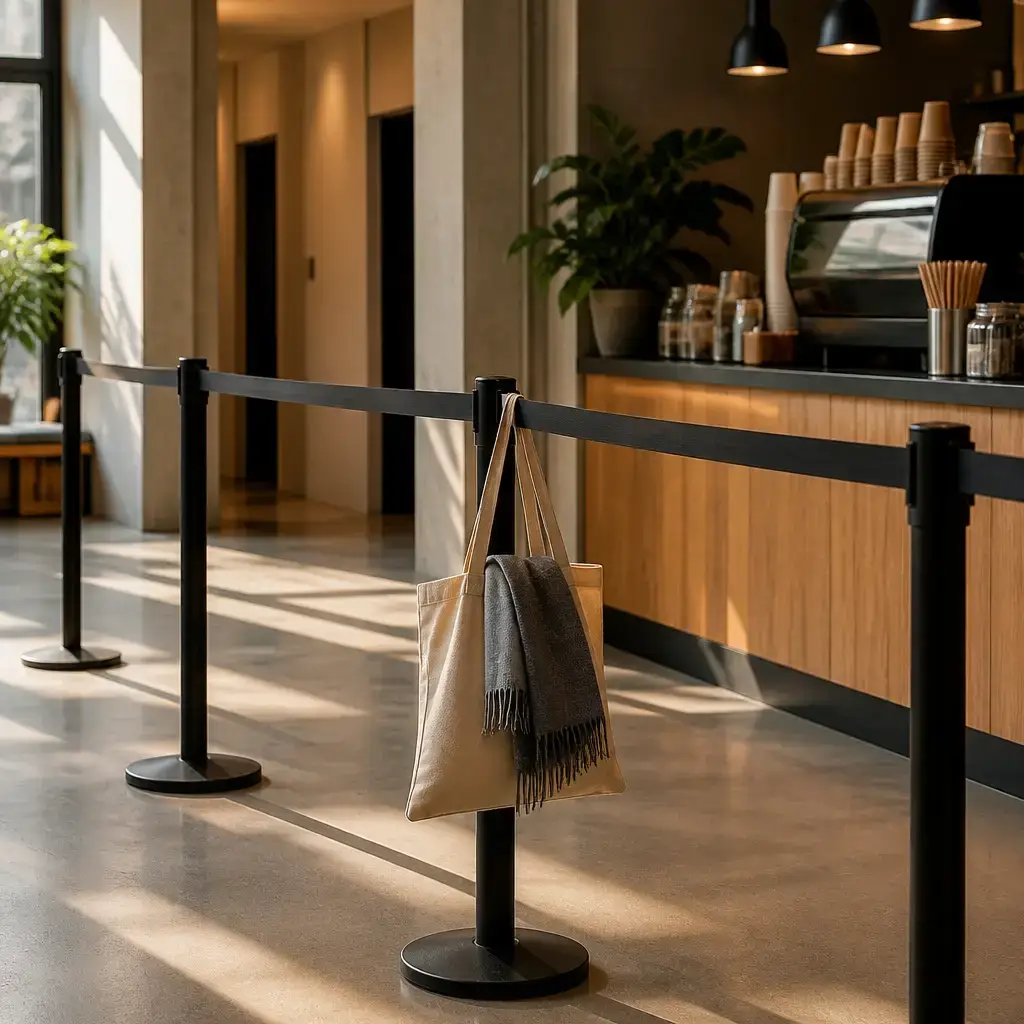
“Platz” means “place” or “spot” in “meinen Platz”, specifically the speaker’s spot in the line. The expression identifies the position that another person should keep available. This is useful when asking someone to hold your place in a queue.
freihalten
“freihalten” means “to keep free” in “meinen Platz freihalten”, meaning to hold the speaker’s place. It appears as an infinitive at the end after “Kannst”. Use the pattern “etwas freihalten” when keeping a place or space available.
während
“während” means “while” in “während ich auf die Toilette gehe”. It introduces the activity happening during the time the speaker’s place is being held. Use it to connect one action with another action taking place at the same time.
ich
“ich” means “I” in “während ich auf die Toilette gehe”. It identifies the person who goes to the restroom. At the beginning of a sentence, the same pronoun appears as “Ich”, as in “Ich bin gleich wieder da”.
auf
“auf” is part of the destination expression “auf die Toilette” in “auf die Toilette gehe”. Together, the expression means going to the restroom. Use “auf die Toilette gehen” when talking about going to the toilet.
die
“die” means “the” before “Toilette” in “auf die Toilette”. It is the article used with the feminine noun “Toilette”. This form is part of the common destination expression “auf die Toilette”.
Toilette
“Toilette” means “restroom” or “toilet” in “auf die Toilette gehe”. It names the place the speaker is going to during the short break. Use it in “auf die Toilette gehen” when politely referring to a restroom visit.
gehe
“gehe” means “go” in “während ich auf die Toilette gehe”. It is the form of “gehen” used with “ich” and appears at the end of the subordinate clause introduced by “während”. Use “ich gehe” to say that you are going somewhere.
Ja
“Ja” means “yes” in “Ja, aber komm bitte schnell zurück”. It confirms that the person agrees to keep the place. Use it at the start of a reply when accepting a request.
aber
“aber” means “but” in “Ja, aber komm bitte schnell zurück”. It introduces a condition or limitation to the agreement. Use it to accept something while adding an important point.
komm
“komm” means “come” as an informal singular request in “komm bitte schnell zurück”. It is the command form of “kommen” used with one person addressed as “du”. “Komm bitte ...” is useful when asking someone informally to come.
bitte
“bitte” means “please” in “komm bitte schnell zurück”. It makes the request more polite. Place it in a request such as “Komm bitte ...” when speaking to someone informally.
schnell
“schnell” means “quickly” in “komm bitte schnell zurück”. It asks the person to return without taking much time. Use it when a prompt response or quick return matters.
zurück
“zurück” means “back” in “komm bitte schnell zurück”. With a movement verb, it shows that the person should return to the previous place. It is useful when asking someone to return after a short absence.
wenn
“wenn” means “if” or “when” in “wenn die Schlange weitergeht”. Here it introduces the condition that the line moves. Use “wenn” to describe what should happen if or when a particular event occurs.
Schlange
“Schlange” means “line” or “queue” in “die Schlange weitergeht”. It refers to the people waiting in order, not to a snake in this context. Use “die Schlange” when talking about a queue in a shop or another public place.
weitergeht
“weitergeht” means “continues moving” in “wenn die Schlange weitergeht”. It is the form of “weitergehen” used with “die Schlange” and appears at the end of the clause after “wenn”. Use it when a queue or process moves on.
bin
“bin” means “am” in “Ich bin gleich wieder da”. It is the form of “sein” used with “ich”. In this expression, it helps say that the speaker will be back at the place shortly.
gleich
“gleich” means “right away” or “in a moment” in “Ich bin gleich wieder da”. It shows that the return will happen soon. Use it when reassuring someone that you will not be away for long.
wieder
“wieder” means “again” or “back” in “Ich bin gleich wieder da”. Here it marks a return to the place where the speaker was before. Use it with a location expression when saying that someone will be back.
da
“da” means “there” in “Ich bin gleich wieder da”. In this expression, it refers to being back at the current or previously mentioned place. “Wieder da” is useful when reassuring someone that you will return.
nach
“nach” means “toward” in the direction expression “nach vorne”. It combines with “vorne” to show movement toward the front. Use “nach vorne” when describing movement forward in a line or space.
vorne
“vorne” means “forward” or “at the front” in “gehe ich nach vorne”. It identifies the direction in which the person moves when the line advances. Use it with “nach” to describe going toward the front.
und
“und” means “and” in “gehe ich nach vorne und halte deinen Platz frei”. It links the two actions of moving forward and keeping the place available. Use it to connect actions performed by the same person.
halte
“halte” means “keep” or “hold” in “halte deinen Platz frei”. It is the form of “halten” used with “ich”. Together with “deinen Platz frei”, it describes keeping someone’s place available while they are away.
deinen
“deinen” means “your” before “Platz” in “deinen Platz frei”. It is the form of “dein” used with the masculine object “Platz” here. Use a possessive form before a noun when referring to an informal person’s place or thing.
frei
“frei” means “free” or “available” in “halte deinen Platz frei”. It describes the place as remaining unoccupied for the person who left. The pattern “einen Platz frei halten” is useful when preserving someone’s spot.
Danke
“Danke” means “thanks” in “Danke”. It expresses gratitude for the other person’s agreement to help. Use it as a short, natural response after someone does or agrees to do something helpful.
beeile
“beeile” means “hurry” in “Ich beeile mich”. It is the form of “sich beeilen” used with “ich”, together with the reflexive object “mich”. Use “sich beeilen” when promising or explaining that you will move quickly.
mich
“mich” means “myself” as the reflexive object in “Ich beeile mich”. It refers back to “ich”, the person who is hurrying. The expression “Ich beeile mich” is used when saying that you will hurry.
komme
“komme” means “come” in “komme direkt zurück”. It is the form of “kommen” used with “ich”. Use “ich komme ... zurück” to say that you are returning somewhere.
direkt
“direkt” means “directly” or “straight” in “komme direkt zurück”. It shows that the speaker will return without delay or deviation. Use it when emphasizing a direct movement or immediate return.