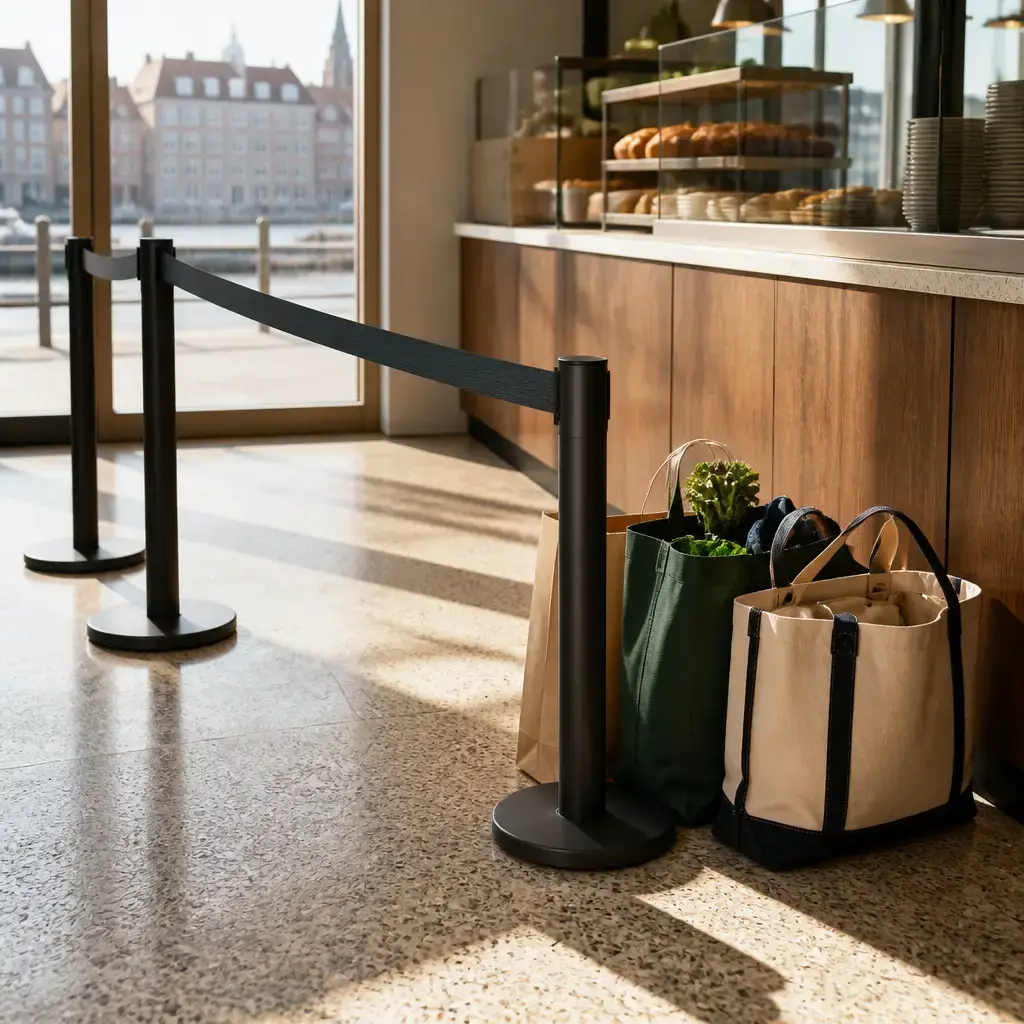
Entschuldigung
Entschuldigung politely gets the other person’s attention before offering them the place in line. Use it when beginning a polite request or interruption.
du
du refers to one person the speaker addresses informally. Here it is the person who can go ahead, and it is used together with kannst.
kannst
kannst is the form of können used with du here, expressing that the person may go ahead. It is followed by the infinitive gehen in this sentence.
vor
vor marks the position ahead in vor mir gehen, so the other person moves ahead of the speaker in the line. Use it with a reference person when describing position in a queue.
mir
mir identifies the speaker as the reference person in vor mir gehen, meaning ahead of me. The form mir is used after vor in this phrase.
gehen
gehen means to go; here it describes moving ahead in the line. It follows kannst in this sentence.
Bist
Bist is the form of sein used with du in Bist du sicher?; here it asks whether the person is certain. Use it at the beginning of a direct question about someone’s certainty.
sicher
sicher means sure or certain in Bist du sicher? It follows the form of sein and is used here to check whether the other person really accepts the offer.
Ich
Ich identifies the speaker in Ich möchte dir deinen Platz nicht wegnehmen and the later lines. It is used as the subject when the speaker describes their own wishes or actions.
möchte
möchte expresses a wish in Ich möchte dir deinen Platz nicht wegnehmen: the speaker does not want to take the other person’s place. It is used after Ich and before the infinitive wegnehmen.
dir
dir identifies the person whose place is involved in Ich möchte dir deinen Platz nicht wegnehmen. It refers to the person being addressed and affected by the action.
deinen
deinen marks the place as belonging to the person addressed in deinen Platz. Here it identifies the other person’s place in the line.
Platz
Platz means the person’s spot in the line in deinen Platz. Use it when referring to someone’s place in a queue.
nicht
nicht negates wegnehmen in Ich möchte dir deinen Platz nicht wegnehmen, making clear that the speaker does not want to take the place. It appears before the action being negated here.
wegnehmen
wegnehmen is the infinitive after möchte; here it means taking away someone’s place in line. In this dialogue, the action concerns the other person’s Platz.
Das
Das refers back to the situation in Das ist in Ordnung and presents it as acceptable. Use it to refer to a situation that has just been mentioned.
ist
ist is the form of sein used with Das in Das ist in Ordnung; it links the situation to the assessment that it is all right. It follows Das in this statement.
in
in is part of the expression in Ordnung; together they reassure the other person that the situation is acceptable. Use it in this expression when saying that something is okay.
Ordnung
Ordnung completes in Ordnung, which means that letting the other person go ahead is acceptable here. Use it in this expression when reassuring someone that something is all right.
deine
deine marks Taschen as belonging to the person addressed in deine Taschen. Here it identifies the bags as the other person’s.
Taschen
Taschen means bags and refers to the items that look heavy in deine Taschen sehen schwer aus. Use it for bags a person is carrying.
sehen
sehen means look or appear in deine Taschen sehen schwer aus. It combines with schwer aus to describe how the bags appear.
schwer
schwer describes the Taschen as heavy in deine Taschen sehen schwer aus. It is placed between sehen and aus in this appearance expression.
aus
aus completes the expression sehen schwer aus; together they mean look or appear, while schwer gives the quality. It comes at the end of this sentence.
Danke
Danke expresses thanks for the favor of being allowed to go ahead. Use it as a brief polite response when someone helps you.
sehr
sehr strengthens nett in sehr nett, making the appreciation warmer. It is placed before the adjective it intensifies.
nett
nett describes the favor as kind or nice in Danke, das ist sehr nett. Here it warmly evaluates the other person’s action.
brauche
brauche is the form of brauchen used with Ich in Ich brauche an der Theke nur eine Minute; here it says that one minute is needed at the counter. It is followed by the time expression eine Minute in this line.
an
an places the action at the counter in an der Theke. Use it together with der Theke when referring to being at the counter.
der
der is the article used with Theke in an der Theke. It forms part of the location phrase for the counter.
Theke
Theke means counter and names the place where B will spend one minute. Use it for a service or sales counter.
nur
nur limits the time in Ich brauche an der Theke nur eine Minute to only one minute. It comes before eine Minute here to emphasize the short duration.
eine
eine specifies the amount in eine Minute, giving a duration of one minute. It combines with Minute as the time expression after nur.
Minute
Minute is the unit of time in eine Minute. Here it states how long B expects to need at the counter.
noch
noch in Ich kann noch ein bisschen warten adds that A is willing to wait further or additionally. Use it when extending an existing period of waiting or time.
ein
ein is part of the small-quantity expression ein bisschen. Together with bisschen, it describes a small amount of additional waiting.
bisschen
bisschen in ein bisschen means a small amount; here it limits how much longer A can wait. Use it in ein bisschen when referring to a small amount or degree.
warten
warten is the infinitive after kann and means to wait. Here it describes A remaining in the line for a little longer.
passe
passe is the form of aufpassen used with Ich in Ich passe auf, dass ich dich nicht aufhalte; here the speaker promises to make sure of something. It is followed by auf and a dass-clause.
auf
auf is the separable part of aufpassen in passe auf; together they mean pay attention or make sure. It follows passe in this sentence.
dass
dass introduces the clause describing what the speaker will make sure of in Ich passe auf, dass ich dich nicht aufhalte. In this dialogue, that clause ends with aufhalte.
dich
dich identifies the person who might be delayed in Ich passe auf, dass ich dich nicht aufhalte; it refers to A. Use it when addressing one person informally as the person affected by an action.
aufhalte
aufhalte is the form of aufhalten used with ich in dass ich dich nicht aufhalte; here it means hold you up or delay you. It appears at the end of the dass-clause and expresses the delay the speaker promises to avoid.