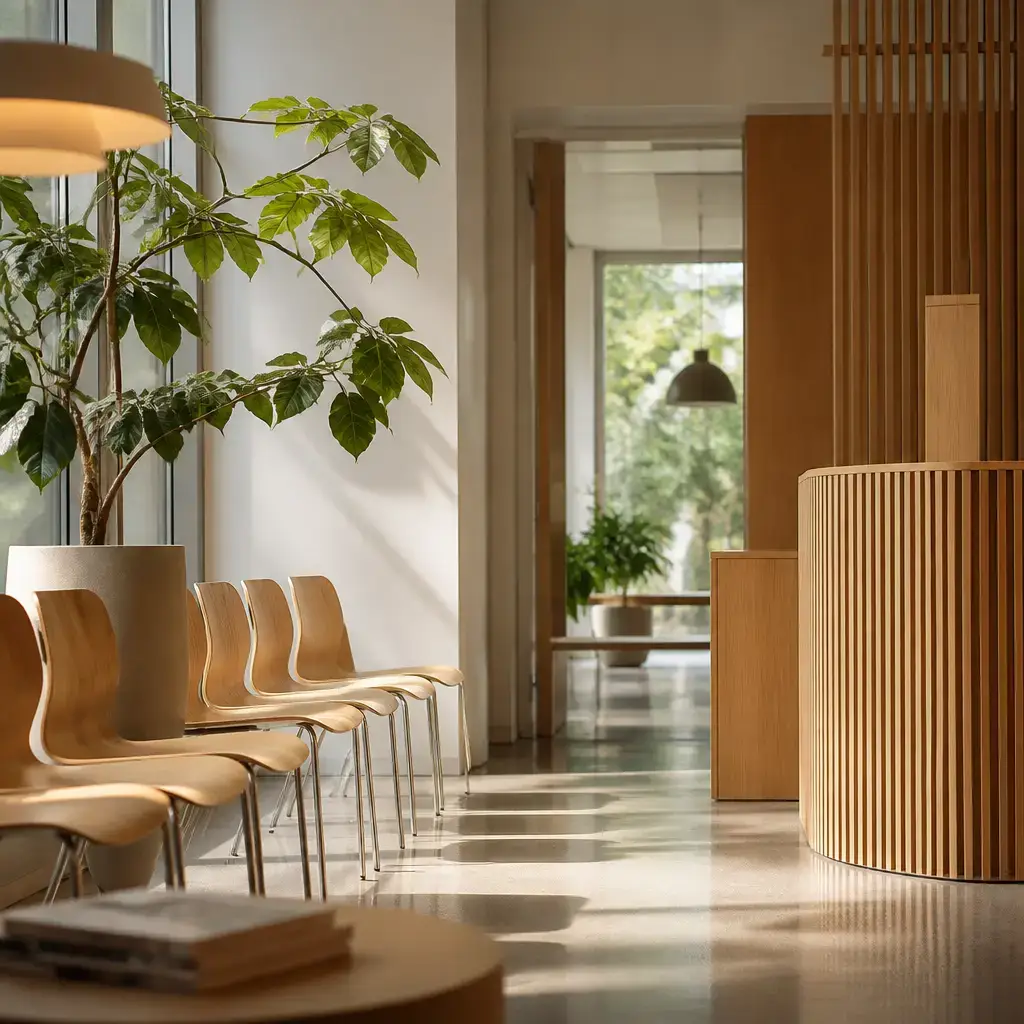
Entschuldigung
“Entschuldigung” is a polite way to say “excuse me” when getting someone’s attention. In “Entschuldigung, wie lange muss ich ungefähr warten?”, it opens a respectful question in a public waiting area. A common reuse is “Entschuldigung” before asking a stranger for information.
wie
In “wie lange”, “wie” asks how much or to what extent, together with “lange”. Here, “wie lange” asks about the duration of the wait. A common pattern is “wie lange + verb” when asking how long something takes.
lange
In “wie lange muss ich ungefähr warten?”, “lange” describes the duration of the waiting. Together with “wie”, it asks how long the wait will be. The same pattern can be used for other activities whose duration is unknown.
muss
“muss” expresses that the speaker has to wait in “wie lange muss ich ungefähr warten?”. It is the form of müssen used with “ich” in this question. A reusable pattern is “Ich muss + infinitive” for something the speaker has to do.
ich
“ich” identifies the speaker as the person who has to wait in “wie lange muss ich ungefähr warten?”. It is the first-person pronoun for “I”. A common reuse is “Ich habe …” or “Ich muss …” when describing the speaker’s own situation.
ungefähr
“ungefähr” makes the requested waiting time approximate rather than exact. In “wie lange muss ich ungefähr warten?”, the speaker asks for an estimate. It can be placed with a number or amount when precision is not available.
warten
“warten” means “to wait” in “muss ich ungefähr warten?”, where it follows “muss”. The exact form “warte” appears in “Dann warte ich erst einmal” for the speaker’s decision to wait for now; both forms are related to the citation form warten. A common pattern is “auf + person or thing warten” when naming what someone is waiting for.
Etwa
“Etwa” means approximately in “Etwa zehn Minuten”. It gives an estimated amount of waiting time rather than an exact one. A common pattern is “etwa + number + unit”, such as an estimated duration or quantity.
Minuten
“Minuten” names the time unit in “Etwa zehn Minuten”. It is the plural form of Minute because the estimate is ten minutes. A common reuse is a number followed by “Minuten” when stating a duration.
vielleicht
“vielleicht” signals uncertainty in “vielleicht etwas länger”. The speaker is suggesting that the wait may exceed the estimated ten minutes, without stating this as certain. It is commonly used before a possible answer, action, or description.
etwas
In “etwas länger”, “etwas” means “a little” or “somewhat” and softens the extent of “länger”. Together, the phrase means that the wait may be a little longer. A common pattern is “etwas + adjective or adverb” for a small or moderate degree.
länger
“länger” means “longer” in “vielleicht etwas länger”, referring to a wait that may exceed ten minutes. It is the comparative form related to the citation form lang. A common reuse is “etwas länger” when something lasts beyond an earlier estimate.
habe
“habe” means “have” in “Ich habe danach noch einen anderen Termin”. It is the form of haben used with “ich” to state that the speaker has another appointment. A reusable pattern is “Ich habe + object” when mentioning something the speaker has or needs to attend.
danach
“danach” means “after that” or “afterward” in “Ich habe danach noch einen anderen Termin”. Here, it places the other appointment after the current waiting situation. It can be used to link a later event to something already mentioned.
noch
In “noch einen anderen Termin”, “noch” adds the idea of another appointment still remaining afterward. It shows that this is an additional matter the speaker has to consider. A common pattern is “noch + noun” when mentioning one more item or obligation.
einen
“einen” introduces “einen anderen Termin”, meaning “another appointment”. It is the indefinite article form used before “Termin” in this sentence. A common reuse is an article followed by an adjective and noun when introducing one unspecified item.
anderen
“anderen” means “another” in “einen anderen Termin”, identifying an appointment different from the current situation. It modifies “Termin” inside that noun phrase. A common pattern is “einen anderen + noun” when referring to a different or additional item.
Termin
“Termin” means an appointment or scheduled meeting in “einen anderen Termin”. The speaker mentions it as a later commitment that may limit the time available for waiting. A common reuse is “einen Termin haben” when saying that someone has an appointment.
Wenn
“Wenn” introduces the condition in “Wenn das zu spät ist”. Here, it means “if” and connects the possibility of the wait being too late with the suggested alternative. A common pattern is “Wenn …, …” for stating a condition and its consequence.
das
In “Wenn das zu spät ist”, “das” refers to the relevant timing or waiting situation and means “that” or “it”. It is the subject of “ist” in the conditional clause. A common reuse is “Wenn das … ist” when evaluating a situation just mentioned.
zu
In “zu spät”, “zu” means “too” and shows that the timing would be later than acceptable. It modifies “spät” as part of this fixed adjective phrase. A common pattern is “zu + adjective” for something exceeding a suitable degree.
spät
“spät” means “late” in “Wenn das zu spät ist”. The phrase evaluates the possible waiting time as unacceptable because it would end too late. A common reuse is “zu spät sein” when a time or action is later than suitable.
ist
“ist” means “is” in “Wenn das zu spät ist”, linking “das” with the description “zu spät”. It is the form of sein used with the singular subject “das”. A common pattern is “etwas ist + adjective” for describing a situation.
können
“können” expresses ability or permission in “können Sie nach dem Mittagessen wiederkommen”. It is used with the formal subject “Sie” and the infinitive “wiederkommen”. A common pattern is “Sie können + infinitive” when politely offering or explaining an available option.
Sie
“Sie” addresses the other person formally in “können Sie … wiederkommen”. It means “you” in this respectful public-service interaction. A common pattern is “Sie können …” when speaking politely to an unfamiliar adult or customer.
nach
In “nach dem Mittagessen”, “nach” means “after” and places the return later than lunch. It introduces the time phrase for “wiederkommen”. A common reuse is “nach + event or time” when describing what happens afterward.
dem
“dem” is the definite article in the time phrase “nach dem Mittagessen”, meaning “the”. It belongs with “Mittagessen” to refer to the lunch period. A common pattern is “nach dem + noun” for a time that follows a specific event.
Mittagessen
“Mittagessen” means lunch in “nach dem Mittagessen”. It identifies the time after which the person may return. A common reuse is “nach dem Mittagessen” when arranging an action for the afternoon.
wiederkommen
“wiederkommen” means “come back” in “können Sie nach dem Mittagessen wiederkommen”. It is the infinitive used after “können” and describes returning to the waiting area. A common pattern is “wiederkommen + time phrase” when arranging a return.
Behalte
“Behalte” means “keep” in the question “Behalte ich meinen Platz …?”. Because it is followed by “ich”, it is the verb-first form used to ask whether the speaker retains the place. It is related to the citation form behalten; a reusable question pattern is “Behalte ich …?” when asking whether something remains yours.
meinen
“meinen” means “my” in “meinen Platz”, identifying the place belonging to the speaker. It is the form of mein used before “Platz” in this sentence. A common pattern is “meinen + noun” when referring to something belonging to the speaker.
Platz
“Platz” means “place” or “spot” in “meinen Platz”, referring to the speaker’s position in the queue. The question asks whether that position remains available after returning later. A common reuse is “seinen Platz behalten” for keeping one’s place.
später
“später” means “later” in “wenn ich später zurückkomme”. It places the possible return at a time after the current moment. It is related to the citation form spät and is commonly used with a verb to describe a later action.
zurückkomme
“zurückkomme” means “come back” or “return” in “wenn ich später zurückkomme”. It is the form of zurückkommen used with “ich” and appears at the end of the conditional clause. A common pattern is “wenn ich … zurückkomme” when stating a condition about the speaker’s return.
müssten
“müssten” means “would need to” in “müssten Sie eine neue Wartenummer ziehen”. It presents the requirement as a possible consequence and softens the statement. It is related to the citation form müssen; a common pattern is “Sie müssten + infinitive” for explaining what someone would have to do.
eine
“eine” introduces “eine neue Wartenummer”, meaning “a new” waiting number. It is the indefinite article before the noun phrase describing what must be obtained. A common reuse is “eine + adjective + noun” when introducing one unspecified item.
neue
“neue” means “new” in “eine neue Wartenummer”, showing that the person would need a different queue number. It modifies “Wartenummer” in the noun phrase and is related to the citation form neu. A common pattern is “eine neue + noun” when replacing an earlier item.
Wartenummer
“Wartenummer” means a waiting number or queue ticket in “eine neue Wartenummer ziehen”. It identifies the number used to keep a place in the public waiting system. A common reuse is “eine Wartenummer ziehen” when taking a queue ticket.
ziehen
In “eine neue Wartenummer ziehen”, “ziehen” means to take or obtain a queue ticket, not simply to pull something. It is the infinitive after “müssten”. A common pattern is “eine Wartenummer ziehen” when entering a numbered waiting system.
Dann
“Dann” means “then” in “Dann warte ich erst einmal”. It marks the speaker’s decision after hearing that returning would require a new ticket. A common reuse is “Dann + verb” when responding to information with a consequence or decision.
erst einmal
The exact expression “erst einmal” means “for now” or “for the moment” in “Dann warte ich erst einmal”. Inside the expression, “erst” points to the immediate first step, while “einmal” helps frame it as a limited decision for the present rather than a final plan. A new example is “Ich mache das erst einmal” for saying that someone will do something for now.
weil
“weil” introduces the reason in “weil ich schon hier bin”. The speaker explains that waiting is sensible because they are already at the location. A common pattern is “weil + clause” for giving a reason; the verb comes at the end of that clause.
schon
“schon” means “already” in “weil ich schon hier bin”. It emphasizes that the speaker is present now, which supports the decision to wait. A common pattern is “schon + place or state” when something is true by the current time.
hier
“hier” means “here” in “ich schon hier bin”, identifying the current location of the speaker. It explains why waiting now is convenient. A common reuse is “hier sein” when stating that someone is present at a place.
bin
“bin” means “am” in “weil ich schon hier bin”, stating that the speaker is already present. It is the form of sein used with “ich”. A common pattern is “Ich bin + place or description” for saying where the speaker is or what state they are in.
Bitte
“Bitte” means “please” in “Bitte achten Sie auf den Bildschirm”. It makes the instruction to watch the screen polite. A common reuse is “Bitte” at the beginning of a request or instruction.
achten
In “achten Sie auf den Bildschirm”, “achten” means “pay attention” or “watch”. With “auf”, it tells the listener to monitor the screen for relevant information. A common pattern is “achten Sie auf + person or thing” when giving a polite instruction to pay attention.
auf
In “achten Sie auf den Bildschirm”, “auf” is part of the construction “achten auf” and connects the act of paying attention with its object. Here, the object is the screen. A common pattern is “auf + person or thing achten” when saying what someone should monitor.
den
“den” is the definite article in “den Bildschirm”, meaning “the” and introducing the specific screen to watch. It belongs to the noun phrase used with “achten auf”. A common reuse is a definite article followed by a noun when referring to a known object.
Bildschirm
“Bildschirm” means “screen” in “achten Sie auf den Bildschirm”. It refers to the display that may show the person’s queue number or turn. A common reuse is “auf den Bildschirm achten” when telling someone to monitor a display.