Entschuldigung
“Entschuldigung” means “excuse me” here and politely gets someone’s attention before a question. It is commonly used when asking a stranger for information in a public place. You can use “Entschuldigung” to begin a polite request.
ist
“ist” means “is” in the question about whether this is the correct line. It is the form of sein used with das in “ist das die richtige Schlange?”. This pattern is useful for checking whether something is a particular thing or place.
das
In “ist das die richtige Schlange?”, “das” refers to the line being indicated; in “Das ist verwirrend”, “Das” refers to the situation. The same word appears as “das” at the beginning of a question and as “Das” at the beginning of a sentence. It is useful when pointing to or referring to something already understood from the situation.
die
“die” means “the” in “die richtige Schlange”. It introduces the specific line that is being checked. It also appears capitalized as “Die” in “Die Schlange dort”, where it introduces the line being described.
richtige
“richtige” means “correct” or “right” in “die richtige Schlange”. It describes which line the speaker needs. The pattern “die richtige” is useful when identifying the correct option in a choice.
Schlange
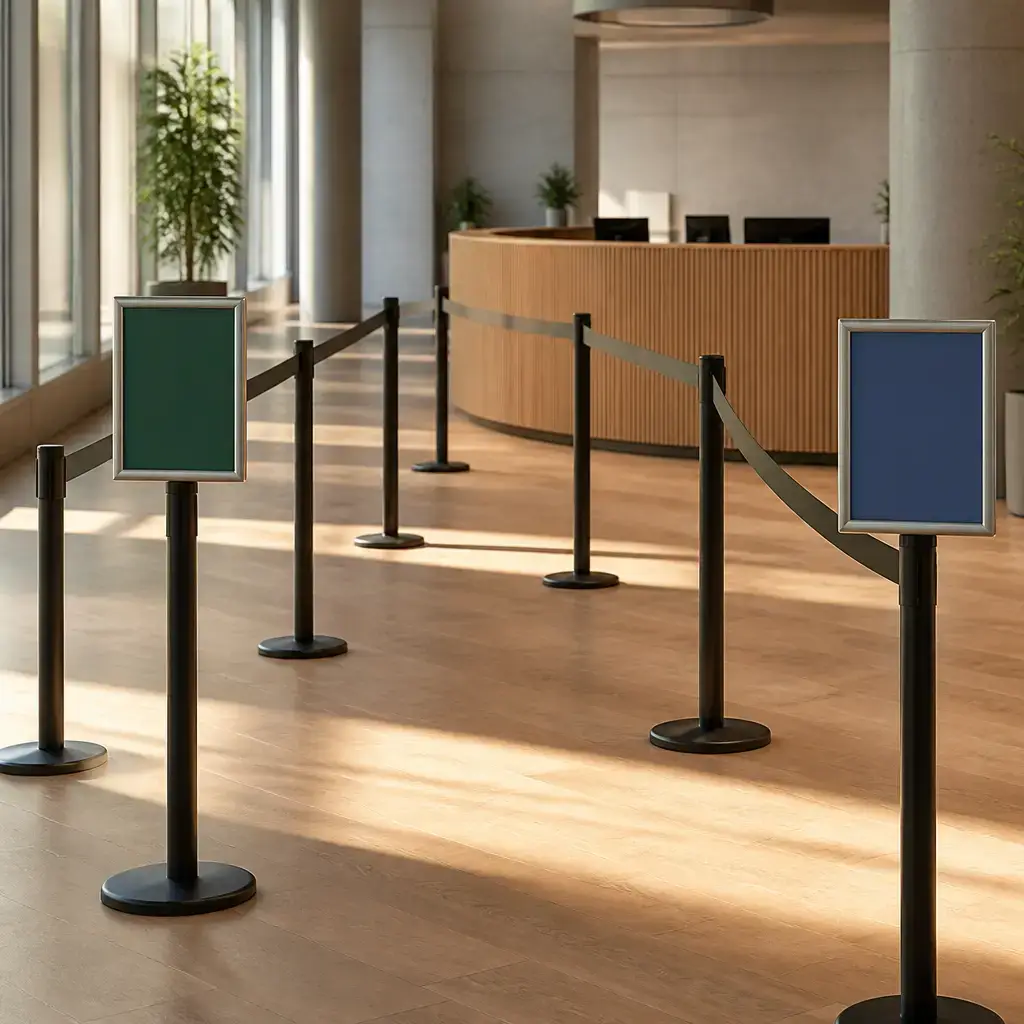
“Schlange” means “queue” or “line” in this dialogue, not a snake. It refers to the line of people waiting for a service. It is reusable in expressions such as “in der Schlange” for being in the line.
Diese
“Diese” means “this” in “Diese Schlange” and points to the line being discussed. It identifies one specific queue near the speakers. The pattern “Diese” plus a noun is useful when indicating a particular nearby thing.
für
“für” means “for” in “für den Informationsschalter”. It shows which service the line is intended for. It is commonly used before the person, place, or service that something is intended for.
den
“den” is the form of “the” used in “den Informationsschalter” after “für”. It introduces the specific information desk that this line serves. The reusable pattern is “für den” followed by a masculine noun.
Informationsschalter
“Informationsschalter” means “information desk” and names the service point for this queue. In “für den Informationsschalter”, it identifies the destination or service associated with the line. It is useful in public buildings when asking where to get information.
Ich
“Ich” means “I” and identifies the speaker in “Ich muss meine Mitgliedskarte verlängern”. It is used when stating the speaker’s own need or action. The pattern “Ich muss ...” is useful for explaining what you need to do.
muss
“muss” means “must” or “need to” in “Ich muss meine Mitgliedskarte verlängern”. It expresses the speaker’s necessity. The pattern “Ich muss” is followed by the action that needs to happen.
meine
“meine” means “my” in “meine Mitgliedskarte” and shows that the card belongs to the speaker. It comes directly before the noun it describes. The pattern “meine” plus a personal item is useful when explaining what belongs to you.
Mitgliedskarte
“Mitgliedskarte” means “membership card”. It is the card that the speaker needs to renew in this situation. It is useful when discussing access, membership, or services connected with an organization.
verlängern
“verlängern” means “to renew” or “to extend” the membership card. It appears after “muss” as the action the speaker needs to carry out. The pattern “eine Karte verlängern” is useful when extending the validity of a card.
Dann
“Dann” means “then” and connects the speaker’s need with the advice that follows. Here it introduces the next step: joining another line. It is useful for giving advice or describing what should happen next.
sollten
“sollten” means “should” and gives polite advice about which line to join. It is used with formal “Sie” in “sollten Sie sich ... anstellen”. The pattern “Sie sollten ...” is useful when recommending an action to someone politely.
Sie
“Sie” means “you” in the formal address used between adults who do not know each other. It appears in the polite advice “sollten Sie sich ... anstellen”. It is useful in public-service conversations when addressing a stranger respectfully.
sich
“sich” refers back to the person being advised in “sich in der Schlange ... anstellen”. Together with anstellen, it is part of the expression for joining a line. The reusable pattern is “sich in der Schlange anstellen” when telling someone to line up.
in
“in” means “in” in “in der Schlange” and indicates entering or being in the queue. Here it is part of the expression “sich in der Schlange anstellen”. It is useful before a place or area where someone joins or stays.
der
“der” means “the” in “in der Schlange” and introduces the specific queue. It appears with “Schlange” inside the phrase for lining up. The pattern “in der” is useful when referring to being in a particular feminine place or area.
beim
“beim” means “at” or “by the” in “beim blauen Schild”. It identifies the sign that marks the correct line. It is useful for locating something near a sign, desk, or other reference point.
blauen
“blauen” means “blue” in “beim blauen Schild” and describes the sign used to identify the line. It comes directly before “Schild”. The pattern “beim blauen” is useful when directing someone to a location marked by a blue sign.
Schild
“Schild” means “sign” in “beim blauen Schild”. It refers to the visible sign beside the correct line. It is useful when giving directions by referring to a posted sign.
anstellen
“anstellen” means “to join the line” in “sich in der Schlange beim blauen Schild anstellen”. It is the action recommended after “sollten”. The complete reusable pattern is “sich in der Schlange anstellen” when telling someone to line up.
habe
“habe” means “have” in “Ich habe fast ... gewartet”. Here it works with “gewartet” to describe the speaker’s completed waiting. It is useful in the pattern “Ich habe ... gewartet” when talking about having waited somewhere.
fast
“fast” means “almost” in “Ich habe fast am falschen Ort gewartet”. It shows that the speaker nearly waited in the wrong place but did not fully do so. It is useful before an action or event that nearly happened.
am
“am” means “at the” in “am falschen Ort”. It locates the waiting at a particular place. It is useful before a place when describing where an action happened.
falschen
“falschen” means “wrong” in “am falschen Ort”. It describes the place where the speaker almost waited. The pattern “am falschen Ort” is useful when explaining that someone was nearly in an incorrect location.
Ort
“Ort” means “place” or “location” in “am falschen Ort”. It refers to the location of the almost mistaken wait. It is useful when identifying where something happens.
gewartet
“gewartet” means “waited” in “Ich habe fast am falschen Ort gewartet”. It describes the completed waiting action together with “habe”. It is useful when explaining where or how long someone waited.
verwirrend
“verwirrend” means “confusing” in “Das ist verwirrend”. It describes the situation with the two nearby lines. It is useful for saying that something makes it difficult to understand what to do.
weil
“weil” means “because” and introduces the reason the situation is confusing. In “weil die beiden Schlangen so nah beieinander sind”, it connects the explanation to the main statement. It is useful for giving a reason for an opinion or situation.
beiden
“beiden” means “both” in “die beiden Schlangen”. It refers to the two lines together. It is useful before a plural noun when referring specifically to two items.
Schlangen
“Schlangen” means “queues” or “lines” in “die beiden Schlangen”. It is the plural form referring to the two queues. It is useful when comparing or discussing more than one line.
so
“so” means “so” in “so nah beieinander” and strengthens the description of how close the lines are. It works together with the following description rather than naming a separate object. The pattern “so” plus an adjective is useful for emphasizing a degree.
nah
“nah” means “close” or “near” in “so nah beieinander”. It describes the small distance between the two lines. It is useful for describing locations that are not far apart.
beieinander
“beieinander” means “close together” in “so nah beieinander”. It emphasizes that the two lines are near one another. It is useful when describing two people or things located close together.
sind
“sind” means “are” in “die beiden Schlangen so nah beieinander sind”. It describes the state or location of the two lines. It is the plural form used with “die beiden Schlangen”.
wechsle
“wechsle” means “change” or “move to another line” in “Ich wechsle jetzt die Schlange”. It describes the speaker’s decision to leave the current queue for a different one. The pattern “Ich wechsle ...” is useful when changing from one queue, place, or option to another.
jetzt
“jetzt” means “now” in “Ich wechsle jetzt die Schlange”. It shows that the change will happen immediately. It is useful for announcing an action that is happening at the present moment.
bevor
“bevor” means “before” and introduces an event that has not happened yet. In “bevor mehr Leute kommen”, it gives the reason for changing lines now. It is useful for describing an action that should happen earlier than another event.
mehr
“mehr” means “more” in “mehr Leute”. It indicates an additional or larger number of people who may arrive. The pattern “mehr” plus a plural noun is useful when referring to an increasing number of people or things.
Leute
“Leute” means “people” in “mehr Leute kommen”. It refers to people who may arrive at the public service area. It is useful in everyday speech when talking about people in general.
kommen
“kommen” means “come” or “arrive” in “mehr Leute kommen”. It describes the arrival of additional people. It is useful after “bevor” when explaining what event may happen next.
dort
“dort” means “there” in “Die Schlange dort”. It points to the other line at a particular location. It is useful when distinguishing a place or object from one that is nearer or already being discussed.
kürzer
“kürzer” means “shorter” in “Die Schlange dort ist jetzt kürzer”. It compares the length of that queue with the other line in the situation. It is useful when choosing between queues based on their relative length.