Entschuldigen
In this dialogue, "Entschuldigen" is a polite way to get someone's attention before speaking. It appears in the expression "Entschuldigen Sie". Use this expression with a stranger or another person you are addressing politely.
Sie
In "Entschuldigen Sie", "Sie" means formal "you". The lowercase form "sie" in "wo sie endete" refers to the line, not to the person being addressed. Use "Entschuldigen Sie" when speaking politely to someone you do not know.
ich
"ich" means "I" and is the speaker of the opinion in "ich glaube, das Ende der Schlange ist hinter uns". It normally appears as the subject of a statement about the speaker. Use it when giving your own observation or opinion.
glaube
"glaube" means "think" or "believe" in "ich glaube, das Ende der Schlange ist hinter uns". Together with "ich", it presents the statement as the speaker's belief rather than as a direct command. The reusable pattern is "ich glaube, ..." when giving a cautious opinion.
das
In "das Ende der Schlange", "das" means "the" before "Ende". The capitalized form "Das" in "Das passiert" refers to the situation just mentioned. In both places, the exact meaning comes from the surrounding expression.
Ende
"Ende" means "end" in "das Ende der Schlange". It identifies the final point of the line, and it also appears in "ans Ende" for the place the speaker moves to. Use it when talking about the endpoint of a line, route, or activity.
der
In "das Ende der Schlange", "der" connects the end with the line and gives the meaning "of the". It is part of the noun phrase identifying which end is meant. Reuse the complete pattern "das Ende der Schlange" when referring to the end of a queue.
Schlange
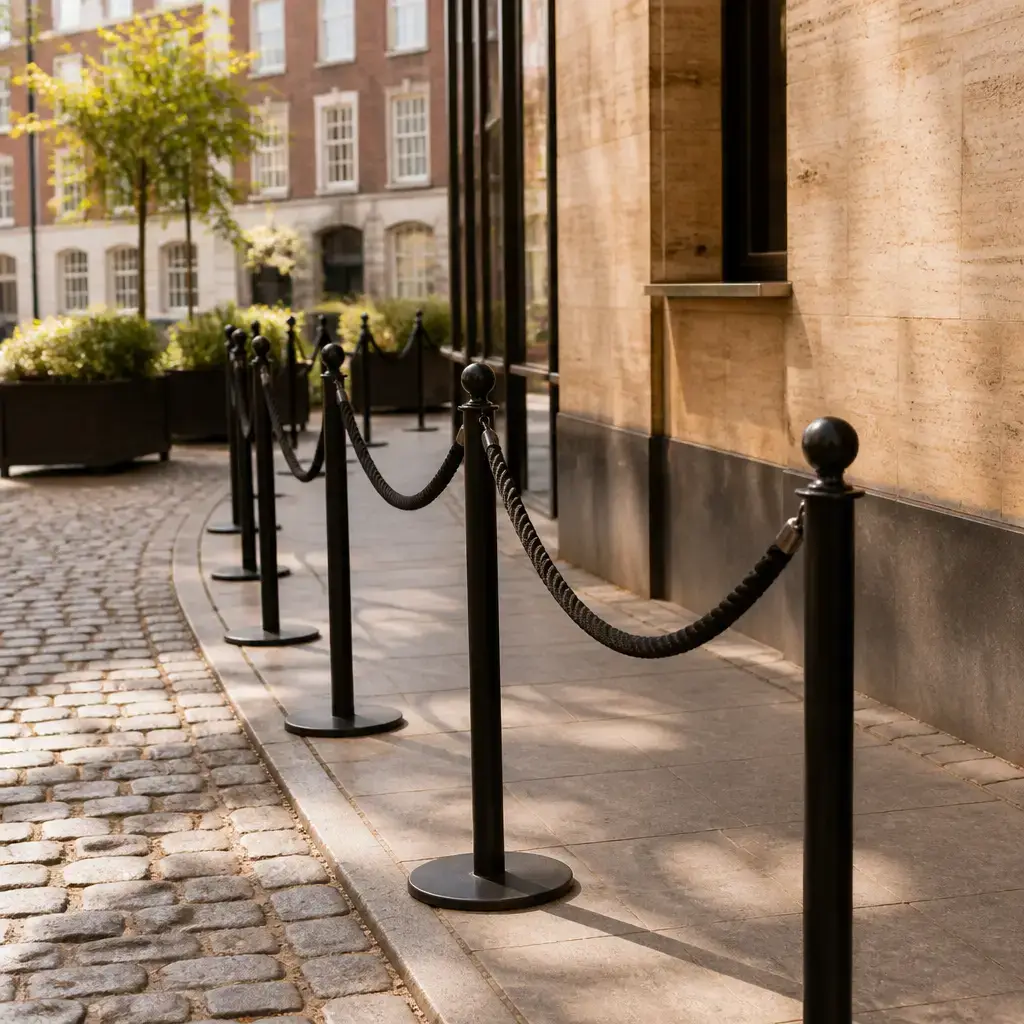
Here, "Schlange" means a line or queue, as shown by "das Ende der Schlange". The context is people waiting, so it does not mean an animal here. Use it when identifying a queue in a public place.
ist
"ist" means "is" in "das Ende der Schlange ist hinter uns". It links the end of the line with its location. Use this pattern to state where something is.
hinter
"hinter" means "behind" in "hinter uns". It places the end of the line on the far side of the speaker and the other people. A reliable reuse pattern is "hinter" followed by the person or group used as the reference point.
uns
"uns" means "us" in "hinter uns" and refers to the speaker together with the people near the speaker. It completes the location phrase after "hinter". Use it when describing something located behind the group you are part of.
Entschuldigung
"Entschuldigung" is a polite apology or "excuse me" used at the start of the second line. It acknowledges a possible mistake before the speaker explains what happened. Use it as a brief apology when you have inconvenienced someone.
habe
"habe" means "have" in "ich habe nicht bemerkt, wo sie endete". Here it helps the speaker report something they failed to notice. The reusable pattern is "Ich habe nicht bemerkt, ..." when explaining that you did not notice something.
nicht
"nicht" means "not" and negates "bemerkt" in "habe nicht bemerkt". It changes the statement from noticing something to not noticing it. Use it before the relevant verb expression when denying that an action happened.
bemerkt
"bemerkt" means "noticed" in "ich habe nicht bemerkt, wo sie endete". It describes becoming aware of the location of the line's end. Use it with something you saw, heard, or otherwise became aware of.
wo
"wo" means "where" in "wo sie endete". It introduces the part of the sentence that gives the location of the line's end. Use "wo" when referring to a place or position that is being identified.
endete
"endete" refers to where the line ended in "wo sie endete". It describes the endpoint of the line that the speaker did not notice. Use it when recounting the point where a line, route, or event stopped.
Die
"Die" means "the" before "Schilder" in "Die Schilder sind von hier aus schwer zu sehen". It begins the sentence and identifies the signs being discussed. Use the complete noun phrase "Die Schilder" when referring to specific signs.
Schilder
"Schilder" means "signs" in "Die Schilder sind von hier aus schwer zu sehen". These are the signs that help show the arrangement of the line. Use it when talking about posted signs in a public place.
sind
"sind" means "are" in "Die Schilder sind von hier aus schwer zu sehen". It connects the plural subject "Die Schilder" with the description of how visible they are. The reusable pattern is "Die Schilder sind ..." when describing signs.
von
"von" contributes the meaning "from" in the viewpoint expression "von hier aus". Together, "von hier aus" means "from here" or from this position. Use this expression when describing what can be seen or done from a particular place.
hier
"hier" means "here" in "von hier aus". It identifies the speaker's current position as the viewpoint. Use it with a location phrase when referring to the place where you are.
aus
In "von hier aus", "aus" completes the expression meaning "from here". It emphasizes the position from which the signs are being viewed. Use the whole phrase when explaining visibility from your current location.
schwer
"schwer" means "difficult" or "hard" in "schwer zu sehen". It says that seeing the signs is not easy from the speaker's position. A reusable pattern is "schwer zu" followed by an action that is difficult.
zu
In "schwer zu sehen", "zu" marks the action "sehen" as the action that is difficult. It is part of the construction describing something as hard to do. Reuse the exact pattern "schwer zu sehen" for something that is difficult to see.
sehen
"sehen" means "see" in "schwer zu sehen". It refers to visually noticing the signs from the current position. Use it after "zu" in this expression when describing visibility.
Soll
"Soll" asks whether the speaker should or is supposed to do something in "Soll ich mich hinter die Person im grauen Mantel stellen?". At the beginning of the question, it introduces a request for instruction or confirmation. Use the pattern "Soll ich ...?" when asking what action you should take.
mich
"mich" means "myself" or "me" in "mich hinter die Person ... stellen". It shows that the speaker is placing themself in a new position. Use it with "stellen" when describing putting yourself somewhere.
Person
"Person" means "person" in "die Person im grauen Mantel". This person is used as a reference point for finding the correct place in the line. Use the phrase to identify someone by a visible characteristic.
im
"im" means "in the" in "im grauen Mantel". It introduces the clothing description that identifies the person. Use it when describing someone as being in a particular item of clothing.
grauen
"grauen" means "gray" in "im grauen Mantel". It describes the color of the coat and helps distinguish the person from others in the line. Use it together with a noun when identifying something gray.
Mantel
"Mantel" means "coat" in "im grauen Mantel". The coat is the visible feature used to identify the person in the queue. Use the phrase when directing someone to a person wearing a gray coat.
stellen
"stellen" means "stand" or "position" in "mich hinter die Person ... stellen". With "mich", it describes placing oneself behind another person. Use this construction when moving yourself into a particular standing position.
Bitte
"Bitte" means "please" in "Bitte tun Sie das". It makes the response a polite request rather than a blunt instruction. Use it at the beginning of a polite request.
tun
"tun" means "do" in "Bitte tun Sie das". Here, "das" refers back to the suggested action of standing behind the person in the gray coat. Use this expression when agreeing that someone should carry out an action just mentioned.
alle
"alle" means "everyone" or "all" in "alle warten schon eine Weile". It refers to the people already waiting in the line. Use it as the subject when referring to every person in a group.
warten
"warten" means "wait" in "alle warten schon eine Weile". It describes what the people in the line are doing. Use it with a time expression when saying that people have been waiting for some period.
schon
"schon" means "already" in "warten schon eine Weile". It shows that the waiting began earlier and has continued until now. Use it to emphasize that an action or situation has been true for some time.
eine
"eine" means "a" in the time expression "eine Weile". It forms the phrase for an unspecified period of time. Use the complete expression when referring to waiting or continuing for a while.
Weile
"Weile" means "while" or a period of time in "eine Weile". The phrase "schon eine Weile" says that everyone has been waiting for some time. Use it for an unspecified but noticeable length of time.
wollte
"wollte" means "wanted" or "meant to" in "Ich wollte mich nicht vordrängeln". With "nicht", the speaker says that cutting in was not their intention. Use this pattern when explaining that an unwanted action was not deliberate.
vordrängeln
"vordrängeln" means "cut in" or move ahead of others in a queue in "mich nicht vordrängeln". The form appears with "mich" because the speaker is describing their own movement into the line. Use this expression when apologizing for entering a queue in the wrong place.
passiert
"passiert" means "happens" in "Das passiert, wenn es hier so voll wird". It presents the situation as something that can occur when the area is crowded. Use "Das passiert" when referring back to an event that has just been discussed.
wenn
"wenn" means "when" or "if" in "wenn es hier so voll wird". It introduces the condition under which the situation happens. Use it to connect an event with the circumstance that causes or accompanies it.
es
"es" functions as the subject in "es hier so voll wird", where the area becomes crowded. It does not point to a specific object; it is part of the expression describing the general situation. Use this construction when describing a place becoming crowded.
so
"so" means "so" or "to this extent" in "so voll". It intensifies the description of how crowded the area is. Use the pattern "so" plus an adjective when describing a situation to a particular degree.
voll
"voll" means "full" or "crowded" in "so voll wird". Here it describes the area as having many people and little space. Use it when explaining why movement or visibility is difficult in a place.
wird
"wird" means "becomes" or "gets" in "es hier so voll wird". It shows a change into the crowded condition described by "voll". Use it with an adjective when saying that something is becoming a certain way.
gehe
"gehe" means "go" or "head" in "Ich gehe jetzt ans Ende". It describes the speaker's decision to move to the back of the line. Use it after "Ich" when stating where you are going.
jetzt
"jetzt" means "now" in "Ich gehe jetzt ans Ende". It indicates that the speaker will move immediately. Use it to mark an action that is happening at the present time.
ans
"ans" means "to the" in "ans Ende" and shows movement toward the end of the line. It is the contracted form used in this expression. Use the complete phrase "ans Ende" when saying that you are going to the back or endpoint of the queue.