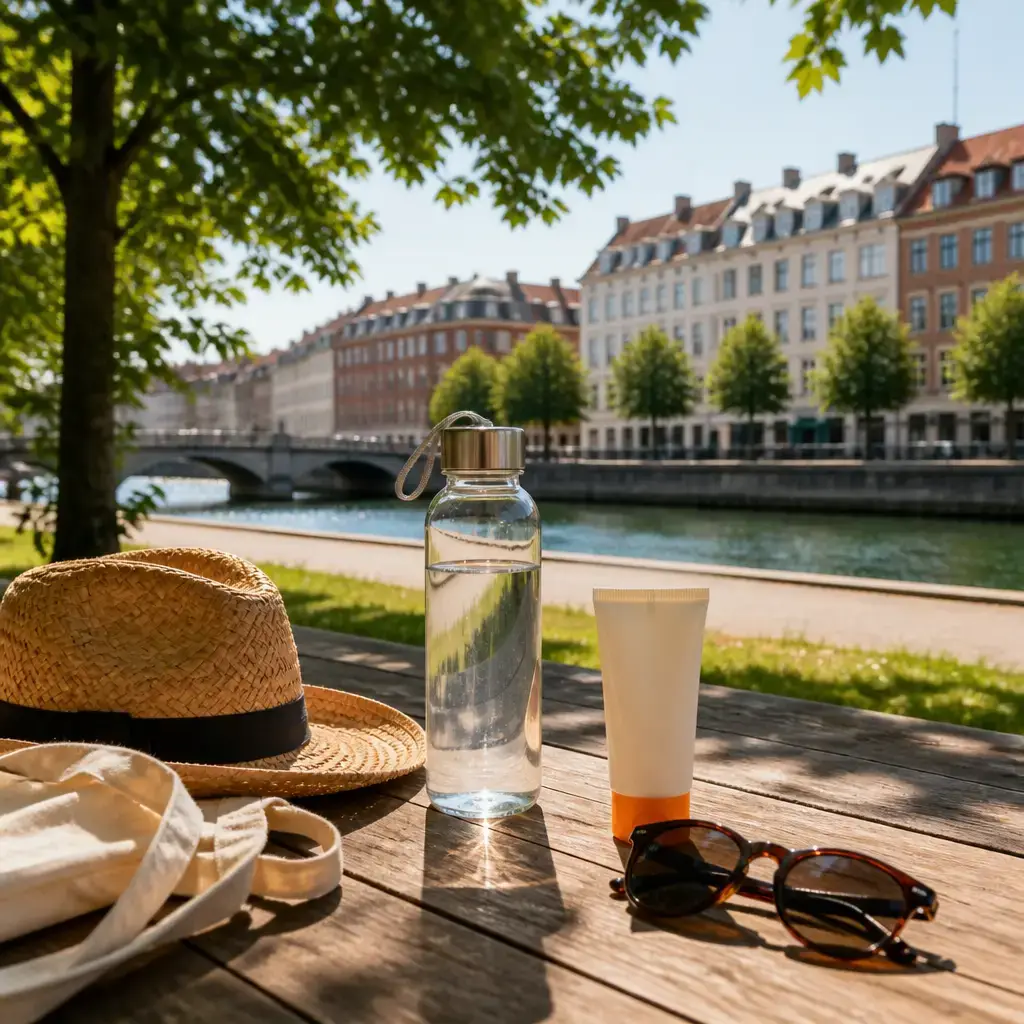
Heute
“Heute” means today and places the statement in the current day. It commonly appears with a time or weather statement, as in “Heute wird es wirklich heiß.”
wird
“Wird” expresses that the weather will become hot in this statement. It connects “es” with the adjective “heiß”; a common reuse pattern is “Es wird” followed by a description.
es
“Es” is the subject used for the weather in “Heute wird es wirklich heiß.” German commonly uses “es” when describing weather or conditions.
wirklich
“Wirklich” intensifies the description and means really here. It can be placed before an adjective to strengthen a statement, as in “wirklich heiß.”
heiß
“Heiß” describes the weather as hot in “Heute wird es wirklich heiß.” It is useful with “es wird” for describing a change in weather or temperature.
Lass
“Lass” begins a suggestion addressed to another person in “Lass uns während der heißesten Zeit des Tages nicht spazieren gehen.” The construction “Lass uns” is used when suggesting that the speaker and listener do something together.
uns
“Uns” refers to the speaker and the listener together in the suggestion “Lass uns ...”. It identifies the people who would carry out the suggested activity.
während
“Während” means during and introduces the period in which they should not go walking. It commonly appears before a noun phrase describing a time period, as in “während der heißesten Zeit des Tages.”
der
“Der” is the definite article inside “der heißesten Zeit des Tages.” It belongs with “Zeit” and helps identify a specific period.
heißesten
“Heißesten” means hottest and describes the time as the period with the strongest heat. It appears directly before “Zeit” in the noun phrase “der heißesten Zeit.”
Zeit
“Zeit” means time or period here and identifies the part of the day being discussed. It can be used in a phrase that specifies when an activity should or should not happen.
des
“Des” means of the in “des Tages.” Together with “Tages,” it specifies which day the “Zeit” belongs to.
Tages
“Tages” identifies the day in the phrase “der heißesten Zeit des Tages.” It completes the expression for a part or period of the day.
nicht
“Nicht” negates the activity “spazieren gehen” in the suggestion. It is placed before the activity being rejected in “nicht spazieren gehen.”
spazieren
“Spazieren” contributes the meaning of strolling or walking for pleasure in “spazieren gehen.” It is commonly used together with “gehen” to describe going for a walk.
gehen
“Gehen” means go and completes the expression “spazieren gehen.” In this dialogue, the combined expression describes walking during the hottest part of the day.
Ich
“Ich” means I and identifies the speaker in “Ich werde Sonnencreme auftragen.” It is used when the speaker states an intention or action concerning themself.
werde
“Werde” marks the speaker’s planned action in “Ich werde Sonnencreme auftragen.” The construction places the action word “auftragen” at the end.
Sonnencreme
“Sonnencreme” means sunscreen, the substance that the speaker plans to apply. It is the object of “auftragen” in “Sonnencreme auftragen.”
auftragen
“Auftragen” means apply or put on here, specifically applying sunscreen. The reusable expression “Sonnencreme auftragen” names the action of putting sunscreen on the skin.
bevor
“Bevor” means before and introduces the action that must happen first in “bevor wir losgehen.” It commonly introduces a clause about an earlier action, with the verb at the end of that clause.
wir
“Wir” means we and refers to the speaker together with the other person in “bevor wir losgehen.” It identifies who will set off.
losgehen
“Losgehen” means leave or set off in “bevor wir losgehen.” It describes beginning the journey away from the current place.
Bleib
“Bleib” is a direct instruction to stay in “Bleib auch im Schatten.” It is useful when telling one person to remain in a particular place or condition.
auch
“Auch” adds this advice to the other precautions and means also or too. In “Bleib auch im Schatten,” it shows that staying in the shade is an additional recommendation.
im
“Im” means in the in “im Schatten.” It introduces the place or condition where the person should stay.
Schatten
“Schatten” means shade in “Bleib auch im Schatten.” It names the cooler, protected place recommended during the heat.
wann immer
“Wann immer” means whenever and introduces a repeated situation in “wann immer du kannst.” It combines “wann,” meaning when, with “immer,” meaning always, to express any time that the condition applies.
du
“Du” means you and refers to the person receiving the advice in “du kannst.” It is used here for direct, informal address to one person.
kannst
“Kannst” expresses that the listener has the ability or opportunity to do something in “wann immer du kannst.” A common reuse pattern is “du kannst” followed by an action.
Bei
“Bei” introduces the circumstances in “Bei dieser Hitze,” meaning in or under this heat. It commonly appears before a noun phrase describing conditions affecting an action or result.
dieser
“Dieser” points to the particular heat being experienced in “Bei dieser Hitze.” It specifies the noun “Hitze” rather than referring to heat in general.
Hitze
“Hitze” means heat and names the condition that could cause dehydration. It appears after “Bei” in the expression “Bei dieser Hitze.”
könnte
“Könnte” expresses a possible consequence rather than a certain one in “könnte ich schnell dehydrieren.” It commonly appears with an action word later in the sentence to describe what might happen.
schnell
“Schnell” means quickly and describes how soon dehydration could occur. It can be placed with an action to indicate the speed of an event.
dehydrieren
“Dehydrieren” means become dehydrated in this dialogue. It is the possible result described after “könnte ich schnell.”
Nimm
“Nimm” gives one person the instruction to take something along in “Nimm Wasser mit.” The pattern places the item after “Nimm” and ends with “mit.”
Wasser
“Wasser” means water and is the item the listener is told to carry in “Nimm Wasser mit.” It is the object placed between “Nimm” and “mit.”
mit
“Mit” contributes the meaning along or with you in the split expression “Nimm Wasser mit.” Together with “Nimm,” it tells the listener to take the object along.
und
“Und” means and and links the two instructions in “Nimm Wasser mit und trink oft.” It is used here to connect carrying water with drinking regularly.
trink
“Trink” is a direct instruction to drink in “trink oft.” It is useful when advising one person to consume a drink.
oft
“Oft” means often and tells the listener to drink regularly rather than only once. It modifies the instruction “trink” in “trink oft.”
später
“Später” means later and postpones the visit in “Lass uns später in den Park gehen.” It is useful for arranging an activity at a later time.
in
“In” indicates the destination in “in den Park gehen.” With a verb of movement such as “gehen,” it introduces the place someone is going to.
den
“Den” is the definite article in “den Park.” It accompanies “Park” as the destination in the expression “in den Park gehen.”
Park
“Park” means park and is the destination of the planned visit. It appears in the destination phrase “in den Park gehen.”
wenn
“Wenn” means when and introduces the condition for going to the park in “wenn es kühler ist.” It commonly begins a clause describing the time or condition for another action.
kühler
“Kühler” means cooler and describes a later condition that is more comfortable than the current heat. It is used with “es ist” in “wenn es kühler ist.”
ist
“Ist” means is and links “es” with the description “kühler” in “wenn es kühler ist.” In this clause, it appears at the end after the description.
Das
“Das” means that and refers to the proposed plan of visiting the park later. In “Das wird sicherer und angenehmer sein,” it introduces the expected result of that plan.
sicherer
“Sicherer” means safer and compares the later plan with going out during the strongest heat. It is one of the two descriptions linked by “und” in the final sentence.
angenehmer
“Angenehmer” means more comfortable or more pleasant and describes the expected experience later. It is paired with “sicherer” to give two reasons for the plan.
sein
“Sein” means be and completes the expected-result construction “Das wird sicherer und angenehmer sein.” It appears at the end after the two descriptions.