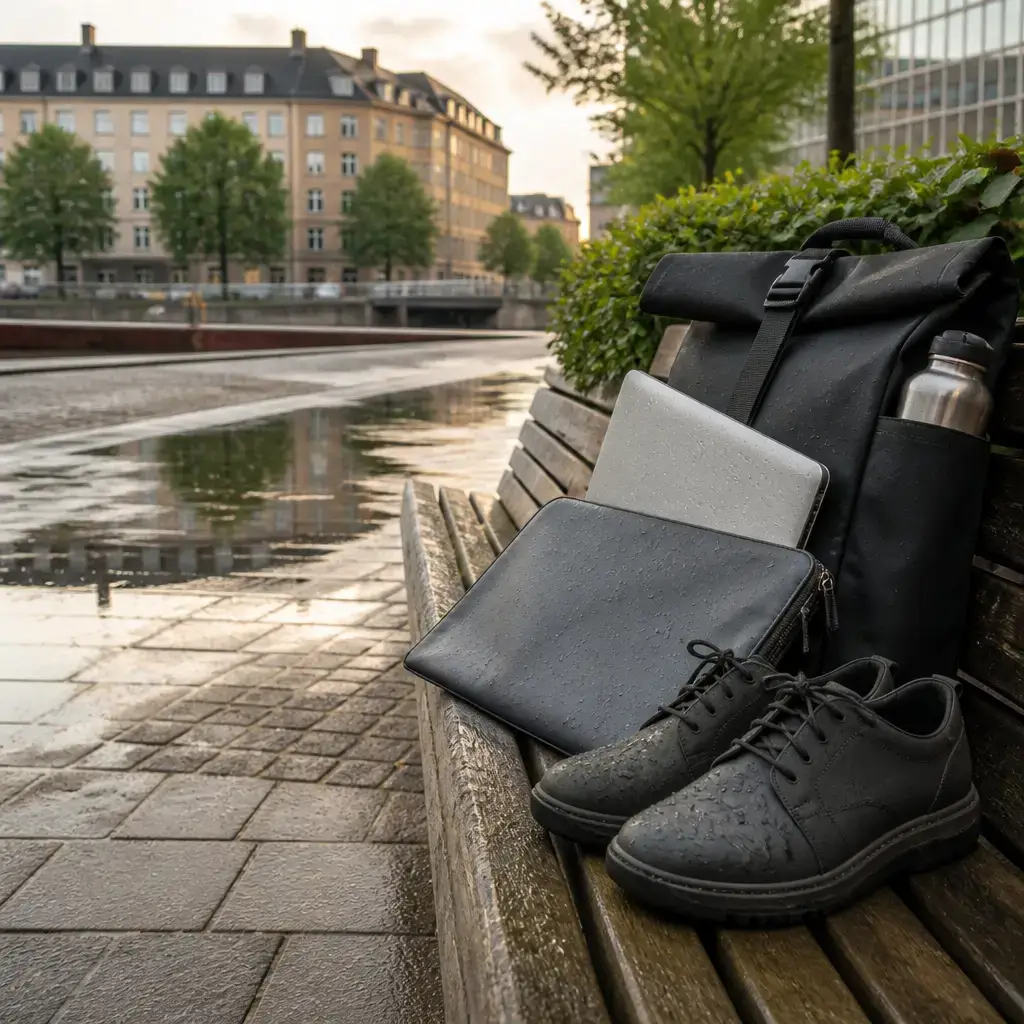
Der
“Der” means “the” before “Wetterbericht” in this sentence. It is the form used at the beginning of “Der Wetterbericht”; a reusable pattern is “der” before a matching masculine noun.
Wetterbericht
“Wetterbericht” means “weather forecast” here. It is the subject in “Der Wetterbericht sagt”; a reusable pattern is “Der Wetterbericht sagt, dass …” when reporting what the forecast says.
sagt
“Sagt” means “says” in “Der Wetterbericht sagt”. It introduces the information that follows in “dass bald starker Regen beginnt”; a reusable pattern is “X sagt, dass …”.
dass
“Dass” means “that” and introduces the information reported after “sagt”. In “dass bald starker Regen beginnt”, the verb “beginnt” comes at the end; this is a reusable pattern after “sagen” when reporting a statement.
bald
“Bald” means “soon” in “dass bald starker Regen beginnt”. It places the beginning of the rain in the near future; a reusable pattern is “bald beginnen” for something that will start soon.
starker
“Starker” describes the rain as heavy or strong in “starker Regen”. It appears directly before “Regen”; this exact pattern can describe strong rain in a weather report.
Regen
“Regen” means “rain” in “starker Regen”. It is the thing that “beginnt”; a reusable pattern is “Der Regen beginnt” when saying that rain is starting.
beginnt
“Beginnt” means “starts” in “starker Regen beginnt”. It describes the rain coming into progress soon; a reusable pattern is “X beginnt” for something that is starting.
Dann
“Dann” means “then” and connects the forecast with the advice that follows. In “Dann trag heute wasserdichte Schuhe”, it signals the recommended response; a reusable pattern is “Dann …” after a stated situation.
trag
“Trag” tells one person to wear something in “Trag heute wasserdichte Schuhe”. It is the direct command form used with “du”; a reusable pattern is “Trag …” followed by the item to wear.
heute
“Heute” means “today” in “Trag heute wasserdichte Schuhe”. It specifies when the advice applies; a reusable pattern is placing “heute” with an action that should happen today.
wasserdichte
“Wasserdichte” means “waterproof” in “wasserdichte Schuhe”. It describes the shoes as protecting against water and comes before “Schuhe”; the same pattern can describe another waterproof item when its noun is supplied.
Schuhe
“Schuhe” means “shoes” in “wasserdichte Schuhe”. It is the item that the listener is told to wear; a reusable pattern is “Schuhe tragen” for wearing shoes.
In
“In” means “in” in “In der Nähe des Bahnhofs”. Here it places the location near the station at the beginning of the sentence; a reusable pattern is “in der Nähe von …” for saying that something is nearby.
Nähe
“Nähe” means “vicinity” or “proximity” in “in der Nähe des Bahnhofs”. Together with “in der” it describes a place that is close to the station; a reusable pattern is “in der Nähe …” when locating something nearby.
des
“Des” contributes “the” in the phrase “des Bahnhofs”, which means “of the station”. It links “Bahnhofs” to “Nähe” in “in der Nähe des Bahnhofs”; a reusable pattern is “in der Nähe des …” before the thing used as the reference point.
Bahnhofs
“Bahnhofs” means “station” in “des Bahnhofs”, the reference point for the nearby location. Its citation form is “Bahnhof”, and “Bahnhofs” is the form used in this phrase; a reusable pattern is “in der Nähe des Bahnhofs”.
gibt
“Gibt” is used in “gibt es” to say that something exists or is present. In “gibt es immer Pfützen”, the whole construction means “there are always puddles”; a reusable pattern is “Es gibt …” followed by the thing that exists.
es
“Es” is the fixed “there” element in “gibt es” when saying that something exists. In “gibt es immer Pfützen”, it helps form “there are always puddles”; a reusable pattern is “Es gibt …”.
immer
“Immer” means “always” in “gibt es immer Pfützen”. It says that puddles are regularly present near the station; a reusable pattern is placing “immer” with a repeated or regular situation.
Pfützen
“Pfützen” means “puddles” in “gibt es immer Pfützen”. Its citation form is “Pfütze”, and “Pfützen” is the plural form used for multiple puddles; a reusable pattern is “Es gibt Pfützen” when reporting puddles.
Du
“Du” means “you” in “Du brauchst vielleicht auch mehr Zeit”. It identifies the person who may need more time; a reusable pattern is “Du brauchst …” when telling one person what they need.
brauchst
“Brauchst” means “need” in “Du brauchst vielleicht auch mehr Zeit”. It expresses the listener’s possible need for extra time; a reusable pattern is “Du brauchst …” followed by the needed thing.
vielleicht
“Vielleicht” means “perhaps” or “maybe” in “Du brauchst vielleicht auch mehr Zeit”. It makes the need possible rather than certain; a reusable pattern is placing “vielleicht” before the action or situation being presented as possible.
auch
“Auch” means “also” in “Du brauchst vielleicht auch mehr Zeit”. It adds extra time to the other preparations already being discussed; a reusable pattern is using “auch” to add another item or action.
mehr
“Mehr” means “more” or “extra” in “mehr Zeit”. It says that the amount of time needed is greater than usual or previously expected; a reusable pattern is “mehr” before a noun such as “Zeit”.
Zeit
“Zeit” means “time” in “mehr Zeit”. It is what the listener may need because of delays; a reusable pattern is “mehr Zeit brauchen” for needing extra time.
wegen
“Wegen” means “because of” in “wegen Verspätungen”. It gives the reason for needing more time; a reusable pattern is “mehr Zeit wegen …” when extra time is needed because of a problem or event.
Verspätungen
“Verspätungen” means “delays” in “wegen Verspätungen”. Its citation form is “Verspätung”, and “Verspätungen” is the plural form used for multiple delays; a reusable pattern is “wegen Verspätungen” when explaining a travel delay.
Soll
“Soll” means “should” in “Soll ich meinen Laptop … stecken?”. Together with “ich”, it asks whether the speaker ought to do the action; a reusable pattern is “Soll ich …?” when asking for advice about an action.
ich
“Ich” means “I” in “Soll ich meinen Laptop … stecken?”. It identifies the speaker as the person considering the action; a reusable pattern is “Soll ich …?” for asking what the speaker should do.
meinen
“Meinen” means “my” before “Laptop” in “meinen Laptop”. It identifies the laptop as belonging to the speaker; a reusable pattern is “meinen” before the speaker’s masculine object in a phrase such as “meinen Laptop”.
Laptop
“Laptop” means “laptop” in “meinen Laptop”. It is the object that may be put into a waterproof sleeve; a reusable pattern is “meinen Laptop in … stecken” for placing the laptop inside something.
eine
“Eine” means “a” or “an” in “eine wasserdichte Hülle”. It introduces one waterproof sleeve as the possible container; a reusable pattern is “eine” before a singular noun in this kind of object phrase.
Hülle
“Hülle” means “sleeve” or “cover” in “eine wasserdichte Hülle”. It is the item being considered as protection for the laptop; a reusable pattern is “etwas in eine Hülle stecken” when putting an item into a cover.
stecken
“Stecken” means “put” or “place inside” in “meinen Laptop in eine wasserdichte Hülle stecken”. It is the action being considered after “Soll ich”; a reusable pattern is “etwas in etwas stecken” with the item and its container included.
Lass
“Lass” tells one person to keep or leave something in a place in “Lass ihn in deiner Tasche”. It is a direct command used with “du”; a reusable pattern is “Lass etwas in …” when advising someone to leave something where it is.
ihn
“Ihn” means “it” here and refers back to the laptop in “Lass ihn in deiner Tasche”. It is the item that should remain in the bag; a reusable pattern is “Lass ihn …” when referring back to a previously mentioned masculine noun.
deiner
“Deiner” means “your” in “deiner Tasche”. It identifies the bag as belonging to the person being addressed; a reusable pattern is “in deiner Tasche” when referring to the listener’s bag.
Tasche
“Tasche” means “bag” in “in deiner Tasche”. It is the place where the laptop should remain so that it stays dry; a reusable pattern is “etwas in der Tasche” for locating an item in a bag.
wo
“Wo” means “where” in “wo er trocken bleibt”. It introduces the location clause describing what happens inside the bag; a reusable pattern is “wo …” after a place when adding information about that place.
er
“Er” means “it” here and refers to the laptop in “wo er trocken bleibt”. It is the thing that stays dry inside the bag; a reusable pattern is using “er” to refer back to a previously mentioned masculine noun.
trocken
“Trocken” means “dry” in “trocken bleibt”. It describes the laptop’s condition inside the bag; a reusable pattern is “trocken bleiben” for something remaining dry.
bleibt
“Bleibt” means “stays” or “remains” in “wo er trocken bleibt”. It says that the laptop continues to be dry; its citation form is “bleiben”, and a reusable pattern is “X bleibt trocken”.
sollte
“Sollte” means “should” in “Dann sollte ich früher als sonst losgehen”. It presents leaving earlier as the sensible response to the rain and possible delays; a reusable pattern is “Ich sollte …” when stating what the speaker ought to do.
früher
“Früher” means “earlier” in “früher als sonst”. It compares the planned departure time with the usual time; a reusable pattern is “früher als …” when saying that something happens earlier than a reference point.
als
“Als” means “than” in the comparison “früher als sonst”. It connects the earlier time with the usual situation; a reusable pattern is “mehr/früher als …” for making a comparison.
sonst
“Sonst” means “usually” or “normally” in “früher als sonst”. It supplies the usual departure time as the comparison point; a reusable pattern is “als sonst” when comparing with what normally happens.
losgehen
“Losgehen” means “leave” or “set off” in “früher als sonst losgehen”. It is the action the speaker should do earlier; its infinitive form appears after “sollte”, and a reusable pattern is “früher losgehen” for setting off earlier.
Das
“Das” means “that” in “Das sollte die Fahrt weniger stressig machen”. It refers to the previous plan of leaving earlier; a reusable pattern is “Das sollte … machen” when evaluating the likely effect of a previous action.
die
“Die” means “the” before “Fahrt” in “die Fahrt”. It introduces the particular trip being discussed; a reusable pattern is “die” before a matching feminine noun.
Fahrt
“Fahrt” means “trip” or “journey” in “die Fahrt”. It is what should become less stressful; its citation form is “Fahrt”, and a reusable pattern is “die Fahrt” when referring to a particular journey.
weniger
“Weniger” means “less” in “weniger stressig”. It reduces the amount of stress associated with the trip; a reusable pattern is “weniger” before an adjective when describing a lower degree.
stressig
“Stressig” means “stressful” in “die Fahrt weniger stressig machen”. It describes the trip’s level of stress; a reusable pattern is “etwas weniger stressig machen” when saying that an action reduces stress.
machen
“Machen” means “make” in “die Fahrt weniger stressig machen”. It expresses causing the trip to have a lower level of stress; its infinitive form appears after “sollte”, and a reusable pattern is “etwas … machen” with the result or description included.