Ich
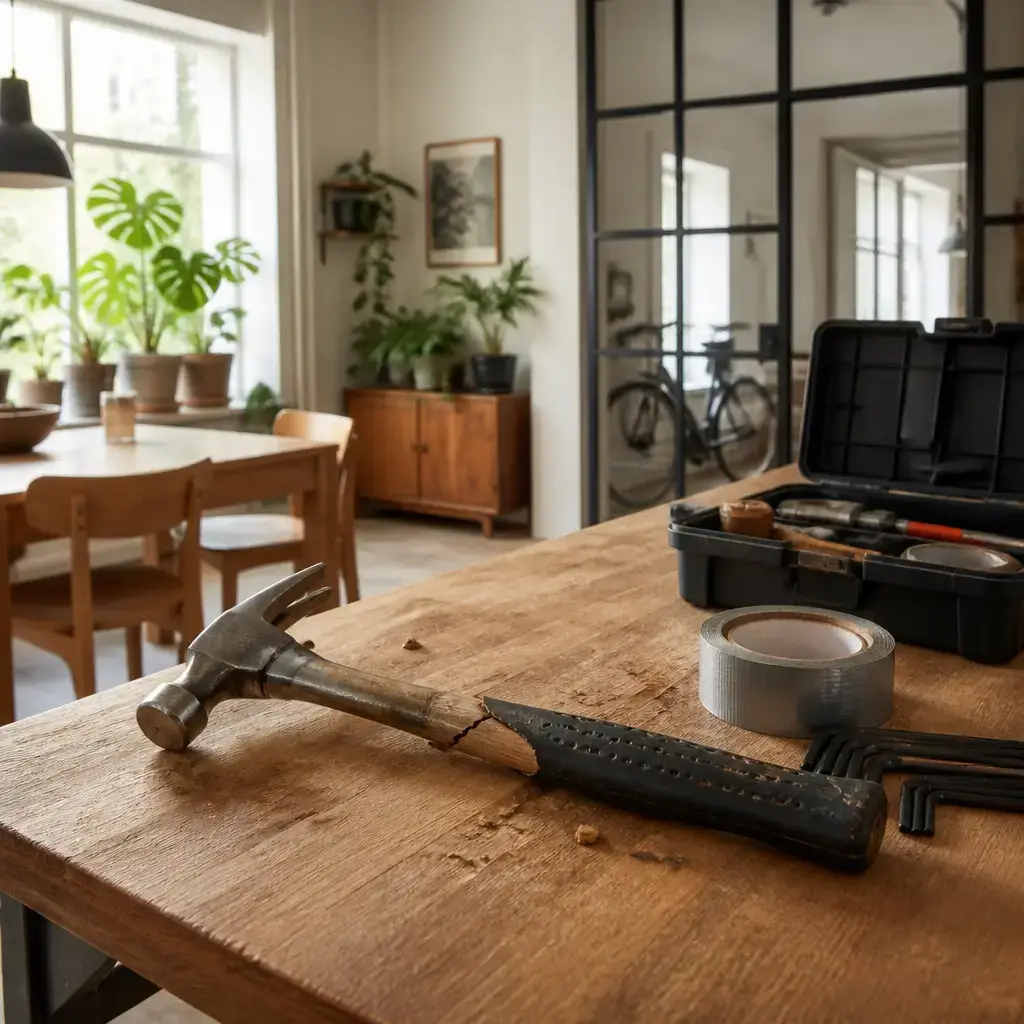
Ich means “I” in Ich muss mich dafür entschuldigen and Ich kann es ersetzen. It is the subject form used when the speaker describes their own obligation or ability; a useful pattern is Ich muss ... or Ich kann ... when taking responsibility or offering help.
muss
muss means “must” or “need to” in Ich muss mich dafür entschuldigen. It is the form of müssen used with Ich and is followed here by the infinitive entschuldigen; use Ich muss ... to state a necessary action.
mich
mich refers back to the speaker in mich dafür entschuldigen, so the speaker is apologizing personally. With Ich, this is the reflexive form used in the expression sich entschuldigen; the pattern Ich muss mich ... is useful when describing an action the speaker must take.
dafür
dafür means “for that” or “about it” in mich dafür entschuldigen, referring to what happened to the tool. It is part of the expression sich dafür entschuldigen and can be reused when apologizing for a situation already understood from context.
entschuldigen
entschuldigen means “to apologize” in Ich muss mich dafür entschuldigen. It is the infinitive after muss and appears with the reflexive form mich; Ich muss mich dafür entschuldigen is useful when accepting responsibility for a problem.
was
In was mit dem geliehenen Werkzeug passiert ist, was means “what” or “the thing that”; in Was ist damit passiert?, it asks what happened. Its meaning depends on whether it introduces the explanation or begins the question, and Was ist damit passiert? is a useful way to ask about an object or situation.
mit
mit means “with” and, in was mit dem geliehenen Werkzeug passiert ist, helps express what happened to the tool. It is used here before dem geliehenen Werkzeug; the pattern was ist mit ... passiert? is useful when asking about something affected by an event.
dem
dem means “the” in mit dem geliehenen Werkzeug and refers to the specific tool. This is the article form used after mit in this phrase, so mit dem ... is a useful pattern for referring to a particular object connected with an event.
geliehenen
geliehenen means “borrowed” in dem geliehenen Werkzeug and identifies the tool as one that had been borrowed. The form stands directly before Werkzeug inside the noun phrase; use geliehenen before a noun when describing that borrowed item in a similar context.
Werkzeug
Werkzeug means “tool” in dem geliehenen Werkzeug. It is the object that was used and damaged, and the phrase das geliehene Werkzeug can identify a borrowed tool in a practical conversation.
passiert
passiert means “happened” in was mit dem geliehenen Werkzeug passiert ist and Was ist damit passiert? It describes the event being asked about or explained; Was ist damit passiert? is a reusable question when an object has been affected.
ist
ist is the form of sein used in passiert ist and Was ist damit passiert?; together with passiert, it forms the past statement or question about what happened. The exact pattern Was ist damit passiert? is useful for asking about a past event involving something.
damit
damit means “with it” or “about it” in Was ist damit passiert?, referring back to the tool. It avoids repeating Werkzeug after the object is known; use Was ist damit passiert? when asking what happened to a previously mentioned thing.
Der
Der means “the” in Der Griff and identifies the specific handle being discussed. It appears at the beginning of the sentence before Griff; Der ... is useful when introducing a particular object or part of an object.
Griff
Griff means “handle” in Der Griff ist gerissen. It names the part of the tool that cracked, and Der Griff ist ... is a useful pattern for describing the condition of a handle.
gerissen
gerissen means “cracked” or “split” here, describing the damaged handle in Der Griff ist gerissen. It is used with ist to report the resulting condition; the exact sentence is useful when explaining that a handle has broken.
während
während means “while” in während ich es benutzt habe and introduces the activity happening at the same time as the handle cracked. It is followed here by the clause ich es benutzt habe; use während + a clause to connect an event with the activity in progress.
es
In es benutzt habe, es means “it” and refers to the tool; in Es tut mir leid, it is part of the apology expression rather than a separate concrete object. The patterns es benutzen and Es tut mir leid are useful when describing use of an object or expressing regret.
benutzt
benutzt means “used” in ich es benutzt habe and describes what the speaker was doing with the tool. It is paired with habe in this past statement; the pattern ich habe es benutzt is useful for explaining how an object was used.
habe
habe is the form of haben used with ich in ich es benutzt habe. Together with benutzt, it places the use of the tool in the past; a useful pattern is ich habe es benutzt when reporting a completed use.
Lass
Lass means “let” in Lass mich sehen and makes a direct request to be allowed to look. It is the imperative form of lassen used with mich plus an infinitive; Lass mich ... is useful when asking to inspect or do something yourself.
sehen
sehen means “see” in Lass mich sehen, so the speaker asks to look at the damage. It is the infinitive after Lass mich; Lass mich sehen is a natural request when checking a problem.
wie
wie means “how” in wie schlimm der Schaden ist and introduces an assessment of degree. It connects schlimm with the damage being evaluated; the pattern wie ... ist is useful for asking or explaining how serious something is.
schlimm
schlimm means “bad” or “severe” in wie schlimm der Schaden ist and describes the degree of the damage. It appears before the clause ending ist; use wie schlimm ... ist when assessing the seriousness of a problem.
Schaden
Schaden means “damage” in der Schaden and refers to the harm done to the tool. In wie schlimm der Schaden ist, it is the thing whose severity is being assessed; this pattern is useful when discussing the extent of damage.
kann
kann means “can” in Ich kann es ersetzen oder bei der Reparatur helfen. It is the form of können used with Ich and is followed by infinitives; Ich kann ... is useful when offering an ability or possible solution.
ersetzen
ersetzen means “replace” in Ich kann es ersetzen and refers to replacing the damaged tool or item. It is the infinitive after kann and takes es as its object; use Ich kann es ersetzen when offering a replacement.
oder
oder means “or” and connects the two offered solutions in es ersetzen oder bei der Reparatur helfen. It presents replacement and help with repair as alternatives; use the pattern A oder B when offering two possible actions.
bei
bei means “with” or “in connection with” in bei der Reparatur helfen. It links helfen to the repair activity and is followed here by der Reparatur; bei ... helfen is useful when offering help with a task.
Reparatur
Reparatur means “repair” in bei der Reparatur helfen and names the work needed to fix the tool. The phrase bei der Reparatur helfen is useful when offering assistance with a repair.
helfen
helfen means “help” in bei der Reparatur helfen. It is the infinitive paired with kann in Ich kann ... helfen and takes the activity bei der Reparatur here; use Ich kann bei ... helfen when offering practical assistance.
Wir
Wir means “we” in Wir sollten prüfen and Wir kriegen das hin, referring to both people working on the problem. It is the subject of a recommendation and a reassuring solution; Wir können ... or Wir sollten ... can introduce a shared action.
sollten
sollten means “should” in Wir sollten prüfen, ob die Reparatur hält and expresses a recommendation. It is the form of sollen used with Wir and is followed by the infinitive prüfen; use Wir sollten ... when suggesting the next sensible step.
prüfen
prüfen means “check” in Wir sollten prüfen, ob die Reparatur hält. It is the infinitive after sollten and introduces the question of whether the repair will work; use prüfen, ob ... when checking a condition or result.
ob
ob means “whether” in prüfen, ob die Reparatur hält and introduces the point being checked. It connects the action of checking with a yes-or-no issue; prüfen, ob ... is a useful pattern for verifying whether something works.
die
die means “the” in die Reparatur and identifies the specific repair being discussed. It appears directly before Reparatur in the clause ob die Reparatur hält; die Reparatur is useful when referring to a particular repair.
hält
hält means “holds” or “holds up” in ob die Reparatur hält, asking whether the repair will remain effective. It is the form of halten used with die Reparatur; use ob ... hält when checking whether a repair or solution remains sound.
tut
tut is part of Es tut mir leid, the expression used to say “I am sorry.” By itself it contributes the verb meaning “does,” but the complete expression conveys regret; Es tut mir leid is useful when apologizing for causing a problem.
mir
mir means “to me” in Es tut mir leid and identifies the person experiencing the regret expressed by the apology. It belongs to the fixed expression Es tut mir leid; use that whole expression when acknowledging that you are sorry.
leid
leid is part of Es tut mir leid, which means “I am sorry” in this dialogue. Its meaning here comes from the complete expression rather than from leid alone; Es tut mir leid is useful when apologizing for an action or consequence.
dass
dass means “that” in dass ich zusätzliche Arbeit verursacht habe and introduces the reason for the apology. It begins the clause explaining what the speaker regrets; use Es tut mir leid, dass ... when apologizing for a specific consequence.
zusätzliche
zusätzliche means “extra” or “additional” in zusätzliche Arbeit and describes work created beyond what was already expected. It directly modifies Arbeit; the phrase zusätzliche Arbeit is useful when acknowledging an added burden.
Arbeit
Arbeit means “work” in zusätzliche Arbeit and refers to the effort caused by the damaged tool. The phrase zusätzliche Arbeit identifies an extra task for someone else; it is useful when apologizing for creating more work.
verursacht
verursacht means “caused” in ich zusätzliche Arbeit verursacht habe and describes the speaker’s responsibility for the extra work. It appears with habe in the past clause; use zusätzliche Arbeit verursacht haben when explaining that an action created extra work.
Sag
Sag means “tell” in Sag mir nächstes Mal sofort Bescheid and is a direct request to inform the speaker. It is the imperative form of sagen used with mir and Bescheid; Sag mir ... is useful when asking someone to communicate information.
nächstes
nächstes means “next” in nächstes Mal and points to the following occasion. Together with Mal, it forms the time expression “next time”; use nächstes Mal when giving advice for a future occasion.
Mal
Mal means “time” or “occasion” in nächstes Mal. It completes the expression for a future occasion and is used here in the request Sag mir nächstes Mal sofort Bescheid.
sofort
sofort means “immediately” or “right away” in Sag mir nächstes Mal sofort Bescheid. It specifies that the information should be given without delay; use sofort with an action when emphasizing prompt timing.
Bescheid
Bescheid is part of Sag mir nächstes Mal sofort Bescheid, meaning “let me know” in this context. The word belongs to the expression Bescheid sagen and is used with the person receiving the information; Sag mir ... Bescheid is useful when asking someone to keep you informed.
kriegen
kriegen means “manage” or “get done” in Wir kriegen das hin. Its practical meaning comes from the complete expression kriegen ... hin, which reassures someone that the problem can be solved; Wir kriegen das hin is useful when responding calmly to a difficulty.
das
das means “it” or “that” in Wir kriegen das hin and refers to the damaged-tool problem. It is the object placed between kriegen and hin in this expression; Wir kriegen das hin is useful when saying that a situation can be handled.
hin
hin completes the expression Wir kriegen das hin, meaning “we can manage it” or “we can sort it out.” It appears after the object das, so the reusable word order is Wir kriegen das hin when reassuring someone that a problem will be resolved.