Der
Der means “the” here and introduces the battery in Der Akku meines Laptops. It is used with a specific noun phrase; learn it together with the noun it introduces.
Akku
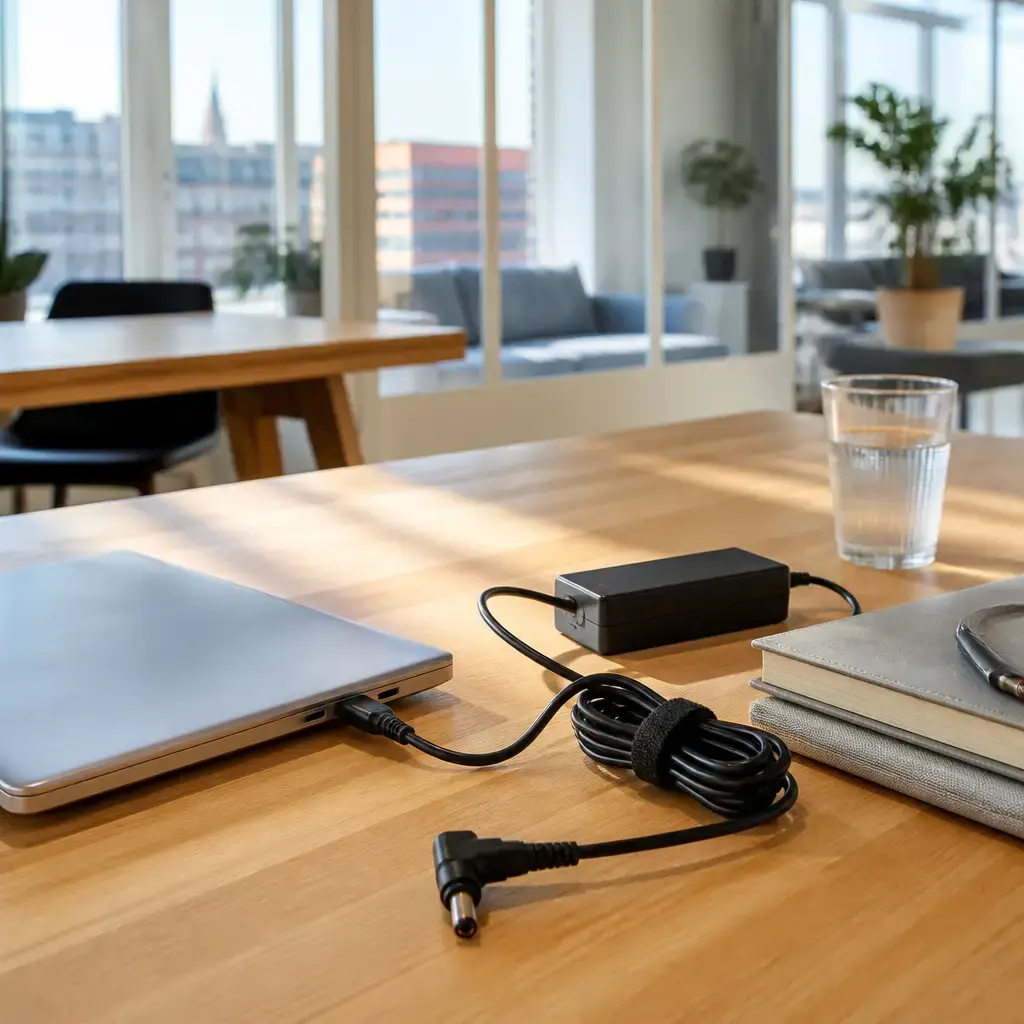
Akku means “battery” here, specifically the laptop battery. It is the item described as almost empty, and it can be reused for a device’s battery.
meines
Meines means “my” in meines Laptops and identifies who the laptop belongs to. Its form is used before Laptops in this possessive phrase; a reliable pattern is meines + noun.
Laptops
Laptops means “of the laptop” in meines Laptops. The form identifies the laptop whose battery is being discussed, and it is used here after the possessive form meines.
ist
Ist means “is” in Der Akku meines Laptops ist fast leer and links the battery to its condition. It is the form used with the battery as the subject; use it to describe what something is like or what state it is in.
fast
Fast means “almost” in fast leer, showing that the battery is nearly empty but not necessarily completely empty. It is placed before the word describing the condition; use it to express that something is close to a state.
leer
Leer means “empty” here, describing the battery’s remaining charge. In fast leer, it combines with fast to mean nearly empty; it can be reused for something that has no contents or supply left.
Du
Du means “you” when speaking directly to one person in this workplace conversation. It is the subject of Du kannst dir mein Ladegerät ausleihen; use it when addressing that person informally.
kannst
Kannst expresses “can” or “are able to” in Du kannst dir mein Ladegerät ausleihen. It is followed by the infinitive ausleihen; use the pattern Du kannst + infinitive to offer or describe what one person can do.
dir
Dir means “for yourself” in Du kannst dir mein Ladegerät ausleihen and identifies the person borrowing the charger. It belongs to the construction sich etwas ausleihen, used when someone borrows something for their own use.
mein
Mein means “my” in mein Ladegerät and shows that the charger belongs to the speaker. It comes before the noun it describes; use it to identify something owned by the speaker.
Ladegerät
Ladegerät means “charger” here, the device being borrowed for the laptop. It is the object of ausleihen, and it can be reused for a device’s charging equipment.
bis
Bis means “until” in bis zum Meeting and sets the endpoint of the borrowing period. It combines with the time expression zum Meeting; use it to say how long something continues.
zum
Zum contributes “the” in the time expression bis zum Meeting. It is the contracted form of zu dem, and together with bis it forms the expression for “until the meeting”; use bis zum + time or event as a time limit.
Meeting
Meeting means “meeting” and names the event that marks the endpoint of the borrowing period. It is used after bis zum; use it for a scheduled work meeting.
ausleihen
Ausleihen means “borrow” in Du kannst dir mein Ladegerät bis zum Meeting ausleihen. It is the infinitive after kannst and is used with the borrower and the thing borrowed; a common pattern is sich etwas ausleihen.
es
Es means “it” here and refers to the charger in Ist es mit meinem Laptop kompatibel? The same form later refers to the item being put back; use it for a previously mentioned neuter item or object.
mit
Mit means “with” in the compatibility question and connects the charger to meinem Laptop. A reliable reuse pattern is kompatibel mit + device or object.
meinem
Meinem means “my” in mit meinem Laptop and identifies the laptop belonging to the speaker. Its form follows mit in this phrase; use it before a noun when describing the speaker’s item in a similar mit phrase.
Laptop
Laptop means “laptop” and is the device whose compatibility with the charger is being checked. It is used after meinem; it can be reused for the same type of portable computer.
kompatibel
Kompatibel means “compatible” in the question about whether the charger works with the laptop. It describes whether two devices can work together; a common pattern is kompatibel mit + device.
sollte
Sollte expresses “should” in Es sollte passen, showing an expectation that the charger will fit. It is followed by the infinitive passen; use it to give a cautious expectation or prediction.
passen
Passen means “fit” in Es sollte passen and refers to the charger fitting the laptop connection. It is the infinitive after sollte; use it when checking whether an object fits a place, opening, or device.
aber
Aber means “but” and introduces a limitation to the expectation that the charger should fit. It connects Es sollte passen with the instruction to check the connector; use it to contrast two related statements.
überprüfe
Überprüfe means “check” in the direct instruction überprüfe zuerst den Anschluss. It tells one person to examine something carefully; use it as an informal instruction before relying on a device or result.
zuerst
Zuerst means “first” and shows that checking the connector should happen before using the charger. It indicates the first step in an order of actions; use it to organize instructions.
den
Den means “the” here and introduces Anschluss as the thing to check. It belongs to the noun phrase den Anschluss; keep it with the noun when referring to this specific connector.
Anschluss
Anschluss means “connector” or “port” here, the part that must be checked for compatibility. It is the object of überprüfe; use it for a connection point on a device.
und
Und means “and” and links the statement that the charger fits with the statement that the battery is charging. It joins related information; use it to add another fact or action.
passt
Passt means “fits” in Es passt and confirms that the charger fits the laptop connection. It describes the result of the earlier check; use it when an object is the right size or connection for something.
lädt
Lädt means “is charging” in der Akku lädt jetzt and describes the battery receiving power. The battery is the subject here; use it when talking about a device or battery charging.
jetzt
Jetzt means “now” and shows that the battery is charging at the present time. It marks when the action is happening; use it to emphasize a current change or situation.
Leg
Leg means “put” or “place” in the instruction Leg es zurück. It tells one person to return the charger to its previous place; use it as an informal instruction to place something somewhere.
zurück
Zurück means “back” in Leg es zurück and shows that the item should return to its earlier location. It completes the action of returning the object; use it with a placement or movement verb when something goes back.
auf
Auf means “onto” or “on” in auf meinen Schreibtisch and introduces the desk as the destination. With a verb of placing something, it can identify the surface where the object should be put.
meinen
Meinen means “my” in meinen Schreibtisch and shows that the desk belongs to the speaker. It comes before Schreibtisch in the destination phrase; use it to identify the speaker’s desk or another possession in a similar phrase.
Schreibtisch
Schreibtisch means “desk” and names the place where the charger should be returned. It follows meinen in auf meinen Schreibtisch; use it for a work or study desk.
wenn
Wenn means “when” in wenn du fertig bist and introduces the time or condition for returning the charger. It connects finishing with the following action; use wenn + clause to say when something should happen.
fertig
Fertig means “finished” in wenn du fertig bist and describes the person’s completed task. It is used with bist in this expression; use it to say that someone has finished what they were doing.
bist
Bist means “are” in du fertig bist and links du with the state fertig. It is the form of sein used with du; use it with a description or state of one person.
Ich
Ich means “I” and identifies the speaker who promises to return the charger. It is the subject of Ich lege es zurück; use it when speaking about yourself.
lege
Lege means “put” or “place” in Ich lege es zurück and describes the speaker’s action of returning the charger. It is used with Ich and the object es; a reusable pattern is Ich lege + object + zurück.
bevor
Bevor means “before” and introduces the time clause bevor du gehst. It shows that returning the charger will happen earlier than the other person leaving; use bevor + clause to order two events.
gehst
Gehst means “go” or “leave” in bevor du gehst and refers to the other person leaving work. It is used with du in the time clause; use it when describing one person’s departure.
Dann
Dann means “then” and presents the result of the promised return time. In Dann habe ich genug Zeit, it connects that timing with having enough time; use it to introduce a resulting or subsequent situation.
habe
Habe means “have” in Dann habe ich genug Zeit and describes the speaker’s available time. It is used with Ich and the phrase genug Zeit; a common pattern is Ich habe + amount or resource.
genug
Genug means “enough” in genug Zeit and indicates that the available amount is sufficient. It comes before Zeit in this phrase; use it before an amount or resource when it meets a need.
Zeit
Zeit means “time” in genug Zeit and refers to the period available before the charger is needed again. It combines naturally with genug in this sentence; use genug Zeit to say that sufficient time is available.
brauche
Brauche means “need” in bevor ich es wieder brauche and refers to needing the charger again. It is used with Ich and the object es; a reliable pattern is Ich brauche + object when stating what you need.
wieder
Wieder means “again” and shows that the speaker will need the charger at a later time as well. It marks a repeated need or action; use it when something happens another time.