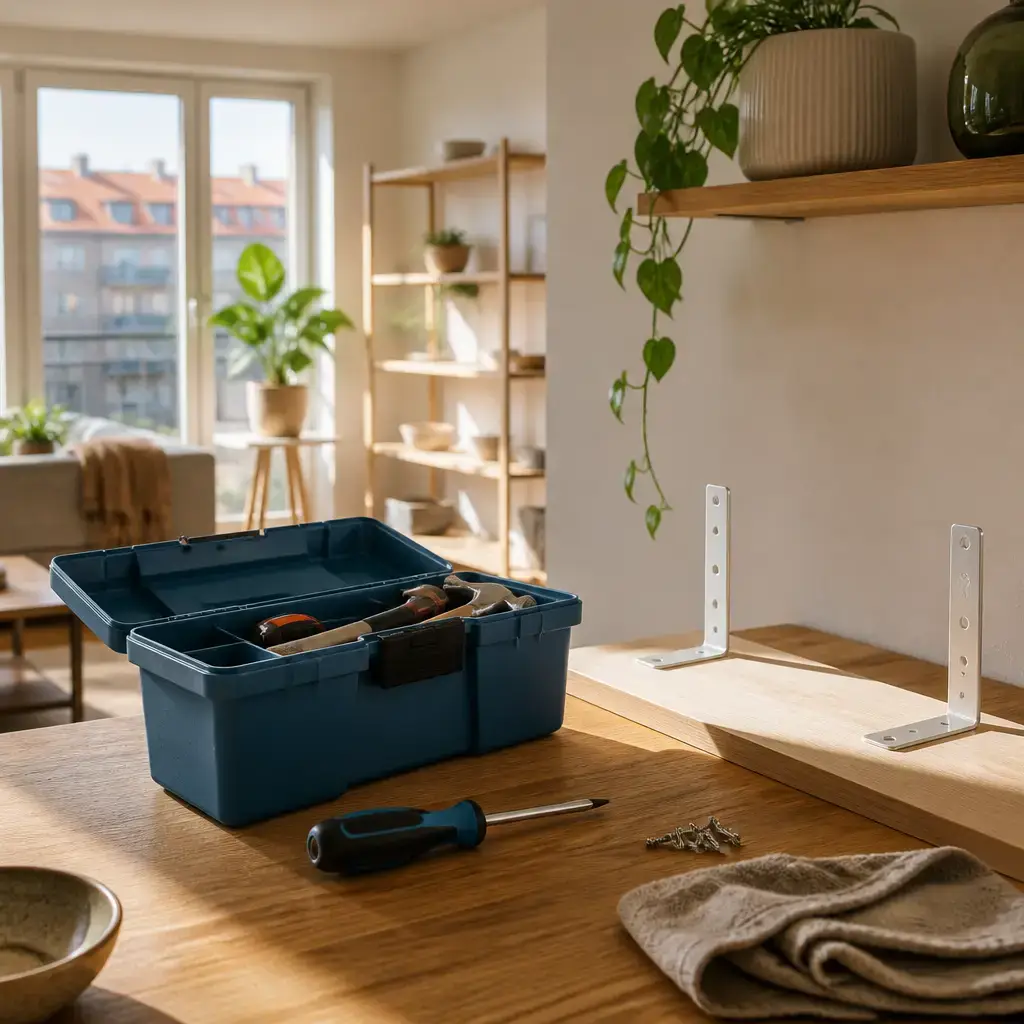
Kann
Kann means can and makes the opening question a polite request: "Kann ich ...?" It is used here to ask permission to borrow something, and the same question pattern is useful when requesting permission.
ich
ich means I and identifies the person who wants to borrow the screwdriver in "Kann ich mir deinen Schraubenzieher ... ausleihen?" It is used as the subject of a request or statement about yourself, as in "Ich muss ...".
mir
mir means to me or for myself in the borrowing construction; it shows who will borrow the screwdriver for their own use. It commonly appears with a person who borrows or receives something for personal use.
deinen
deinen means your and identifies the screwdriver as belonging to the person being addressed. It comes directly before the owned object in "deinen Schraubenzieher", so it is useful when naming something that belongs to another person.
Schraubenzieher
Schraubenzieher means screwdriver, the tool being borrowed and returned in this dialogue. It is used as the object of borrowing and is later referred to by Er and ihn; it is useful when discussing a specific hand tool.
für
für means for and introduces the purpose of borrowing the tool in "für eine kleine Reparatur". It commonly links an object or action to its intended purpose.
eine
eine means a or one and introduces the non-specific repair in "eine kleine Reparatur". It is used before a singular noun when the particular item or task has not been specified.
kleine
kleine means small and describes the repair in "eine kleine Reparatur". It is used directly before the noun it describes, so the same adjective-before-noun pattern helps add a simple description to a task or object.
Reparatur
Reparatur means repair and names the task for which the screwdriver is needed. In "für eine kleine Reparatur", it identifies the purpose of borrowing the tool and is useful when discussing a fixing task.
ausleihen
ausleihen means borrow for temporary use in this request for the screwdriver. It appears as the infinitive after Kann and is used when asking to use someone else’s object and later return it.
Er
Er means it here and refers back to the masculine noun Schraubenzieher, not to a person. In "Er ist im blauen Werkzeugkasten", it introduces information about where the tool is; the lowercase form er later refers to the same tool.
ist
ist means is and states the screwdriver’s location in "Er ist im blauen Werkzeugkasten". It is useful for saying where a person or object is located.
im
im means in the and describes the screwdriver’s location inside the toolbox. It is the contraction of in and dem, and it commonly introduces the place where something is located.
blauen
blauen means blue and describes the toolbox in "im blauen Werkzeugkasten". Its form appears directly before the noun after im, and the adjective-before-noun pattern is useful for identifying a particular object by color.
Werkzeugkasten
Werkzeugkasten means toolbox and names the container holding the screwdriver. It appears after "im blauen" to give the tool’s location, so it is useful when locating tools or other objects.
muss
muss means must or need to and expresses the speaker’s necessity in "Ich muss die Halterungen am Regal festziehen". It is used with an infinitive for an action that the speaker needs to carry out.
die
die means the and introduces the specific brackets in "die Halterungen". It is used here before the plural object of the tightening action when both speakers can identify which brackets are meant.
Halterungen
Halterungen means brackets or supports and refers to the parts attached to the shelf. The singular citation form is Halterung, while this dialogue form refers to several brackets; it is useful when describing parts that support or hold something.
am
am means at the or on the in "am Regal" and locates the brackets in relation to the shelf. It is the contraction of an and dem, and it is useful for naming a position on or beside a specific object.
Regal
Regal means shelf and identifies what the brackets are attached to in "die Halterungen am Regal". It is useful when talking about a piece of furniture used for storing or displaying things.
festziehen
festziehen means tighten, specifically carrying out the action needed on the shelf brackets. It appears as the infinitive after muss and is useful with screws, brackets, or other parts that need to be made secure.
Benutze
Benutze means use and gives a direct instruction to use a particular screwdriver. It is the one-person command form in "Benutze den mittelgroßen Schraubenzieher", useful when telling someone which object to use.
den
den means the and introduces the specific screwdriver in "den mittelgroßen Schraubenzieher". It marks the object selected for the instruction and is useful when directing someone to use a particular item.
mittelgroßen
mittelgroßen means medium-sized and identifies which screwdriver should be used. It directly describes Schraubenzieher in "den mittelgroßen Schraubenzieher", so the pattern is useful when distinguishing between tools by size.
passt
passt means fits or is suitable and says that the chosen screwdriver works better with the brackets. It is used with zu in "passt besser zu diesen Halterungen", a useful pattern for saying that one object suits another.
besser
besser means better and compares the suitability of this screwdriver with another possible choice. It modifies the idea of fitting in "passt besser zu diesen Halterungen", useful when selecting the more suitable tool or option.
zu
zu means with or for in the construction "passt besser zu diesen Halterungen". With passt, it introduces the object that something is suitable for, which is useful when matching a tool to a part.
diesen
diesen means these or those and points to the specific brackets being discussed. It appears before Halterungen in "zu diesen Halterungen", so it is useful when indicating a particular group of nearby or previously mentioned objects.
Wann
Wann means when and asks for the time of the return in "Wann soll ich ihn zurückbringen?" It is useful at the beginning of a question about when an action should happen.
soll
soll means should or am supposed to and asks what return time is expected. In "Wann soll ich ihn zurückbringen?", it combines with an infinitive at the end and is useful for asking about an agreed plan or expectation.
ihn
ihn means it here and refers to the screwdriver as the object being returned. It is used when a masculine object has already been mentioned and needs to be referred to again during an action.
zurückbringen
zurückbringen means bring back or return and describes taking the screwdriver back to its owner. It appears as the infinitive after soll in "ihn zurückbringen", a useful construction for discussing the return of a borrowed object.
Bitte
Bitte means please and makes the instruction more polite in "Bitte bring ihn vor dem Abendessen zurück". It is commonly placed at the beginning of a request or command.
bring
bring means bring and gives the direct instruction to take the screwdriver back. It is the one-person command form of bringen in "Bitte bring ihn ... zurück", useful when telling someone to move an object to a destination.
vor
vor means before and sets the deadline for returning the screwdriver in "vor dem Abendessen". It is useful for stating that an action must happen earlier than a particular time or event.
dem
dem means the in the time phrase "vor dem Abendessen". It follows vor here and introduces the specific event used as the return deadline.
Abendessen
Abendessen means dinner and names the event before which the screwdriver should be returned. It is useful when setting a time limit in relation to the evening meal.
zurück
zurück means back and adds the return direction to bring in the instruction to return the screwdriver. It appears at the end of the sentence with bring, and this separable-verb pattern is useful for describing something being taken back.
Wenn
Wenn means if here and introduces the condition that the screwdriver becomes dusty. It begins the conditional clause "Wenn er staubig wird", useful when explaining what should happen if a situation occurs.
staubig
staubig means dusty and describes the condition the screwdriver may reach. In "staubig wird", it follows the idea of becoming and is useful for describing an object covered with dust.
wird
wird means gets or becomes and describes a change into the condition staubig. It is used with an adjective in "staubig wird", a useful pattern for saying that something changes state.
wische
wische means wipe and describes the speaker’s cleaning action before returning the screwdriver. In "wische ich ihn zuerst ab", it is used with a direct object and the particle ab to describe wiping something clean.
zuerst
zuerst means first and says that wiping will happen before the screwdriver is returned. It is useful for ordering actions when one task must be completed before another.
ab
ab means off or away and completes the wiping action in "wische ich ihn zuerst ab". Together with wische, it indicates removing dust from the screwdriver, and this separable-verb pattern is useful for cleaning something from a surface.
Das
Das means that and refers to the preceding action of wiping the screwdriver. In "Das hilft, die Werkzeuge in gutem Zustand zu halten", it presents that action as something beneficial; it is useful for referring back to an entire situation.
hilft
hilft means helps and says that the cleaning action supports keeping the tools in good condition. It appears in the pattern "hilft, die Werkzeuge in gutem Zustand zu halten", useful for describing an action that contributes to a result.
Werkzeuge
Werkzeuge means tools and refers to the set of tools whose condition should be maintained. The singular citation form is Werkzeug, while this dialogue form refers to several tools; it is useful when discussing tools as a group.
in
in means in and introduces the condition phrase "in gutem Zustand". It is useful for describing the state or condition in which an object is kept.
gutem
gutem means good and describes the condition in "in gutem Zustand". It appears directly before Zustand in this fixed state phrase, which is useful when saying that an object is maintained well.
Zustand
Zustand means condition or state and names the state in which the tools should remain. In "in gutem Zustand", it is useful for discussing whether an object is kept properly or remains usable.
halten
halten means keep or maintain and describes preserving the tools in good condition. It appears in "in gutem Zustand zu halten" after hilft, a useful pattern for saying that an action helps maintain something in a particular state.