Ich
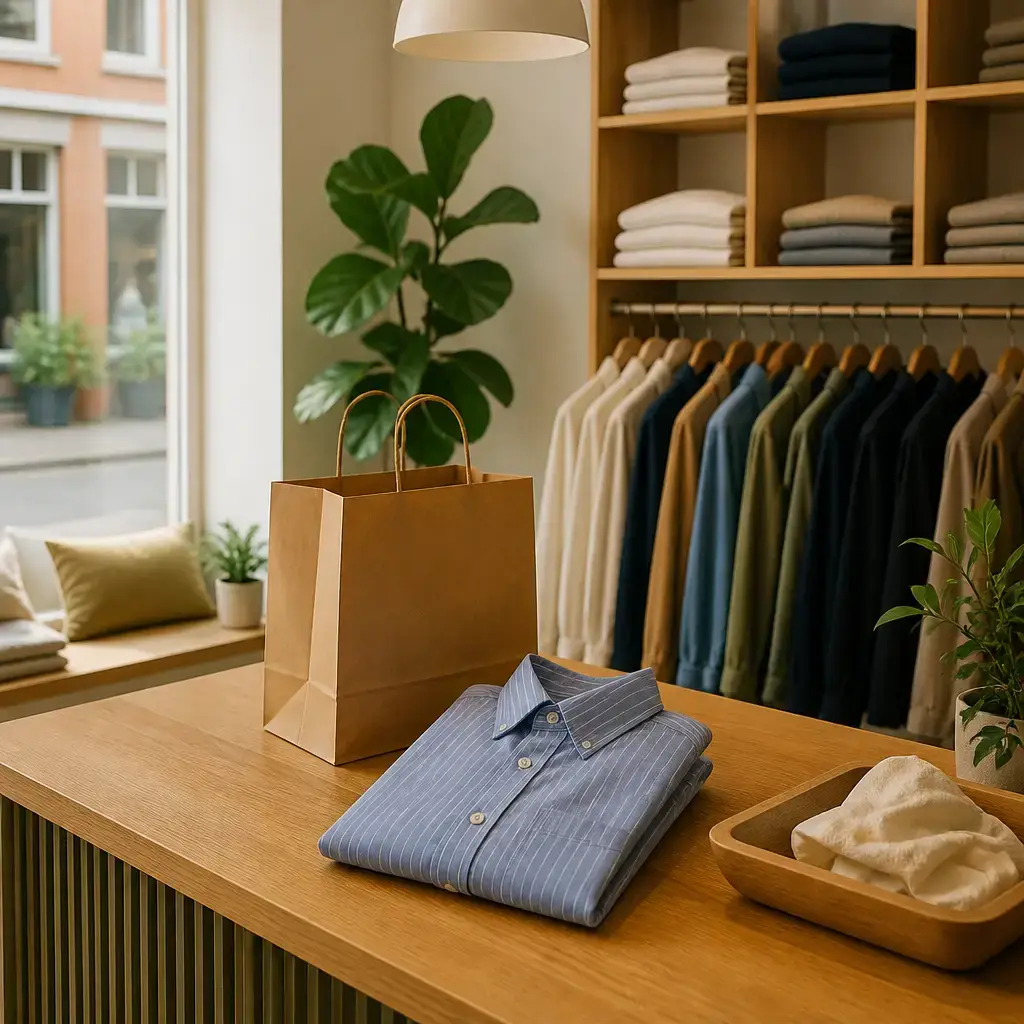
Ich means “I” in Ich habe dieses Hemd gekauft and Ich würde es lieber gegen eine größere Größe umtauschen. It identifies the customer as the person who bought the shirt or wants the exchange. Use Ich at the start when stating your own action, preference, or request.
habe
In Ich habe dieses Hemd gekauft, habe helps express the completed action of buying the shirt. The same verb appears as Haben in Haben Sie noch den Kassenzettel und das Etikett? when asking whether someone has something. Reuse habe with a past-action expression such as Ich habe ... gekauft when talking about something you bought.
dieses
Dieses means “this” in dieses Hemd and points to the specific shirt being discussed. It comes directly before Hemd in the phrase dieses Hemd. Use dieses when identifying one particular item nearby or already under discussion.
Hemd
Hemd means “shirt” in dieses Hemd and refers to the item the customer bought and wants to exchange. It is also the item described as ungetragen in wenn das Hemd ungetragen ist. Use Hemd when talking about a shirt in a clothing shop.
gekauft
Gekauft means “bought” in Ich habe dieses Hemd gekauft. Together with Ich habe, it describes the completed purchase of the shirt. Reuse the pattern Ich habe ... gekauft, keeping the purchased item in the object position.
Es
Es means “it” in Es passt nicht and refers to the shirt. It is the subject of the statement about the shirt’s fit. Use Es when referring back to an item whose identity is already clear.
passt
Passt means “fits” in Es passt nicht, describing whether the shirt is the right fit. The negative nicht changes the statement to “it does not fit.” Use passt when commenting on whether clothing fits someone.
nicht
Nicht means “not” in Es passt nicht and negates the statement that the shirt fits. It appears after passt in this short sentence. Use nicht to make a known action or description negative, as in Es passt nicht.
Sie
Sie means formal “you” in Haben Sie noch den Kassenzettel und das Etikett? The shop employee uses it to address the customer politely. Use Sie when speaking respectfully to a customer or another person you address formally.
noch
Noch means “still” in Haben Sie noch den Kassenzettel und das Etikett? It asks whether the customer continues to have the receipt and tag. Use noch before the thing someone may still have, such as noch den Kassenzettel.
den
Den is the article before Kassenzettel in den Kassenzettel und das Etikett, meaning “the receipt.” It identifies the specific receipt requested by the shop employee. Reuse den directly before a masculine object when asking for or referring to a particular item.
Kassenzettel
Kassenzettel means “receipt” in den Kassenzettel und das Etikett. In the dialogue, it is one of the items required for the return or exchange. Use Kassenzettel when asking about proof of purchase in a shop.
und
Und means “and” in den Kassenzettel und das Etikett and joins the receipt with the tag. It connects two items requested together. Use und to link items in a list, such as a receipt and a tag.
das
In das Etikett, das means “the” before the specific tag; in Das sollte möglich sein, the capitalized form refers to the proposed return or exchange. Its meaning therefore depends on the phrase in which it appears. Use das Etikett when naming the tag and Das ... when referring back to a situation.
Etikett
Etikett means “tag” or “label” in das Etikett. Here it refers to the tag that remained with the shirt. Use Etikett when discussing a clothing label or another product label in a shop.
beides
Beides means “both” in Ich habe beides in der Tüte aufgehoben and refers together to the receipt and the tag. It avoids repeating those two items. Use beides when two previously mentioned things are being kept, found, or discussed together.
in
In means “in” in in der Tüte and places the receipt and tag inside the bag. Here it introduces the container where both items were kept. Use in der ... when saying that something is inside a specific container or place.
der
Der is the article in in der Tüte, meaning “in the bag.” It appears directly before Tüte in this location phrase. Reuse in der Tüte when describing something kept inside the bag.
Tüte
Tüte means “bag” in in der Tüte and refers to the shopping bag containing the receipt and tag. It names the container rather than the clothing item. Use Tüte when talking about a small shopping bag or similar bag.
aufgehoben
Aufgehoben means “kept” or “saved” in Ich habe beides in der Tüte aufgehoben. It says that the customer retained both the receipt and the tag rather than discarding them. Reuse Ich habe ... aufgehoben when explaining that you kept an item for later use.
Dann
Dann means “then” in Dann kann ich Ihnen bei einer Rückgabe oder einem Umtausch helfen. It connects the customer’s confirmation about the receipt and tag to the employee’s next offer. Use Dann at the beginning when one action or fact leads to the next step.
kann
Kann means “can” in kann ich Ihnen ... helfen and expresses the employee’s ability or offer to help. It is followed by the person receiving help and helfen at the end of the phrase. Use kann ich ... helfen when offering assistance.
Ihnen
Ihnen means formal “you” as the person receiving help in Ihnen ... helfen. It addresses the customer politely and appears with helfen in the offer of assistance. Use Ihnen when saying that you can help a person formally, as in Ich kann Ihnen helfen.
bei
Bei means “with” or “in the matter of” in bei einer Rückgabe oder einem Umtausch. It introduces the type of shop matter in which the employee can help. Reuse bei with a service, problem, or process, such as bei einer Rückgabe helfen.
einer
Einer means “a” in bei einer Rückgabe and introduces one possible type of assistance, a return. It appears directly before Rückgabe after bei. Use bei einer ... when offering help with a feminine-named process or matter.
Rückgabe
Rückgabe means “return” in bei einer Rückgabe. It refers to giving the shirt back rather than exchanging it for another size. Use Rückgabe when discussing the return of a purchased item to a shop.
oder
Oder means “or” in einer Rückgabe oder einem Umtausch and presents two alternatives. The alternatives are a return and an exchange. Use oder to offer a choice between two possible actions or options.
einem
Einem means “a” in bei ... einem Umtausch and introduces the alternative of an exchange. It appears before Umtausch in the phrase governed by bei. Reuse bei einem Umtausch when talking about help with an exchange.
Umtausch
Umtausch means “exchange” in bei ... einem Umtausch and refers to replacing the shirt with another item or size. It is contrasted here with a Rückgabe as the other possible shop process. Use Umtausch when asking or talking about exchanging a purchased item.
helfen
Helfen means “help” in kann ich Ihnen bei einer Rückgabe oder einem Umtausch helfen. It describes the employee’s offer to assist with the shop process. Reuse Ich kann Ihnen helfen when offering help to a customer.
würde
Würde expresses “would” in Ich würde es lieber gegen eine größere Größe umtauschen and makes the customer’s preferred action polite and less direct. It works with lieber to state a preference. Use Ich würde ... lieber ... when politely saying which option you prefer.
lieber
Lieber means “rather” in Ich würde es lieber gegen eine größere Größe umtauschen. It shows that the customer prefers an exchange instead of a return. Use lieber with würde when politely choosing one option over another.
gegen
Gegen means “for” or “in exchange for” in gegen eine größere Größe umtauschen. It introduces what the shirt will be exchanged for. Reuse the pattern etwas gegen etwas umtauschen, keeping the replacement item after gegen.
eine
Eine means “a” in eine größere Größe and introduces the replacement size requested by the customer. It appears directly before größere Größe. Use eine before a singular feminine item when naming one possible replacement or choice.
größere
Größere means “larger” in eine größere Größe and describes the requested replacement size. It shows that the customer wants a size bigger than the current one. Use größere directly before a noun when requesting or comparing a larger item.
Größe
Größe means “size” in eine größere Größe and die größere Größe. It refers to the clothing size the customer wants to try or receive. Use Größe when asking for a different clothing size, as in eine größere Größe.
umtauschen
Umtauschen means “exchange” in gegen eine größere Größe umtauschen. In Ich würde es lieber ... umtauschen, it names the action the customer prefers to take. Reuse etwas gegen etwas umtauschen with the item being exchanged and the replacement item included.
sollte
Sollte means “should” in Das sollte möglich sein and expresses a cautious expectation that the exchange can be made. It does not present the possibility as an absolute guarantee. Use Das sollte ... sein when giving a tentative but positive answer about whether something is possible.
möglich
Möglich means “possible” in Das sollte möglich sein and describes the exchange as feasible. It is followed by sein in this statement. Use möglich sein when saying that an action or arrangement can be done.
sein
Sein means “be” in Das sollte möglich sein and completes the expression “should be possible.” It follows sollte in this sentence. Reuse sollte ... sein when giving a cautious assessment, such as Das sollte kein Problem sein in a new example.
wenn
Wenn means “if” in wenn das Hemd ungetragen ist and introduces the condition for the exchange. The condition is that the shirt has not been worn. Use wenn before a condition that must be met for something to happen.
ungetragen
Ungetragen means “unworn” or “unused” in das Hemd ungetragen ist. It describes the condition the shirt must meet for the exchange to be possible. Use ungetragen when describing clothing that has not been worn.
Wo
Wo means “where” in Wo kann ich die größere Größe anprobieren? It asks for the location of the fitting rooms or another place to try on the size. Use Wo at the beginning of a question asking where something is or where an action can happen.
die
In die größere Größe, die means “the” before the specific size; in Die Umkleidekabinen, it means “the” before the fitting rooms. It identifies known items in both phrases. Use die directly before a known item such as die größere Größe or Die Umkleidekabinen.
anprobieren
Anprobieren means “try on” in die größere Größe anprobieren. It refers specifically to putting on the larger size to check its fit. Reuse anprobieren with clothing as the object, such as Ich möchte das Hemd anprobieren in a new example.
Umkleidekabinen
Umkleidekabinen means “fitting rooms” in Die Umkleidekabinen sind hinter dem Aufsteller dort. It names the rooms where the customer can try on the larger size. Use Umkleidekabinen when asking for or giving directions to changing rooms in a clothing shop.
sind
Sind means “are” in Die Umkleidekabinen sind hinter dem Aufsteller dort and links the fitting rooms to their location. It is used because the subject refers to the fitting rooms. Use sind when locating more than one place or item.
hinter
Hinter means “behind” in hinter dem Aufsteller dort and gives the fitting rooms’ position relative to the display stand. It answers the customer’s question about where to try on the shirt. Use hinter when giving directions by saying that a place or object is behind another one.
dem
Dem is the article in hinter dem Aufsteller dort, meaning “behind the display stand there.” It appears directly before Aufsteller in this location phrase. Reuse hinter dem ... when directing someone to a place behind a specific object.
Aufsteller
Aufsteller means “display stand” in hinter dem Aufsteller dort and identifies the shop display used as a reference point. The employee uses it to give directions to the fitting rooms. Use Aufsteller when referring to a freestanding promotional or product display in a shop.
dort
Dort means “there” in hinter dem Aufsteller dort and points to the display stand being indicated. It makes the location reference more specific for the customer. Use dort when directing someone toward a visible place or object.