Die
In "Die Internetverbindung", "Die" means "the" and points to a specific internet connection. Use it before a noun when referring to a particular thing, as in "Die Seite" in the dialogue.
Internetverbindung
"Internetverbindung" means "internet connection" and names the connection that is weak in the room. Use it when discussing the quality or availability of an internet connection.
ist
In "Die Internetverbindung ist ... schwach", "ist" means "is" and links the connection with its description. It is the form used with this singular subject in the dialogue.
in
In "in diesem Raum", "in" marks the location where the connection is weak. Use it with a place to say where something is happening or located.
diesem
In "in diesem Raum", "diesem" means "this" and identifies the particular room being discussed. The reusable pattern is "in diesem ..." when pointing to a specific nearby place.
Raum
"Raum" means "room" in "in diesem Raum". Use it to identify the room where the internet connection or signal is being discussed.
schwach
"schwach" describes the internet connection as weak in "Die Internetverbindung ist in diesem Raum schwach". Use it to describe a connection or signal that is not strong.
Der
In "Der Router", "Der" means "the" and introduces the specific router being discussed. It is used before the device name when referring to that router.
Router
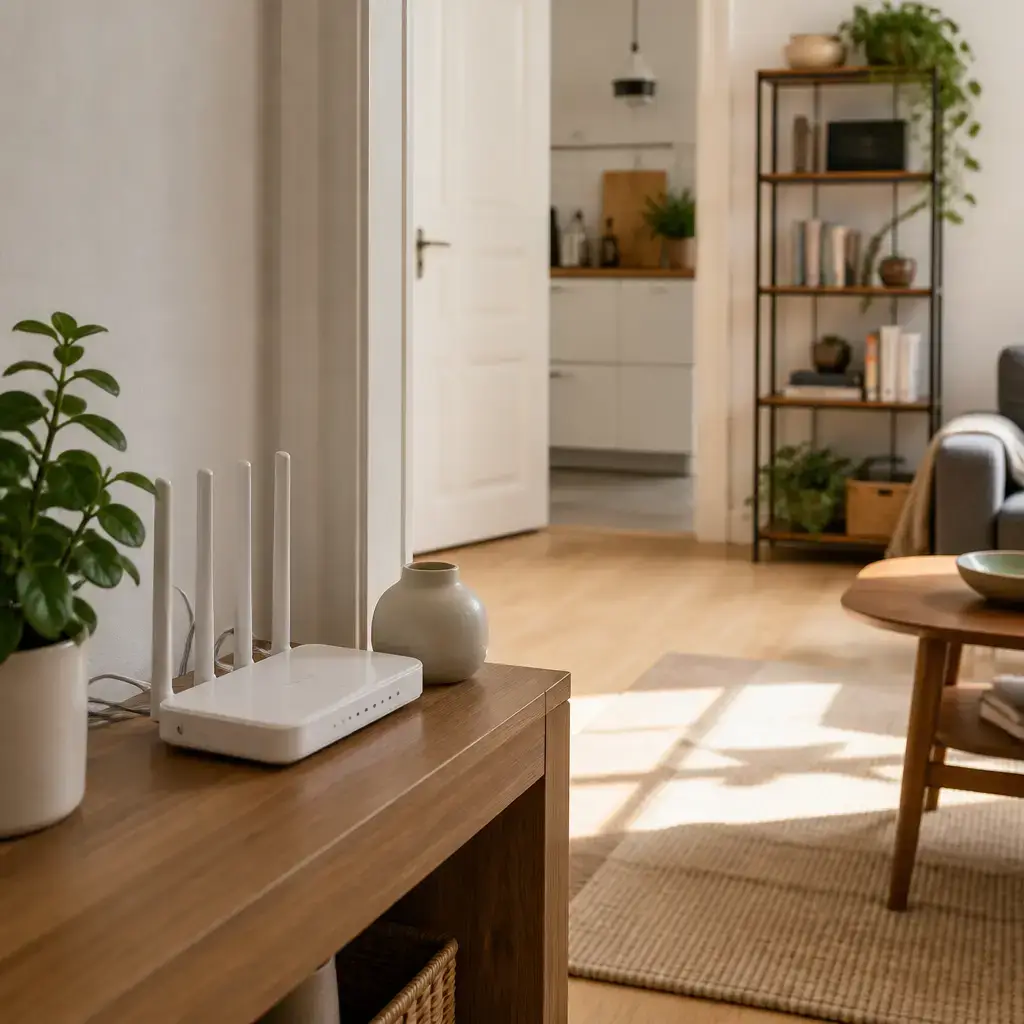
"Router" means "router", the device that is restarted and moved in the dialogue. Use it when discussing the device that provides or distributes the internet connection.
braucht
In "Der Router braucht vielleicht ...", "braucht" means "needs" and says that the router may require something. The reusable pattern is "braucht vielleicht ..." when suggesting a possible need.
vielleicht
"vielleicht" means "maybe" and makes the statement about the restart uncertain. Use it when offering a possibility rather than stating something as certain.
einen
In "einen kurzen Neustart", "einen" means "a" or "an" and introduces one possible restart. The reusable pattern is "einen ..." followed by the noun being needed here.
kurzen
In "einen kurzen Neustart", "kurzen" describes the restart as quick or short. It helps specify the kind of restart that the router may need.
Neustart
"Neustart" means "restart" and refers to turning the router off and on again. Use it when a device or system is started again to try to solve a problem.
Soll
In "Soll ich ihn ausschalten ...?", "Soll" asks whether the speaker should perform the action. The reusable pattern is "Soll ich ...?" when asking for permission or guidance about what to do.
ich
"ich" means "I" and identifies the person asking whether to restart the router. Use it as the subject when speaking about your own action.
ihn
"ihn" means "it" here and refers back to the router in "Soll ich ihn ausschalten" and "Ihn auf ein offenes Regal zu stellen". Use it to refer to that male-named device when it is the thing being turned off, turned on, or placed.
ausschalten
In "Soll ich ihn ausschalten", "ausschalten" means "turn off" and names the first action in the restart. Use the pattern "Soll ich ihn ausschalten ...?" when asking whether to switch the device off.
und
In "ausschalten und wieder einschalten", "und" joins the two actions of turning the router off and turning it on again. Use it to connect actions that belong together.
wieder
In "wieder einschalten", "wieder" means "again" and shows that the router is turned on after being turned off. Use it before an action that is repeated or resumed.
einschalten
In "wieder einschalten", "einschalten" means "turn on" and names the second action of the restart. It is paired with "ausschalten" when describing switching a device off and on.
Mach
In "Mach das", "Mach" means "do" and gives a direct instruction to one person to carry out the suggested action. Use "Mach das" when telling someone informally to do the action already discussed.
das
In "Mach das", "das" means "that" and refers to the action of turning the router off and on. Here it is a reference to the previously mentioned action, not a noun meaning "the".
warte
In "warte, bis die Statusleuchte wieder angeht", "warte" means "wait" and tells the other person to pause. Use "warte, bis ..." when asking someone to wait for a specific event.
bis
"bis" means "until" and introduces the event that marks the end of the wait in "bis die Statusleuchte wieder angeht". Use it before a time or event that must happen first.
Statusleuchte
"Statusleuchte" means "status light" and refers to the indicator on the router that comes on again. Use it when talking about a light that shows the state of a device.
angeht
In "bis die Statusleuchte wieder angeht", "angeht" means "comes on" or "lights up". It describes the status light becoming active again, and it appears at the end of the clause after "bis".
Seite
"Seite" means "page" in "Die Seite lädt jetzt besser" and refers to the web page being opened. Use it when discussing a page on a website or in a browser.
lädt
In "Die Seite lädt jetzt besser", "lädt" means "loads" and describes what the page is doing. Use it to report how a page is loading in a browser.
jetzt
"jetzt" means "now" and marks the current improvement in "Die Seite lädt jetzt besser". Use it when describing what is happening at the present moment.
besser
"besser" means "better" and shows that the page is loading more successfully than before. Use it to describe an improvement in a process or result.
auf
In "auf ein offenes Regal zu stellen", "auf" marks the surface or destination where the router is to be placed. Use it with a surface or platform when describing placing something on it.
ein
In "ein offenes Regal", "ein" means "a" or "an" and introduces an open shelf as the possible destination. It appears before the description and noun in the pattern "auf ein ...".
offenes
In "ein offenes Regal", "offenes" describes the shelf as open rather than enclosed. It specifies which kind of shelf might help the connection.
Regal
"Regal" means "shelf" in "ein offenes Regal". Use it when identifying the piece of furniture where the router could be placed.
zu
In "Ihn auf ein offenes Regal zu stellen", "zu" marks "stellen" as an infinitive connected to the larger idea of putting the router somewhere. Together, the phrase describes placing the router on an open shelf.
stellen
In "Ihn auf ein offenes Regal zu stellen", "stellen" means "put" or "place" and describes moving the router onto the shelf. The reusable pattern is "auf ... stellen" for placing something on a surface.
könnte
In "könnte noch mehr helfen", "könnte" means "could" or "might" and presents the possible benefit of moving the router. Use it when suggesting a possible result without certainty.
noch
In "noch mehr helfen", "noch" means "even" or "further" and increases the degree of possible help. Use it with "mehr" to express an additional or greater amount.
mehr
In "noch mehr helfen", "mehr" means "more" and says that the proposed placement might provide additional help. Use it when comparing the amount or degree of an effect.
helfen
In "könnte noch mehr helfen", "helfen" means "help" and refers to improving the internet connection. It follows "könnte" in the reusable pattern "könnte ... helfen" when describing a possible benefit.
Sollen
In "Sollen wir ihn in die Nähe der Tür stellen?", "Sollen" asks whether the speakers should carry out the action together. Use the pattern "Sollen wir ...?" when suggesting or checking a joint action.
wir
"wir" means "we" and refers to the two people who may move the router together. Use it as the subject when the speaker includes another person in the action.
Nähe
In "in die Nähe der Tür", "Nähe" means "vicinity" or "proximity" and identifies an area close to the door. The reusable pattern is "in die Nähe ..." when describing a destination near something.
Tür
"Tür" means "door" in "in die Nähe der Tür" and identifies the object used as the reference point for the router's new position. Use it when describing a location near a door.
So
At the start of "So könnte das Signal ... erreichen", "So" means "that way" and refers to moving the router near the doorway. Use it to connect an action with the result it may produce.
Signal
"Signal" means "signal" and refers to the wireless signal that may reach the room more effectively. Use it when discussing the strength or reach of a connection.
diesen
In "diesen Raum", "diesen" means "this" and identifies the particular room that the signal may reach. Use it before a noun when pointing to a specific place being discussed.
erreichen
In "das Signal diesen Raum besser erreichen", "erreichen" means "reach" and describes the signal getting to this room. Use it with a destination or object to say what something can reach.