Unsere
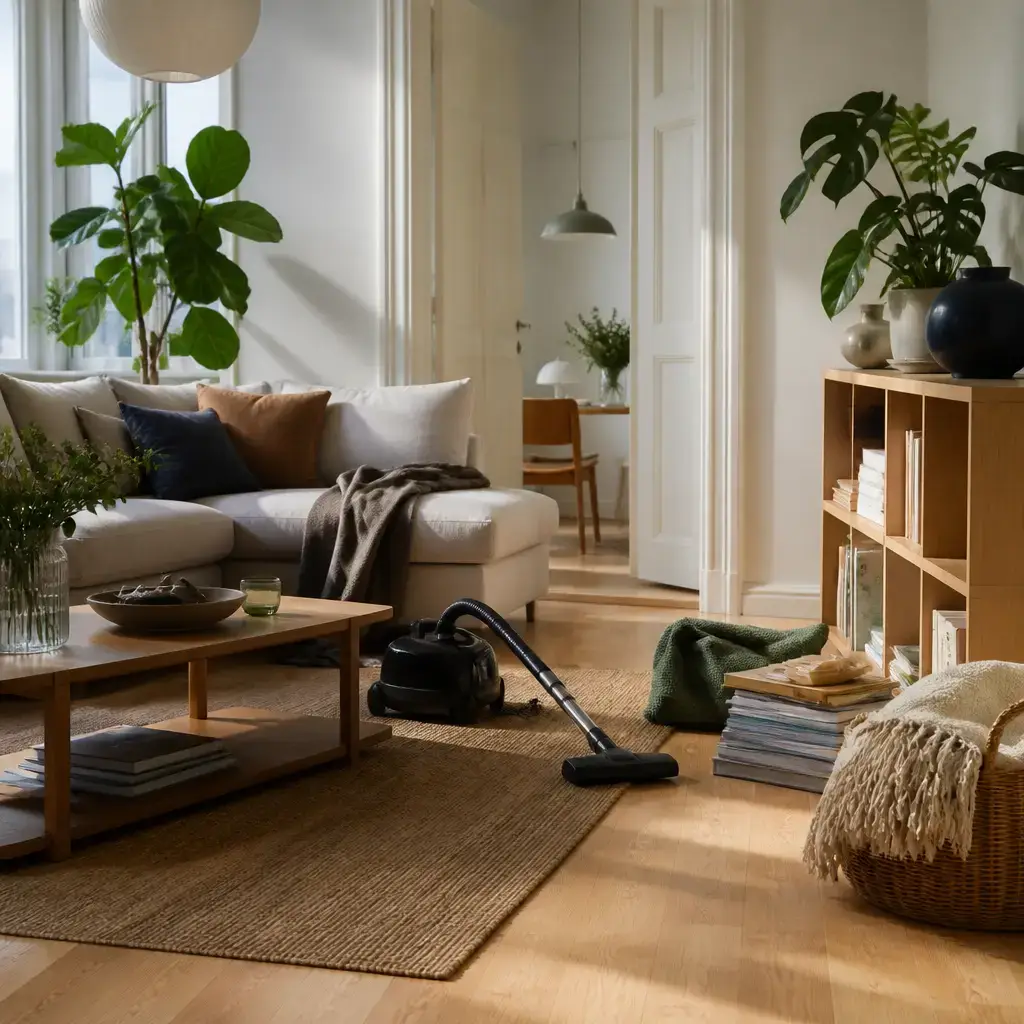
“Unsere” means “our” in “Unsere Gäste”. It is the possessive form used directly before “Gäste”; a reusable pattern is “unsere + noun”, such as in a new example: “unsere Freunde”. You use it when talking about people or things belonging to you and someone else.
Gäste
“Gäste” means “guests”, the people who are coming to visit. The citation form is “Gast”, and “Gäste” is its plural form here. A reusable pattern is “Die Gäste kommen”; you use it when talking about visitors.
kommen
“Kommen” means “come” or “are coming” in “Unsere Gäste kommen bald”. This form describes the guests’ arrival in the dialogue. A reusable pattern is “Die Gäste kommen morgen”; use it to say that people will arrive.
bald
“Bald” means “soon” and shows that the guests will come after a short time. It commonly appears after the verb, as in “Die Gäste kommen bald”. You use it when an event is expected in the near future.
Dann
“Dann” means “then” and connects the guests’ arrival with the next action. In “Dann sollten wir ...”, it introduces what should happen as a result. A reusable pattern is “Dann machen wir ...”; use it to suggest the next step.
sollten
“Sollten” means “should” in “Dann sollten wir das Wohnzimmer aufräumen”. It expresses a recommendation for what “wir” ought to do. A reusable pattern is “Wir sollten + infinitive”, such as in a new example: “Wir sollten anfangen”; use it to make a suggestion.
wir
“Wir” means “we” and refers to the two adults acting together. It is the subject in “sollten wir ...”. A reusable pattern is “Wir + verb”, used when describing an action done by you and at least one other person.
das
“Das” means “the” before “Wohnzimmer” in “das Wohnzimmer”. It identifies the specific living room being discussed. A reusable pattern is “das + noun”, used with a neuter noun such as “das Wohnzimmer”.
Wohnzimmer
“Wohnzimmer” means “living room”, the room they are preparing for the guests. It is used in the object phrase “das Wohnzimmer aufräumen”. A reusable pattern is “im Wohnzimmer”; use it when saying that something happens in the living room.
aufräumen
“Aufräumen” means “tidy up” or “clear up” in “das Wohnzimmer aufräumen”. It describes putting a room or its contents in order. A reusable pattern is “einen Raum aufräumen”, such as in a new example: “die Küche aufräumen”; use it when cleaning and organizing a space.
bevor
“Bevor” means “before” and introduces the time condition “bevor sie ankommen”. It connects the tidying with the later arrival. A reusable pattern is “bevor + clause”, used when one action must happen earlier than another.
sie
“Sie” means “they” in “bevor sie ankommen” and refers back to the guests. It is the subject of the clause about arriving. A reusable pattern is “sie + verb”; use it when referring to several people already known from the conversation.
ankommen
“Ankommen” means “arrive” in “bevor sie ankommen”. It describes the guests reaching the home. A reusable pattern is “bei jemandem ankommen”, such as in a new example: “Wir kommen um acht Uhr an”; use it to talk about reaching a place.
Ich
“Ich” means “I” and identifies the speaker in “Ich stelle die Bücher zurück ...”. It is the person carrying out the action. A reusable pattern is “Ich + verb”, used to say what you are going to do or are doing.
stelle
“Stelle” means “put” or “place” in “Ich stelle die Bücher zurück ins Regal”. It describes placing the books in an upright position back on the shelf. A reusable pattern is “Ich stelle + object + place”, such as in a new example: “Ich stelle die Tasse auf den Tisch”.
die
“Die” means “the” before “Bücher” in “die Bücher”. It identifies the specific books being put away. A reusable pattern is “die + plural noun”, used for specific items such as “die Bücher”.
Bücher
“Bücher” means “books”, the items being put back on the shelf. The citation form is “Buch”, and “Bücher” is its plural form here. A reusable pattern is “Bücher lesen” or “Bücher ins Regal stellen”; use it when talking about books.
zurück
“Zurück” means “back” in “stelle ... zurück ins Regal”. It shows that the books are being returned to their previous place. A reusable pattern is “etwas zurückstellen”, used when putting an item back where it belongs.
ins
“Ins” means “into the” in “ins Regal”. It marks movement into the shelf, and it combines “in” with “das” here. A reusable pattern is “etwas ins + noun stellen”, such as in a new example: “die Flasche ins Regal stellen”.
Regal
“Regal” means “shelf” or “shelving unit” in “ins Regal”. It is the destination where the books are placed. A reusable pattern is “etwas ins Regal stellen”; use it when putting an object onto or into a shelf.
richte
“Richte” means “straighten” or “arrange” in “Ich richte die Kissen auf dem Sofa”. It describes making the cushions neat. A reusable pattern is “etwas richten”, used when putting something into a tidy or orderly position.
Kissen
“Kissen” means “cushions” in “die Kissen”. These are the soft items being straightened on the sofa. The same form can refer to a cushion or cushions depending on context; here the dialogue clearly refers to several cushions.
auf
“Auf” means “on” in “auf dem Sofa”. It shows the cushions’ location on the sofa. A reusable pattern is “etwas liegt auf dem Sofa”; use it to describe something resting on a surface.
dem
“Dem” means “the” in the location phrase “auf dem Sofa”. Together with “auf”, it identifies the sofa as the place where the cushions are. A reusable pattern is “auf dem + noun” for describing a fixed location.
Sofa
“Sofa” means “sofa”, the furniture on which the cushions are arranged. It appears in the location phrase “auf dem Sofa”. A reusable pattern is “auf dem Sofa sitzen”; use it when talking about being on the sofa.
Sollen
“Sollen” means “should” or “shall” in the question “Sollen wir auch ...?”. It asks whether the speakers ought to do another task together. A reusable pattern is “Sollen wir + infinitive?”, used to suggest an activity and ask for agreement.
auch
“Auch” means “also” or “as well” in “auch den Teppich saugen”. It adds vacuuming to the other tidying tasks. A reusable pattern is “auch + object or action”; use it when adding one more thing to a plan.
den
“Den” means “the” before “Teppich” in “den Teppich saugen”. It identifies the specific rug they are considering vacuuming. A reusable pattern is “den + object + verb”, used when referring to a specific masculine object being acted on.
Teppich
“Teppich” means “rug” or “carpet”, the floor covering they may vacuum. It appears in the object phrase “den Teppich saugen”. A reusable pattern is “den Teppich saugen”; use it when talking about vacuuming a rug or carpet.
saugen
“Saugen” means “vacuum” in “den Teppich saugen”. It describes cleaning the rug with a vacuum cleaner. A reusable pattern is “etwas saugen”, such as in a new example: “den Boden saugen”; use it when naming what is being vacuumed.
Staubsaugen
“Staubsaugen” means “vacuuming” in “Staubsaugen würde helfen”. It names the cleaning activity as a whole. A reusable pattern is “Staubsaugen hilft”; use it when discussing vacuuming as a task or activity.
würde
“Würde” means “would” in “Staubsaugen würde helfen”. It presents vacuuming as a helpful possibility or suggestion. A reusable pattern is “... würde helfen”; use it to say that a proposed action would improve a situation.
helfen
“Helfen” means “help” in “würde helfen”. Here it says that vacuuming would improve the room’s condition. A reusable pattern is “Das würde helfen”; use it when agreeing that an action could be useful.
besonders
“Besonders” means “especially” and highlights the area near the doorway. It shows that this location needs particular attention. A reusable pattern is “besonders + place or quality”; use it to emphasize one part of a situation.
in
“In” means “in” as part of “in der Nähe der Tür”. Here the whole phrase means “near the doorway”. A reusable pattern is “in der Nähe von + place or person”; use it to describe something located close to something else.
der
“Der” means “the” in “in der Nähe der Tür”. It belongs to the fixed location phrase “in der Nähe” and identifies the area being discussed. A reusable pattern is “in der Nähe der + noun”, used to say that something is near a specific place or object.
Nähe
“Nähe” means “vicinity” or “near area” in “in der Nähe der Tür”. The full phrase identifies an area close to the doorway. A reusable pattern is “in der Nähe + place”; use it when describing where something is located.
Tür
“Tür” means “door” in “der Tür”, referring here to the doorway area. It specifies what the location is near. A reusable pattern is “an der Tür” or “in der Nähe der Tür”; use these when talking about a position by or near a door.
Raum
“Raum” means “room” in “Der Raum fühlt sich schon gemütlicher an”. It refers to the living room after it has been tidied. A reusable pattern is “der Raum ist ...”; use it when describing a room’s condition.
fühlt
“Fühlt” means “feels” as part of “fühlt sich ... an”. The full expression describes how the room seems, rather than someone physically touching it. A reusable pattern is “etwas fühlt sich ... an”, used to describe an impression or sensation.
sich
“Sich” is part of the expression “fühlt sich ... an”, which means “feels”. It links the room to the way it seems or comes across. A reusable pattern is “etwas fühlt sich + adjective + an”; use it to describe how something feels.
schon
“Schon” means “already” in “fühlt sich schon gemütlicher an”. It shows that the room feels cozier even before every preparation is finished. A reusable pattern is “schon + verb or adjective”; use it when a change has happened earlier than expected or by this point.
gemütlicher
“Gemütlicher” means “more comfortable” or “cozier” in “fühlt sich schon gemütlicher an”. It describes the improved atmosphere of the room after tidying. The related form is “gemütlich”, with “gemütlicher” comparing the room with how it felt before. You use it when one place or situation feels more pleasant than another.
an
“An” completes the expression “fühlt sich ... an”, meaning “feels”. It is separated from “fühlt” in this sentence because the expression has this two-part form. A reusable pattern is “Das fühlt sich gut an”; use it to describe how something feels or seems.
Lass
“Lass” means “let” in the suggestion “Lass uns Tee machen”. Together with “uns”, it means “let’s”. A reusable pattern is “Lass uns + infinitive”, used to propose doing something together.
uns
“Uns” means “us” in “Lass uns Tee machen”. Together with “Lass”, it forms the suggestion “let’s make tea”. A reusable pattern is “Lass uns + infinitive”; use it when inviting another person to do something with you.
Tee
“Tee” means “tea”, the drink they plan to prepare once the room is ready. It is the object of “machen” in “Tee machen”. A reusable pattern is “Tee machen”; use it when talking about preparing tea.
machen
“Machen” means “make” in “Lass uns Tee machen”. It describes preparing the tea. A reusable pattern is “etwas machen”, such as in a new example: “Kaffee machen”; use it when talking about preparing or doing something.
sobald
“Sobald” means “once” or “as soon as” and introduces the condition “sobald alles fertig ist”. It says that making tea will happen immediately after everything is ready. A reusable pattern is “sobald + clause”; use it to connect an action with the moment another condition is fulfilled.
alles
“Alles” means “everything” in “sobald alles fertig ist”. It refers collectively to all the tidying and preparation. A reusable pattern is “alles ist fertig”; use it when all relevant tasks or items are ready.
fertig
“Fertig” means “ready” in “alles fertig ist”. It describes the completed state required before they make tea. A reusable pattern is “etwas ist fertig”; use it when a task or preparation has been completed.
ist
“Ist” means “is” in “alles fertig ist”. It links “alles” with the state “fertig” inside the clause introduced by “sobald”. A reusable pattern is “etwas ist + adjective”, used to describe the current state of something.