Auf
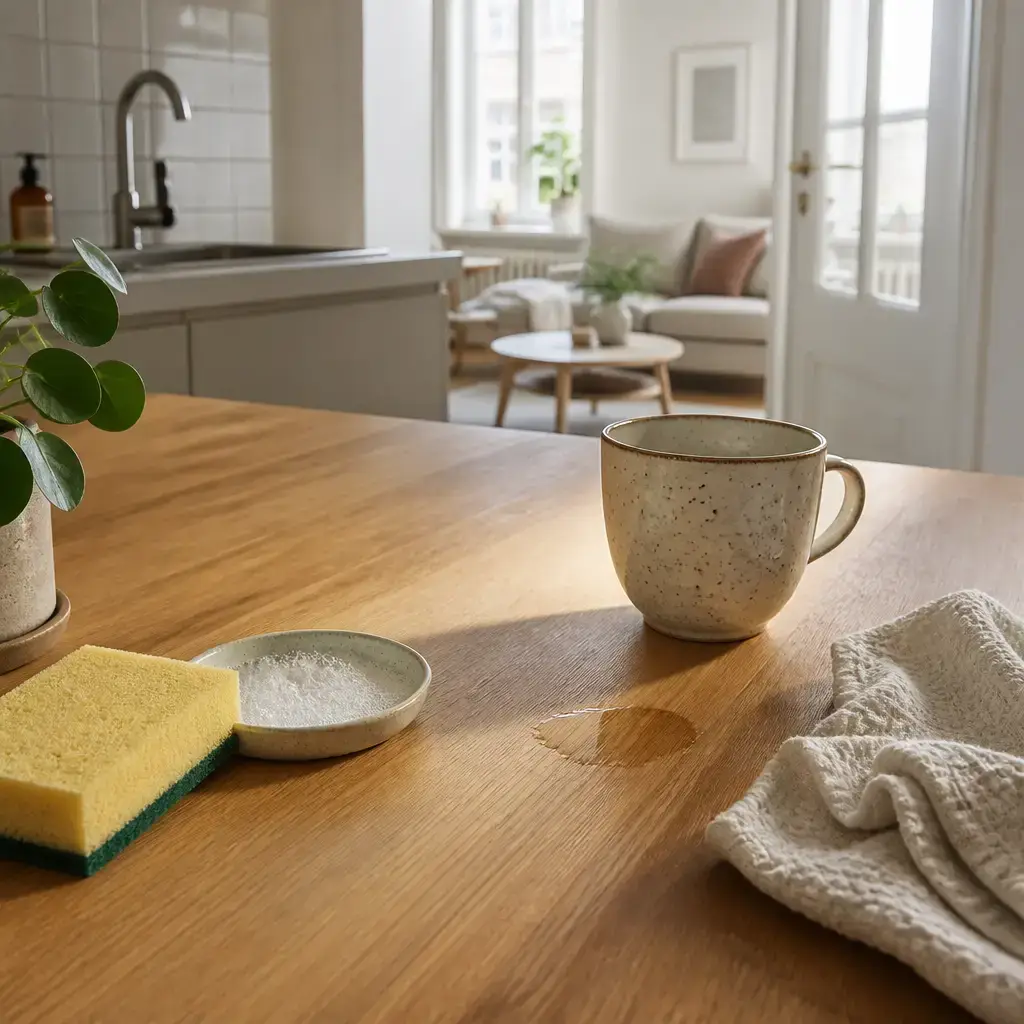
“Auf” means “on” in “Auf dem Tisch”, describing where the stain is located. Here it is used with a location and the dative phrase “dem Tisch”. A common reuse pattern is “auf” plus a place, such as “auf dem Tisch”.
dem
“Dem” means “the” in “Auf dem Tisch” and marks “Tisch” as the dative masculine noun after the location phrase. It is the definite article used with this exact masculine noun here. Reuse “auf dem” before a masculine or neuter place noun when describing a location.
Tisch
“Tisch” means “table” in “Auf dem Tisch”. It is the place where the stain is located. You can reuse it in location phrases such as “auf dem Tisch” when describing something on a table.
ist
“Ist” means “is” and states that the stain exists at a particular place in “Auf dem Tisch ist ein Fleck”. It is the third-person singular form of sein used with “ein Fleck”. A common reuse pattern is “[place] ist [thing]” when saying that something is somewhere.
ein
“Ein” means “a” in “ein Fleck” and introduces the stain as one unspecified thing. It is the masculine indefinite article used here with the subject “Fleck”. Reuse “ein” before a singular masculine noun when introducing one unspecified item.
Fleck
“Fleck” means “stain” in “ein Fleck”. It names the small mark that the speakers are cleaning. You can reuse it with cleaning descriptions, such as “Der Fleck ist fast weg” when a stain is nearly gone.
Ich
“Ich” means “I” and identifies the speaker in “Ich sehe ihn bei der Tasse”. It is capitalized here because it begins the sentence. Reuse “Ich” as the subject when describing your own action or observation.
sehe
“Sehe” means “see” in “Ich sehe ihn bei der Tasse”. It is the first-person singular form of sehen and takes “ihn” as the thing being seen. A useful reuse pattern is “Ich sehe …” followed by the person or thing you can see.
ihn
“Ihn” means “it” here and refers back to “ein Fleck” in “Ich sehe ihn bei der Tasse”. This form is used for the masculine object of “sehe”. Reuse “Ich sehe ihn” when referring to a previously mentioned masculine person or thing.
bei
“Bei” means “near” or “by” in “bei der Tasse”, locating the stain close to the cup. In this location phrase, it is followed by the dative article “der”. Reuse “bei” plus a place or person when saying that something is nearby.
der
“Der” means “the” in “bei der Tasse” and is the dative feminine article used after “bei”. It belongs with the feminine noun “Tasse”. Reuse “bei der” before a feminine noun when describing a nearby location.
Tasse
“Tasse” means “cup” in “bei der Tasse”. It identifies the object near which the stain can be seen. You can reuse it in location phrases such as “bei der Tasse” when referring to a cup nearby.
Haben
“Haben” means “have” in the question “Haben wir einen sauberen Schwamm?”. It is the first-person plural form of haben placed at the beginning to form a yes-or-no question. Reuse “Haben wir …?” when asking whether something is available.
wir
“Wir” means “we” in “Haben wir einen sauberen Schwamm?”. It identifies the speaker and the other person together as the subject of the question. Reuse “wir” when asking about something shared by a group that includes the speaker.
einen
“Einen” means “a” in “einen sauberen Schwamm” and introduces one unspecified sponge as the object of “haben”. It is the masculine accusative form of the indefinite article here. Reuse “einen” before a singular masculine object in a similar question or statement.
sauberen
“Sauberen” means “clean” in “einen sauberen Schwamm”. The ending matches the masculine accusative phrase after “haben”. Reuse “sauberen” before a masculine object in this kind of phrase when describing it as clean.
Schwamm
“Schwamm” means “sponge” in “einen sauberen Schwamm”. It names the cleaning item the speakers are looking for. You can reuse it in phrases about cleaning, such as “Der Schwamm ist am Waschbecken”.
am
“Am” means “at the” or “by the” in “am Waschbecken”, locating the sponge beside the sink. It is the shortened form of an dem, and the following noun is dative here. Reuse “am” before a masculine or neuter place noun when describing a location.
Waschbecken
“Waschbecken” means “sink” in “am Waschbecken”. It identifies where the sponge is. You can reuse it in location phrases such as “am Waschbecken” when talking about something beside or at a sink.
Soll
“Soll” means “should” in “Soll ich etwas Seife nehmen?”. It asks whether the speaker is expected or advised to use some soap. It is the first-person singular form of sollen; a common reuse pattern is “Soll ich …?” followed by an action.
etwas
“Etwas” means “some” in “etwas Seife”, referring to an unspecified amount of soap. It is used here before the material noun “Seife”. Reuse “etwas” with an uncountable substance when asking for or referring to some of it.
Seife
“Seife” means “soap” in “etwas Seife”. It names the cleaning substance to be used on the sponge. You can reuse it in phrases about washing or cleaning, such as “ein bisschen Seife”.
nehmen
“Nehmen” means “use” in “etwas Seife nehmen”, although its basic meaning can also be “take”. It is the infinitive used at the end after the modal verb “Soll”. Reuse “Soll ich … nehmen?” when asking whether you should take or use a particular item.
Tu
“Tu” means “put” in “Tu ein bisschen Seife auf den Schwamm”. It gives a direct instruction to place the soap on the sponge and is the imperative form of tun. Reuse “Tu … auf …” when telling someone to put something onto a surface.
bisschen
“Bisschen” means “little bit” in “ein bisschen Seife”, referring to a small amount. Together with “ein”, it forms the expression “ein bisschen” for a small quantity. Reuse “ein bisschen” before a substance or other thing when only a small amount is meant.
den
“Den” means “the” in “auf den Schwamm” and marks “Schwamm” as the masculine accusative object of the placement. It is used here after “auf” for movement onto the sponge. Reuse “auf den” before a masculine noun when describing movement or placement onto it.
fast
“Fast” means “almost” in “fast weg”. It shows that the stain has nearly disappeared but is not completely gone yet. Reuse “fast” before a word or phrase when something is close to reaching a state.
weg
“Weg” means “gone” or “away” in “Der Fleck ist fast weg”. It describes the stain as nearly no longer present. A common reuse pattern is “ist weg” when saying that something has disappeared or is no longer there.
sieht
“Sieht” contributes “looks” in the expression “sieht sauber aus”, describing the table’s appearance. It is the third-person singular form of sehen used with the particle “aus” to express appearance. Reuse the pattern “sieht + adjective + aus” when describing how something looks.
sauber
“Sauber” means “clean” in “sieht sauber aus”. It describes the table’s apparent condition rather than stating directly that it has been cleaned. Reuse “sieht sauber aus” when something appears clean to the observer.
aus
“Aus” completes the expression “sieht sauber aus”, which means “looks clean”. It is placed at the end of the sentence as part of this separable verb construction. Reuse “sieht + adjective + aus” to describe someone’s or something’s appearance.