Das
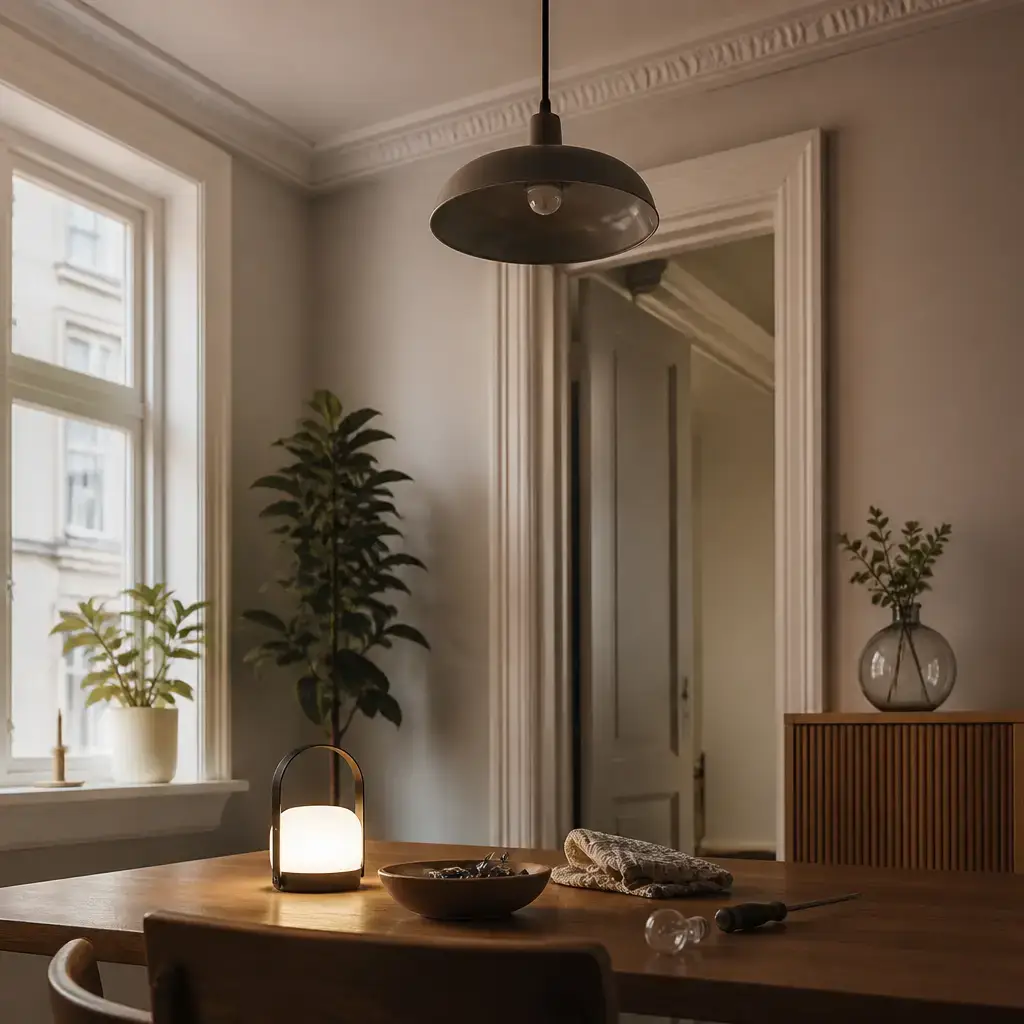
In "Das Licht", "Das" means "the" and introduces the specific light being discussed. It is used before a neuter noun when that noun is the subject, here while reporting a problem with the light.
Licht
In "Das Licht funktioniert nicht", "Licht" means "light" and refers to the light that is not working. The word is useful when talking about illumination or a light in a room.
funktioniert
In "Das Licht funktioniert nicht", "funktioniert" means "works" or "functions" and describes whether the light is operating. It is used to report the working condition of an object, especially when explaining a problem.
nicht
In "Das Licht funktioniert nicht", "nicht" makes the statement negative: the light does not work. It comes after "funktioniert" here to deny that the light is operating, which is useful when reporting a fault.
Hast
In "Hast du den Schalter überprüft?", "Hast" means "have" and comes from "haben". It is used with "du" to begin a yes-or-no question about whether a check has been completed.
du
In "Hast du den Schalter überprüft?", "du" means "you" and addresses one person directly. It is the person being asked whether the switch was checked.
den
In "den Schalter", "den" means "the" and introduces the switch as the object being checked. This form is used before a masculine singular object in this role, when asking about a specific switch.
Schalter
In "den Schalter", "Schalter" means "switch" and refers to the control for the light. It is the object of the checking action and is later referred to by "ihn".
überprüft
In "Hast du den Schalter überprüft?", "überprüft" means "checked" and is the past participle from "überprüfen". Together with "Hast du" it asks whether the switch has been checked; in "Ich habe ihn überprüft", it reports that the check was done.
Ich
In "Ich habe ihn überprüft", "Ich" means "I" and identifies the person who checked the switch. It is used as the subject when the speaker reports their own action.
habe
In "Ich habe ihn überprüft", "habe" means "have" and comes from "haben". Here it is an auxiliary with "überprüft", helping the speaker report a completed check rather than expressing possession.
ihn
In "Ich habe ihn überprüft", "ihn" means "it" and refers back to "den Schalter". It replaces the repeated object after "überprüft", so the speaker can say that the switch was checked without naming it again.
und
In "Ich habe ihn überprüft, und es funktioniert immer noch nicht", "und" means "and" and links the report of checking with the continuing problem. It is useful for joining two related statements in the same situation.
es
In "es funktioniert immer noch nicht", "es" means "it" and refers to the light or device being discussed. It keeps that thing as the subject of the second clause without repeating "Licht".
immer
In "immer noch nicht", "immer" contributes to the idea that the situation continues; it does not mean "always" here. Together with "noch", it helps say that the problem remains after the check.
noch
In "immer noch nicht", "noch" helps express "still", showing that the light remains non-functional. This combination is useful when a negative situation continues longer than expected.
Vielleicht
In "Vielleicht ist die Glühbirne alt", "Vielleicht" means "maybe" and presents the old bulb as a possible explanation. It is useful at the beginning of a statement when suggesting a cause without stating it as certain.
ist
In "Vielleicht ist die Glühbirne alt", "ist" means "is" and comes from "sein". It links the bulb with the description "alt", allowing the speaker to describe its condition.
die
In "die Glühbirne", "die" means "the" and introduces the specific bulb being discussed. It is used before this feminine noun when the bulb is the subject of the description.
Glühbirne
In "die Glühbirne", "Glühbirne" means "bulb" and identifies the part that may be old. The same noun is later the object in "die Glühbirne ersetzen", when the speakers plan to replace it.
alt
In "Die Glühbirne ist alt", "alt" means "old" and describes the bulb's age or condition. It follows "ist" here as a description of the bulb and is useful when suggesting that age may explain the problem.
Der
In "Der Raum", "Der" means "the" and introduces the specific room being discussed. It is used before this masculine noun when the room is the subject of the sentence.
Raum
In "Der Raum ist jetzt zu dunkel", "Raum" means "room" and refers to the place affected by the failed light. This word is useful for describing the condition of an indoor space.
jetzt
In "Der Raum ist jetzt zu dunkel", "jetzt" means "now" and points to the room's current condition. It is placed in the sentence to show that the excessive darkness is happening at present.
zu
In "zu dunkel", "zu" means "too" and shows that the darkness is beyond a suitable level. The pattern "zu" plus an adjective is useful for describing an excessive condition.
dunkel
In "Der Raum ist jetzt zu dunkel", "dunkel" means "dark" and describes the room's lighting. With "zu", it expresses that there is not enough light for the current situation.
kann
In "Ich kann eine kleine Lampe holen", "kann" means "can" and comes from "können". It expresses the speaker's ability or offer to bring the lamp, with "holen" completing the action.
eine
In "eine kleine Lampe", "eine" means "a" and introduces one non-specific lamp that can be brought. It makes the lamp a new item in the conversation rather than the already-mentioned lamp.
kleine
In "eine kleine Lampe", "kleine" means "small" and describes the lamp. It appears before "Lampe" to identify the particular size of the temporary light source.
Lampe
In "eine kleine Lampe", "Lampe" means "lamp" and refers to the alternative light source. The lamp is brought to help while the bulb cannot yet be replaced, and it is later called "die Lampe".
holen
In "Ich kann eine kleine Lampe holen", "holen" means "bring" or "get" and is the form from "holen" used after "kann". The speaker uses it to offer to fetch the lamp for the dark room.
Wir
In "Wir sollten die Glühbirne später wechseln", "Wir" means "we" and includes the speaker and the other person. It presents changing the bulb as a shared task or plan.
sollten
In "Wir sollten die Glühbirne später wechseln", "sollten" means "should" and comes from "sollen". It gives a recommendation about the bulb, with "wechseln" naming the action that is recommended.
später
In "die Glühbirne später wechseln", "später" means "later" and places the replacement after the current moment. It is useful for saying that an action should be postponed.
wechseln
In "Wir sollten die Glühbirne später wechseln", "wechseln" means "change" and names the recommended action for the bulb. After "sollten", it stays at the end of the clause as the action being suggested.
Benutze
In "Benutze die Lampe", "Benutze" means "use" and comes from "benutzen". It is a direct instruction to one person, telling them to use the lamp as a temporary solution.
bis
In "bis wir die Glühbirne ersetzen", "bis" means "until" and introduces the point when the replacement happens. It connects using the lamp with the endpoint of replacing the bulb.
ersetzen
In "bis wir die Glühbirne ersetzen", "ersetzen" means "replace" and describes the action the speakers will carry out on the bulb. It comes at the end of the clause after the subject and object, and is useful for stating the action that ends the temporary arrangement.