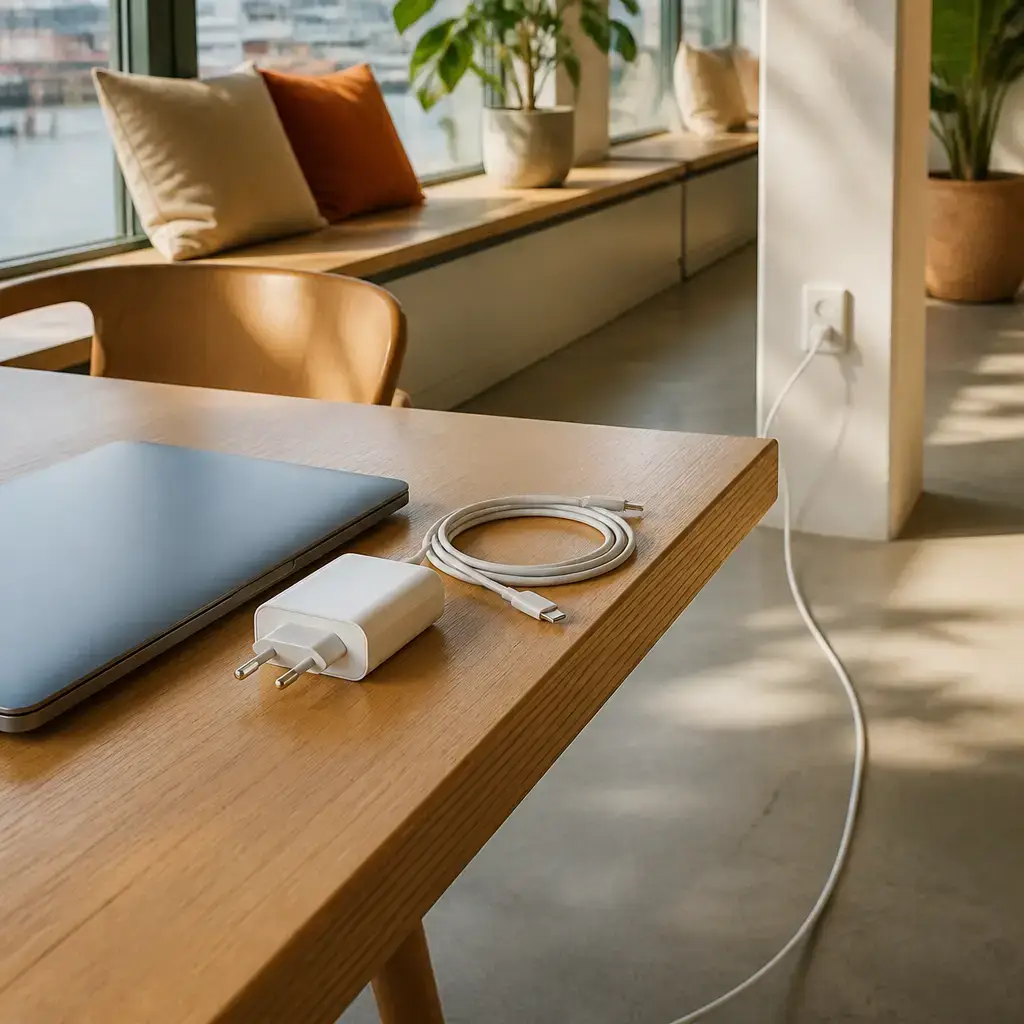
Kann
“Kann” means “can” or “is it possible” here, introducing the question “Kann ich ein Ladegerät ausleihen?”. It comes before the subject in this question pattern and is used with an infinitive such as “ausleihen”.
ich
“ich” means “I” in “Kann ich ein Ladegerät ausleihen?”. It is lowercase after the question word, while the same pronoun appears as uppercase “Ich” at the start of “Ich lege alles zurück.” Reuse it as the subject in a pattern such as “Kann ich ...?”.
ein
“ein” means “a” in “ein Ladegerät”, referring to one unspecified charger. It belongs directly before the noun and is used here as part of “ein Ladegerät ausleihen”.
Ladegerät
“Ladegerät” means “charger” in “ein Ladegerät ausleihen”. It names the object being borrowed and can be reused after “ein” in the same object pattern.
ausleihen
“ausleihen” means “borrow” in “ein Ladegerät ausleihen”. It is the infinitive used after “Kann ich”; the reusable pattern is “etwas ausleihen”, with the borrowed object in the position of “ein Ladegerät”.
Benutz
“Benutz” means “use” as an informal command in “Benutz das neben meinem Laptop.” It directly tells another person what to do and is followed here by the object “das”.
das
“das” means “it” or “the one” in “Benutz das neben meinem Laptop”, referring to the charger understood from the conversation. It can be used after a command when the object is already clear.
neben
“neben” means “beside” or “next to” in “neben meinem Laptop”. It places the charger in relation to the laptop and is followed here by “meinem Laptop”.
meinem
“meinem” means “my” in “meinem Laptop”, identifying the speaker’s laptop. In this location phrase after “neben”, it has the form used before “Laptop”.
Laptop
“Laptop” means “laptop” in “neben meinem Laptop”. It is the reference point for the charger’s location and follows the possessive form “meinem”.
Brauche
“Brauche” means “need” in the question “Brauche ich auch diesen Adapter?”. It is at the start of the question and is followed by the subject “ich”; this pattern asks whether something is needed.
auch
“auch” means “also” or “too” in “auch diesen Adapter”, adding the adapter to the charger already being discussed. It appears before the noun phrase here and can mark an additional item.
diesen
“diesen” means “this” in “diesen Adapter”, pointing to a particular adapter nearby or already identified. It appears directly before “Adapter” in the question “Brauche ich auch diesen Adapter?”.
Adapter
“Adapter” means “adapter” in “diesen Adapter”. It names the additional object the speaker may need and follows the demonstrative form “diesen”.
Benutze
“Benutze” means “use” as an informal command in “Benutze ihn, wenn dein Stecker nicht passt.” It gives advice about using the adapter and is followed by the object pronoun “ihn”.
ihn
“ihn” means “it” here, referring to the adapter in “Benutze ihn”. It is the object of “Benutze” and can refer back to a masculine-noun object already mentioned.
wenn
“wenn” means “if” in “wenn dein Stecker nicht passt”, introducing the condition for using the adapter. It begins a subordinate clause in which “passt” comes at the end.
dein
“dein” means “your” in “dein Stecker”, identifying the plug as belonging to the person being addressed. It appears directly before the noun “Stecker”.
Stecker
“Stecker” means “plug” in “dein Stecker nicht passt”. It is the thing whose fit is being checked and follows the possessive form “dein”.
nicht
“nicht” means “not” in “dein Stecker nicht passt”, making the statement negative. Here it negates whether the plug fits with the adapter.
passt
“passt” means “fits” in “dein Stecker nicht passt”. It describes whether the plug is suitable for the connection and appears at the end of the “wenn” clause.
Reicht
“Reicht” means “reaches” or “is long enough” in “Reicht das Kabel bis zum Tisch?”. It starts the question because the speaker is checking whether the cable can reach a destination.
Kabel
“Kabel” means “cable” in “das Kabel”. It is the object whose length or reach is being checked and appears with “das” in the question.
bis
“bis” means “up to” or “as far as” in “bis zum Tisch”. It marks the endpoint of the cable’s reach and is followed here by the destination phrase “zum Tisch”.
zum
“zum” means “to the” in “zum Tisch”. It is the contracted form of “zu dem” and introduces the destination in “bis zum Tisch”.
Tisch
“Tisch” means “table” in “bis zum Tisch”. It names the endpoint the cable may reach and follows “zum”.
Es
“Es” means “it” in “Es reicht, wenn du nahe an der Wand sitzt”, referring to the cable or its reach in this context. It is the subject of the statement and can begin the reusable pattern “Es reicht, wenn ...”.
du
“du” means “you” in “wenn du nahe an der Wand sitzt”, addressing one person informally. It is the subject of the condition and comes before the rest of the clause.
nahe
“nahe” means “near” in “nahe an der Wand”. It describes the sitting position and is used here together with “an der Wand” to specify what the person is near.
an
“an” contributes the meaning “at” or “by” in “an der Wand”. Together with “nahe”, it forms the location phrase “nahe an der Wand”.
der
“der” means “the” in “an der Wand”. It is the article used before “Wand” in this location phrase.
Wand
“Wand” means “wall” in “nahe an der Wand”. It identifies the place near which the person should sit.
sitzt
“sitzt” means “sits” or “is sitting” in “wenn du nahe an der Wand sitzt”. It describes the addressed person’s position and appears at the end of the subordinate clause.
lege
“lege” means “put” or “place” in “Ich lege alles zurück”. It describes placing the borrowed things back, and the reusable phrase here is “lege alles zurück”.
alles
“alles” means “everything” in “Ich lege alles zurück”. It refers collectively to all the items being used and is the object of “lege”.
zurück
“zurück” means “back” in “lege alles zurück”, showing that the items are returned to their previous place. Together with “lege”, it forms the separated verb expression “lege ... zurück”.
fertig
“fertig” means “finished” or “done” in “wenn ich fertig bin”. It describes the point when the speaker has finished using the items and is used with “bin” in this expression.
bin
“bin” means “am” in “wenn ich fertig bin”, completing the expression “fertig sein”, meaning to be finished. It appears with the subject “ich” in the subordinate clause.
Lass
“Lass” means “leave” as an informal command in “Lass es auf meinem Schreibtisch”. It tells the other person where to leave the item and is followed by “es”.
auf
“auf” means “on” in “auf meinem Schreibtisch”. It introduces the surface where the item should remain and is followed by the possessive phrase “meinem Schreibtisch”.
Schreibtisch
“Schreibtisch” means “desk” in “auf meinem Schreibtisch”. It names the place where the item should be left and follows “meinem”.
damit
“damit” means “so that” in “damit ich es finden kann”. It introduces the purpose of leaving the item on the desk, with the verb forms placed at the end of the clause.
finden
“finden” means “find” in “damit ich es finden kann”. It is the infinitive used with “kann” and takes “es” as the thing being found.