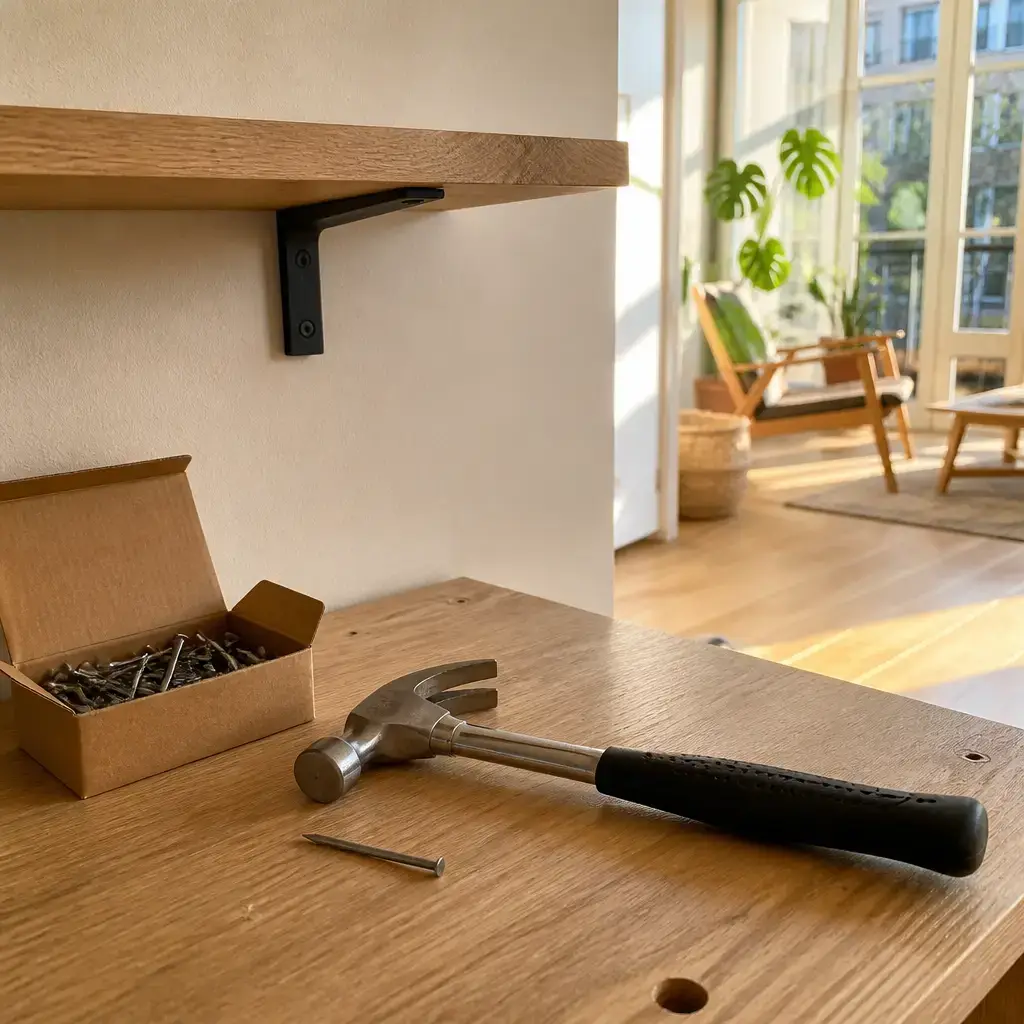
Hast
“Hast” means “have” in the question “Hast du einen Hammer, den ich benutzen kann?” It comes first because this is a yes-or-no question; a useful pattern is “Hast du ...?” when asking whether someone has something.
du
“du” means “you” in “Hast du einen Hammer, den ich benutzen kann?” It addresses one person informally and is used as the subject of the question.
einen
“einen” means “a” or “an” before Hammer in “einen Hammer”. It introduces the particular object being requested; a useful pattern is “einen” followed by the object in a request such as “Hast du einen ...?”.
Hammer
“Hammer” means “hammer” in “einen Hammer”. It names the tool that the speaker wants to use; you can reuse it as the object after verbs such as haben or benutzen.
den
“den” refers back to “einen Hammer” in “den ich benutzen kann” and means “that” or “which” here. It introduces the information that the speaker can use the hammer; a useful pattern is a noun followed by “den ... kann” when referring back to this masculine object.
ich
“ich” means “I” in “den ich benutzen kann”. It is the person who can use the hammer and is the subject of the clause; use it before an action you perform.
benutzen
“benutzen” means “use” in “den ich benutzen kann”. It names the action the speaker wants to perform with the hammer; with “kann”, the infinitive stays at the end of this clause.
kann
“kann” means “can” in “den ich benutzen kann”. It expresses ability or permission to use the hammer and comes at the end because it is in the relative clause; a useful pattern is “ich kann” plus an action.
Benutze
“Benutze” means “use” as an informal command in “Benutze diesen hier”. It directly tells one person what to do; the same command pattern can be followed by the object being used.
diesen
“diesen” means “this one” in “diesen hier”. It points to a particular hammer available nearby; it is useful when selecting one item from several visible items.
hier
“hier” means “here” in “diesen hier”. It indicates the item located here, near the speakers; it can be added when pointing out a nearby object.
aber
“aber” means “but” in “aber halte den Griff fest”. It connects the permission to use the hammer with an important instruction; use it to introduce a contrasting point or limitation.
halte
“halte” means “hold” or “grip” as an informal command in “halte den Griff fest”. It tells one person to keep hold of the handle; a useful pattern is “halte” followed by the object and “fest” for holding something firmly.
Griff
“Griff” means “handle” in “den Griff”. It names the part of the hammer that should be held; it can be used after an article when identifying a specific handle.
fest
“fest” means “firmly” or “tightly” in “halte den Griff fest”. Together with halte, it says to keep a firm grip on the handle; this pattern is useful for instructions involving physical objects.
brauche
“brauche” means “need” in “Ich brauche ihn”. It states that the speaker requires the hammer for a purpose; a useful pattern is “Ich brauche” followed by the needed object.
ihn
“ihn” means “it” in “Ich brauche ihn” and refers to the hammer. It is used here instead of repeating Hammer; a useful reuse point is to use it when referring back to this masculine object.
um
“um” begins the purpose expression “um dieses Regal zu reparieren” and contributes the meaning “in order to”. Use “um ... zu” before an infinitive when explaining the purpose of an action.
dieses
“dieses” means “this” in “dieses Regal”. It identifies a particular shelf that is being repaired; it is placed before the noun it points out.
Regal
“Regal” means “shelf” in “dieses Regal”. It names the object that needs repair; it is the object of reparieren in this purpose expression.
zu
“zu” is part of “zu reparieren” and marks the infinitive in the purpose expression “um dieses Regal zu reparieren”. A useful pattern is “um ... zu” followed by the action being done for a purpose.
reparieren
“reparieren” means “repair” or “fix” in “dieses Regal zu reparieren”. It names the action performed on the shelf; a useful pattern is reparieren followed by the object that needs fixing.
Brauchst
“Brauchst” means “need” in the question “Brauchst du auch Nägel?” It asks one person whether another item is required; a useful pattern is “Brauchst du ...?” when offering or checking for a need.
auch
“auch” means “also” in “Brauchst du auch Nägel?” It adds nails to the hammer already being discussed; use it when asking whether an additional item is needed.
Nägel
“Nägel” means “nails” in “Brauchst du auch Nägel?” It refers to the nails that may be needed for the shelf; it is the item being asked about after brauchst.
Ein
“Ein” means “one” or “a” in “Ein Nagel würde helfen”. It specifies that a single nail would be useful; this pattern can introduce one helpful item.
Nagel
“Nagel” means “nail” in “Ein Nagel”. It names the single item that would help with the shelf; it follows Ein to identify that item.
würde
“würde” means “would” in “Ein Nagel würde helfen”. It presents the nail’s usefulness as a possible or expected result; a useful pattern is “würde” followed by an infinitive such as helfen.
helfen
“helfen” means “help” in “würde helfen”. It describes the useful effect of one nail in this situation; with würde, it appears as the infinitive at the end of the sentence.
Sie
“Sie” means “they” in “Sie sind in der Kiste neben dir” and refers to the nails. It is the subject of the location statement; use this plural subject with a verb describing where the items are.
sind
“sind” means “are” in “Sie sind in der Kiste neben dir”. It links the nails to their location in the box; a useful pattern is “Sie sind in ...” when saying where several things are.
in
“in” means “in” in “in der Kiste”. It places the nails inside the box; a common reuse pattern is “in” followed by a container or place.
der
“der” means “the” in “in der Kiste”. Together with Kiste, it identifies the specific box where the nails are; it is part of the location expression after in.
Kiste
“Kiste” means “box” in “in der Kiste”. It names the container holding the nails; it can be used after in to describe an object’s location inside a box.
neben
“neben” means “beside” or “next to” in “neben dir”. It identifies the box as being beside the person addressed; a useful pattern is “neben” followed by the nearby person or thing.
dir
“dir” means “you” in “neben dir”. It identifies the person next to whom the box is located; after neben, it refers to the person beside whom something is.
bringe
“bringe” means “bring” in “Ich bringe den Hammer zurück”. Together with zurück, it expresses returning the hammer; a useful pattern is “Ich bringe” followed by the object and zurück.
zurück
“zurück” means “back” in “Ich bringe den Hammer zurück”. It completes the meaning of bringing the hammer back to its place; it is placed after the object in this sentence.
wenn
“wenn” means “when” in “wenn ich fertig bin”. It introduces the time at which the speaker will return the hammer; a useful pattern is “wenn” followed by a clause describing when something happens.
fertig
“fertig” means “finished” or “done” in “wenn ich fertig bin”. It describes the speaker’s state after completing the task; the reusable expression “fertig sein” means to be finished.
bin
“bin” means “am” in “wenn ich fertig bin”. It completes the expression “ich bin fertig”, meaning that the speaker is done; in this subordinate clause, it comes at the end.
Leg
“Leg” means “place” or “leave” as an informal command in “Leg ihn hier zu den anderen Werkzeugen”. It tells one person where to put the hammer; a useful pattern is “Leg” followed by the object and its destination.
anderen
“anderen” means “other” in “den anderen Werkzeugen”. It identifies the tools as the other tools in the shared collection; it helps distinguish them from the hammer being returned.
Werkzeugen
“Werkzeugen” means “tools” in “zu den anderen Werkzeugen”. It names the group where the hammer should be placed; the expression “zu den anderen Werkzeugen” gives the destination of the hammer.
bist
“bist” means “are” in “wenn du fertig bist”. It describes whether the person addressed has finished; a useful pattern is “wenn du ... bist” for a condition involving that person.