Der
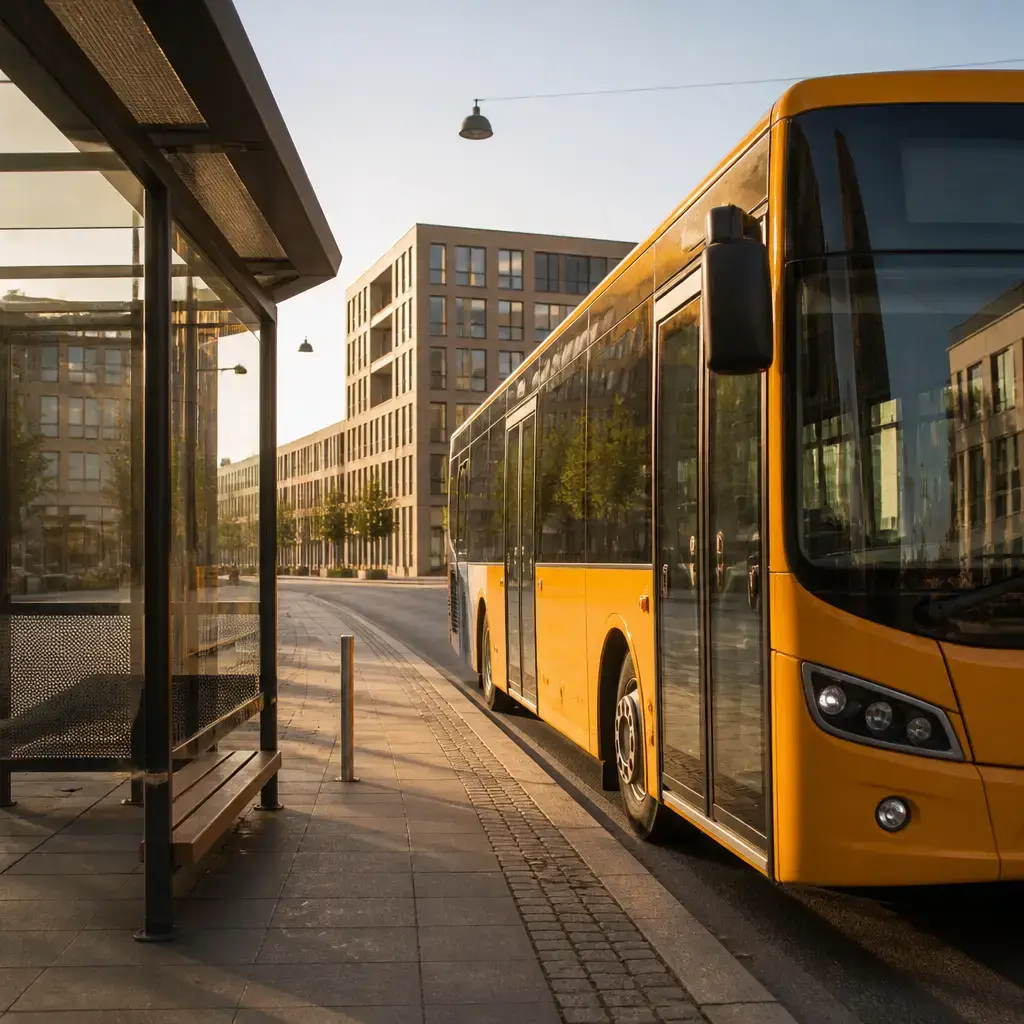
“Der” means “the” in “Der Bus ist da” and “der richtige Bus”. It is the definite article used with “Bus” in these dialogue phrases. A reusable pattern is “der + noun” when referring to a specific masculine noun.
Bus
“Bus” means “bus” in “Der Bus ist da” and “der richtige Bus”. It names the vehicle the speakers are checking before boarding. A common reuse pattern is “mit dem Bus” for travelling by bus.
ist
“Ist” means “is” in “Der Bus ist da” and “der richtige Bus”. Here it links the subject to a location or description. A reusable pattern is “ist + place” or “ist + description”.
da
“Da” means “here” in “Der Bus ist da”, referring to the bus being present at the stop. It is used after “ist” to state that something is there. A new example is “Der Fahrer ist da” for “The driver is here.”
Glaubst
“Glaubst” means “do you think” or “do you believe” in “Glaubst du, das ist der richtige Bus?”. It is the form of “glauben” used with “du” in this question. A reusable pattern is “Glaubst du, …?” when asking for someone’s opinion.
du
“Du” means “you” in “Glaubst du, das ist der richtige Bus?”. It identifies the person being asked for an opinion. It commonly appears with a verb form addressing one person directly.
das
“Das” means “this” in “das ist der richtige Bus”, referring to the bus being considered. Together with “ist” and the description, it identifies the bus. A reusable pattern is “Das ist …” when identifying or describing something.
richtige
“Richtige” means “right” or “correct” in “der richtige Bus”, meaning the bus that goes to the intended destination. Its form appears with “der” and “Bus” in this phrase. A reusable pattern is “der richtige + noun” when selecting the correct option.
Fragen
“Fragen” means “let’s ask” in “Fragen wir den Fahrer”. The whole phrase proposes asking the driver, and “Fragen” expresses the shared action. A reusable pattern is “Fragen wir + person” when suggesting that both speakers ask someone.
wir
“Wir” means “we” in “Fragen wir den Fahrer” and “Steigen wir ein”. It includes the speaker and the other passenger in the suggested action. A common reuse pattern is “wir + verb” for an action done by a group including the speaker.
den
“Den” means “the” in “den Fahrer”, referring to the specific driver they want to ask. It appears directly before “Fahrer” in this phrase. A reusable pattern is “den + noun” when referring to a specific masculine object or person in this type of phrase.
Fahrer
“Fahrer” means “driver” in “den Fahrer”. It refers to the person driving the bus, whom the passengers ask for information. A new example is “Ich frage den Fahrer” for “I ask the driver.”
bevor
“Bevor” means “before” in “bevor wir einsteigen”. It introduces the action that should happen before boarding. A reusable pattern is “bevor + clause” when placing one action earlier than another.
einsteigen
“Einsteigen” means “to get on” or “to board” in “bevor wir einsteigen”. It refers specifically to entering the bus as a passenger. A common reuse pattern is “in den Bus einsteigen” for “get on the bus.”
Entschuldigung
“Entschuldigung” means “excuse me” in “Entschuldigung, fährt dieser Bus zum Bahnhof?”. It politely gets the driver’s attention before the question. It is useful when addressing an unfamiliar person politely.
fährt
“Fährt” means “goes” or “travels” in “fährt dieser Bus zum Bahnhof?”. Here it asks about the bus’s route to the station. It is the form of “fahren” used with “dieser Bus” in this question. A reusable pattern is “Fährt dieser Bus zu …?” when checking a bus route.
dieser
“Dieser” means “this” in “dieser Bus”, pointing to the bus the passengers are about to board. It appears directly before “Bus” in the question. A reusable pattern is “dieser + noun” when identifying one specific nearby item.
zum
“Zum” means “to the” in “zum Bahnhof”. It marks the station as the destination of the bus. It is used here as part of the fixed destination phrase “zum Bahnhof”; a new example is “zum Hotel” for “to the hotel.”
Bahnhof
“Bahnhof” means “station” in “zum Bahnhof” and “Der Bahnhof”. It refers to the train station that is the bus’s destination and last stop. A common reuse pattern is “zum Bahnhof fahren” for “go to the station.”
die
“Die” means “the” in “die letzte Haltestelle”. It introduces the specific stop being described as the last one. A reusable pattern is “die + noun” with a feminine noun such as “Haltestelle” in this phrase.
letzte
“Letzte” means “last” in “die letzte Haltestelle”. It identifies the station as the final stop on the route. A common reuse pattern is “die letzte + noun” when referring to the final item in a sequence.
Haltestelle
“Haltestelle” means “stop” in “die letzte Haltestelle”. It refers to a place where a bus stops for passengers. A reusable pattern is “an der Haltestelle” for “at the bus stop.”
Dann
“Dann” means “then” in “Dann ist das der richtige Bus”. It signals the conclusion that follows from the station being the last stop. A common reuse pattern is “Dann + sentence” when stating what follows from new information.
Steigen
“Steigen” means “let’s get on” in “Steigen wir ein”. The whole phrase tells both passengers to board the bus. A reusable pattern is “Steigen wir ein” when suggesting that a group board a vehicle.
ein
“Ein” contributes the meaning “in” or “on” in “Steigen wir ein”. Together, “Steigen wir ein” means “let’s get on”, so this word works with “Steigen” as part of the boarding expression. Do not use it alone as the complete meaning of the phrase.
und
“Und” means “and” in “Steigen wir ein und gehen weiter nach hinten”. It joins the actions of boarding and moving farther inside. A reusable pattern is “verb und verb” when connecting two actions.
gehen
“Gehen” means “go” or “walk” in “gehen weiter nach hinten”. Here it describes moving farther toward the back of the bus. A reusable pattern is “gehen nach …” when describing movement toward a place or direction.
weiter
“Weiter” means “farther” or “onward” in “gehen weiter nach hinten”. It shows that the passengers should continue moving rather than stop near the entrance. A common reuse pattern is “weitergehen” or “weiter + verb” for continuing an action.
nach
“Nach” contributes the directional meaning “toward” in “nach hinten”. Together with “hinten”, it directs the movement toward the back. A reusable pattern is “nach + direction”, such as “nach hinten” for “toward the back.”
hinten
“Hinten” means “at the back” in “nach hinten”. It identifies the direction in which the passengers should move inside the bus. A new example is “Der Fahrer ist hinten” for “The driver is at the back.”
Ich
“Ich” means “I” in “Ich stelle mich in die Mitte des Busses”. It identifies the speaker as the person who will choose a place to stand. It commonly appears before the verb in a simple statement about the speaker’s action.
stelle
“Stelle” means “stand” or “place myself” in “Ich stelle mich in die Mitte des Busses”. The complete expression “stelle mich” describes positioning oneself in a place. A reusable pattern is “Ich stelle mich in …” when saying where you will stand.
mich
“Mich” means “myself” in “Ich stelle mich in die Mitte des Busses”. It shows that the speaker is positioning the speaker’s own body. Together with “stelle”, it forms the expression “stelle mich”, rather than a complete meaning on its own.
in
“In” means “in” in “in die Mitte des Busses”. It introduces the place where the speaker positions themself. A reusable pattern is “in + place” when describing being or moving into a location.
Mitte
“Mitte” means “middle” in “in die Mitte des Busses”. It identifies the central area of the bus as the speaker’s intended position. A common reuse pattern is “in der Mitte” for “in the middle” when describing a location.
des
“Des” means “of the” in “die Mitte des Busses”. It links the middle to the bus, giving the meaning “the middle of the bus”. A reusable pattern is “die Mitte des + noun” when identifying the middle of something.
Busses
“Busses” means “bus” in the phrase “die Mitte des Busses”, which means “the middle of the bus”. It is the form of “Bus” used after “des” in this possessive relationship. A reusable pattern is “des + noun” for expressing “of the …”.