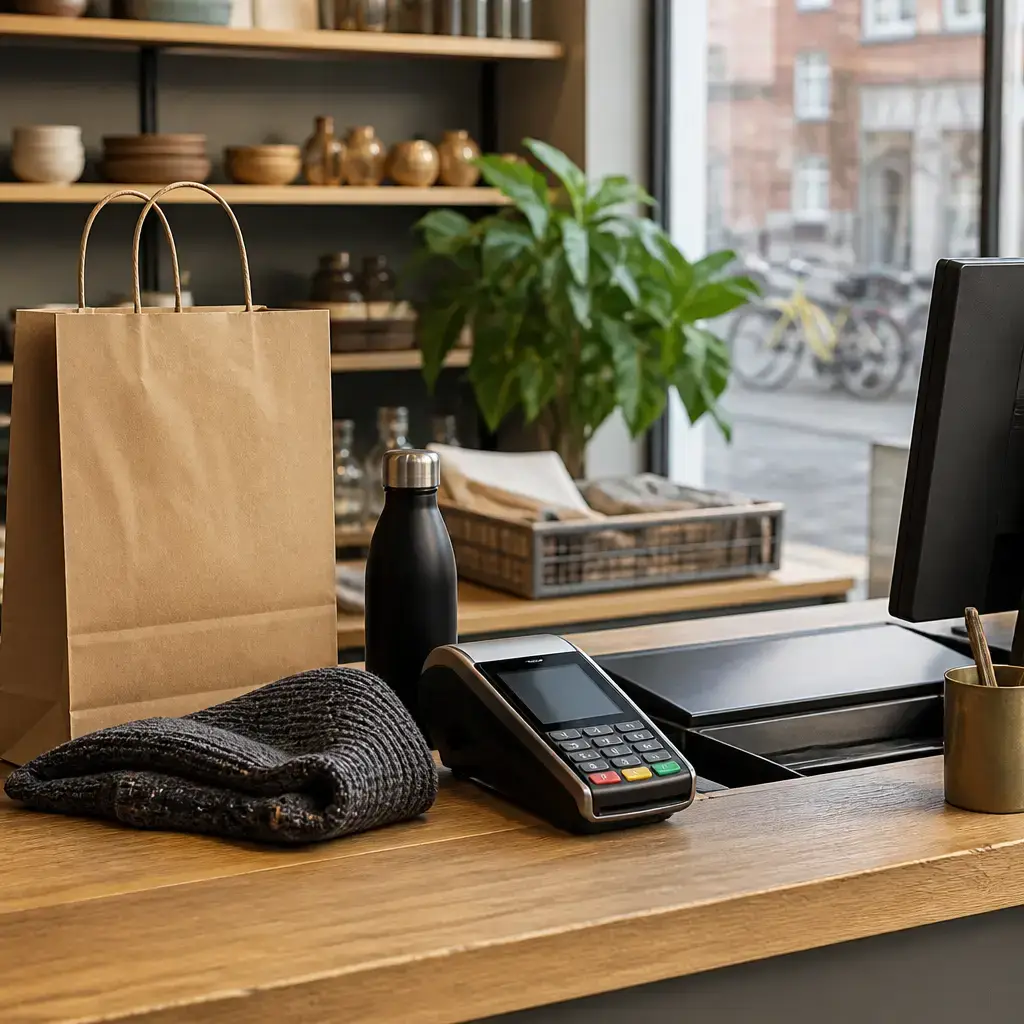
Ich
Ich means “I” and identifies the speaker in Ich habe meine Einkaufstasche vergessen and Ich bezahle mit Karte. It is used as the subject when the speaker talks about themself. A common reuse pattern is Ich + verb.
habe
habe means “have” in Ich habe meine Einkaufstasche vergessen. Together with vergessen, it describes the already completed forgetting. Reuse it in the pattern Ich habe ... vergessen when saying that you forgot something.
meine
meine means “my” and shows that the Einkaufstasche belongs to the speaker in meine Einkaufstasche. It comes directly before the noun it describes. Reuse the pattern meine + noun for something belonging to the speaker.
Einkaufstasche
Einkaufstasche means “shopping bag” and names the bag the speaker forgot. It refers specifically to a bag used for shopping. Use it when asking for or talking about a bag for carrying groceries.
vergessen
vergessen means “forgotten” in Ich habe meine Einkaufstasche vergessen. It describes failing to remember or bring the shopping bag. A reusable pattern is etwas vergessen, with the forgotten thing in the object position.
Sie
Capitalized Sie means formal “you” in Sie können hier eine Tasche kaufen and Bezahlen Sie mit Karte oder bar? Lowercase sie means “them” in Ich kann sie jetzt tragen. Capitalization distinguishes formal address from this pronoun use in the dialogue.
können
können means “can” in Sie können hier eine Tasche kaufen and says that buying a bag is possible for the customer. It is used with another verb, such as kaufen, to express ability or possibility. Reuse können + infinitive.
hier
hier means “here” and points to the shop as the place where a bag can be bought. It gives the location of the possible action. Use hier when indicating the place where something is available or happening.
eine
eine means “a” in eine Tasche and Eine Einkaufstasche. It comes before the feminine nouns Tasche and Einkaufstasche; the capital letter in Eine is because it starts the sentence. Reuse eine before a feminine noun when referring to one non-specific item.
Tasche
Tasche means “bag” in eine Tasche kaufen. Here it refers to a general bag, while Einkaufstasche specifies a shopping bag. The exact reusable phrase eine Tasche kaufen means “buy a bag.”
kaufen
kaufen means “buy” in eine Tasche kaufen. It describes obtaining the bag by paying for it. Reuse kaufen with the item being bought, as in etwas kaufen.
wäre
wäre means “would be” in Eine Einkaufstasche wäre gut. It presents the shopping bag as a helpful or suitable option. Reuse the pattern X wäre gut to say that something would be good or useful.
gut
gut means “good” or, in Eine Einkaufstasche wäre gut, “helpful.” It evaluates the shopping bag as a useful solution to the problem. Reuse it in X wäre gut when suggesting or assessing an option.
Bezahlen
Bezahlen introduces the question Bezahlen Sie mit Karte oder bar? and asks about the customer’s payment method. At the beginning of this question, it comes before formal Sie. Reuse the pattern Bezahlen Sie mit ...? when asking formally how someone will pay.
mit
mit means “with” or “by means of” in mit Karte and identifies the payment method. It connects the action of paying with the method used. Reuse mit + payment method, as in mit Karte bezahlen.
Karte
Karte means “card” in mit Karte. Here it refers to paying with a bank or payment card rather than cash. Reuse it in the payment pattern mit Karte bezahlen.
oder
oder means “or” and offers a choice between Karte and bar in Karte oder bar. It connects the two possible payment methods. Reuse A oder B when presenting two alternatives.
bar
bar means “in cash” in mit Karte oder bar. It names cash as the alternative to paying by card. A common reuse pattern is bar bezahlen for paying in cash.
bezahle
bezahle means “pay” in Ich bezahle mit Karte. The speaker states that they are paying by card. Reuse the pattern Ich bezahle mit + payment method when saying how you are paying.
Brauchen
Brauchen means “need” in Brauchen Sie einen Kassenbon? The formal question asks whether the customer needs a receipt. Reuse Brauchen Sie ...? when politely asking whether someone needs something.
einen
einen means “a” in einen Kassenbon and introduces the receipt being requested. It is the form used before Kassenbon in this sentence. Reuse einen before a masculine noun used as the direct object.
Kassenbon
Kassenbon means “receipt,” specifically the checkout receipt in Brauchen Sie einen Kassenbon? It is the paper the customer may take after paying. Reuse the phrase einen Kassenbon brauchen when asking whether someone needs a receipt.
Bitte
Bitte means “please” and makes Bitte legen Sie den Kassenbon in die Tasche a polite request. It appears at the beginning of the request. Reuse Bitte + verb when politely asking someone to do something.
legen
legen means “put” or “place” in Bitte legen Sie den Kassenbon in die Tasche. It describes placing the receipt inside the bag. Reuse the pattern etwas in ... legen, with the item and its destination included.
den
den means “the” in den Kassenbon and identifies the specific receipt to be placed in the bag. It comes directly before Kassenbon. Reuse den before a masculine noun used as the direct object.
in
in means “into” in in die Tasche because the receipt is being placed inside the bag. It introduces the destination of the action legen. Reuse the pattern etwas in die Tasche legen for putting something into the bag.
die
die means “the” in die Tasche and identifies the specific bag that receives the receipt. Together with in, it forms the destination in die Tasche. Reuse in die Tasche when describing movement or placement into the bag.
sind
sind means “are” in Hier sind Ihre Einkäufe. It presents or points out the groceries for the customer. Reuse Hier sind ... when handing over or indicating several things.
Ihre
Ihre means formal “your” in Ihre Einkäufe. It shows that the groceries belong to the customer being addressed formally. Reuse Ihre + noun in polite service interactions.
Einkäufe
Einkäufe means “groceries” or “purchases” in Hier sind Ihre Einkäufe. In this scene, it refers to the items the customer has bought. Use it for things someone has purchased, especially groceries here.
kann
kann means “can” in Ich kann sie jetzt tragen and expresses the speaker’s ability to carry the groceries. It is used with the verb tragen. Reuse the pattern Ich kann + object + verb when saying what you are able to do.
jetzt
jetzt means “now” in Ich kann sie jetzt tragen. It indicates that the speaker can carry the groceries at this moment, after they have been put in the bag. Reuse jetzt with an action that is happening or becoming possible at the present time.
tragen
tragen means “carry” in sie jetzt tragen. It describes holding and moving the groceries. Reuse it with the thing being carried, as in etwas tragen.