Vi
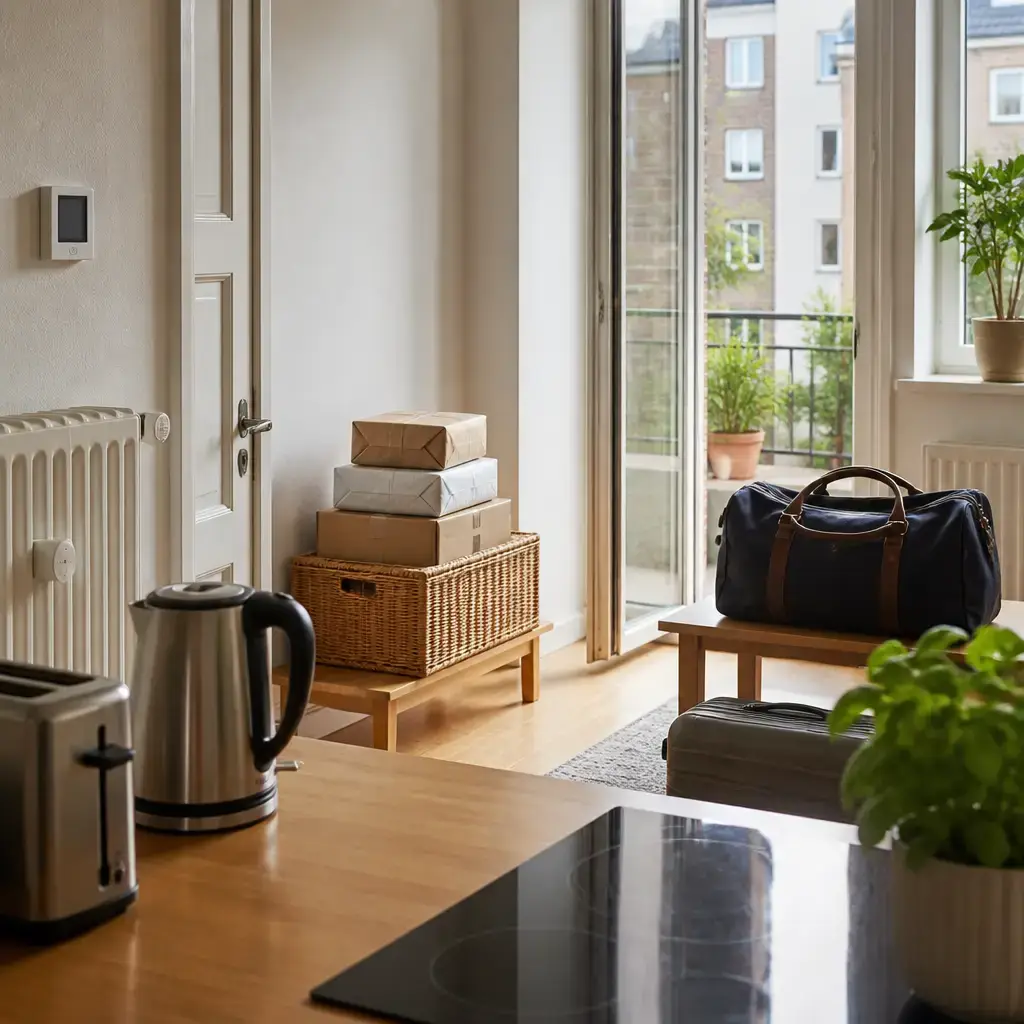
“Vi” means “we” in “Vi skal være væk i flere dage” and refers to the two people speaking together. It is used as the subject before the verb phrase, as in “Vi skal være væk”.
skal
In “Vi skal være væk”, “skal” expresses a planned or expected future situation; in “Skal vi skrue ned for termostaten?”, it asks whether they should do something. It comes before the following verb or verb phrase, such as “skal være” and “Skal vi skrue”.
være
“Være” means “be” in the phrase “skal være væk”. It follows “skal” and describes the situation they expect to be in while travelling.
væk
“Væk” means “away” in “være væk” and describes being away from the apartment. The reusable pattern here is “være væk i flere dage”, meaning to be away for several days.
i
“I” expresses the duration in “i flere dage”, meaning “for several days”. It is placed before the time expression that states how long they will be away.
flere
“Flere” means “several” in “flere dage”, indicating more than one day. It is used directly before the time word “dage”.
dage
“Dage” means “days” in “i flere dage”. Together with “i flere” it states the length of their absence.
så
“Så” means “so” in “så lad os tjekke lejligheden”, introducing the action that follows from being away. It links the situation “Vi skal være væk” to the decision to check the apartment.
lad
“Lad” helps form the suggestion “lad os tjekke lejligheden”, meaning “let’s check the apartment”. In this pattern it is followed by “os” and an infinitive such as “tjekke”.
os
“Os” means “us” in “lad os tjekke lejligheden”. Together, “lad os” addresses the speakers as the people who should carry out the suggested action.
tjekke
“Tjekke” means “check” in “lad os tjekke lejligheden”, where it names the suggested action. It follows “lad os”; the related form “tjekker” appears in “jeg tjekker soveværelset igen nu” for a current checking action.
lejligheden
“Lejligheden” means “the apartment” in “tjekke lejligheden”. The ending is part of the form used for the specific apartment that both speakers are discussing.
en
“En” means “a” in “en ekstra gang”, the expression used for checking something one additional time. It comes before “gang” in this fixed phrase.
ekstra
“Ekstra” means “extra” in “en ekstra gang”, adding the idea of one more check. It modifies “gang” inside the expression “en ekstra gang”.
gang
“Gang” means “time” or “occasion” in “en ekstra gang”, not a physical movement. The full expression “tjekke lejligheden en ekstra gang” means to check the apartment once more.
Jeg
“Jeg” means “I” in “Jeg har taget stikkene ud” and “Jeg bad også vores nabo”. It marks the speaker as the subject of the action.
har
“Har” means “have” in “Jeg har taget stikkene ud”. Here it helps present the unplugging as an action the speaker has completed, followed by “taget”.
taget
“Taget” means “taken” in “har taget stikkene ud”. With “ud” and “af de små apparater”, it describes removing the plugs from the appliances.
stikkene
“Stikkene” means “the plugs” in “taget stikkene ud”. It is the object being removed in the expression “tage stikkene ud”.
ud
In “taget stikkene ud”, “ud” means “out” and shows movement away from the appliances. It also appears in “se beboet ud”, where it is part of the expression meaning “look occupied”.
af
“Af” means “from” in “ud af de små apparater”, identifying where the plugs are removed from. It follows “ud” in this removal expression.
de
“De” means “the” in “de små apparater”. It introduces the specific appliances whose plugs have been removed.
små
“Små” means “small” in “de små apparater”. It describes the appliances and comes before the noun “apparater”.
apparater
“Apparater” means “appliances” in “de små apparater”. The phrase identifies the small household devices from which the plugs were removed.
og
“Og” means “and” and joins actions or statements, as in “taget stikkene ud ... og slukket for komfuret”. It connects the two completed preparation actions.
slukket for
“Slukket for” means “turned off” in “slukket for komfuret”. “Slukket” expresses the switched-off action, while “for” links that action to the appliance being turned off; together they describe turning off the stove.
Er
“Er” means “is” or “are” in the questions “Er altandøren låst?” and “er vinduerne i soveværelset sikre?”. It begins a question about the condition or security of something.
altandøren
“Altandøren” means “the balcony door” in “Er altandøren låst?” and “Altandøren er låst”. It identifies the particular door whose lock is being checked.
låst
“Låst” means “locked” in “altandøren låst” and “Altandøren er låst”. It describes the security state of the balcony door.
vinduerne
“Vinduerne” means “the windows” in “vinduerne i soveværelset”. The phrase identifies the bedroom windows whose security is being checked.
soveværelset
“Soveværelset” means “the bedroom” in “vinduerne i soveværelset” and “tjekker soveværelset igen”. It names the room being checked.
sikre
“Sikre” means “secure” or “safe” in “er vinduerne i soveværelset sikre?”. It describes whether the bedroom windows are in a safe condition.
igen
“Igen” means “again” in “tjekker soveværelset igen nu”. It shows that the bedroom is being checked one more time.
nu
“Nu” means “now” in “jeg tjekker soveværelset igen nu”. The lowercase form “nu” also appears at the end of the sentence and places the checking in the present moment.
skrue ned for
“Skrue ned for” means “turn down” or “lower” in “skrue ned for termostaten”. “Skrue” supplies the adjustment action, “ned” gives the downward direction, and “for” links the action to the thermostat.
termostaten
“Termostaten” means “the thermostat” in “skrue ned for termostaten”. It is the device whose setting they are considering lowering.
mens
“Mens” means “while” in “mens vi er væk”. It introduces the period during which they will be away.
Sæt
“Sæt” means “set” in the instruction “Sæt den lavere”. It tells the other person to adjust the thermostat to a lower setting.
den
“Den” means “it” in “Sæt den lavere” and refers back to the thermostat. It is placed before the instruction about setting it lower.
lavere
“Lavere” means “lower” in “Sæt den lavere”, referring to a lower thermostat setting. It describes the desired adjustment rather than the apartment’s temperature itself.
men
“Men” means “but” in “men ikke så lavt”. It introduces the limit on how far the thermostat should be lowered.
ikke
“Ikke” means “not” in “ikke så lavt”. It negates the idea of lowering the setting to an excessively low level.
lavt
“Lavt” means “low” in “ikke så lavt, at lejligheden bliver for kold”. It describes the level of the thermostat setting and is followed by the result clause introduced by “at”.
at
“At” means “that” in “så lavt, at lejligheden bliver for kold”. It introduces the result that must be avoided: the apartment becoming too cold.
bliver
“Bliver” means “gets” or “becomes” in “lejligheden bliver for kold”. It describes a change in the apartment’s temperature.
for
“For” means “too” in “for kold”, showing that the apartment should not become excessively cold. It comes directly before the describing word “kold”.
kold
“Kold” means “cold” in “lejligheden bliver for kold”. Together with “for” it describes an undesirable temperature that is excessively cold.
bad
“Bad” means “asked” in “Jeg bad også vores nabo om at hente eventuelle pakker”. It describes the speaker making a request of the neighbor.
også
“Også” means “also” in “Jeg bad også vores nabo”. It adds the request about the neighbor to the other preparations already mentioned.
vores
“Vores” means “our” in “vores nabo”. It identifies the neighbor as belonging to or being associated with both speakers.
nabo
“Nabo” means “neighbor” in “vores nabo”. It names the person asked to collect packages while the speakers are away.
om
“Om” helps introduce the requested action in “bad også vores nabo om at hente eventuelle pakker”. In this construction, it is followed by “at” and the action “hente”.
hente
“Hente” means “collect” or “pick up” in “om at hente eventuelle pakker”. It names the action the neighbor is asked to perform.
eventuelle
“Eventuelle” means “any” or “possible” in “eventuelle pakker”. It leaves open which packages may arrive during the speakers’ absence.
pakker
“Pakker” means “packages” in “hente eventuelle pakker”. It is the thing the neighbor is asked to collect.
Det
“Det” means “that” or “it” in “Det får lejligheden til at se beboet ud”, referring to the package arrangement just mentioned. The same word appears as lowercase “det” in “det var det værd”, referring to the checklist activity.
får
“Får” means “makes” in “Det får lejligheden til at se beboet ud”. It expresses that the arrangement causes the apartment to appear occupied.
til
“Til” is part of the causative pattern “får lejligheden til at se beboet ud”. It connects what is caused, “lejligheden”, with the resulting appearance introduced by “se”.
se
“Se” means “look” or “appear” in “til at se beboet ud”. Together with “beboet ud”, it describes how the apartment appears to other people.
beboet
“Beboet” means “occupied” or “inhabited” in “se beboet ud”. It describes the appearance the apartment should give while the residents are away.
føler
“Føler” means “feel” in “Nu føler jeg mig mere rolig”. It introduces the speaker’s emotional state after completing the checks.
mig
“Mig” means “myself” or “me” in “føler jeg mig mere rolig”. It refers back to the speaker as the person experiencing the feeling.
mere
“Mere” means “more” in “mere rolig”. It shows that the speaker feels calmer than before the preparations.
rolig
“Rolig” means “calm” or “relaxed” in “jeg føler mig mere rolig”. It describes the speaker’s emotional state about leaving.
ved
“Ved” means “about” or “at” in “rolig ved at tage af sted”, connecting the feeling of calm with the prospect of leaving. It is followed here by “at tage af sted”.
tage af sted
“Tage af sted” means “leave” or “go away” in “rolig ved at tage af sted”. “Tage”, “af”, and “sted” work together as the full expression for setting off, rather than being interpreted separately here.
tog
“Tog” means “took” in “Det tog lidt tid”. It describes the amount of time required to go through the checklist.
lidt
“Lidt” means “a little” in “Det tog lidt tid”. It indicates that the checklist review required a small amount of time.
tid
“Tid” means “time” in “Det tog lidt tid”. The phrase “tog lidt tid” states how long the checklist activity required.
gå
“Gå” means “go through” in “at gå tjeklisten igennem”, referring to reviewing the checklist. It is used with “igennem” to describe examining the checklist from beginning to end.
tjeklisten
“Tjeklisten” means “the checklist” in “gå tjeklisten igennem”. It is the specific list that the speakers review before leaving.
igennem
“Igennem” means “through” in “gå tjeklisten igennem”. With “gå” and “tjeklisten”, it forms the expression for going through or reviewing the checklist.
var
“Var” means “was” in “men det var det værd”. It describes the value of the completed checklist activity in the past.
det værd
“Det værd” means “worth it” in “det var det værd”. “Det” refers to going through the checklist, while “værd” expresses that the time and effort had sufficient value.