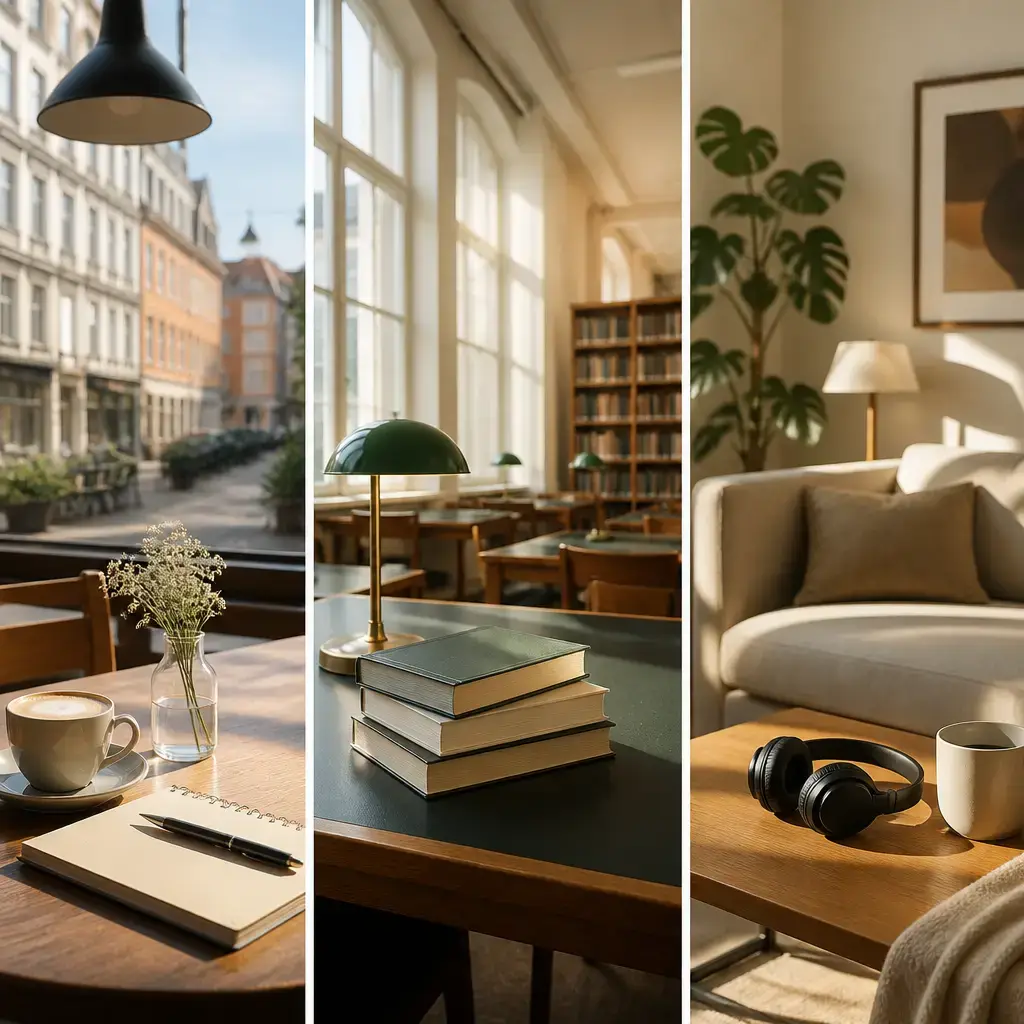
Jeg
“Jeg” means “I” here: the speaker identifies themself as the person who needs to choose. It is used as the subject before a verb, as in “Jeg skal vælge”.
skal
“skal” expresses that the speaker needs to or is going to choose. It is used before the infinitive “vælge”; a common pattern is “Jeg skal” followed by an action.
vælge
“vælge” means “to choose” in “Jeg skal vælge”. It is the action controlled by “skal”, and the same pattern can be reused with “skal” plus an infinitive.
det
In “det bedste sted”, “det” means “the” and introduces the specific place being chosen. It is part of the noun phrase “det bedste sted”, not a separate object.
bedste
“bedste” means “best” and identifies the place as the most suitable choice in this context. It is the superlative form related to “god”; a reusable pattern is “det bedste” plus a noun.
sted
“sted” means “place”, specifically the place where the speaker will study. It appears in “det bedste sted at studere”; a common pattern is “et sted” followed by a purpose or activity.
at
In “at studere”, “at” marks the infinitive meaning “to study”. It connects the activity to “sted”, showing what the place is for.
studere
“studere” means “to study” in “at studere”. It follows the infinitive marker “at”; the pattern “at” plus an infinitive is used to name an action or purpose.
Tænk
“Tænk” tells the other person to think about several factors before choosing. It is the command form related to the citation form “tænke”; a common pattern is “Tænk på” followed by a topic.
på
In “Tænk på støj”, “på” introduces what the listener should consider, so the phrase means “think about noise”. The reusable pattern is “Tænk på” plus a person, thing, or issue.
støj
“støj” means “noise”, one of the factors to consider when choosing a study place. It can be listed after “Tænk på” together with other conditions.
lys
In “Tænk på støj, lys, komfort og forstyrrelser”, “lys” means “light” as a condition in the room. The same form appears in “Caféen er lys”, where it means “bright”, so its meaning depends on the surrounding sentence.
komfort
“komfort” means “comfort”, referring to how comfortable the study place is. It is one of the nouns listed after “Tænk på”, a useful pattern for naming several things to consider.
og
“og” connects items in a list: “støj, lys, komfort og forstyrrelser” means noise, light, comfort, and distractions. It is also used to connect actions in “Brug biblioteket ... og øv dig”.
forstyrrelser
“forstyrrelser” means “distractions”, referring to things that interrupt concentration. It is used as one of the conditions to evaluate when choosing a place to study.
Caféen
“Caféen” means “the cafe”, the specific cafe being compared with the library and home. It is the definite form related to “café”; a common pattern is a place name followed by “er” and a description.
er
“er” means “is” and describes the cafe as bright in “Caféen er lys”. It is used between the subject and a description of that subject.
men
“men” means “but” and introduces a problem that contrasts with the cafe being bright. It connects two contrasting parts of the sentence, as in “er lys, men ...”.
folk
“folk” means “people”, referring to people moving past the speaker’s table. It is the subject of “bliver ved med at gå forbi”; a common pattern is “folk” followed by an action.
bliver
In “bliver ved med at gå forbi”, “bliver” helps express that the action continues, so the people keep walking past. It is the present form related to “blive”; the complete continuing-action pattern is “bliver ved med at” plus an infinitive.
ved
In “bliver ved med at gå forbi”, “ved” is part of the construction meaning that the action continues. It should be understood together with “bliver” and “med”, not as the whole meaning of “keep” by itself.
med
In “bliver ved med at gå forbi”, “med” completes the continuing-action construction with “bliver ved”. Together, the expression says that the people continue walking past the table.
gå
In “gå forbi”, “gå” means “walk” or “go”, describing the people’s movement. It follows “at” in “bliver ved med at gå” and combines with “forbi” to mean moving past.
forbi
In “gå forbi mit bord”, “forbi” means “past”, showing that the people move past the speaker’s table. The reusable pattern is “gå forbi” followed by the person or place being passed.
mit
“mit” means “my” in “mit bord”, identifying the table as belonging to or being used by the speaker. It comes directly before the noun in the possessive pattern “mit” plus a noun.
bord
“bord” means “table”, the place beside which the people are walking. It appears in the phrase “mit bord”; a common pattern is a possessive followed by “bord” when identifying someone’s table.
Al
In “Al den bevægelse”, “Al” means “all” and emphasizes the total amount of movement. It works with the following phrase to refer to all the movement around the speaker.
den
In “Al den bevægelse”, “den” helps identify the movement being discussed as that particular movement. Together, “Al den bevægelse” means “all that movement” in this situation.
bevægelse
“bevægelse” means “movement”, referring to people moving around the cafe. It is the subject of the statement about what can make concentration difficult.
kan
“kan” expresses possibility here: all the movement can make concentration difficult. It is the present form related to “kunne”; a common pattern is “kan” followed by an infinitive.
gøre
In “kan gøre det svært”, “gøre” means “make”, describing the effect that the movement may have. It follows “kan” and appears in the pattern “gøre det” plus a description of the result.
svært
In “gøre det svært at koncentrere sig”, “svært” means “difficult” and describes concentrating as hard. The reusable pattern is “gøre det svært at” followed by an action.
koncentrere
In “at koncentrere sig”, “koncentrere” means “concentrate” or “focus”. It is used with the reflexive element “sig”; the full expression means to focus oneself.
sig
In “koncentrere sig”, “sig” refers back to the person who is concentrating and is part of the reflexive expression meaning “concentrate”. It stays with “koncentrere” in this reusable pattern.
Biblioteket
“Biblioteket” means “the library”, the quieter place considered for reading. It is the definite form related to “bibliotek”; it appears as the subject in “Biblioteket er mere stille” and as the object in “Brug biblioteket”.
mere
In “mere stille”, “mere” means “more” and makes the library quieter in comparison with the cafe. A common pattern is “mere” plus a description when comparing two places or things.
stille
In “Biblioteket er mere stille”, “stille” means “quiet”. Together with “mere”, it describes the library as quieter than the other option being discussed.
ikke
“ikke” negates the statement “jeg kan øve mig”, so “kan ikke øve mig” means “cannot practice”. It normally appears with the verb phrase that is being denied.
øve
In “øve mig i at tale”, “øve” means “practice”. It is part of the construction “øve sig i” for practicing an activity or skill.
mig
In “øve mig i at tale”, “mig” refers to the speaker as the person doing the practice. Together with “øve” and “i”, it forms the expression for practicing something oneself.
i
In “øve mig i at tale”, “i” introduces the skill or activity being practiced. The reusable pattern is “øve sig i” followed by an activity.
tale
In “at tale”, “tale” means “to speak”, the skill the speaker wants to practice. It follows “at” in the pattern “øve mig i at” plus an action.
der
In “tale der”, “der” means “there”, referring to the library just mentioned. It indicates the place where speaking practice cannot take place.
Brug
“Brug” tells the listener to use the library for reading. It is the command form related to the citation form “bruge”; a common pattern is “Brug” followed by a place or object and its purpose.
til
In “Brug biblioteket til at læse”, “til” introduces the purpose for using the library: reading. The reusable pattern is “bruge noget til at” followed by an activity.
læse
In “til at læse”, “læse” means “to read”, the activity assigned to the library. It follows “at” after “til”, forming a purpose expression.
så
Here “så” means “then” and marks the next step after reading in the library. It helps organize the suggested sequence: use the library first, then practice speaking at home.
derhjemme
“derhjemme” means “at home”, the place suggested for speaking practice. It is used as a place expression, as in “øv dig ... derhjemme”.
et
In “et passende sted”, “et” means “a” and introduces one suitable place. It is the indefinite article used before the noun phrase “passende sted”.
passende
“passende” means “suitable” or appropriate for the task. In “et passende sted”, it describes a place that fits the particular activity.
hver
“hver” means “each” and shows that the speaker wants a suitable place separately for every task. The reusable pattern is “hver” followed by a singular noun, as in “hver opgave”.
opgave
“opgave” means “task”, referring to activities such as reading and speaking practice. It appears after “hver” in “hver opgave”, meaning each task.
klart
In “Et klart valg”, “klart” means “clear”, describing a decision that is definite and easy to follow. It is the form related to “klar” used in this noun phrase.
valg
“valg” means “choice”, referring to the decision about which place to use for each activity. A common pattern is “et valg” followed by a description such as “klart”.
burde
“burde” expresses an expectation or recommendation that the clear choice should make studying less stressful. It is used before “gøre” in the pattern “burde” plus an infinitive.
mindre
“mindre” means “less” in “mindre stressende”, reducing the amount of stress associated with studying. A common pattern is “mindre” plus a description when comparing the degree of a quality.
stressende
“stressende” means “stressful” and describes studying as causing stress. In “mindre stressende at studere”, it is modified by “mindre” to mean less stressful.