Jeg
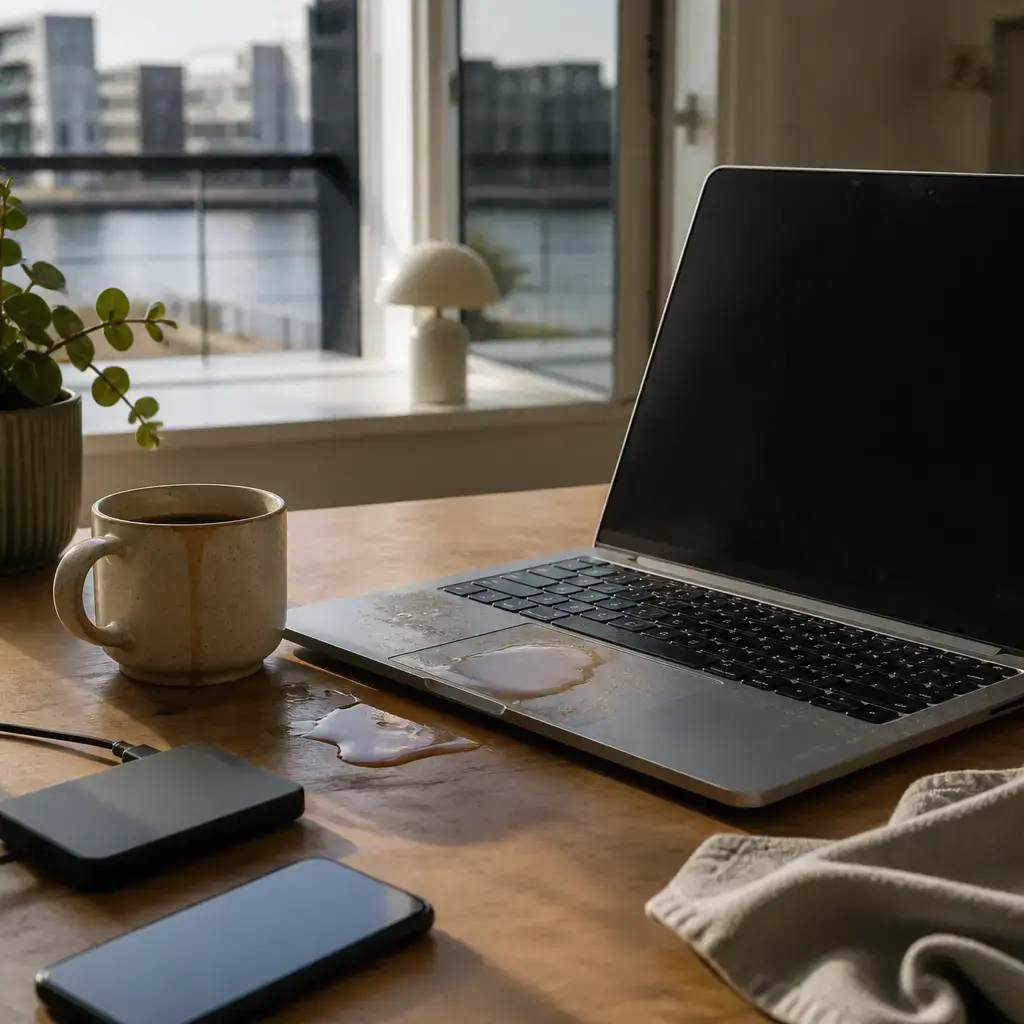
“Jeg” means “I” and identifies the speaker in “Jeg spildte kaffe”. It is used as the subject when talking about yourself.
spildte
“Spildte” describes the speaker accidentally spilling coffee in “Jeg spildte kaffe”. It is used with the spilled substance, such as “kaffe” here.
kaffe
“Kaffe” means coffee, the liquid that was spilled. In “spildte kaffe”, it is the substance affected by the action.
i
In “i nærheden af min bærbare computer”, “i” places the spill in a location: near the laptop. It commonly introduces a place or area where something is located.
nærheden
“Nærheden” means the vicinity or nearby area in “i nærheden af min bærbare computer”. The phrase “i nærheden af” locates something close to a person or object.
af
In “nærheden af min bærbare computer”, “af” connects the nearby area with the laptop. In “De fleste af filerne”, it identifies the files from which most are being counted.
min
“Min” means “my” and shows that the laptop belongs to or is associated with the speaker in “min bærbare computer”. It comes directly before the thing being identified as the speaker’s.
bærbare
“Bærbare” specifies that the computer is portable in “min bærbare computer” and “den bærbare computer”. Together with “computer”, it refers to a laptop.
computer
“Computer” means computer and identifies the device involved in the accident. In “bærbare computer”, it forms the expression for a laptop.
og
“Og” means “and” and links the spilled-coffee statement with the information about liquid entering the laptop. It joins two related parts of the same account.
der
In “der kom noget væske ind under tastaturet”, “der” introduces the fact that something came in. This construction presents something entering or appearing in a location.
kom
“Kom” describes the liquid getting into the laptop in “der kom noget væske ind under tastaturet”. Here it works with “ind” to show movement into an interior space.
noget
“Noget” means some or an unspecified amount of something in “noget væske”. It is used here because the amount of liquid is not specified.
væske
“Væske” means liquid and identifies what entered under the keyboard. It can be used for an unspecified liquid such as the coffee in this situation.
ind
“Ind” means in or inside and shows direction in “kom noget væske ind under tastaturet”. It marks movement toward the inside of something.
under
“Under” means below or underneath in “under tastaturet”. It introduces the object that the liquid went beneath.
tastaturet
“Tastaturet” means the keyboard, specifically the keyboard under which the liquid went. In “under tastaturet”, it identifies the reference point for the location.
Tag
“Tag” gives the instruction to take or remove something in “Tag stikket ud”. It is used here to tell someone to remove the plug.
stikket
“Stikket” means the plug in “Tag stikket ud”. It is the object being removed from the laptop’s power connection.
ud
“Ud” means out and completes “Tag stikket ud”, which tells someone to unplug the device. It shows movement away from the connection.
med det samme
“Med det samme” means immediately or at once. “Med” contributes the linking idea of “with”, “det” refers to “the”, and “samme” means “same”; together they form the time expression “at once” rather than a literal instruction.
sluk
“Sluk” gives the instruction to turn the laptop off in “sluk den”. It is used as a direct command about switching off a device.
den
“Den” refers back to the laptop or device in “sluk den”, “ligger på den”, and “se på den”. It lets the speaker refer to the already mentioned device without repeating its name.
hvis
“Hvis” means “if” and introduces the condition in “hvis den stadig kører”. It is used to connect an instruction with a situation that may or may not apply.
stadig
“Stadig” means “still” in “den stadig kører”, showing that the laptop may continue to be operating. It commonly appears with a verb when a state continues.
kører
“Kører” means is running or operating in “den stadig kører”. With a device, it describes whether the device is currently functioning or switched on.
Skal
“Skal” helps form the question “Skal jeg prøve at tørre den med en hårtørrer?”, asking whether the speaker should do something. “Skal jeg” is a reusable way to ask whether one should take an action.
prøve
“Prøve” means try in “Skal jeg prøve at tørre den”. The pattern “prøve at” introduces an action that someone is considering attempting.
at
In “prøve at tørre” and “uden at gøre”, “at” introduces the following verb action. It connects a preceding expression with what someone does or does not do.
tørre
“Tørre” means dry in “prøve at tørre den med en hårtørrer”. It describes the intended action applied to the wet laptop.
en
“En” marks one non-specific item or person in “en hårtørrer” and “En tekniker”. It appears before the noun being introduced.
hårtørrer
“Hårtørrer” means hair dryer in “en hårtørrer”. It names the tool the speaker considers using to dry the laptop.
Varme
“Varme” means heat and is the subject of “Varme kan gøre skaden værre”. It identifies the force that may increase the damage.
kan
“Kan” expresses possibility or capacity in “Varme kan gøre skaden værre”. It is used here to say that heat may cause a particular result.
gøre
“Gøre” means make or cause in “gøre skaden værre”. The pattern “gøre ... værre” describes causing something to become more serious.
skaden
“Skaden” means the damage in “gøre skaden værre”. It identifies the existing problem whose severity could increase.
værre
“Værre” means worse and describes a more serious condition in “gøre skaden værre”. It is used after “gøre” to describe the resulting state.
Lad
“Lad” introduces the instruction in “Lad en tekniker se på den”, telling someone to allow or arrange for a technician to inspect the laptop. It is useful when directing someone to let another person perform an action.
tekniker
“Tekniker” means technician in “en tekniker” and “En tekniker”. It identifies the person who can inspect the damaged laptop.
se
In “se på den”, “se” means check or inspect rather than simply look. The expression is used when a technician examines the laptop.
på
In “ligger på den”, “på” shows the files’ location on the laptop. In “se på den”, it forms the expression for inspecting or checking the device.
er
“Er” links the speaker with the worried state in “Jeg er bekymret”. It is the form used here to say how the speaker feels.
bekymret
“Bekymret” means worried in “Jeg er bekymret”. It describes the speaker’s concern about the project files.
fordi
“Fordi” means “because” and introduces the reason in “fordi mine projektfiler ligger på den”. It is followed here by a clause explaining why the speaker is worried.
mine
“Mine” means “my” and identifies the project files as belonging to or being associated with the speaker in “mine projektfiler”. It appears directly before the files being identified.
projektfiler
“Projektfiler” means project files and identifies the important files stored on the laptop. In “mine projektfiler”, it is the thing the speaker is worried about.
ligger
“Ligger” describes the project files as being located on the laptop in “mine projektfiler ligger på den”. It is used here for the location of stored files.
Tjek
“Tjek” gives the instruction to check something in “Tjek din sikkerhedskopi”. It is used as a direct command to verify the backup.
din
“Din” means “your” and identifies the backup as belonging to or being associated with the person being addressed in “din sikkerhedskopi”. It comes before the noun it specifies.
sikkerhedskopi
“Sikkerhedskopi” means backup in “din sikkerhedskopi i skyen”. It identifies the saved copy of the files that should be checked.
skyen
“Skyen” means the cloud in “sikkerhedskopi i skyen”. It identifies the online location where the backup is stored.
fra
“Fra” means “from” and identifies the source device in “fra en anden enhed”. It shows which device should be used to access or check the backup.
anden
“Anden” means another or different in “en anden enhed”. It distinguishes this device from the laptop that was spilled on.
enhed
“Enhed” means device in “en anden enhed”. It refers to another piece of technology used to check the cloud backup.
før
“Før” means “before” and introduces the condition in “før du rører ved den bærbare computer igen”. It links an earlier action to something that should happen later.
du
“Du” means “you” and identifies the person addressed in “før du rører ved den bærbare computer igen”. It is the subject of that instruction.
rører
“Rører” means touches in “rører ved den bærbare computer”. Together with “ved”, it describes physical contact with the laptop.
ved
In “rører ved den bærbare computer”, “ved” completes the expression for touching something. It connects the touching action with the object being touched.
igen
“Igen” means “again” in “rører ved den bærbare computer igen”. It shows that touching the laptop would happen another time after the warning.
De
In “De fleste af filerne”, “De” is the first element identifying the group being discussed. “Fleste” contributes the idea of “most”, so the meaning belongs to the phrase rather than to “De” alone.
fleste
“Fleste” contributes “most” in “De fleste af filerne”. Together with “De” and “af filerne”, it identifies the majority of the specific files.
filerne
“Filerne” means the files in “De fleste af filerne”. It refers to the specific project files already under discussion.
var
“Var” links “De fleste af filerne” with their state in “var allerede synkroniseret”. It places that state in the past context of the conversation.
allerede
“Allerede” means “already” and shows that the syncing had happened by the relevant time in “var allerede synkroniseret”. It is used with an action or state that was completed or true sooner than expected.
synkroniseret
“Synkroniseret” means synced or synchronized in “var allerede synkroniseret”. It describes the files as already matched with their cloud copies.
være
“Være” contributes the idea of remaining or being in “Lad den bærbare computer være slukket”. The whole construction tells someone to leave the laptop in its off state.
slukket
“Slukket” describes the laptop’s off state in “være slukket”. It is the state the speaker is instructed to maintain.
prøv
“Prøv” gives the instruction in “prøv ikke at starte den”. With “ikke”, it tells the listener not to attempt the following action.
ikke
“Ikke” makes the instruction negative in “prøv ikke at starte den”. It tells the listener not to perform the action that follows.
starte
“Starte” means start or switch on in “starte den”. It identifies the action that the listener should avoid too soon.
for
In “for tidligt”, “for” means “too” and shows that the timing would be earlier than appropriate. It combines with “tidligt” to express excessive earliness.
tidligt
“Tidligt” means early in “for tidligt”. Together with “for”, it describes starting the laptop sooner than is advisable.
tager
“Tager” describes taking the laptop along in “Jeg tager den med til en tekniker”. The pattern “tager den med til” shows carrying or bringing something to a destination.
med
In “tager den med til en tekniker”, “med” means along or with and shows that the laptop accompanies the speaker. In “med det samme”, it is part of the expression meaning immediately.
til
“Til” marks the destination in “tager den med til en tekniker”. It connects the act of taking the laptop with the technician it is being brought to.
spørger
“Spørger” means asks in “spørger om det næste skridt”. It describes requesting information from the technician.
om
“Om” means “about” in “spørger om det næste skridt”. It introduces the topic that the speaker asks about.
det
In “med det samme”, “det” is part of the expression meaning immediately. In “det næste skridt”, it helps identify the specific next step being discussed.
næste
“Næste” means next in “det næste skridt”. It identifies the step that follows in the repair process.
skridt
“Skridt” means step in “det næste skridt”, referring to the next action in the situation. It is used here for progress through a process rather than a physical movement.
uden
“Uden” means “without” and introduces the action that should not result in “uden at gøre skaden værre”. The pattern “uden at” is used to describe doing something while avoiding another result.