Før
“Før” means “before” and introduces the time of the action in “Før jeg laver aftensmad”. It is useful for placing one event earlier than another, as in the reusable pattern “Før jeg …”.
jeg
“jeg” means “I” in “Før jeg laver aftensmad” and “Jeg vil sende”. The capitalized form “Jeg” appears at the beginning of a sentence; the lowercase form is used elsewhere. A common reuse pattern is “jeg vil …” for stating an intention.
laver
“laver” means “cook” in “laver aftensmad”. Here it describes preparing dinner, and the form comes from “lave”. You can reuse “laver” with the thing being prepared, such as “laver aftensmad”.
aftensmad
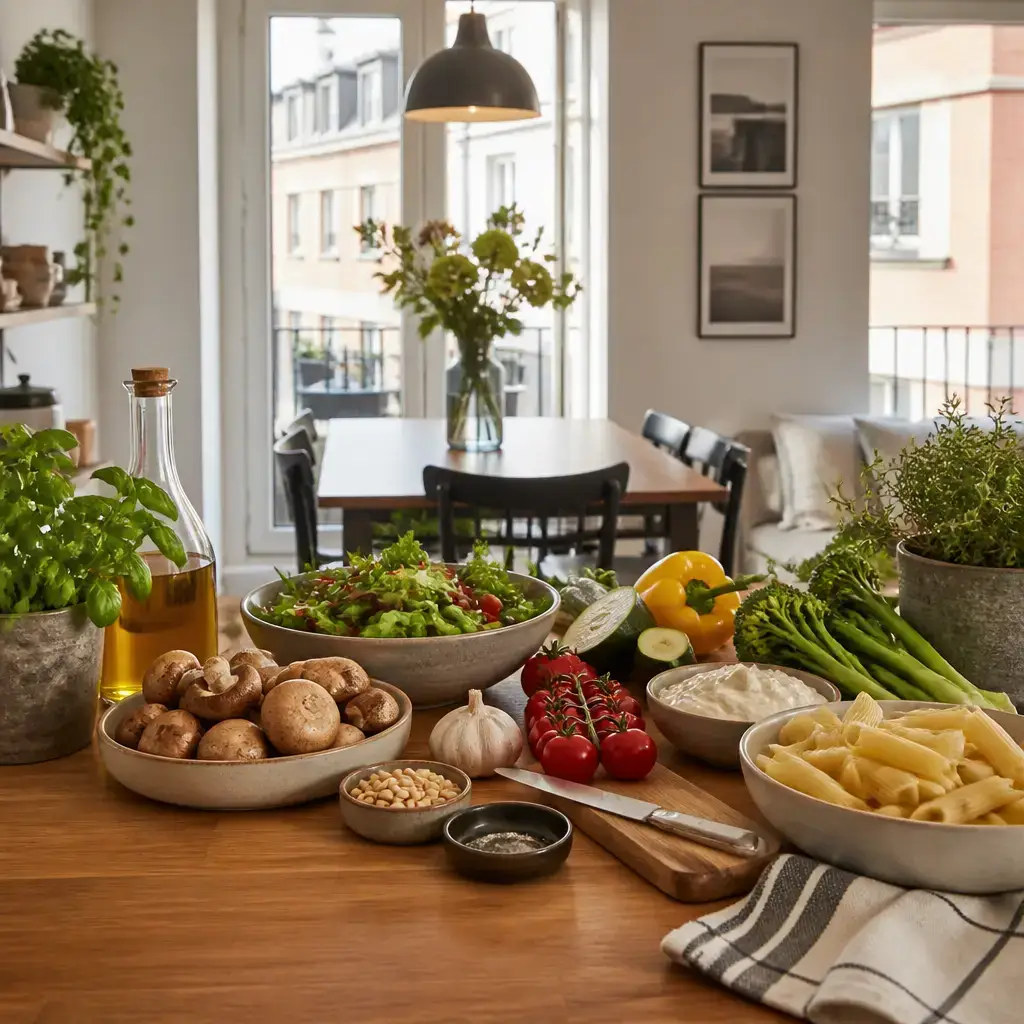
“aftensmad” means “dinner” in “laver aftensmad”. It names the evening meal being prepared. A common reuse pattern is “lave aftensmad” when talking about cooking dinner.
bør
“bør” means “should” and expresses what is advisable in “bør jeg tjekke alles kostbegrænsninger”. It is followed here by the infinitive “tjekke”. You can use “bør” when recommending or identifying a responsible action.
tjekke
“tjekke” means “check” in “bør jeg tjekke alles kostbegrænsninger” and “værd at tjekke”. After “bør”, it names the action that should be done; after “at”, it names the action considered worthwhile. A reusable pattern is “bør … tjekke …” when checking information is advisable.
alles
“alles” means “everyone’s” in “alles kostbegrænsninger”. It shows that the dietary restrictions belong to all the people being discussed. A useful reuse pattern is “alles” followed by the thing shared by everyone.
kostbegrænsninger
“kostbegrænsninger” means “dietary restrictions” in “alles kostbegrænsninger”. It refers to foods or ingredients that people cannot or do not eat. You can use it when asking about food requirements before preparing a meal.
Det
“Det” refers to the situation or action just mentioned in “Det er værd at tjekke”. The same pronoun appears as lowercase “det” in “Ville det stadig føles som …” and “Det ville det”. A common reuse pattern is “Det er …” when commenting on a situation.
er
“er” means “is” in “Det er værd at tjekke”. It links “Det” with the evaluation “værd at tjekke”. You can reuse “er” to describe or evaluate a situation with “Det er …”.
værd
“værd” contributes the idea “worthwhile” in “Det er værd at tjekke”. The full construction “værd at tjekke” means that checking is worth doing. A reusable pattern is “Det er værd at …” followed by an action.
at
“at” introduces an infinitive in “at tjekke”, “at lave”, and “at spørge”. It also introduces the clause “at jeg gerne vil lave noget” after “sige”. Use “at” before an infinitive when forming an expression such as “værd at tjekke” or “for at spørge”.
fordi
“fordi” means “because” and introduces the reason in “fordi den ene gæst undgår mælkeprodukter”. It connects the statement that checking is worthwhile with its explanation. A common pattern is “fordi …” followed by the reason for an action or opinion.
den
“den” helps identify one particular guest in “den ene gæst”. Together with “ene”, it forms one side of the contrast with “en anden”. You can reuse “den ene … den anden …” when distinguishing two people or things.
ene
“ene” means “one” in the expression “den ene gæst”. It identifies one of two guests, contrasted with “en anden”. The reusable pattern “den ene … en anden …” presents two different people or choices.
gæst
“gæst” means “guest” in “den ene gæst”. It refers to a person invited to the dinner. You can use “gæst” when talking about someone visiting or attending a meal.
undgår
“undgår” means “avoids” in “undgår mælkeprodukter”. It says that the guest deliberately does not consume dairy products. The form comes from “undgå”, and a common reuse pattern is “undgår” followed by the food or activity being avoided.
mælkeprodukter
“mælkeprodukter” means “dairy products” in “undgår mælkeprodukter”. It refers to foods made from milk. You can use it when describing ingredients that someone avoids or when checking dietary needs.
og
“og” means “and” and joins related information in “undgår mælkeprodukter, og en anden ikke spiser svinekød”. It links the two guests’ dietary restrictions. A common reuse is “X og Y” when adding one item or statement to another.
en
“en” means “a” or “one” in “en anden”. Here it introduces another guest in contrast with “den ene gæst”. You can reuse “en anden” when referring to a different person or thing.
anden
“anden” means “another” in “en anden ikke spiser svinekød”. It identifies a different guest from the one already mentioned. The reusable expression “en anden” is used to introduce a second person or option.
ikke
“ikke” means “not” and negates the action in “ikke spiser svinekød”. It shows that the other guest does not eat pork. A common placement is before the verb phrase being negated, as in “ikke spiser …”.
spiser
“spiser” means “eats” in “ikke spiser svinekød”. With “ikke”, it describes the guest’s food restriction. The form comes from “spise”, and you can reuse it with the food someone eats or does not eat.
svinekød
“svinekød” means “pork” in “ikke spiser svinekød”. It names the meat that the guest does not eat. You can use it when discussing ingredients or dietary restrictions.
havde
“havde” means “had” in “Jeg havde planlagt at lave cremet pasta”. It helps describe an earlier plan. In this sentence it is used with “planlagt” to refer to what was planned before the current adjustment.
planlagt
“planlagt” means “planned” in “havde planlagt at lave cremet pasta”. It describes the intended dinner before a substitute became necessary. The form comes from “planlægge”, and a reusable pattern is “havde planlagt at …” for an earlier intention.
cremet
“cremet” means “creamy” in “cremet pasta”. It describes the intended texture or style of the pasta dish. You can use it before a food noun when describing a creamy dish.
pasta
“pasta” means “pasta” in “lave cremet pasta”. It names the dish being planned. A common reuse pattern is “lave pasta” when talking about preparing pasta.
så
“så” means “so” and introduces the consequence in “så jeg har brug for et alternativ”. The need for an alternative follows from the dietary restrictions. You can use “så” to connect a situation with its result or response.
har
“har” means “have” in “jeg har brug for et alternativ”, where the full expression means “need”. The reusable construction is “har brug for” followed by the thing that is needed. In this dialogue, the needed thing is “et alternativ”.
brug
“brug” is part of the expression “har brug for”, which means “need” in this dialogue. The complete expression, rather than “brug” alone, describes the speaker’s need for an alternative. A common reuse pattern is “har brug for …” followed by a noun.
for
“for” is part of “har brug for”, meaning “need”, and of “for at spørge”, meaning “in order to ask”. Its contribution depends on the construction around it. Reuse “har brug for …” for a need and “for at …” for a purpose.
et
“et” means “a” or “an” in “et alternativ”. It introduces the singular noun “alternativ”. You can reuse “et” before a singular noun in a phrase such as “et alternativ”.
alternativ
“alternativ” means “alternative” or “substitute” in “et alternativ”. It refers to another ingredient or dish that can replace the milk-based sauce. You can use it when proposing a replacement for something unsuitable.
Du
“Du” means “you” in “Du kunne bruge olivenolie”. The lowercase form “du” appears later in “hvis du tilføjer”. The capitalized form is used at the beginning of a sentence, and “du kunne …” is a useful way to make a suggestion.
kunne
“kunne” means “could” in “Du kunne bruge olivenolie”. It presents using olive oil and vegetables as a possible suggestion. It is followed here by the infinitive “bruge”; a common pattern is “Du kunne …” when offering an option.
bruge
“bruge” means “use” in “kunne bruge olivenolie og grøntsager”. It names the proposed action with the ingredients. After “kunne”, it appears in the infinitive, and a reusable pattern is “bruge … i stedet for …”.
olivenolie
“olivenolie” means “olive oil” in “bruge olivenolie og grøntsager”. It is one of the suggested ingredients for the adjusted dish. You can use it when naming an ingredient or cooking fat.
grøntsager
“grøntsager” means “vegetables” in “olivenolie og grøntsager”. It names another group of ingredients suggested for the meal. You can use it when discussing ingredients or planning a dish.
i
“i” is part of the expression “i stedet for”, which means “instead of”. In this dialogue it introduces the sauce being replaced. Reuse the complete pattern “i stedet for …” when choosing one option rather than another.
sted
“sted” is part of the fixed expression “i stedet for”, meaning “instead of”. The whole expression contrasts the proposed ingredients with “en sauce lavet med mælk”. Use “i stedet for …” to state what one thing replaces.
sauce
“sauce” means “sauce” in “en sauce lavet med mælk”. It names the milk-based component that the speaker wants to replace. You can use it when describing a sauce in a meal or recipe.
lavet
“lavet” means “made” in “en sauce lavet med mælk”. The phrase “lavet med mælk” describes the sauce by naming its ingredient. The form comes from “lave”, and it can be used after a noun to add this kind of description.
med
“med” means “with” in “lavet med mælk”. It introduces milk as an ingredient used to make the sauce. A common reuse pattern is “lavet med …” when describing what a food is made with.
mælk
“mælk” means “milk” in “lavet med mælk”. It identifies the ingredient in the sauce that may not suit one guest. You can use it when naming milk as an ingredient or drink.
Ville
“Ville” expresses “would” in the question “Ville det stadig føles som et ordentligt måltid”. The same form appears as lowercase “ville” in “Det ville det”. A reusable pattern is “Ville det …?” when asking about a possible result.
stadig
“stadig” means “still” in “Ville det stadig føles som et ordentligt måltid”. It asks whether the meal would retain its quality or character after the change. You can use it to ask whether something remains true after a change.
føles
“føles” means “feels” or “seems” in “føles som et ordentligt måltid”. Together with “som”, it describes how the proposed meal would seem. A common reuse pattern is “føles som …” when describing an impression.
som
“som” means “like” in “føles som et ordentligt måltid”. It introduces the comparison used to describe the meal’s impression. You can reuse “føles som …” to say that something seems like a particular thing.
ordentligt
“ordentligt” means “proper” or “decent” in “et ordentligt måltid”. It expresses the speaker’s idea of a satisfactory, complete meal. You can use it before a noun when describing something as proper or acceptable.
måltid
“måltid” means “meal” in “et ordentligt måltid”. It refers to the dinner being prepared for the guests. You can use it when talking about a complete occasion of eating.
gæsterne
“gæsterne” means “the guests” in “for gæsterne”. It refers to the specific guests whose needs are being considered. The ending marks the guests as a definite group, and the phrase “for gæsterne” identifies who the meal is intended for.
især
“især” means “especially” in “især hvis du tilføjer svampe”. It emphasizes that adding mushrooms and salad would make the meal feel proper. You can use it to highlight one condition, person, or detail as particularly important.
hvis
“hvis” means “if” and introduces the condition in “hvis du tilføjer svampe og en frisk salat”. It connects the possible quality of the meal with adding those ingredients. A common pattern is “hvis …” followed by the condition for a result.
tilføjer
“tilføjer” means “add” in “hvis du tilføjer svampe og en frisk salat”. It names the action that could improve the meal. The form comes from “tilføje”, and a common reuse pattern is “tilføjer” followed by the ingredient being added.
svampe
“svampe” means “mushrooms” in “tilføjer svampe”. It names one ingredient suggested for the meal. You can use it when discussing ingredients or additions to a dish.
frisk
“frisk” means “fresh” in “en frisk salat”. It describes the salad as fresh and contributes to the positive description of the meal. You can use it before a food noun to describe freshness.
salat
“salat” means “salad” in “en frisk salat”. It names the side dish suggested along with the mushrooms. You can use it when planning or describing a meal.
vil
“vil” expresses the intention “will” or “want to” in “Jeg vil sende en hurtig besked”. It presents sending the message as the speaker’s planned action. A common pattern is “Jeg vil …” followed by an infinitive for stating an intention.
sende
“sende” means “send” in “vil sende en hurtig besked”. It names the action intended by the speaker. After “vil”, it appears in the infinitive, and a common pattern is “sende en besked”.
hurtig
“hurtig” means “quick” in “en hurtig besked”. It describes the message as brief or quick to send. You can use it before a noun when describing something as quick.
besked
“besked” means “message” in “en hurtig besked”. It refers to the written communication the speaker plans to send. You can reuse “sende en besked” when talking about sending a message.
spørge
“spørge” means “ask” in “for at spørge om andre ønsker”. It states the purpose of sending the message. After “for at”, it appears in the infinitive; a common pattern is “spørge om …” when asking about something.
om
“om” means “about” in “spørge om andre ønsker”. It introduces the subject of the question, namely other preferences. A common reuse pattern is “spørge om …” when asking for information about something.
andre
“andre” means “other” in “andre ønsker”. It refers to preferences in addition to the dietary restrictions already mentioned. You can use it before a plural noun when referring to additional people, things, or preferences.
ønsker
“ønsker” means “preferences” or “wishes” in “andre ønsker”. It refers to what the guests may want or prefer in the meal. You can use it when asking people to state their preferences.
Hold
“Hold” tells someone to “keep” something in “Hold spørgsmålet enkelt”. It is a direct instruction to maintain a simple question. A reusable pattern is “Hold …” followed by the thing and the quality it should retain.
spørgsmålet
“spørgsmålet” means “the question” in “Hold spørgsmålet enkelt”. It refers to the question in the message about dietary needs and preferences. The definite form identifies one specific question already being discussed.
enkelt
“enkelt” means “simple” in “Hold spørgsmålet enkelt”. It describes how the question should remain so that people do not feel troublesome. You can use it after “Hold” to tell someone to keep something simple.
ellers
“ellers” means “or else” in “ellers kan folk føle, at de er til besvær”. It introduces a possible negative consequence if the question is not kept simple. You can use it to warn about what may happen otherwise.
kan
“kan” means “can” or “may” in “kan folk føle” and “kan bare sige”. In the first phrase it presents a possible feeling, and in the second it presents what the message is able to say. A common pattern is “kan …” followed by an infinitive.
folk
“folk” means “people” in “kan folk føle”. It refers generally to the guests or people receiving the question. You can use it when speaking about people as a group without naming them individually.
føle
“føle” means “feel” in “kan folk føle”. It names the possible emotional response to being asked about their needs. After “kan”, it appears in the infinitive; a common pattern is “kan … føle …”.
de
“de” means “they” in “at de er til besvær”. It refers back to the people who may receive the question. A common reuse pattern is “de er …” when describing a group’s situation or feeling.
til
“til” is part of the expression “er til besvær”, which means “are causing trouble” or “are being an inconvenience”. It cannot be translated on its own as the full meaning comes from the expression. Reuse “være til besvær” when describing someone as an inconvenience.
besvær
“besvær” means “trouble” or “inconvenience” in “er til besvær”. The complete expression says that people may feel they are causing trouble by stating their needs. You can use “til besvær” to describe something or someone as troublesome for others.
Beskeden
“Beskeden” means “the message” in “Beskeden kan bare sige”. It refers to the specific message being planned. It is the definite form corresponding to “besked”, and the capital letter appears because it begins the sentence.
bare
“bare” means “just” or “simply” in “kan bare sige”. It makes the proposed content of the message sound uncomplicated. You can use “bare” before an action when suggesting that something should simply be done.
sige
“sige” means “say” in “Beskeden kan bare sige”. It describes the content that the message can communicate. After “kan”, it appears in the infinitive, and a common pattern is “kan sige, at …”.
gerne
“gerne” contributes the meaning “would like to” in “jeg gerne vil lave noget”. Together with “vil”, it expresses the speaker’s positive willingness or intention to make something. A common reuse pattern is “gerne vil …” followed by an infinitive.
noget
“noget” means “something” in “lave noget, der passer til alle”. It refers to an unspecified dish or food. You can reuse “noget” when the exact thing is not named or is not important.
der
“der” means “that” or “which” in “noget, der passer til alle”. It introduces the clause describing what the unspecified thing should do. A common pattern is “noget, der …” followed by a description.
passer
“passer” means “fits” or “is suitable” in “der passer til alle”. Here it says that the food will suit everyone. The form comes from “passe”, and a common reuse pattern is “passer til …” when something is suitable for a person or purpose.
alle
“alle” means “everyone” in “passer til alle”. It refers to all the guests collectively. You can use “passer til alle” when saying that an option suits everyone in a group.
lyder
“lyder” means “sounds” in “Det lyder hensynsfuldt”. It introduces an evaluation based on how the proposed message comes across. A common reuse pattern is “Det lyder …” when reacting to an idea or statement.
hensynsfuldt
“hensynsfuldt” means “considerate” in “lyder hensynsfuldt”. It evaluates the message as showing attention to the guests’ needs and feelings. You can use it to describe an action or message that takes other people into account.
giver
“giver” means “gives” in “giver dem mulighed for at svare tydeligt”. It describes the message providing the guests with an opportunity to respond. A common reuse pattern is “giver nogen mulighed for at …”.
dem
“dem” means “them” in “giver dem mulighed”. It refers to the guests who receive the opportunity to answer. You can reuse “give dem mulighed for at …” when describing an opportunity offered to a group.
mulighed
“mulighed” means “opportunity” or “possibility” in “giver dem mulighed for at svare tydeligt”. It refers to the chance the guests have to answer. A common reuse pattern is “mulighed for at …” followed by an action.
svare
“svare” means “answer” in “mulighed for at svare tydeligt”. It names the response the guests can give to the message. After “mulighed for at”, it appears in the infinitive; a common pattern is “svare på …” when answering something.
tydeligt
“tydeligt” means “clearly” in “svare tydeligt”. It describes how the guests can communicate their needs or preferences. You can use it after a verb when describing an action done in a clear way.