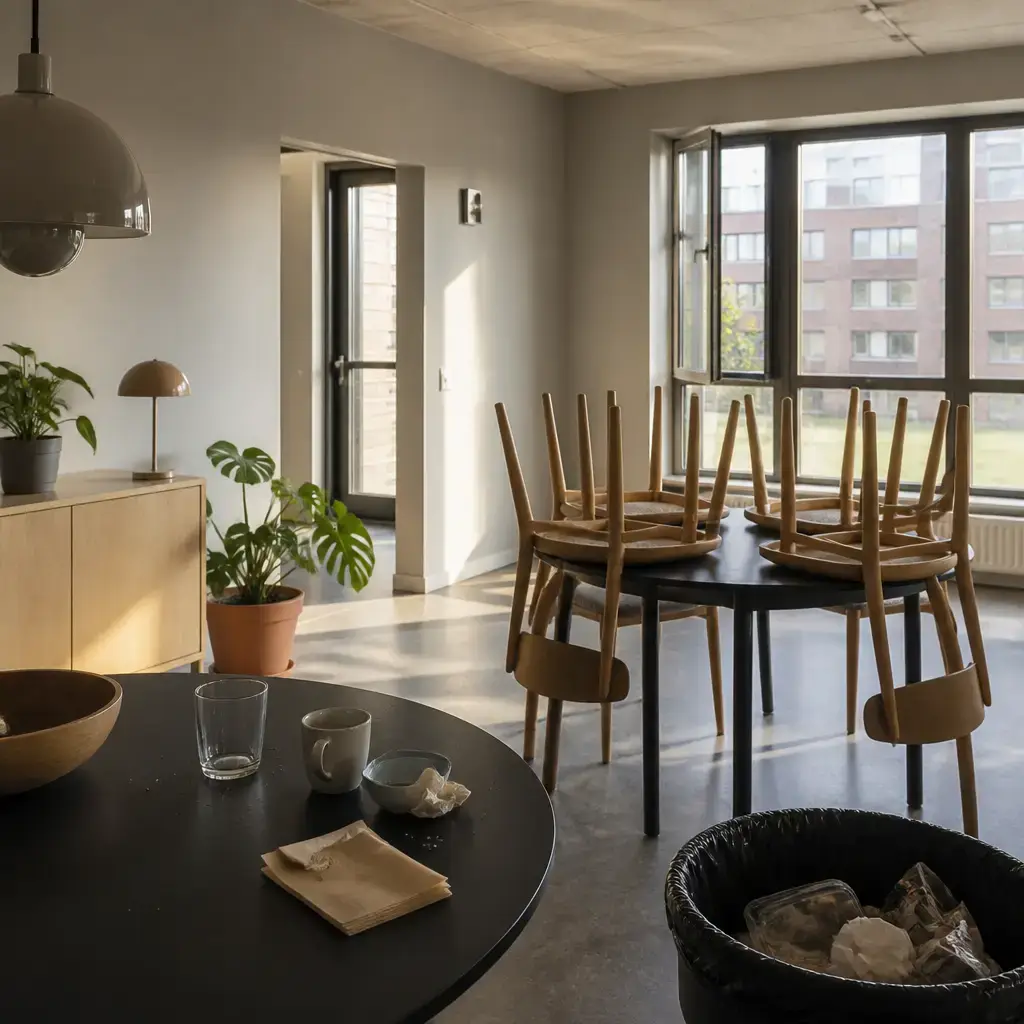
Vi
“Vi” means “we” in “Vi brugte fællesrummet et stykke tid.” It identifies the speakers as the people who used the common room. Reuse “Vi” before an action when talking about yourself and others together.
brugte
“brugte” means “used” here, referring to using the common room. It is the dialogue form of “bruge” in “Vi brugte fællesrummet.” Reuse “bruge” with an object for something you use, such as a room or tool.
fællesrummet
“fællesrummet” means “the common room,” the shared room they have just used. The exact form refers to a specific room in the situation. Reuse it after a verb such as “bruge” when saying that someone uses the common room.
et
In “et stykke tid,” “et” contributes the meaning “a” to the expression “a while.” It comes directly before “stykke.” Reuse “et” in this time expression when describing an unspecified period.
stykke
In “et stykke tid,” “stykke” means a period or stretch rather than a physical piece. Together, “et stykke tid” means “for a while.” Use this complete expression after an action to say how long it continued.
tid
In “et stykke tid,” “tid” means “time,” and the whole expression means “for a while.” It completes the time expression after “et stykke.” Reuse “et stykke tid” when giving a general duration.
Lad
“Lad” begins the suggestion “Lad os rydde op,” meaning “Let’s clean up.” It introduces an action that the speaker proposes doing together. Reuse “Lad os” followed by an action when making a joint suggestion.
os
In “Lad os rydde op,” “os” means “us,” referring to the speaker and the other person together. It is part of the suggestion pattern “Lad os” rather than a separate request. Reuse “Lad os” before an action you suggest doing together.
rydde
In “rydde op,” “rydde” contributes the idea of clearing or cleaning, and the whole expression means “clean up.” Here it is used after “Lad os” in “Lad os rydde op.” Reuse “rydde op” for cleaning and putting a shared place in order.
op
In “rydde op,” “op” is part of the expression meaning “clean up,” not a separate direction to move upward. It completes the meaning of “rydde” in “Lad os rydde op.” Reuse “rydde op” when talking about leaving a place tidy.
før
“før” means “before” in “før vi går,” which sets the time for cleaning up. It introduces the action that must happen first. Reuse “før” before a clause or event that precedes another action.
går
“går” means “go” or “leave” here in “før vi går,” referring to leaving the common room. It completes the clause about what happens after the cleanup. Reuse “går” when describing someone going or leaving in the present situation.
Jeg
“Jeg” means “I” in “Jeg sætter stolene tilbage.” It identifies the speaker as the person who will put the chairs back. Reuse “Jeg” before an action you are taking or offering to take.
sætter
“sætter” means “put” or “place” here in “sætter stolene tilbage.” It describes placing the chairs back in position. Reuse “sætter” with an object and a location or direction, such as “sætter noget tilbage.”
stolene
“stolene” means “the chairs” in “Jeg sætter stolene tilbage.” It refers to the specific chairs in the room. Reuse “stolene” as the object of an action involving these chairs.
tilbage
“tilbage” means “back” in “sætter stolene tilbage,” showing that the chairs return to their earlier position. It adds the idea of returning something. Reuse “sætte noget tilbage” when restoring an object to where it was.
hvor
“hvor” means “where” in “hvor de stod,” introducing the place where the chairs were positioned. It connects the action of putting them back with their previous location. Reuse “hvor” to introduce a location clause.
de
“de” means “they” in “hvor de stod,” referring to the chairs. It is the subject of the clause describing their earlier position. Reuse “de” when referring back to multiple people or things already mentioned.
stod
“stod” means “stood” or “were positioned” in “hvor de stod.” It describes where the chairs had been located before being moved. Reuse “stå” for the position of people or objects that are standing or placed upright.
fjerner
“fjerner” means “remove” or “clear” in “fjerner affaldet fra bordene.” It describes taking the trash away from the tables. Reuse “fjerner” with the thing being removed and “fra” the place it is removed from.
affaldet
“affaldet” means “the trash” in “fjerner affaldet fra bordene.” It refers to the specific waste left on the tables. Reuse it as the object of an action such as removing or sorting the trash.
fra
“fra” means “from” in “fra bordene,” identifying the place from which the trash is removed. It links the removed object to its starting location. Reuse “fra” before a place or source.
bordene
“bordene” means “the tables” in “affaldet fra bordene.” It refers to the specific tables where the trash is located. Reuse it after “fra” when describing something coming from or being removed from the tables.
Skal
“Skal” begins the question “Skal vi også slukke lyset?”, meaning “Should we also turn off the light?” It asks whether the group ought to perform the action. Reuse “Skal vi” to suggest or ask about doing something together.
også
“også” means “also” or “too” in “Skal vi også slukke lyset?” It adds turning off the light to the other cleanup tasks. Reuse “også” when adding another action, person, or thing to what has already been mentioned.
slukke
“slukke” means “turn off” in “slukke lyset,” referring to switching off the light. It follows “Skal” in the question. Reuse “slukke” with something that is switched off, such as a light.
lyset
“lyset” means “the light” in “slukke lyset.” It is the specific light that should be turned off in the room. Reuse “slukke lyset” when telling someone to switch off the light.
Sluk
“Sluk” means “turn off” in the direct instruction “Sluk lyset.” It tells the listener to switch off the light. Reuse “Sluk” followed by the thing that should be turned off.
Luk
“Luk” means “close” in “Luk vinduerne.” It is a direct instruction to close the windows. Reuse “Luk” followed by a door, window, or other thing that should be closed.
vinduerne
“vinduerne” means “the windows” in “Luk vinduerne.” It refers to the specific windows in the common room. Reuse it as the object after an instruction to close or open the windows.
låser
In “låser af,” “låser” contributes the action of locking, and the whole expression means “lock up.” Here it refers to securing the room before leaving. Reuse “låse af” when finishing at a place and securing it.
af
In “låser af,” “af” is part of the expression meaning “lock up.” It completes the meaning of “låser” in “før vi låser af.” Reuse “låse af” for locking a place when closing it for departure.
Rummet
“Rummet” means “the room” in “Rummet ser klart ud.” It refers to the common room after the cleanup. Reuse it when describing the condition or appearance of that specific room.
ser
In “ser klart ud,” “ser” means “looks” or “seems,” describing the room’s appearance. Together with “klart ud,” it says that the room appears ready. Reuse “ser ... ud” when giving an impression about how something appears.
klart
In “ser klart ud,” “klart” means “ready” in this context, describing the room as prepared for the next group. Its meaning comes from the complete expression “ser klart ud.” Reuse the expression when a place appears prepared for use.
ud
In “ser klart ud,” “ud” is part of the expression meaning “looks” or “appears.” It works together with “ser” and helps describe the room’s appearance. Reuse “ser ... ud” before a description of how something seems.
til
“til” means “for” in “klart ud til den næste gruppe,” identifying the people the room is ready for. It links the room’s readiness with its intended users. Reuse “klar til” or “klart ud til” before a person, group, or activity.
den
“den” means “the” in “den næste gruppe.” It points to the specific group that will use the room next. Reuse “den” before a singular noun phrase when referring to a particular thing or person.
næste
“næste” means “next” in “den næste gruppe,” identifying the group that will come after the current users. It comes directly before “gruppe.” Reuse “den næste” before a person, group, event, or time that follows the current one.
gruppe
“gruppe” means “group” in “den næste gruppe.” It refers to the people who will use the room after the speakers leave. Reuse “gruppe” for several people considered together, such as a class or team.
Så
“Så” means “then” in “Så kan vi låse døren og gå.” It marks the next action after the room is ready. Reuse “Så” to connect a result or completed step with what can happen next.
kan
“kan” means “can” in “kan vi låse døren og gå,” expressing that the speakers are now able to do these actions. It comes before the action forms “låse” and “gå.” Reuse “kan” before an action when expressing ability or possibility.
låse
“låse” means “lock” in “låse døren.” It follows “kan” and describes securing the door before leaving. Reuse “låse” with the object being secured, such as “låse døren.”
døren
“døren” means “the door” in “låse døren.” It refers to the specific door of the room. Reuse it as the object of “låse” when saying that the door is secured.
og
“og” means “and” in “låse døren og gå.” It joins the two actions of locking the door and leaving. Reuse “og” to connect actions or items of equal importance.
gå
“gå” means “go” or “leave” in “låse døren og gå.” It follows “kan” and describes leaving after the door is locked. Reuse “gå” for moving away or leaving, especially when the destination is clear from the context.