Er
Er means “is/are” here and starts the question asking whether anyone is using the treadmill. It is the present form used in questions such as Er der nogen ...? and is useful when asking about someone or something’s current state.
der
Der is the existential “there” in Er der nogen, asking whether anyone is present or involved. It works with er to introduce the person or thing whose presence is being asked about, so this form is useful in availability questions.
nogen
Nogen means “anyone” in this question about whether somebody is using the treadmill. It refers to an unspecified person and is useful after the existential pattern Er der ...? when asking whether somebody is present or involved.
bruger
Bruger means “uses” or “is using” in the question about the treadmill. It is the form used with the person being asked about, and a useful reuse point is to use it for someone’s current use of an object or facility.
dette
Dette means “this” and points to the specific treadmill nearby. It is placed before løbebånd in dette løbebånd, so it is useful when identifying one particular nearby thing.
løbebånd
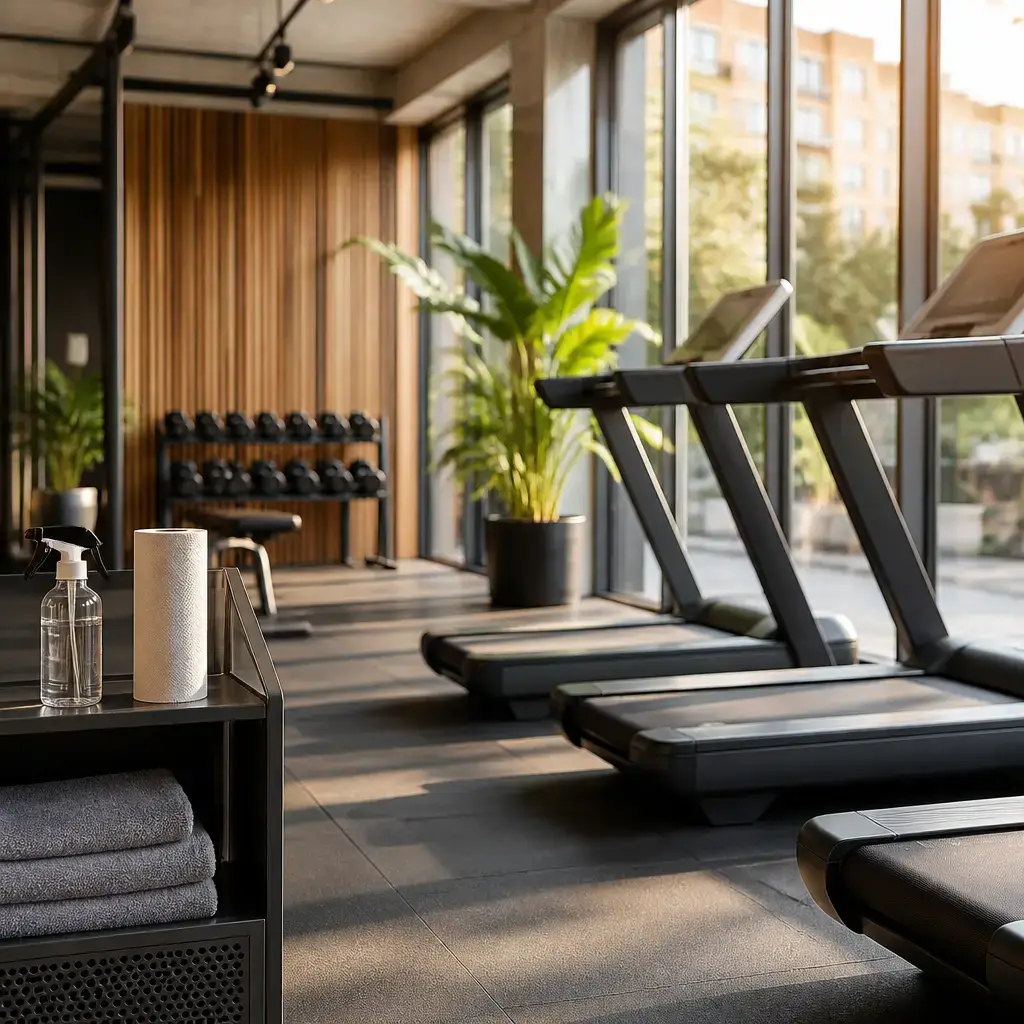
Løbebånd means “treadmill,” the piece of gym equipment being discussed. It is the noun identified by dette, and it can be reused when asking about or referring to a treadmill in a gym.
nu
Nu means “now” and asks about the treadmill’s use at the present moment. It commonly appears with a question about a current action or situation, as here.
Det
Det means “it” here and refers back to the treadmill. In Det ser ledigt ud, it is the subject being described, so this pronoun is useful when referring back to a thing already mentioned.
ser
Ser means “looks” or “seems” in the description of the treadmill’s apparent availability. It is used with ledigt ud in this sentence, and it is useful when giving an impression rather than stating a directly verified fact.
ledigt
Ledigt means “free” or “available” here, describing the treadmill as apparently not in use. It follows ser and combines with ud in ser ledigt ud, a useful way to describe how something appears.
ud
Ud contributes to the expression ser ledigt ud, which means “looks free” or “seems available” here. It belongs with ser and the description, so it is useful in the reusable pattern ser + description + ud.
men
Men means “but” and introduces advice that contrasts with the treadmill appearing free. It connects two parts of a statement when the second part limits or qualifies the first.
hold øje med
Hold øje med means “keep an eye on” or “watch carefully” in the advice about monitoring the time. In this expression, hold means “keep,” øje means “eye,” and med links the action to what is watched; a reusable pattern is hold øje med + the thing being monitored. It is useful when reminding someone to pay attention to a changing situation.
tiden
Tiden means “the time” and refers to the amount of time available for using the treadmill. It is the definite form related to tid, and it is useful after hold øje med when telling someone to monitor time.
Hvor
Hvor means “how” in the question Hvor længe, which asks about duration. It combines with længe to form a question about how long something should continue.
længe
Længe means “long” when it refers to duration in Hvor længe. It is useful with hvor when asking how much time an activity should take or continue.
skal
Skal means “should” here, asking what amount of use is appropriate. It is followed by bruge in Skal jeg bruge det, so it is useful for asking about an expected or recommended action.
jeg
Jeg means “I” and identifies the speaker as the person who may use the treadmill. It is the subject before skal and is useful when talking about the speaker’s own action or responsibility.
bruge
Bruge means “use” in the question about using the treadmill. It follows skal in Skal jeg bruge det, and this combination is a useful pattern for asking whether or how one should use something.
hvis
Hvis means “if” and introduces the condition that other people are waiting. It is useful for connecting an action or recommendation to a possible situation.
andre
Andre means “others,” referring to other gym users who may be waiting for the treadmill. It is useful when referring to additional people without naming them individually.
venter
Venter means “are waiting” here and describes the other people’s situation. It is the action in the clause introduced by hvis, and it is useful when explaining that people are waiting for access or service.
Begræns
Begræns means “limit” as a direct instruction to the listener about their time. It is used at the start of the instruction Begræns din tid, so it is useful when politely or directly setting a maximum.
din
Din means “your” and identifies the time as belonging to the person being addressed. It comes before tid in din tid, and it is useful for referring to something connected with the listener.
tid
Tid means “time” in the phrase din tid, meaning the period the listener spends using the treadmill. It is useful with a quantity or limit when discussing how long an activity may continue.
til
Til means “to” in Begræns din tid til cirka ti minutter and marks the limit being set. It is useful after a verb of limiting when specifying the permitted amount or endpoint.
cirka
Cirka means “around” or “approximately” and shows that ten minutes is an estimate rather than an exact requirement. It is placed before the amount cirka ti minutter, so it is useful with numbers when precision is not intended.
minutter
Minutter means “minutes,” the unit used for the suggested time limit. It follows the number ti in the phrase ti minutter and is useful when stating a duration or time allowance.
når
Når means “when” and introduces the situation that the gym is busy. It is useful for linking advice to a recurring or expected situation.
travlt
Travlt means “busy” in the expression der er travlt i fitnesscenteret, describing a crowded or active situation at the gym. It is useful in this expression when explaining that many people may need access at the same time.
i
I means “in” and locates the busy situation inside the fitness center. It is used before fitnesscenteret, and it is useful for indicating the place where an action or situation occurs.
fitnesscenteret
Fitnesscenteret means “the gym” or “the fitness center” where the conversation takes place. It is the definite form referring to the particular gym, and it is useful after i when naming the location of an activity.
tørre
Tørre means “wipe” in the question about wiping the treadmill down after use. It follows skal in Skal jeg tørre det af, and it is useful for asking about cleaning or drying an object.
af
Af contributes to tørre det af, meaning “wipe it down” in this context. It completes the action of wiping a surface, so the reusable pattern is tørre + object + af.
færdig
Færdig means “finished” or “done” when the speaker has completed using and cleaning the treadmill. It describes the speaker in når jeg er færdig, and it is useful for indicating that an activity has ended.
Brug
Brug means “use” as a direct instruction to use the spray and paper towel. It begins the instruction Brug sprayen, so it is useful when telling someone to use a particular item.
sprayen
Sprayen means “the spray,” referring to the cleaning spray available in the gym. It is the object of Brug and is useful when identifying a specific spray already available in the setting.
og
Og means “and” and joins the spray with the paper towel as two items to use. It is useful for connecting equal items or actions in one instruction.
et
Et means “a” or “an” before papirhåndklæde and introduces one unspecified paper towel. It is useful before the noun when referring to one item without identifying a particular one.
papirhåndklæde
Papirhåndklæde means “paper towel,” the item used with the spray for cleaning. It is joined to sprayen by og and is useful when naming a paper towel used for wiping a surface.
fra
Fra means “from” and shows where the paper towel should be taken: the rack. It is useful for indicating the source or place from which an item is obtained.
stativet
Stativet means “the rack” or “the stand,” referring to the particular rack holding the paper towels. It follows fra in fra stativet and is useful when directing someone to take something from a specific support or storage place.
gør
Gør means “make” or “do” in gør det rent, where the speaker says they will make the treadmill clean. It is the verb used with det and rent, and it is useful when describing making something reach a clean condition.
rent
Rent means “clean” and describes the condition the treadmill will have after cleaning. In gør det rent, it completes the description of det, so it is useful for stating the result of cleaning an object.
før
Før means “before” and introduces the time boundary before the speaker leaves. It is useful for linking one action to an earlier action that must happen first.
går
Går means “go” or “leave” here, referring to the speaker leaving the gym. It appears in før jeg går, and it is useful when describing an action that happens before departure.
Så
Så means “so” or “then” and presents the result of cleaning the equipment. At the start of Så er udstyret klar, it is useful for showing a consequence or resulting state.
udstyret
Udstyret means “the equipment,” referring to the gym equipment after it has been cleaned. It is the subject of Så er udstyret klar and is useful when referring to the particular equipment already under discussion.
klar
Klar means “ready” and describes the equipment as ready for another user. It follows er in er udstyret klar, and it is useful for stating that something can now be used or received.
den
Den means “the” in den næste person and helps identify the particular person who will use the equipment afterward. It is useful before an adjective and noun when referring to a specific person or thing.
næste
Næste means “next” and identifies the person who will use the equipment after the current user. It comes before person in den næste person, and it is useful for describing the following person or event in an order.
person
Person means “person,” referring to the next gym user. It is the noun in den næste person and is useful when identifying an individual without specifying their name or other details.