Må
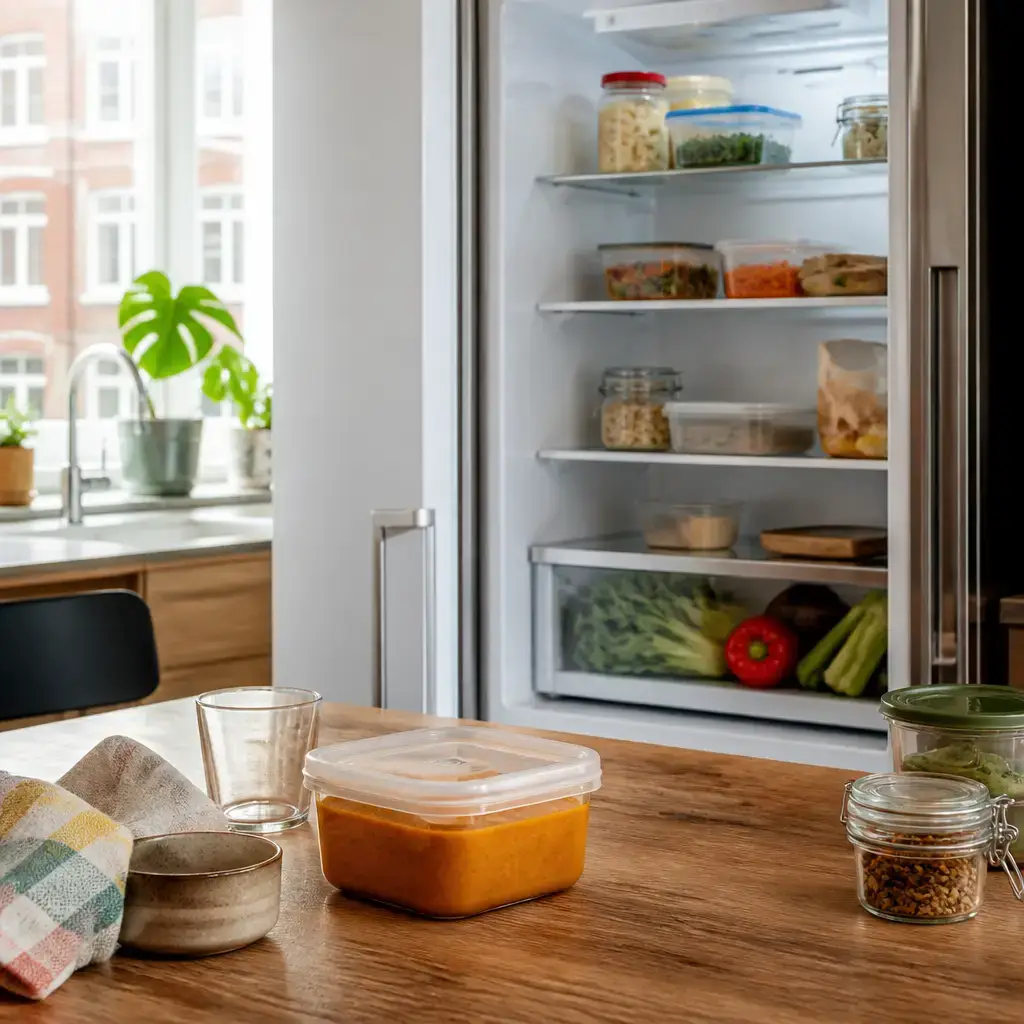
Må means “may” or “can” here and asks for permission in “Må jeg sætte denne suppe i fælleskøleskabet?”. Use Må jeg + an infinitive when asking whether you are allowed to do something.
jeg
jeg means “I” and is the person asking permission in “Må jeg sætte denne suppe i fælleskøleskabet?”. Use it as the subject for an action you will do.
sætte
sætte means “put” or “place” in “Må jeg sætte denne suppe i fælleskøleskabet?”. The related form “Sæt” is used as a direct instruction in “Sæt et mærke på beholderen”. Use sætte with the item being placed and its destination.
denne
denne means “this” and points to the specific soup in “denne suppe”. Use denne before a noun when identifying one particular nearby or known thing.
suppe
suppe means “soup” and is the food being put in the fridge. Use it as the noun for a soup when naming food or a dish.
i
i means “in” and marks the fridge as the destination in “i fælleskøleskabet”. Use i with a place when saying that something is put or kept inside it.
fælleskøleskabet
fælleskøleskabet means “the shared fridge” and names the specific refrigerator used by everyone. Use this form when referring to that shared storage place in the kitchen.
et
et introduces one non-specific label or mark in “et mærke”. Use et before this noun when mentioning one item for the first time.
mærke
mærke means “label” or “mark” in “Sæt et mærke på beholderen”. Use it as the item that is placed on a container to identify it.
på
på means “on” in “på beholderen” and “på den”, showing the surface where a label or date is written. Use på + an object when writing or placing something on its surface.
beholderen
beholderen means “the container” and refers to the specific container holding the soup. Use this definite form when the listener knows which container is meant.
før
før means “before” and introduces the action that must happen first in “før du lader den stå der”. Use før before an event or clause to show its earlier position in time.
du
du means “you” and refers to the person who should leave the container there. Use it as the subject when speaking directly to one person.
lader
lader means “lets” or “leaves” in “lader den stå der”, where something is allowed to remain in place. Use lader + an object + an infinitive when saying that someone lets something stay or do something.
den
den means “it” and refers back to the food or container already being discussed. Use den as a pronoun when the specific referent is clear from the conversation.
stå
stå means “stand” or “remain” in “stå der”, describing the item remaining in that place. With lader, use stå to say that something is left where it is.
der
der means “there” and points to the place where the item is left in “stå der”. Use it to refer to a location already known from the situation.
Skal
Skal means “should” in the question “Skal jeg også skrive datoen på den?”. Use Skal jeg + an infinitive when asking whether you are expected or advised to do something.
også
også means “also” or “too” and adds writing the date to the earlier suggestion about labeling. Use it when adding another action, person, or item.
skrive
skrive means “write” in “skrive datoen på den”. Use it with the information being written and, when relevant, på + the surface receiving it.
datoen
datoen means “the date” and refers to the specific date written on the item. Use this definite form when the relevant date is understood from the situation.
Så
Så means “so” or “then” in “Så ved folk...”, connecting the earlier labeling action with its result. Use it at the start of a statement to introduce a consequence or conclusion.
ved
ved means “know” in “ved folk”, describing people having information about the food. Use ved with information or a clause to say what someone knows.
folk
folk means “people” and is the general group who can identify how long the food has been there. Use it when referring to people in general rather than one named person.
hvor
hvor means “how” in the question phrase “hvor længe”, which asks about duration. Use hvor + a descriptive word such as længe when asking about degree or duration.
længe
længe means “long” in “hvor længe”, asking how much time has passed. Use it with hvor to ask about the duration of an action or state.
har
har means “has” in “har stået derinde” and helps express that the item has remained inside. Use har before a past participle when describing an earlier action or state connected to the present.
stået
stået means “stood” or “been left” in “har stået derinde”, describing the item remaining in the fridge. Use it after har when saying that something has stayed in a place.
derinde
derinde means “inside” or “in there” and identifies the interior place where the item has remained. Use it when the inside location is already clear from the context.
Hvilken
Hvilken means “which” and asks the listener to choose a shelf in “Hvilken hylde”. Use Hvilken before a noun when selecting one option from several.
hylde
hylde means “shelf” and identifies the part of the fridge being discussed. Use it when naming a horizontal storage surface such as a fridge shelf.
er
er means “is” and links the shelf with its intended use in “er til ens egen mad”. Use er to describe or identify what something is for.
til
til means “for” in “til ens egen mad”, marking the food that the shelf is intended to hold. Use til + a noun to express purpose or intended use.
ens
ens means “one’s” or “one’s own” in “ens egen mad”, referring generally to each person’s personal food. Use it before a noun when expressing general ownership rather than naming a particular owner.
egen
egen means “own” and emphasizes personal ownership in “ens egen mad”. Use egen with a possessive expression when stressing that something belongs personally to someone.
mad
mad means “food” and refers broadly to the food kept on the shelf. Use it as a general word for food rather than for one specific food item.
Brug
Brug means “use” as a direct instruction in “Brug den øverste hylde”. Use Brug at the beginning of a command telling someone to use an object or place.
øverste
øverste means “top” or “uppermost” in “den øverste hylde”, identifying the highest shelf. Use it with a noun when selecting the highest position in an arrangement.
væk
væk means “away” in “væk fra de fælles madvarer”, describing separation from the shared food items. Use the pattern væk fra + an object to say that something is away from it.
fra
fra means “from” in “væk fra de fælles madvarer”, marking the point or things from which something is separated. Use it after væk to specify what something is away from.
de
de means “the” in “de fælles madvarer” and introduces the specific shared food items. Use de before a plural noun or description when referring to known items.
fælles
fælles means “shared” or “common” and describes the food items available to everyone. Use it before a noun when something belongs to or is used by several people.
madvarer
madvarer means “food items” or “food products” and refers to the shared items in the fridge. Use it when talking about individual kinds or stored items of food.
og
og means “and” and joins the two actions in “tager den snart med hjem”. Use it to connect actions, people, or things of equal importance.
tager
tager means “take” or “bring” in “tager den snart med hjem”, describing moving the item to the speaker’s home. Use tager + an object + med hjem when saying that something is taken home.
snart
snart means “soon” and says that the item will be taken home in the near future. Use it with an action to give that action an upcoming time.
med
med contributes the sense of taking something along in “tager den snart med hjem”. Use med with a movement expression when an object or person accompanies the movement.
hjem
hjem means “home” and marks the destination in “med hjem”. Use it with a verb of movement to say that someone or something is going home.
måde
måde means “way” in the expression “På den måde”, meaning “that way”. Use På den måde to connect an action with the result it produces.
bliver
bliver means “becomes” or “gets” in “bliver køleskabet ... fyldt”, describing a change into a filled state. Use it before fyldt when explaining that something becomes filled.
køleskabet
køleskabet means “the fridge” and refers to the specific refrigerator that should not become full of old food. Use this definite form for that known appliance.
ikke
ikke means “not” and negates the statement that the fridge becomes filled with old food. Use it to mark that an action or state does not happen.
fyldt
fyldt means “filled” in “fyldt med gammel mad”, describing the contents of the fridge. Use the pattern fyldt med + contents to say what something is filled with.
gammel
gammel means “old” and describes the food that has been left in the fridge for too long. Use it before a noun when describing food or another thing as no longer fresh or new.