Undskyld
“Undskyld” means “excuse me” here and politely gets the other person’s attention. It can also apologize, as in the second line. Use “Undskyld” before a polite question or explanation.
jeg
“jeg” means “I” and is the person giving the opinion in “jeg tror”. It commonly comes before the verb in a statement. Use “jeg” when speaking about yourself.
tror
“tror” means “think” or “believe” in “jeg tror, at køens ende er bag os.” The pattern “jeg tror, at ...” introduces what the speaker believes. Use it when giving an opinion rather than stating something as certain.
at
“at” introduces the statement that follows “jeg tror” in “jeg tror, at køens ende er bag os.” It connects the opinion to its content. Reuse the pattern “jeg tror, at ...” before a complete statement.
køens
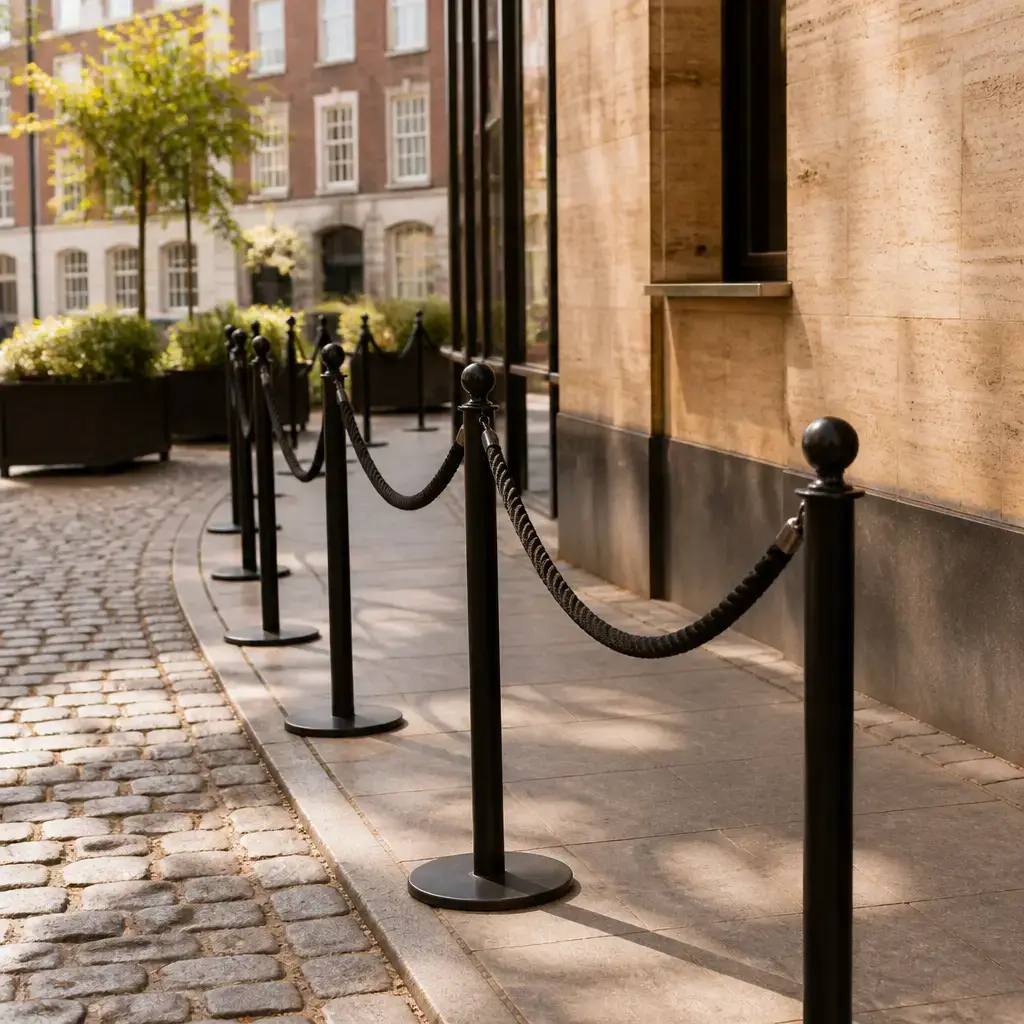
“køens” means “the line’s” or “of the line” and connects the line with “ende” in “køens ende”. The exact form shows which line the end belongs to. Use it before a noun when expressing this kind of relationship.
ende
“ende” means “end” here, specifically the end of the line in “køens ende”. It identifies the point where the queue finishes. Reuse it in a noun phrase such as “køens ende” when referring to the end of a line.
er
“er” means “is” and links “køens ende” with its location in “køens ende er bag os.” It is used to state where something is. Reuse the pattern “[something] er [location].”
bag
“bag” means “behind” in “bag os”. It places the end of the line behind the speakers. Use “bag” before a person or place to describe a position behind it.
os
“os” means “us” in “bag os”, referring to the people speaking. It follows “bag” as the people whose position is used as the reference point. Use “os” when referring to yourself and at least one other person.
lagde mærke til
“lagde mærke til” means “noticed” as a whole in “jeg lagde ikke mærke til, hvor den sluttede.” “lagde” supplies the first part, “mærke” is the middle component, and “til” completes the expression. A reusable pattern is “lagde mærke til + something” when saying that someone noticed something.
ikke
“ikke” means “not” and makes “lagde mærke til” negative in “jeg lagde ikke mærke til, hvor den sluttede.” It is placed before the expression being negated here. Use “ikke” to say that an action or fact did not happen.
hvor
“hvor” means “where” and introduces the information about the point at which the line ended in “hvor den sluttede.” It connects a question word with a following clause. Reuse “hvor + clause” when specifying a location.
den
“den” means “it” here and refers back to the line in “hvor den sluttede.” It is the thing whose endpoint is being described. Use “den” to refer back to a previously mentioned item of this type.
sluttede
“sluttede” means “ended” and describes where the line finished in “hvor den sluttede.” The form appears after “den” in this clause. Reuse it when describing where something ended.
Skiltene
“Skiltene” means “the signs” and refers to the signs that are difficult to see. It is the subject of “Skiltene er svære at se herfra.” Reuse it when talking about visible information displayed on signs.
svære
“svære” means “difficult” or “hard” in “svære at se”. It describes seeing the signs as an effort from the current position. Reuse the pattern “[something] er svære at + verb” for something that is difficult to do.
se
“se” means “see” in “svære at se herfra.” It names the action that is difficult in this sentence. Reuse “at se” when talking about seeing something.
herfra
“herfra” means “from here” and marks the viewpoint in “svære at se herfra.” It explains that the signs are difficult to see from the speakers’ current location. Use “herfra” when describing what can be seen or reached from the present place.
Skal
“Skal” asks whether the speaker should take the action in “Skal jeg stille mig bag personen i den grå frakke?” It starts a question about what the speaker ought to do. Reuse “Skal jeg ...?” when asking whether you should perform an action.
stille
“stille” means “place” or “position” in “stille mig bag personen”. Together with “mig”, it describes putting oneself in a position. Reuse “stille + pronoun + location” when saying where someone should position themselves.
mig
“mig” means “me” or “myself” in “stille mig”. It identifies the person being positioned, namely the speaker. Use it after an action that affects or positions the speaker.
personen
“personen” means “the person” in “bag personen i den grå frakke.” It identifies the person whose position is used as a reference in the line. Reuse “personen i ...” to identify someone by what they are wearing or where they are.
i
“i” means “in” and connects “personen” with the clothing description “den grå frakke.” It shows that the person is wearing or is associated with the coat. Reuse “i + noun phrase” for a person described by clothing.
grå
“grå” means “gray” and describes the coat in “den grå frakke.” It helps identify which person is meant. Reuse “den grå + noun” when describing a specific gray item.
frakke
“frakke” means “coat” in “den grå frakke.” It is the clothing item used to identify the person in the line. Reuse it in a phrase describing someone by their coat.
Ja
“Ja” means “yes” and confirms the requested action in “Ja, gør det venligst.” It signals agreement before the polite instruction. Use “Ja” to accept or confirm something.
gør
“gør” means “do” in “gør det venligst.” It tells the other person to carry out the action just discussed. Reuse “gør det” when referring back to an already understood action.
det
“det” means “it” or “that” in “gør det venligst.” It refers to moving behind the person, rather than naming that action again. Use “gør det” when the action is already clear from the conversation.
venligst
“venligst” means “please” and makes “gør det” polite in “gør det venligst.” It is used with the request to move back in the line. Reuse it with a polite instruction when asking someone to do something.
Alle
“Alle” means “everyone” here and refers to all the people waiting in the line. It is the subject of “Alle har ventet et stykke tid.” Use “Alle” when referring to every person in a group.
har
“har” combines with “ventet” in “Alle har ventet et stykke tid” to express the waiting described by the speaker. It helps connect the people with that completed or continuing experience. Reuse “har” with a following action form when describing what people have done.
ventet
“ventet” means “waited” or “been waiting” in “har ventet et stykke tid.” It describes the time the people have spent waiting. Reuse “har ventet et stykke tid” when explaining that someone has waited for a period.
et
“et” means “a” or “one” in the expression “et stykke tid.” It comes before “stykke” in this phrase about a period of time. Reuse the exact pattern “et stykke tid” to refer to some time.
stykke
“stykke” means “piece” in isolation, but in “et stykke tid” it contributes to the meaning “a period of time.” The complete expression, not this word alone, describes the duration. Reuse “et stykke tid” when saying that something lasts for some time.
tid
“tid” means “time” in “et stykke tid.” Together with “et stykke” it refers to a period during which the people have been waiting. Reuse “et stykke tid” for an unspecified length of time.
ville
“ville” expresses the speaker’s intention in “ville ikke snige mig ind i køen.” With “ikke”, it says the speaker did not intend to sneak into the line. Reuse “ville ikke + verb” when explaining that someone did not want or intend to do something.
snige
“snige” means “sneak” in “snige mig ind i køen.” It describes entering the line quietly or improperly. Reuse the pattern “snige + pronoun + ind i + place” when describing sneaking into a place.
ind
“ind” means “in” or “into” and marks movement into the line in “snige mig ind i køen.” It works with “i” to show the destination. Reuse “ind i + place” for movement into a place.
køen
“køen” means “the line” in “ind i køen.” It is the destination that the speaker did not intend to enter improperly. Reuse it after “i” when referring to a specific queue.
sker
“sker” means “happens” in “Det sker, når der bliver så mange mennesker her.” It says that the situation can occur under the stated condition. Reuse “det sker, når ...” when explaining when an event occurs.
når
“når” means “when” and introduces the situation that leads to the event in “når der bliver så mange mennesker her.” It connects the event with a time or condition. Reuse “når + clause” to explain when something happens.
der
“der” helps introduce the situation in “der bliver så mange mennesker her.” It presents the number of people who are present rather than referring to a specific person. Reuse “der bliver ...” when describing a situation in which something becomes present or numerous.
bliver
“bliver” means “becomes” or “gets” in “der bliver så mange mennesker her.” It describes the situation changing so that many people are present. Reuse “der bliver + quantity” when describing an increasing number of people or things.
så
“så” means “so” in “så mange mennesker” and emphasizes the large number of people. It works together with “mange”, so the full phrase means “so many people”. Reuse “så mange + plural noun” to emphasize quantity.
mange
“mange” means “many” in “mange mennesker.” It gives the quantity of the people in the area. Reuse “mange” before a plural noun when referring to a large number.
mennesker
“mennesker” means “people” in “så mange mennesker her.” It identifies the people whose number makes the area crowded. Reuse “mange mennesker” when referring to a large group of people.
her
“her” means “here” and refers to the current area in “mennesker her.” It locates the people at the speakers’ present place. Use “her” when pointing to the place where the speakers are.
går
“går” means “go” or “walk” in “Jeg går om bag i køen nu.” Here it describes moving to the back of the line. Reuse “går + location” when saying where someone is going.
om
“om” helps mark the movement toward the back in “om bag i køen.” Its meaning is completed by the whole expression, which means going to the back of the line. Reuse “om bag i køen” when describing movement to the rear of a queue.
nu
“nu” means “now” and places the action in the present in “Jeg går om bag i køen nu.” It shows that the speaker will move back immediately. Use “nu” to indicate that an action is happening at the current time.