Jeg
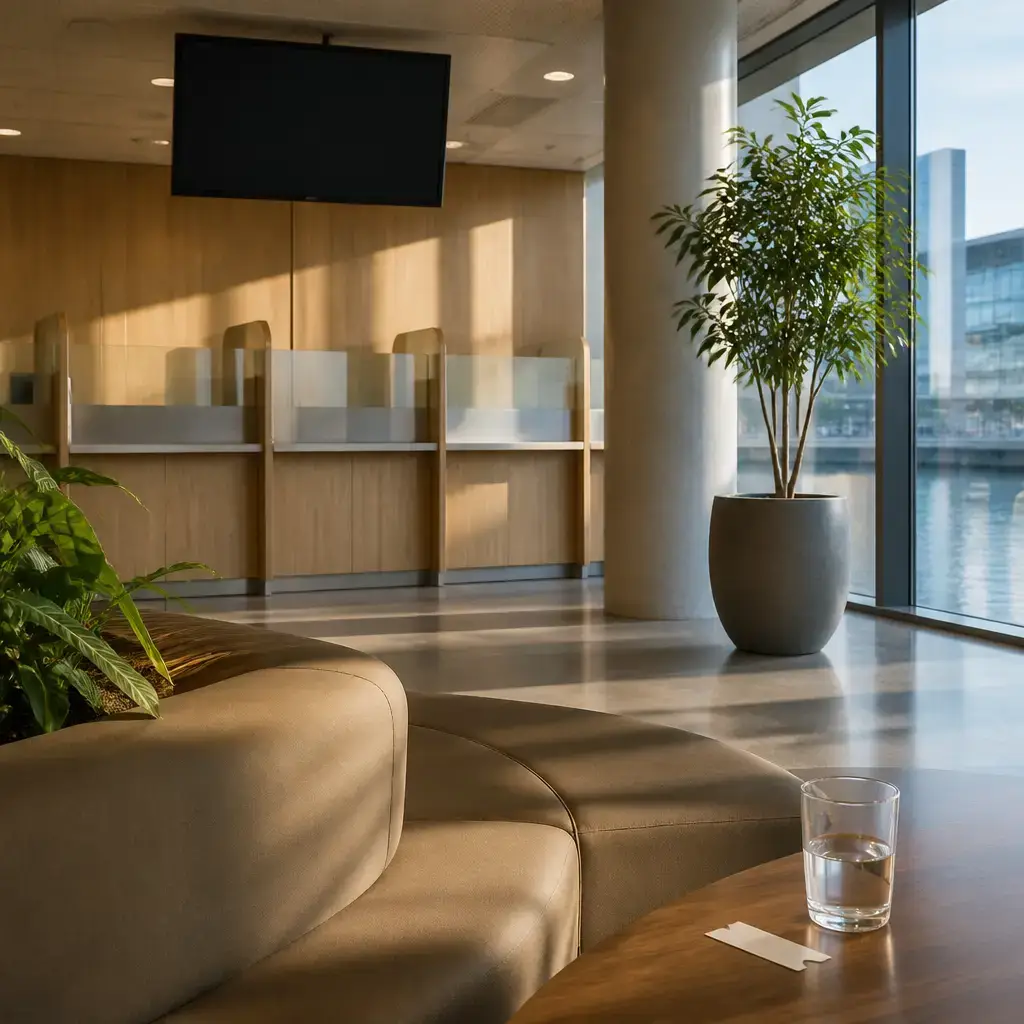
“Jeg” means “I” here: the speaker is talking about themself. It is used as the subject before the verb, as in “Jeg venter”. Use “Jeg” when stating what you are doing or thinking.
venter
“venter” means “am waiting” in “Jeg venter stadig”. It describes waiting for something, and the common pattern is “vente på” followed by what you are waiting for. You can use it when waiting for a person, service, or your turn.
stadig
“stadig” means “still” here, showing that the waiting continues. It is placed after “venter” in “Jeg venter stadig”. Use it when a situation has continued longer than expected or is still true.
på
“på” contributes “for” in “venter på”, the expression used for waiting for something. Here it introduces the clause “at det bliver min tur”. Use the pattern “vente på” plus a person, thing, or situation.
at
“at” introduces the clause “at det bliver min tur”, meaning that the speaker is waiting for this situation to happen. It links “venter på” to the following clause. Use “på, at …” when waiting for an event or change.
det
“det” is the subject in “det bliver min tur”; here it refers to the situation in which the speaker’s turn arrives. Its meaning comes from the whole expression “det bliver min tur”, not from “det” alone. This pattern is useful when talking about whose turn it is.
bliver
“bliver” means “becomes” in “det bliver min tur”, expressing that the situation changes so that it is the speaker’s turn. It is used with “min tur” in this expression. Use the pattern “det bliver [someone’s] tur” to say that someone’s turn comes.
min
“min” means “my” in “min tur”, identifying whose turn it is. It comes directly before the noun “tur”. Use “min” before a noun when referring to something belonging to or connected with you.
tur
“tur” means “turn” in “min tur”. Together with “min” and “det bliver”, it refers to the moment when the speaker is served or called. Use “[someone’s] tur” when people are waiting for an opportunity to act.
De
“De” means “they” here and refers to the people calling each person. It is the subject before “bruger” and “kalder”. Use it when talking about several people without naming them.
bruger
“bruger” means “spend” in “bruger lang tid på at kalde”, describing how much time the process takes. It is used with “lang tid på” before the activity. Use the pattern “bruge [amount of] tid på at …” to say how long an activity takes.
lang
“lang” means “long” in “lang tid”, referring to a lengthy amount of time. It comes before “tid” in this fixed combination. Use “lang tid” when an activity or wait lasts a long time.
tid
“tid” means “time” in “bruger lang tid”. Together with “lang” and “bruger” it describes the duration of the calling process. Use it in patterns such as “bruge tid på” an activity.
kalde
“kalde” means “call” in “at kalde på hver person”. It is the activity that takes a long time and follows “at”. Use the pattern “kalde på” when calling for a person’s attention or asking them to come.
hver
“hver” means “each” in “hver person”, referring to the people one by one. It comes before the singular noun “person”. Use “hver” before a singular noun when referring to every individual in a group.
person
“person” means “person” in “hver person”. Here it refers to each individual who is called. Use it after words such as “hver” when describing people individually.
i
“i” is part of the time expression “i dag”, meaning “today”. Together with “dag” it places the calling process on the current day. Use “i” in this expression when saying that something happens today.
dag
“dag” means “day” in “i dag”, which means “today”. The expression “i dag” refers to the current day rather than to a general day. Use it to specify when an event is happening.
Så
“Så” means “so” at the start of “Så bør jeg blive i nærheden”, linking the advice to what was just said. In “Så holder jeg billetten i hånden”, it means “then” and introduces the resulting action. Use it to show a consequence or the next step.
bør
“bør” means “should” in “bør jeg blive”, presenting staying nearby as sensible advice. It is followed by “jeg” and the verb “blive”. Use “bør” when recommending an action or saying what is advisable.
blive
“blive” means “stay” in “blive i nærheden”, describing remaining close to the waiting area. It follows “bør” and is followed by “i nærheden”. Use “blive” with a place when telling someone to remain there.
nærheden
“nærheden” means “the nearby area” in “i nærheden”, so the speaker should remain close by. The expression “i nærheden” is used for being near a place or person. Use it when giving a general location without naming the exact place.
kalder
“kalder” means “call” in “De kalder måske på dig snart”. It describes the people calling for the listener and is used with “på dig”. Use the pattern “kalde på” plus a person when calling that person.
måske
“måske” means “maybe” in “kalder måske”, making the prediction uncertain. It is placed after the subject and before the verb in this sentence. Use it when suggesting that something may happen without being certain.
dig
“dig” means “you” in “kalder på dig”. It identifies the person being called and follows the preposition “på”. Use “dig” after “på” when the person receiving the call is you.
snart
“snart” means “soon”, indicating that the call may happen after only a short time. It appears at the end of “De kalder måske på dig snart”. Use it when referring to an expected near-future event.
Hvilken
“Hvilken” means “which” in “Hvilken skranke”, asking the listener to identify one counter from several possible counters. It comes before the noun “skranke”. Use “Hvilken” before a singular noun when asking which one.
skranke
“skranke” means “counter” in “Hvilken skranke” and “den rigtige skranke”. Here it refers to a service counter in the public waiting area. Use it when identifying the counter where a person will be served.
skal
“skal” expresses “should” in the question “Hvilken skranke skal jeg holde øje med?”. It asks which counter the speaker is expected to watch. Use “skal” with a subject and verb when asking about an intended or necessary action.
holde øje med
“holde øje med” means “keep an eye on” or “watch” as a whole in “holde øje med” the counter. The expression contains “holde” for keeping, “øje” for an eye, and “med” to connect what is being watched; together they mean to monitor something. Use “holde øje med” plus an object, such as a screen, counter, or child.
Skærmen
“Skærmen” means “the screen” in “Skærmen viser”. The ending and context identify one particular screen in the waiting area. Use it when referring to a specific screen that displays information.
viser
“viser” means “shows” in “Skærmen viser den rigtige skranke”. It describes the information displayed by the screen. Use it with a subject such as a screen and the thing that is displayed.
den
“den” helps identify “den rigtige skranke” as the particular counter that is correct. It appears before the adjective and noun in this definite noun phrase. Use it when pointing to a specific common-gender noun described by an adjective.
rigtige
“rigtige” means “right” or “correct” in “den rigtige skranke”. It specifies which counter the screen shows. Use it before a noun when identifying the correct choice or location.
holder
“holder” means “hold” or “keep” in “holder jeg billetten i hånden”. It describes keeping the ticket physically in the hand. Use it with an object, as in “holder billetten”, and add a place with “i” when useful.
billetten
“billetten” means “the ticket” in “holder jeg billetten”. It refers to the particular ticket the speaker needs for their turn. Use it when talking about a specific ticket, especially with verbs such as “holder” or “har”.
hånden
“hånden” means “the hand” in the expression “i hånden”, describing where the ticket is kept. The full phrase “i hånden” means physically in the hand. Use it when describing something that someone is carrying or holding there.
gør
“gør” means “makes” in “Det gør det nemmere”, describing the effect of keeping the ticket ready. It is followed by “det nemmere”, which expresses that something becomes easier. Use “gøre det nemmere” when an action makes another task easier.
nemmere
“nemmere” means “easier” in “gør det nemmere”. It describes the result of keeping the ticket in hand when the turn arrives. Use it after “gøre det” to say that an action reduces difficulty.
når
“når” means “when” and introduces the time clause “når det bliver din tur”. It connects the preparation with the moment the listener’s turn arrives. Use “når” before a clause describing a time or condition that is expected to occur.
din
“din” means “your” in “din tur”, identifying the listener’s turn. It comes directly before “tur”. Use “din” before a noun when referring to something belonging to or connected with the person addressed.