Kan
Kan expresses ability or possibility in the request “Kan du tjekke”. It is a form of kunne and is used here to ask someone politely to check the app.
du
du means “you” and refers to the person being asked. In “Kan du tjekke”, it comes before the verb in this question pattern.
tjekke
tjekke means “check” in “Kan du tjekke vejr-appen”. It is used after Kan du to ask someone to check something, such as an app or message.
vejr-appen
vejr-appen means “the weather app”, the app being checked in the dialogue. The exact form is a definite compound, and it can be used after verbs such as tjekke when naming the app or service to check.
før
før means “before” and introduces the time condition in “før vi går”. It is commonly followed by a clause describing what happens before another action.
vi
vi means “we” and refers to the two people in the dialogue. In “før vi går”, it is the subject of the clause after før.
går
går means “go” or “leave” in “før vi går”, referring to leaving. Its citation form is gå, and the expression can be reused when saying that people leave before another event.
Der
Der is the introductory subject in “Der står” and “der er en chance”; it helps present information or state that something exists. In this dialogue, it does not refer to a specific physical place.
står
står means “says” or “is written” in “Der står”, referring to the information displayed by the weather app. Its citation form is stå, and “Der står” is useful when reporting what a screen, sign, or message says.
at
at means “that” and introduces the information being reported in “at der er en chance for regn”. It commonly connects a reporting expression with a complete clause.
er
er means “is” or “there is” in “der er en chance for regn”. Its citation form is være, and it is used here to say that a possibility exists.
en
en is the indefinite article “a” in “en chance” and refers to one non-specific possibility. It is used before the noun in phrases such as en chance for regn.
chance
chance means “chance” or “possibility” in “en chance for regn”. The reusable pattern is en chance for followed by what may happen.
for
for means “of” in “en chance for regn”, linking the chance with the possible event. This preposition is used here before the noun naming what there may be a chance of.
regn
regn means “rain” in “en chance for regn”. It names the possible weather event and can be used after for in this expression.
Himlen
Himlen means “the sky” in “Himlen ser allerede overskyet ud”. It is the definite form of himmel and is the thing whose appearance is being described.
ser
ser means “looks” in “Himlen ser allerede overskyet ud”, describing how the sky appears. Its citation form is se, and it is used with a description of appearance in this sentence.
allerede
allerede means “already” and shows that the sky has this appearance at the present time. In “ser allerede overskyet ud”, it comes before the description of the sky.
overskyet
overskyet means “cloudy” or “overcast” and describes the sky in “Himlen ser allerede overskyet ud”. It is used after ser and before ud as part of the appearance description.
ud
ud contributes to the appearance expression “ser allerede overskyet ud”; here it does not simply mean “out”. The pattern ser ... ud is used to describe how someone or something looks.
Temperaturen
Temperaturen means “the temperature” in the sentence about the evening. It is the definite form of temperatur and is the subject of “Temperaturen falder”.
falder
falder means “falls” or “drops” when the temperature changes in “Temperaturen falder”. Its citation form is falde, and it can describe a temperature becoming lower.
også
også means “also” and adds this temperature change to the earlier weather information. In “falder også”, it indicates that the temperature drops in addition to the other conditions mentioned.
i
i means “in” or “during” in the time phrase “i aften”. It is commonly used before a time expression to say when something happens.
aften
aften means “evening”; in “i aften” it means “this evening”, while “den køligere aften” refers to the cooler evening. These phrases show how aften can name the relevant time period.
Skal
Skal asks whether the speaker should take something along in “Skal jeg tage en let jakke med?”. It is a form of skulle and is used here to ask for advice or approval about an action.
jeg
jeg means “I” and refers to the person who may take the jacket. In “Skal jeg tage”, it is the subject of the proposed action.
tage
tage means “take” in the phrase “tage en let jakke med”. Its citation form is tage, and with med it describes taking something along when leaving.
let
let means “light” in “en let jakke”, describing a jacket that is not heavy. It is placed before the noun it describes.
jakke
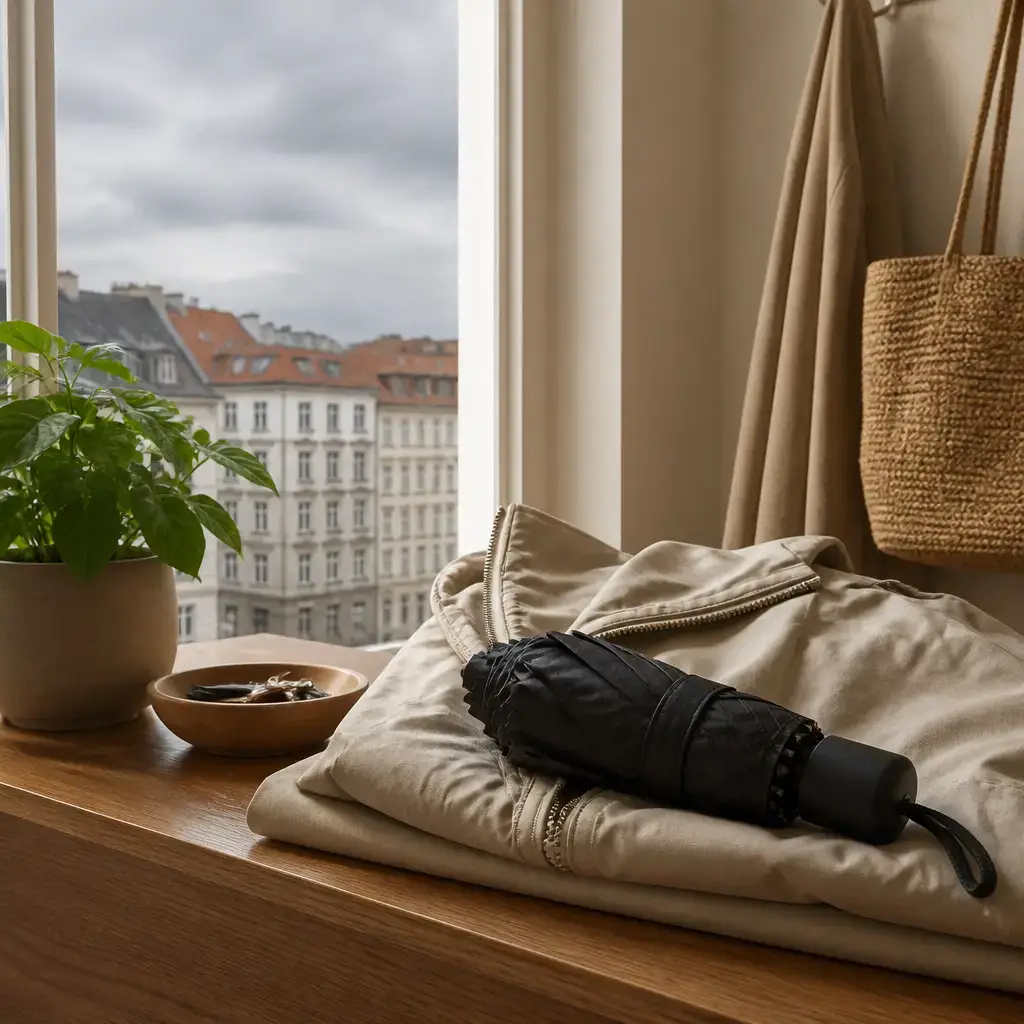
jakke means “jacket” in “en let jakke”. It names the item being considered for carrying and can follow an article and description such as en let.
med
med means “along” in “tage en let jakke med”, showing that the jacket will be taken along. This use commonly follows an object after tage when someone brings an item with them.
lille
lille means “small” in “en lille paraply”, describing the size of the umbrella. It comes before the noun it modifies.
paraply
paraply means “umbrella” in “en lille paraply”. It names the second item that may be useful in the rain.
ville
ville means “would” in “ville være en hjælp”, presenting the jacket and umbrella as something that would be helpful. It is used here to express a possible or expected result rather than a definite statement.
være
være means “be” after ville in “ville være en hjælp”. It links the possible situation with the description en hjælp, and it can follow modal forms in similar statements.
hjælp
hjælp means “help” in “en hjælp”, referring to something useful or supportive. The expression ville være en hjælp presents an item or action as useful in a particular situation.
Så
Så means “then” in “Så kan jeg lægge begge dele i min taske”, introducing the consequence of the suggestion. It can begin a sentence that follows logically from what was just said.
lægge
lægge means “put” or “place” in “lægge begge dele i min taske”. It is used with an object and a location, here the two items and the bag.
begge
begge means “both” and refers to the jacket and the umbrella together. In “begge dele”, it specifies that the two previously mentioned items are included.
dele
dele means “things” or “parts” in the expression “begge dele”, which refers to both items just mentioned. This expression is useful when referring back to two things without repeating their names.
min
min means “my” and shows that the bag belongs to the speaker in “min taske”. It is placed before the noun it identifies as belonging to the speaker.
taske
taske means “bag” in “min taske”. It names the place where the speaker will put both items.
Det
Det means “that” or “it” in “Det burde være nok”, referring to the proposed combination of the jacket and umbrella. It introduces the thing being judged as sufficient.
burde
burde means “should” or “ought to” in “Det burde være nok”, expressing an expectation that the items will be sufficient. It is used here to give a cautious assessment rather than an absolute guarantee.
nok
nok means “enough” in “burde være nok til regnen”. It is used with til to say what something is sufficient for.
til
til means “for” in “nok til regnen”, identifying the situation the items should be sufficient for. The reusable pattern is nok til followed by the relevant need or situation.
regnen
regnen means “the rain” in “nok til regnen”. It is the definite form of regn and names the weather condition the items should protect against.
og
og means “and” and joins “regnen” with “den køligere aften”. It connects two situations or items that are considered together.
den
den means “the” before “køligere aften” and identifies a particular evening. It introduces the noun phrase describing the evening relevant to this situation.
køligere
køligere means “cooler” and describes the evening in “den køligere aften”. It compares this evening with a warmer reference situation and comes before the noun it describes.