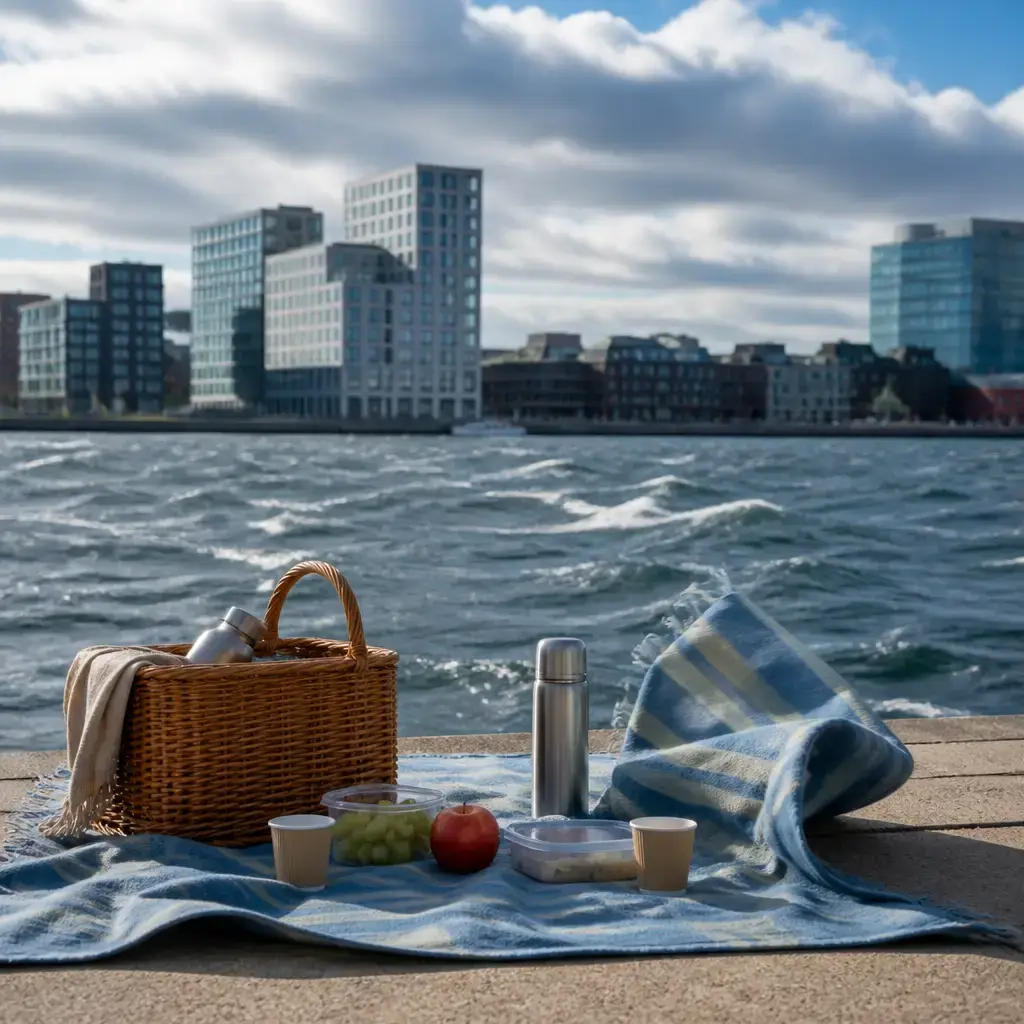
Vinden
“Vinden” means “the wind” in the sentence “Vinden er meget stærkere end i går.” It is the exact form used for the wind being discussed. Use it when talking about a specific wind or weather situation.
er
“Er” means “is” in “Vinden er meget stærkere end i går.” It connects the wind with the description “meget stærkere.” Use “er” to state what something is like or where it is.
meget
“Meget” means “much” here and strengthens the comparison in “meget stærkere.” It shows that the wind is considerably stronger. Use it before an adjective or comparison when you want to add strong emphasis.
stærkere
“Stærkere” means “stronger” in “Vinden er meget stærkere end i går.” It compares the wind today with the wind yesterday. Use “stærkere end” when saying that one thing has greater strength than another.
end
“End” means “than” in the comparison “stærkere end i går.” It introduces what the wind is being compared with. Use it after a comparative form such as “stærkere.”
i
“I” means “in” and is used in the time expression “i går,” meaning “yesterday.” Here it helps form a fixed time expression rather than describing a physical location. Use “i” in common time expressions such as “i dag” and “i går.”
går
“Går” contributes to the time expression “i går,” which means “yesterday” in this dialogue. The meaning comes from the whole expression, not from “går” alone. Use “i går” when referring to the previous day.
En
“En” means “a” in “En picnic.” It introduces one picnic without identifying a specific one previously mentioned. Use “en” before a noun such as “picnic” when introducing it this way.
picnic
“Picnic” means “picnic” in “En picnic er måske ikke behagelig i dag.” It names the outdoor activity being discussed. Use it after “en” when referring to a picnic.
måske
“Måske” means “maybe” in “er måske ikke behagelig.” It expresses uncertainty about whether the picnic will be comfortable. Use “måske” to make a statement less certain.
ikke
“Ikke” means “not” in “måske ikke behagelig.” It negates the description of the picnic as comfortable. Use “ikke” before the word or phrase that is being negated.
behagelig
“Behagelig” means “comfortable” in “En picnic er måske ikke behagelig i dag.” It describes the picnic as pleasant or comfortable, although the sentence says this may not be the case. Use it after “er” to describe how an experience or situation feels.
dag
“Dag” means “day,” and in the expression “i dag” the meaning is “today.” The word is part of the time expression used for the current day. Use “i dag” when saying that something happens today.
Tæppet
“Tæppet” means “the blanket” in “Tæppet ville blive ved med at blæse væk.” It refers to the specific blanket at the picnic. Use this exact form when talking about that blanket as a known object.
ville
“Ville” means “would” in “Tæppet ville blive ved med at blæse væk.” It presents what would happen if the picnic continued in the strong wind. Use “ville” to describe a possible or imagined result.
blive
“Blive” is part of “blive ved med at blæse væk,” which means “keep blowing away.” It helps express that the action would continue. Use “blive ved med at” before an action that continues.
ved
“Ved” is part of the continuing expression “blive ved med at blæse væk.” Together with “blive” and “med” it contributes the meaning “keep.” Use it in the pattern “blive ved med at” followed by an action.
med
“Med” is part of “blive ved med at blæse væk,” meaning “keep blowing away.” In this expression it does not mean that the blanket is blowing together with something. Use “blive ved med at” to describe a continuing action.
at
“At” marks the infinitive in “blive ved med at blæse væk.” It introduces the action that continues. Use “at” before the infinitive after the pattern “blive ved med.”
blæse
“Blæse” means “blow” in “blæse væk.” Here it describes the wind moving the blanket away. Use it with “væk” when something is blown away.
væk
“Væk” means “away” in “blæse væk.” It shows movement away from the picnic area. Use it after an action such as “blæse” when something moves away.
Det
“Det” means “it” or “that” in “Det kunne også være svært at spise udenfor.” Here it refers generally to eating outside as a situation. Use “det” to refer to a situation or idea already understood from the context.
kunne
“Kunne” means “could” in “Det kunne også være svært at spise udenfor.” It presents difficulty as a possible result of the weather. Use “kunne” before an infinitive such as “være” to describe a possibility.
også
“Også” means “also” in “Det kunne også være svært.” It adds eating outside as another possible problem. Use “også” when adding information to something already mentioned.
være
“Være” means “be” in “kunne også være svært.” It follows “kunne” and links the situation with the description “svært.” Use “kunne være” to say that something could be a certain way.
svært
“Svært” means “difficult” in “Det kunne også være svært at spise udenfor.” It describes eating outside as difficult in the strong wind. Use it after “være” to describe an activity or situation.
spise
“Spise” means “eat” in “at spise udenfor.” With “at,” it names the activity of eating outside. Use “at spise” when referring to eating as an activity.
udenfor
“Udenfor” means “outside” in “at spise udenfor.” It specifies that the eating would take place outdoors. Use it after an activity when you want to say that it happens outside.
Skal
“Skal” means “should” in the question “Skal vi aflyse og mødes indenfor i stedet?” It asks whether the speakers ought to take the proposed action. Use “Skal vi” to suggest or ask about doing something together.
vi
“Vi” means “we” in “Skal vi aflyse.” It refers to the two speakers acting together. Use “vi” as the subject when you mean yourself and at least one other person.
aflyse
“Aflyse” means “cancel” in “Skal vi aflyse.” It refers to cancelling the planned picnic. Use it with an event, meeting, or plan that will no longer take place.
og
“Og” means “and” in “aflyse og mødes indenfor.” It joins the two proposed actions: cancelling and meeting indoors. Use “og” to connect related words, phrases, or actions.
mødes
“Mødes” means “meet” in “mødes indenfor.” It describes the speakers meeting each other indoors. Use “mødes” when people come together at an agreed place or time.
indenfor
“Indenfor” means “indoors” in “mødes indenfor.” It gives the alternative location for the meeting. Use it when an activity takes place inside a building rather than outside.
sted
“Sted” is part of the expression “i stedet,” which means “instead” in this question. The whole expression marks the indoor meeting as the alternative to the picnic. Use “i stedet” when choosing one option in place of another.
mere
“Mere” means “more” in “mere sikkert og nemmere.” Together with “sikkert,” it contributes the comparison “safer.” Use “mere” before an adjective when forming a comparison such as “mere sikkert.”
sikkert
“Sikkert” means “safe” and in “mere sikkert” it means “safer.” It describes the indoor plan as involving less risk than the picnic in the wind. Use it after “mere” when comparing how safe two options are.
nemmere
“Nemmere” means “easier” in “mere sikkert og nemmere.” It describes the indoor plan as less difficult than eating outside. Use it when comparing the difficulty of two options.
Lad
“Lad” means “let” in “Lad mig fortælle det til alle.” It introduces the speaker’s proposal to do something. Use “Lad mig” when offering to carry out an action yourself.
mig
“Mig” means “me” in “Lad mig fortælle det til alle.” It identifies the person who will do the telling. Use “Lad mig” to say “let me” before an action.
fortælle
“Fortælle” means “tell” in “Lad mig fortælle det til alle.” It describes giving the information to the group. Use it in the pattern “fortælle det til” followed by the person or people receiving the information.
til
“Til” means “to” in “fortælle det til alle.” It marks the people who will receive the information. Use “fortælle ... til” when saying whom something is told to.
alle
“Alle” means “everyone” in “fortælle det til alle.” It refers to all the people in the relevant group. Use it after “til” when the information is being given to everyone.
gruppechatten
“Gruppechatten” means “the group chat” in “alle i gruppechatten.” It identifies the specific chat where the people are communicating. Use it after “i” when referring to information or communication inside a group chat.
café
“Café” means “café” in “En café nær parken.” It names the proposed indoor meeting place. Use it after “en” when introducing a café that has not been specified before.
nær
“Nær” means “near” in “nær parken.” It describes the café’s location in relation to the park. Use “nær” before a place to say that something is close to it.
parken
“Parken” means “the park” in “nær parken.” It refers to a specific park known in the situation. Use this form when identifying the park as the place near the café.
et
“Et” means “a” or “an” in “et godt valg.” It introduces one choice. Use “et” before a noun such as “valg” in this expression.
godt
“Godt” means “good” in “et godt valg.” It describes the proposed café as a suitable choice. Use it before a noun in a phrase such as “et godt valg.”
valg
“Valg” means “choice” in “et godt valg.” It refers to the café as the selected option for meeting. Use “et valg” when talking about an option or decision.