Det
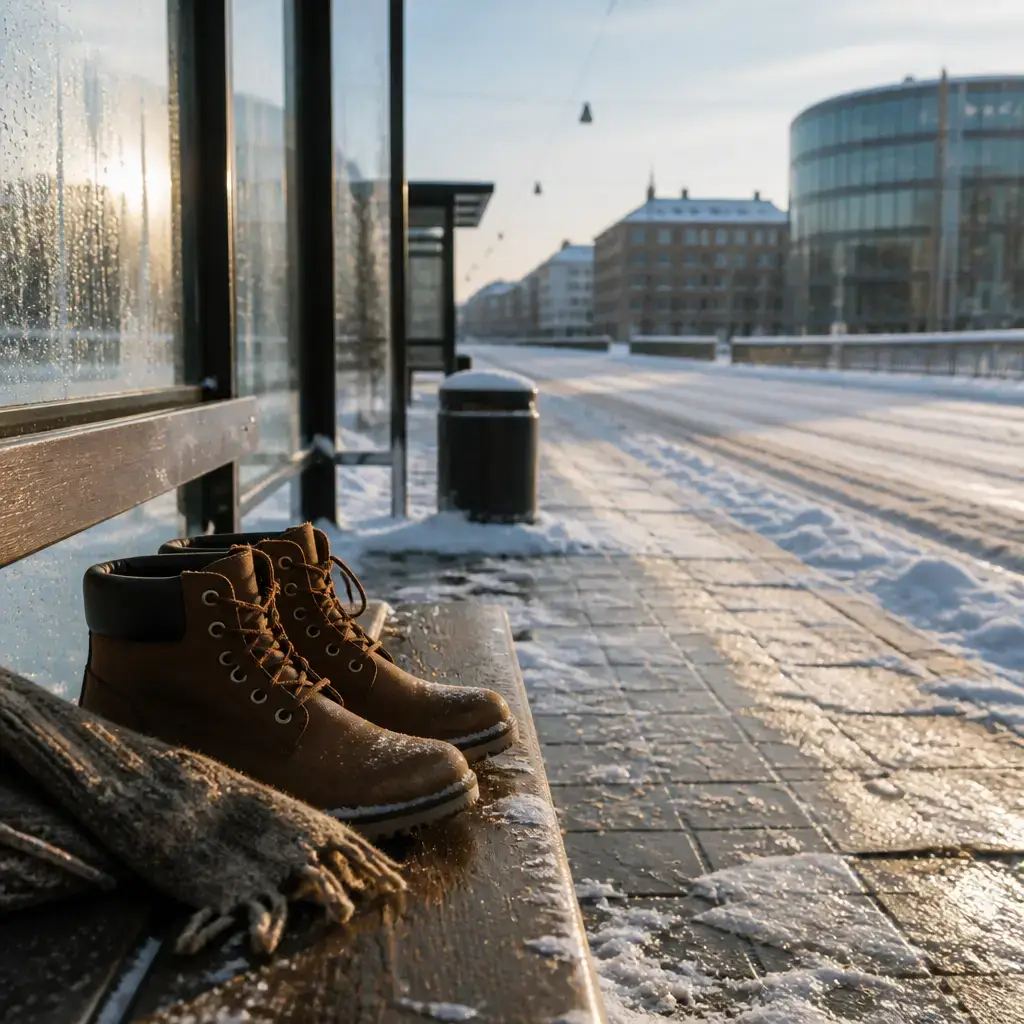
In "Det sneede meget i løbet af natten", "Det" is the impersonal "it" used for the weather; it does not point to a named thing. This pattern is useful when reporting weather conditions.
sneede
"sneede" says that snow fell, describing the snowfall during the night. It appears after "Det" and before "meget", so it names the weather event whose amount is being described.
meget
"meget" means a lot here and describes the amount of snow in "sneede meget". It is useful after an event or action when you want to express a high amount or degree.
i løbet af
The whole expression "i løbet af" means during and places an event within a period. The words "i", "løbet", and "af" function together here, so reuse the complete expression before a time period rather than translating the parts separately.
natten
"natten" means the night, referring here to the specific nighttime period when the snow fell. The definite form identifies that particular night, and the word can follow a time expression to name the relevant period.
Fortovene
"Fortovene" means the sidewalks, referring to the definite group of sidewalks being discussed. It is the subject of the sentence and is useful when talking about sidewalk conditions.
kan
In "Fortovene kan være isglatte", "kan" expresses possibility: the sidewalks may be icy. It combines with "være" before a possible condition and is useful for making a cautious prediction about weather or safety.
være
"være" means be and links the sidewalks to the condition "isglatte" after "kan". It supplies the condition while "kan" expresses that the condition is possible; this combination can describe a possible state.
isglatte
"isglatte" means icy or slippery because of ice, describing the sidewalks in "Fortovene kan være isglatte". It is used as a description after "være" for a surface or path that may be difficult to walk on.
her
In "her til morgen", "her" contributes the sense of the current or present time, giving the expression the meaning this morning. It helps anchor a time reference to the situation being discussed.
til
In "her til morgen", "til" is part of the time expression that refers to this morning rather than a destination. Reuse it here as part of the complete expression "her til morgen".
morgen
"morgen" means morning in "her til morgen", identifying the time of day being discussed. It is useful as the time word in an expression that locates an event in the morning.
Så
"Så" means then and links the snowy, icy situation to the speaker's response in "Så bør jeg tage støvler på". At the beginning of a sentence, it can introduce a consequence or next decision.
bør
"bør" means should or ought to and gives advice about wearing safer boots. It is followed here by an action, "tage støvler på", and is useful when recommending what someone ought to do.
jeg
"jeg" means I and identifies the speaker as the person who should put on boots. It appears before "bør" as the subject of the advice and is useful when stating your own intended or recommended action.
tage
In "tage støvler på", "tage" contributes the action of putting on the boots, while "på" completes the clothing expression. A reusable pattern keeps the clothing item between the action word and "på".
støvler
"støvler" means boots, the clothing item that the speaker plans to put on. It is the object between "tage" and "på" and is useful when talking about this type of footwear.
på
In "tage støvler på", "på" completes the expression for putting clothing on. Its meaning here is connected to the action of wearing something, so reuse it after the clothing item in this pattern.
med
"med" means with and connects the boots to the feature they have: better grip. In "støvler med bedre greb", it introduces a characteristic or feature and is useful before such a description.
bedre
"bedre" means better and compares the grip of these boots with a less effective level of grip. It directly describes "greb" in "med bedre greb" and is useful before the thing being improved.
greb
"greb" means grip or traction, referring here to how well the boots hold on to the icy ground. It follows "med bedre" and is useful when describing the traction of footwear or another surface.
Du
"Du" means you and is the person receiving the advice in "Du bør også gå mere forsigtigt". It is capitalized because it begins the sentence; the same pronoun appears in lowercase later in the dialogue.
også
"også" means also and adds another recommendation to the earlier advice about boots. In "Du bør også gå", it appears before the second action and is useful for adding an additional action or point.
gå
"gå" means walk in this scene, referring to moving along the icy sidewalks. It follows "bør" and is useful with a manner word such as "forsigtigt" when giving advice about how to walk.
mere
"mere" means more and increases the degree of carefulness in "mere forsigtigt end normalt". It is useful before a word describing degree when comparing an action with the usual level.
forsigtigt
"forsigtigt" means carefully and describes how the person should walk. In "gå mere forsigtigt", it gives the manner of the action and is useful when advising someone to move with care.
end
"end" means than and introduces the comparison in "mere forsigtigt end normalt". It follows the comparative expression and is useful for setting the reference point in a comparison.
normalt
"normalt" means normally or as usual and provides the usual level used for comparison. In "mere forsigtigt end normalt", it shows that the person should be more careful than they normally are.
Tror
"Tror" means think or believe and asks for the other person's opinion in the question "Tror du, at busserne bliver forsinkede?". It is useful at the beginning of a question about someone's view or expectation.
at
"at" means that and introduces the clause containing what the speaker is asking about in "Tror du, at busserne bliver forsinkede?". It is useful after an opinion verb before the full statement being considered.
busserne
"busserne" means the buses, referring to the specific buses whose service may be affected. It is the subject of "bliver forsinkede" and is useful when discussing known bus services.
bliver
"bliver" means become or will become and presents being delayed as a resulting state for the buses. It appears before "forsinkede" and is useful when describing a change into a condition.
forsinkede
"forsinkede" means delayed and describes the buses' expected condition after "bliver". In this lesson it concerns public transport that does not run on time, and it is used after "bliver" for that state.
Sandsynligvis
"Sandsynligvis" means probably and gives a cautious answer about the buses. It can stand at the beginning of a reply when something is likely but not certain.
fordi
"fordi" means because and introduces the reason for the prediction in "Sandsynligvis, fordi trafikken bevæger sig langsomt i snevejr". It is useful before a clause that explains why something happens or is expected.
trafikken
"trafikken" means the traffic, referring to the road traffic affected by the snow. It is the subject of "bevæger sig" and is useful when explaining road conditions or movement on the roads.
bevæger
"bevæger" contributes the meaning moves in "trafikken bevæger sig langsomt". It is used together with "sig" to describe the traffic's movement, and the expression can describe something being in motion.
sig
"sig" is the reflexive component in "trafikken bevæger sig langsomt", referring back to the traffic as the thing moving. It completes the movement expression and is used with the verb rather than as a separate named object.
langsomt
"langsomt" means slowly and describes the manner of the traffic's movement. In "bevæger sig langsomt", it follows the movement expression and is useful after a verb to explain how an action happens.
i
In "i snevejr", "i" means in and places the traffic's movement within snowy weather conditions. It is useful before a weather or environmental setting that provides the circumstances for an action.
snevejr
"snevejr" means snowy weather or snow conditions, naming the conditions in which the traffic moves slowly. It follows "i" and is useful for specifying snow as the surrounding weather situation.
Lad
In "Lad mig tjekke transportappen", "Lad" opens a request meaning let me do something. "mig" identifies the person who will act and "tjekke" names the action, so the whole construction is used to ask permission or announce an immediate action.
mig
"mig" means me and identifies the speaker as the person who will check the app in "Lad mig tjekke transportappen". It follows "Lad" in this request pattern and is used for the person allowed to perform the action.
tjekke
"tjekke" means check and names the action the speaker proposes in "Lad mig tjekke transportappen". It follows "Lad mig" and is useful for saying what you want to check or do immediately.
transportappen
"transportappen" means the transport app, specifically the app the speaker plans to check for travel information. It is the object of "tjekke" and is useful when referring to a known app for transport updates.
før
"før" means before and places checking the app earlier than leaving in "før jeg tager af sted". It is useful before a clause or event that must happen first.
tager af sted
The whole expression "tager af sted" means leave or depart. In it, "tager" is the verb and "af" plus "sted" complete the fixed expression for going away; here it follows "før" to mark departure as the later event.
måske
"måske" means maybe and makes the prediction in "Det kan måske spare dig tid" less certain. It is useful with a possible result when you want to suggest something without presenting it as definite.
spare
In "spare dig tid", "spare" means save time or help someone avoid using as much time. A reusable pattern keeps a person between the verb and the resource being saved, as here with "dig" and "tid".
dig
"dig" means you in object position and identifies the person who benefits from saving time in "spare dig tid". It follows "spare" and is useful for naming the person affected by the action.
tid
"tid" means time and is the resource that may be saved in "spare dig tid". It appears after the person who benefits and is useful when describing time as something saved, used, or needed.