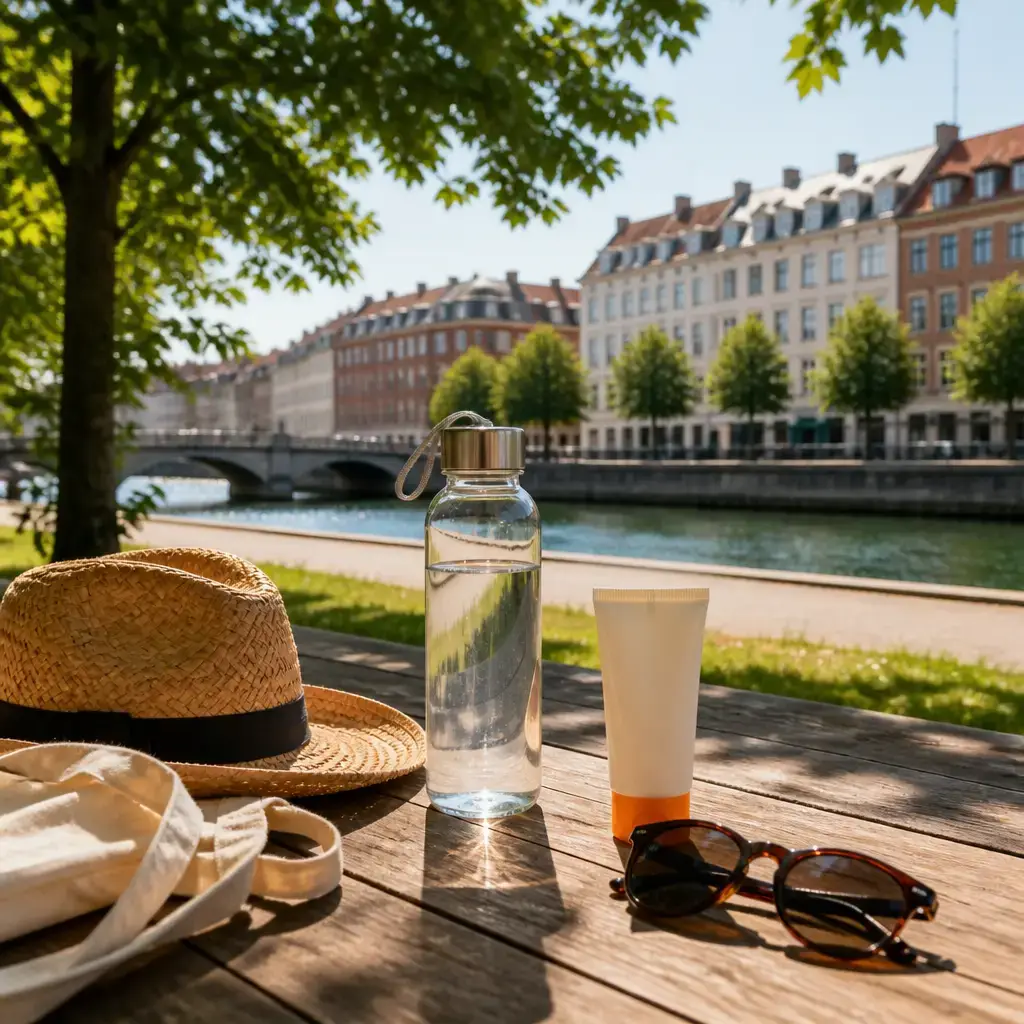
Det
In “Det bliver virkelig varmt i dag”, “Det” is the subject referring to the weather situation, roughly “it.” It is commonly used as the subject when describing weather or a general situation.
bliver
In “Det bliver virkelig varmt i dag”, “bliver” describes the weather coming to be hot or being expected to be hot. With an adjective, this form can describe a changing or future state.
virkelig
“Virkelig” intensifies the description in “virkelig varmt”, meaning “really” hot. It can be placed before an adjective or another description when stronger emphasis is needed.
varmt
In “Det bliver virkelig varmt i dag”, “varmt” describes the weather as hot or warm. It is used here as the weather’s description after “bliver”.
i
In the exact expression “i dag”, “i” contributes the meaning “in”, while the whole expression means “today.” This preposition is often part of expressions that locate something in time or place.
dag
In “i dag”, “dag” means “day”, and the full expression means “today.” The same word can be used in other time expressions involving a day.
Lad
At the beginning of “Lad os undgå at gå”, “Lad” introduces a suggestion, meaning “let” in the sense of “let’s.” The reusable pattern is “Lad os” followed by an action.
os
In “Lad os undgå at gå”, “os” means “us.” Together with “Lad”, it forms a suggestion addressed to the speaker and the other person, not a command directed only at the other person.
undgå
“Undgå” means “avoid” in “undgå at gå”: the speakers want not to walk during the hottest time. It is followed here by “at” and an action, giving the pattern “undgå at” plus a verb.
at
In “undgå at gå”, “at” marks the following verb as an infinitive, so the phrase means “avoid walking.” The reusable pattern is “at” followed by a verb when an action is being named.
gå
In “undgå at gå”, “gå” means “walk” or “go”, referring to the activity they want to avoid. The expression “at gå” can be used when talking about going or walking as an action.
når
“Når” introduces the time clause “når det er varmest”, meaning “when it is hottest.” It is useful for connecting an action or situation to the time when another situation occurs.
er
In “når det er varmest”, “er” links the subject “det” with the description “varmest”, meaning “is.” This form is used to describe a current or identified state.
varmest
In “når det er varmest”, “varmest” means “hottest”, identifying the time when the heat reaches its greatest level. It is useful when comparing several times and referring to the one with the greatest degree of heat.
Jeg
“Jeg” is the subject meaning “I” in “Jeg tager solcreme på.” It identifies the speaker as the person carrying out the action.
tager
In “tager solcreme på”, “tager” contributes the idea of taking or putting something on; the whole expression means “puts sunscreen on.” The reusable construction is a form of “tage” plus an item and “på” for putting something on.
solcreme
“Solcreme” means “sunscreen” and is the item being put on in “tager solcreme på.” It can be used as the object when talking about sun protection.
på
In “tager solcreme på”, “på” contributes the meaning “on”, while the full construction means “put sunscreen on.” It stays connected to the action and the item being put on.
før
“Før” means “before” in “før vi går”, introducing the action that must happen earlier. A common reuse pattern is “før” followed by a clause describing an earlier event.
vi
“Vi” means “we” in “før vi går” and is the subject of that clause. It refers to the speaker together with at least one other person.
Bliv
“Bliv” tells the other person to stay in “Bliv også i skyggen”. It is used at the start of this direct piece of advice about remaining in a place.
også
“Også” means “also” or “too” in “Bliv også i skyggen”, adding this advice to the other precautions. It is useful when presenting an additional action or recommendation.
skyggen
“Skyggen” means “the shade” in “i skyggen”, the place where the person should stay. The phrase “i skyggen” can be reused when describing being or remaining in shade.
du
“Du” means “you” in “når du kan”, referring to the person being addressed. Here it is the subject of the clause about what that person is able to do.
kan
In “kan hurtigt blive dehydreret”, “kan” expresses possibility or ability: the speaker may become dehydrated quickly. It is followed here by “blive” and can be reused with an infinitive to describe what someone can or may do.
hurtigt
“Hurtigt” means “quickly” in “kan hurtigt blive dehydreret”, describing the speed of becoming dehydrated. It can be used with an action to say that the action happens quickly.
blive
In “blive dehydreret”, “blive” means “become” or “get”, describing a change into the state of being dehydrated. The pattern “blive” plus a description can express reaching a new state.
dehydreret
“Dehydreret” means “dehydrated” in “blive dehydreret”, the condition the speaker might reach in the heat. It is used here after “blive” to name the resulting state.
den
In “den her varme”, “den” helps identify the heat being discussed as a particular heat. Together with “her”, the phrase means “this heat”; the full noun phrase appears in “i den her varme”.
her
In “den her varme”, “her” means “this”, pointing to the heat present in the current situation. The pattern “den her” plus a noun is used to identify something as this particular thing.
varme
“Varme” means “heat” in “den her varme”, referring to the hot conditions around the speakers. In “i den her varme”, the whole phrase means “in this heat.”
Hav
“Hav” means “have” in the instruction “Hav vand med”, where the whole expression means “carry water” or “have water with you.” The pattern can be reused to tell someone to bring an item along.
vand
“Vand” means “water” and is the item to be carried in “Hav vand med.” It can be used as the object of an instruction about drinking or bringing water.
med
In “Hav vand med”, “med” means “with” and shows that the water should be kept or carried along with the person. The full pattern is useful when telling someone to have a particular item with them.
og
“Og” means “and” in “Hav vand med, og drik ofte”, joining two pieces of advice. It is used to connect related actions in one instruction.
drik
“Drik” tells the person to drink in “drik ofte.” It is a direct instruction, and it can be followed by a beverage or modified by a word describing how often to drink.
ofte
“Ofte” means “often” in “drik ofte”, recommending that the action happen frequently. It can be used with an action to describe repeated or regular behavior.
besøge
“Besøge” means “visit” in “Lad os besøge parken senere.” It follows “Lad os” as the suggested action, and the pattern is “besøge” plus the place being visited.
parken
“Parken” means “the park” and is the place being visited in “besøge parken.” It is used here as the object of the verb “besøge.”
senere
“Senere” means “later” in “besøge parken senere”, placing the visit at a time after now. It can be added to an action to specify that it will happen later.
køligere
In “når det er køligere”, “køligere” means “cooler”, describing a time when the temperature is lower than it is now. It is useful for comparing a later or different situation with the current one.
sikrere
“Sikrere” means “safer” in “Det bliver sikrere”, describing the planned choice as involving less danger. It is used here to compare the later plan with going out during the strongest heat.
mere
In “mere behageligt”, “mere” means “more” and increases the degree of the following description. The reusable pattern is “mere” plus an adjective when comparing comfort or another quality.
behageligt
In “mere behageligt”, “behageligt” means “comfortable”, describing the later plan as more comfortable. Together with “mere”, it expresses a higher degree of comfort than the alternative.