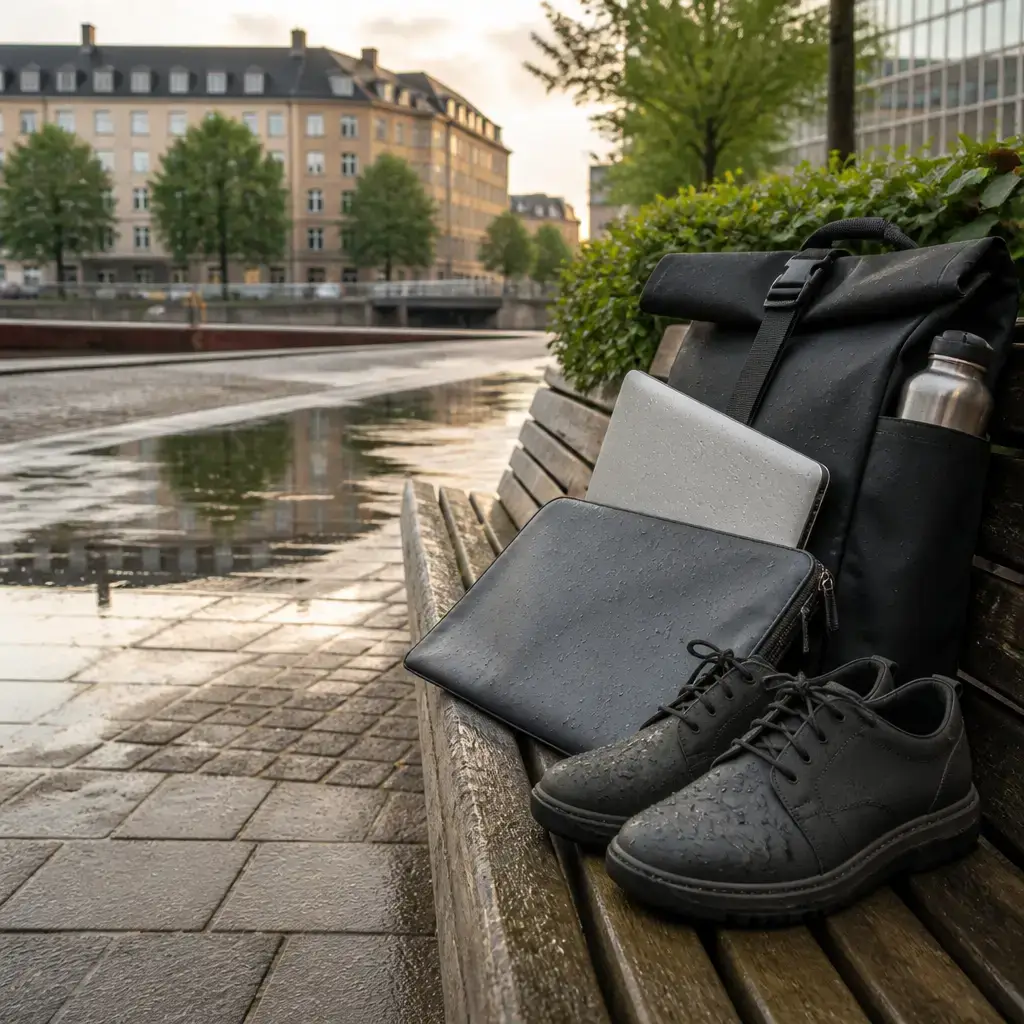
Vejrudsigten
Vejrudsigten means “the weather forecast” here. Its citation form is vejrudsigt, and the exact form refers to the forecast being discussed. Use it when talking about what the forecast predicts, as in Vejrudsigten siger, at ... .
siger
siger means “says” in Vejrudsigten siger, at ... . Its citation form is sige, and siger is the form used for the current statement. It commonly introduces information with at, as in Vejrudsigten siger, at den kraftige regn snart begynder.
at
at introduces the information that the forecast gives: at den kraftige regn snart begynder means “that the heavy rain will soon begin.” It is commonly placed before a full clause after verbs such as siger.
den
den is the definite article in den kraftige regn, referring to the specific heavy rain expected in the conversation. It stands before the adjective and noun in this phrase. A reusable pattern is den + adjective + noun when referring to a specific thing.
kraftige
kraftige describes the rain as heavy or strong in den kraftige regn. Its citation form is kraftig, while kraftige is the form used in this noun phrase. Use it before a noun when describing strong intensity, as in kraftig regn.
regn
regn means “rain” in den kraftige regn. It refers to the weather that is expected to begin soon. It can be combined with descriptions such as kraftig regn when discussing rainfall.
snart
snart means “soon” and places the beginning of the rain in the near future. It modifies the event in den kraftige regn snart begynder. Use it when something is expected to happen shortly.
begynder
begynder means “begins” in den kraftige regn snart begynder. Its citation form is begynde, and begynder is the form used for the event described here. It can be used with an event as the subject, such as regnen begynder.
Så
Så means “then” at the start of the advice Så tag vandtætte sko på i dag. It connects the forecast to the recommended action. Use it to introduce a consequence or next step after earlier information.
tag
tag means “put on” in tag vandtætte sko på, with the meaning supplied by the full expression with på. Its citation form is tage, and tag is the direct command form used here. Use tag ... på when telling someone to put on clothing or footwear.
vandtætte
vandtætte describes the shoes as waterproof in vandtætte sko. Its citation form is vandtæt, while vandtætte is the form used before sko in this phrase. It is useful for describing clothing or equipment that protects against water.
sko
sko means “shoes” in vandtætte sko. The word identifies the footwear that should be put on before going out in the rain. It commonly follows a description such as vandtætte.
på
på completes the putting-on expression tag vandtætte sko på, so the phrase means “put on waterproof shoes.” Here it contributes the idea that the shoes are put onto the body. Use it after the object in this type of expression: tag ... på.
i
i is part of the time expression i dag, meaning “today.” It places the action on the current day rather than describing a physical location. Use i before dag in this fixed time expression.
dag
dag means “day” in i dag, which means “today.” Together with i, it identifies when the shoes should be worn. The expression i dag is used for actions taking place on the current day.
Der
Der introduces the existence statement Der er altid vandpytter ved stationen, meaning that puddles are present there. It is placed at the beginning of the Danish equivalent of “there are.” Use Der er + noun to say that something exists or is present.
er
er means “is” or “are” in Der er altid vandpytter ved stationen. Its citation form is være, and er is the form used in this present-time existence statement. The reusable pattern Der er introduces something that is present.
altid
altid means “always” and says that the puddles are present repeatedly or continually near the station. It modifies the existence statement Der er ... . Use it to express a regular or constant situation.
vandpytter
vandpytter means “puddles” in Der er altid vandpytter ved stationen. Its citation form is vandpyt, and vandpytter is the form used for the puddles mentioned here. Use it when describing small areas of standing water, especially after rain.
ved
ved means “near” or “by” in ved stationen, locating the puddles close to the station. It is a preposition placed before the place being described. Use ved + place when something is situated nearby.
stationen
stationen means “the station” in ved stationen. Its citation form is station, and the exact form refers to the specific station relevant to the trip. It follows ved to name the nearby location.
Du
Du means “you” in Du får måske også brug for ekstra tid. It identifies the person who may need more time. Use Du at the beginning of a statement or question when addressing one person directly.
får
får means “get” in the expression får brug for, which means “need.” Its citation form is få, and får is the form used in this present statement. Use får brug for + thing when saying that someone needs something.
måske
måske means “maybe” or “perhaps” and makes the need for extra time uncertain. It is placed before også in Du får måske også brug for ekstra tid. Use it when presenting a possibility rather than a certainty.
også
også means “also” in Du får måske også brug for ekstra tid. It adds this possible need to the other preparations already discussed. It commonly appears before the part of the sentence that is being added.
brug
brug is part of får brug for, the expression used here for “need.” The noun brug contributes the idea of use within this fixed construction. Use the complete pattern får brug for + noun, such as får brug for ekstra tid.
for
for completes the need expression får brug for, so får brug for ekstra tid means “need extra time.” It links the expression to the thing that is needed. Keep the object after for in this reusable pattern.
ekstra
ekstra means “extra” in ekstra tid, adding the idea of more time than usual or normally planned. It directly describes tid. Use ekstra before a noun when requesting or describing an additional amount.
tid
tid means “time” in får brug for ekstra tid. It is the amount needed to deal with possible delays. It commonly follows an amount or description such as ekstra.
grund
grund is part of på grund af forsinkelser, meaning “because of delays.” It contributes the idea of a reason or cause in this expression. Use the complete pattern på grund af + cause when explaining why something happens.
af
af is part of the expression på grund af, which means “because of” in på grund af forsinkelser. Together with på and grund, it links the extra time to its cause. Keep the reason after the complete expression.
Skal
Skal introduces the question Skal jeg lægge min bærbare computer i et vandtæt etui? and asks whether this is the right action to take. Its citation form is skulle, and skal is the present form used in the question. It commonly comes before the subject in a yes-or-no question.
jeg
jeg means “I” in Skal jeg lægge min bærbare computer i et vandtæt etui? It identifies the person considering the action. After a question word such as Skal, it follows the verb in this question pattern.
lægge
lægge means “put” or “place” in Skal jeg lægge min bærbare computer i et vandtæt etui? Its citation form is lægge, and this is the infinitive used after skal. Use it with an object and a location, such as lægge noget i et etui.
min
min means “my” and identifies the computer as belonging to the speaker in min bærbare computer. It is placed before the noun phrase it describes. Use min before a thing that belongs to the speaker.
bærbare
bærbare identifies the computer as portable, giving bærbare computer the everyday meaning “laptop.” Its citation form is bærbar, while bærbare is the form used in this noun phrase. Use it before computer when referring to a laptop.
computer
computer means “computer” in min bærbare computer. Together with bærbare, it identifies the device that may need protection from the rain. It follows the possessive and description in this noun phrase.
et
et is the indefinite article before etui in et vandtæt etui, meaning “a waterproof sleeve.” It introduces one unspecified case or sleeve. Use it directly before a noun such as etui in an indefinite noun phrase.
vandtæt
vandtæt describes the etui as waterproof in et vandtæt etui. Its citation form is vandtæt, and this exact form modifies the sleeve. Use it before an object when explaining that the object keeps water out.
etui
etui means “case” or “sleeve” in et vandtæt etui. It is the container in which the laptop might be placed. It can be combined with a material or protective description such as vandtæt.
Lad
Lad introduces the instruction Lad den blive i din taske, meaning “keep it in your bag” in this context. Its citation form is lade, and Lad is the command form used to tell someone to allow or keep something in a state or place. It is followed here by den and blive.
blive
blive means “stay” or “remain” in Lad den blive i din taske. Its citation form is blive, and it is used after Lad to describe the state the laptop should remain in. Use Lad ... blive when telling someone to let something stay somewhere.
din
din means “your” in din taske, identifying the bag as belonging to the person being addressed. It comes directly before the noun taske. Use din before a singular thing belonging to the listener.
taske
taske means “bag” in din taske. It names the place where the laptop should remain so that it stays dry. It commonly follows a possessive such as din.
hvor
hvor means “where” and introduces the clause hvor den holder sig tør, describing the place in which the laptop remains dry. It connects the location with additional information about it. Use hvor to introduce a place-related clause.
holder
holder is part of holder sig tør, which means that the laptop stays dry here. Its citation form is holde, and holder is the present form used with the reflexive sig. Use holder sig + adjective to describe something maintaining a condition.
sig
sig is the reflexive pronoun in holder sig tør, referring back to the thing that remains dry. It is needed as part of this expression with holder. Use it with a verb when the subject is affected by or maintains its own state.
tør
tør means “dry” in holder sig tør, describing the condition the laptop remains in. It is the adjective after holder sig. Use it after this construction to describe a maintained condition.
bør
bør means “should” or “ought to” in Så bør jeg tage af sted tidligere end normalt. Its citation form is burde, and bør presents the speaker’s recommended or sensible action. It is followed by an infinitive such as tage.
tage af sted
tage af sted means “leave” or “depart” in Så bør jeg tage af sted tidligere end normalt. The complete expression is what gives the meaning of leaving: tage contributes the action, af contributes movement away, and sted means “place.” Use tage af sted + time or destination when saying when or where someone leaves.
tidligere
tidligere means “earlier” in tage af sted tidligere end normalt. It compares the planned departure time with the usual time. Use it before end + comparison point when saying that something happens earlier.
end
end means “than” in tidligere end normalt. It introduces the point of comparison for the earlier departure. Use it after a comparative expression such as tidligere.
normalt
normalt means “normally” or “usually” in tidligere end normalt. It identifies the usual departure time used as the comparison point. Use it after end when comparing an action with the normal situation.
Det
Det means “that” or “it” in Det burde gøre turen mindre stressende. It refers to the plan of leaving earlier mentioned in the previous line. Use Det at the beginning of a sentence when referring back to an action or situation.
burde
burde means “should” or “ought to” in Det burde gøre turen mindre stressende. Its citation form is burde, and this form expresses an expected result rather than a direct command. It is followed by the infinitive gøre.
gøre
gøre means “make” in gøre turen mindre stressende. Its citation form is gøre, and it is the infinitive after burde. Use gøre + object + adjective to describe causing something to have a particular quality.
turen
turen means “the trip” in gøre turen mindre stressende. Its citation form is tur, and the exact form refers to the specific journey being discussed. It is the object of gøre in this sentence.
mindre
mindre means “less” in mindre stressende, reducing the degree of stress connected with the trip. It modifies stressende in the result expression gøre turen mindre stressende. Use mindre before an adjective when describing a lower degree.
stressende
stressende means “stressful” in gøre turen mindre stressende. It describes the quality that the trip is expected to have to a lower degree. Use it after gøre + object + mindre when describing a trip or situation becoming less stressful.