Jeg
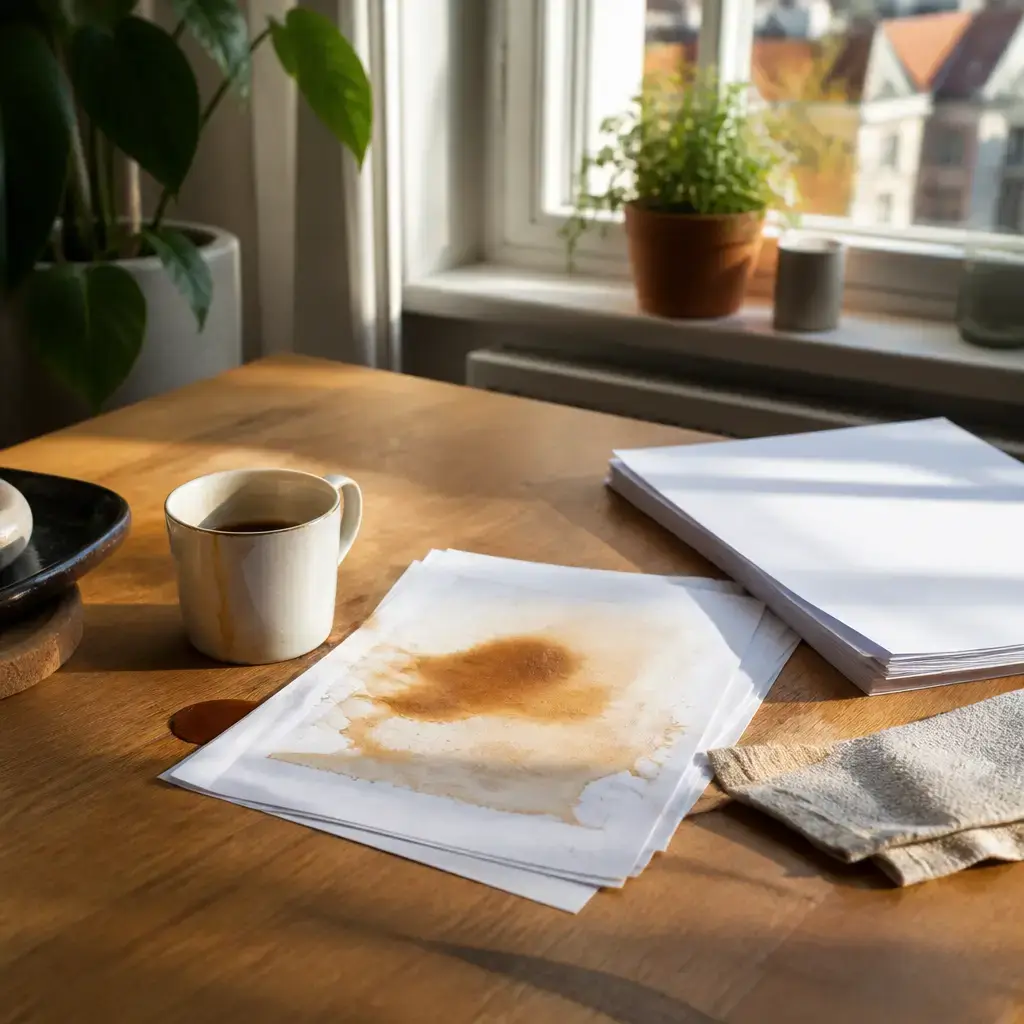
“Jeg” means “I” here: the person who spilled the coffee. It is used as the subject in “Jeg spildte kaffe på de her dokumenter” and “Jeg vil skille de tørre sider ad”. Use “Jeg” before an action you are describing or intend to do.
spildte
“Spildte” means “spilled” in this dialogue, referring to the completed coffee spill. It appears in “Jeg spildte kaffe på de her dokumenter”, with the spilled substance before “på” and the affected object after it. You can reuse the pattern “spildte ... på ...” for saying that something was spilled onto something.
kaffe
“Kaffe” means “coffee”, the drink that was spilled. In “spildte kaffe” it is the substance affected by the action. It can be used after an action such as “spildte” to name what was spilled.
på
“På” means “on” in “på de her dokumenter”, showing where the coffee landed. It connects the spilled substance with the affected surface or object. The reusable pattern here is “... på ...”, as in “spildte kaffe på de her dokumenter”.
de
“De” is part of “de her dokumenter” and helps identify the documents as the ones being referred to. Together with “her”, it gives the meaning “these”. Keep “de her” together before a plural noun when referring to particular nearby things.
her
“Her” means “here” in “de her dokumenter”, pointing to documents that are present or nearby. Its contribution is to make “de dokumenter” specific as “these documents”. The reusable expression is “de her” followed by the thing being indicated.
dokumenter
“Dokumenter” means “documents” in “de her dokumenter”, the papers affected by the spill. It follows the identifying phrase “de her”. Use it after a determiner when naming more than one document.
Flyt
“Flyt” means “move” and is used as a direct instruction in “Flyt dem væk fra koppen”. The form addresses the person who should move the documents. A useful command pattern is “Flyt ... væk fra ...” for moving something away from a place or object.
dem
“Dem” means “them” and refers to the documents in “Flyt dem væk fra koppen”. It is the object being moved. Use “dem” after an instruction or action when it refers back to several people or things.
væk
“Væk” means “away” in “væk fra koppen”, describing movement to a position farther from the cup. It works together with “fra” to show what something is being moved away from. The reusable pattern is “flyt ... væk fra ...”.
fra
“Fra” means “from” in “væk fra koppen”, identifying the cup as the place or object to move away from. It follows “væk” in this movement expression. Use “fra” after an expression of distance or movement away from something.
koppen
“Koppen” means “the cup”, the cup that is close to the documents. It follows “fra” in “væk fra koppen”, so it is the object they should be moved away from. Use this form when referring to the specific cup in the situation.
før
“Før” means “before” and introduces the action that should happen first in “før pletten breder sig”. The documents should be moved before the stain spreads. Use “før” before a clause describing a later event.
pletten
“Pletten” means “the stain”, referring to the coffee mark on the documents. In “før pletten breder sig”, it is the thing that may spread. Use it with a description of what the stain does, such as “pletten breder sig”.
breder
“Breder” means “spreads” in “pletten breder sig”. It describes the stain becoming wider across the documents. In this expression, “breder” is used with “sig”, so keep the two forms together when reusing the meaning “spreads”.
sig
“Sig” is part of “breder sig”, where it helps express that the stain spreads. It does not carry the whole meaning alone; the complete expression “pletten breder sig” means “the stain spreads”. Keep “sig” with the verb when using this reflexive expression.
Den
“Den” introduces “den øverste side” as the specific top page being discussed. Later, the lowercase form “den” refers back to that page in “rører ved den”. Use this form before a specific noun or as a reference to a previously mentioned item.
øverste
“Øverste” means “top” or “uppermost” in “den øverste side”. It identifies which page is meant by describing its position in the stack. Use it before a noun when distinguishing the top item from other items.
side
“Side” means “page” in “den øverste side”, referring to one page of the documents. It is modified by “den øverste”. Use “side” when identifying a particular page in a document.
er
“Er” means “is” and links the page with its condition in “Den øverste side er allerede gennemblødt”. It introduces the description of how the page is now. Use “er” to connect a subject with a state or description.
allerede
“Allerede” means “already” and shows that the page is soaked at this point in the situation. In “er allerede gennemblødt”, it comes between “er” and the description. Use it when something has happened or become true earlier than now.
gennemblødt
“Gennemblødt” means “soaked” or completely wet in “Den øverste side er allerede gennemblødt”. It describes the condition of the top page after the coffee spill. Use it after “er” to describe something that has become saturated with liquid.
Lad
“Lad” means “let” in the instruction “Lad den tørre fladt”. It tells someone to allow the page to dry before touching it. A useful pattern is “Lad ... tørre” when allowing something to dry.
tørre
“Tørre” means “dry” in “Lad den tørre fladt”. After “Lad”, it names the action the page is allowed to carry out. Use “Lad ... tørre” when giving advice about leaving something to dry.
fladt
“Fladt” means “flat” in “tørre fladt”, describing how the page should be positioned while it dries. It gives the manner or position for the drying action. The reusable expression is “tørre fladt” for letting a sheet or similar item dry without folding it.
du
“Du” means “you” in “før du rører ved den”. It identifies the person who should avoid touching the page before it dries. Use “du” as the subject when addressing one person directly.
rører
“Rører” means “touches” in “rører ved den”, referring to handling the wet page. It is used with “ved” in this expression. Keep “rører ved” together when saying that someone touches something.
ved
“Ved” is part of “rører ved den”, the expression used for touching the page. Here it connects the action of touching with the object touched. Use the complete pattern “rører ved ...” rather than treating “ved” as the whole meaning by itself.
Skal
“Skal” is used in “Skal jeg printe en ren kopi af den side?” to ask whether the speaker should take that action. It comes before the subject “jeg” in this question. Use “Skal jeg ...?” when asking if you should do something.
printe
“Printe” means “print” in “Skal jeg printe en ren kopi af den side?”. It names the action the speaker is considering. It follows “Skal jeg” in the question pattern “Skal jeg printe ...?”.
en
“En” means “a” in “en ren kopi”, introducing one unspecified copy. It comes before the noun phrase “ren kopi”. Use it before a singular noun phrase when referring to one item without identifying it as a specific one.
ren
“Ren” means “clean” in “en ren kopi”, describing a copy without the damaged or blurred text. It modifies “kopi” before the noun. Use it before a noun when describing something as clean or undamaged in the relevant situation.
kopi
“Kopi” means “copy” in “en ren kopi”, referring to a newly printed version of the page. It is described by “ren”. The reusable pattern is “en ... kopi” when naming one copy with a quality or description.
af
“Af” means “of” in “en ren kopi af den side”. It connects the new copy with the page it reproduces. Use “kopi af ...” to identify what has been copied.
Det
“Det” refers to the suggested action of printing a clean copy in “Det ville være sikrere”. It means “that” or “it” as a reference to the proposal just mentioned. Use “Det” at the start of a response when evaluating a suggestion or situation.
ville
“Ville” means “would” in “Det ville være sikrere”, presenting the suggested action as a safer option. It is followed by “være” in this expression. Use “ville være ...” to describe how a proposed action or situation would be.
være
“Være” means “be” in “ville være sikrere”. It links the subject of the evaluation with the description “sikrere”. It follows “ville” in the reusable pattern “ville være ...”.
sikrere
“Sikrere” means “safer” in “Det ville være sikrere”, comparing the proposed clean copy with leaving the damaged page as it is. It describes the suggested action as reducing the risk of unclear text. Use it after “være” when evaluating which option offers more safety.
fordi
“Fordi” means “because” and introduces the reason for the suggestion in “fordi teksten kan blive utydelig”. The possible change to the text explains why printing a copy is safer. Use “fordi” before a clause that gives a reason.
teksten
“Teksten” means “the text”, referring to the writing on the wet page. In “teksten kan blive utydelig”, it is the thing that may become unclear. Use it when referring to the specific text already associated with the page.
kan
“Kan” means “may” here, expressing a possibility in “kan blive utydelig”. It says that the text might become unclear rather than stating that this will definitely happen. Use “kan” before another verb to describe what may happen.
blive
“Blive” means “become” in “kan blive utydelig”, describing a change in the text’s condition. It follows “kan” and comes before the description “utydelig”. The reusable pattern is “kan blive ...” for something that may change into a state.
utydelig
“Utydelig” means “unclear” or “blurred” in “teksten kan blive utydelig”. It describes the possible condition of the text after the page gets wet. Use it after “blive” when writing, an image, or another visible message may become difficult to read.
vil
“Vil” means “will” in “Jeg vil skille de tørre sider ad”. It expresses the speaker’s intention to separate the dry pages. Use “Jeg vil ...” to state what you intend or plan to do.
skille
“Skille” means “separate” in “skille de tørre sider ad”. It is part of the complete expression “skille ... ad”, which means to separate things from one another. Keep the object between “skille” and “ad” when reusing this pattern.
sider
“Sider” means “pages” in “de tørre sider”, referring to the pages that are not wet. It is modified by “de tørre”. Use it with a determiner or description when referring to several pages.
ad
“Ad” completes the expression “skille de tørre sider ad”, meaning to separate the pages. It does not express the full action by itself; the verb and object are also needed. Preserve the pattern “skille ... ad” when using it again.
mens
“Mens” means “while” and introduces an action happening during the same period in “mens denne tørrer”. The dry pages are separated during the time this page is drying. Use “mens” before a clause describing a simultaneous action.
denne
“Denne” means “this one” in “mens denne tørrer”, referring to the wet page being discussed. It distinguishes that page from the other pages. Use it when pointing to one specific item that is present or already understood.
tørrer
“Tørrer” means “dries” in “denne tørrer”, describing what the wet page is doing. It follows “denne”, which identifies the page. Use it after the subject when describing an item becoming dry.
Stil
“Stil” means “put” or “place” in the instruction “Stil drikkevarerne på et andet bord”. It tells someone where to place the drinks next time. Use the command pattern “Stil ... på ...” when placing something on a surface.
drikkevarerne
“Drikkevarerne” means “the drinks”, referring to the beverages that should be kept away from the documents. It is the object of “Stil” in “Stil drikkevarerne på et andet bord”. Use it when talking about the specific drinks in the situation.
et
“Et” means “a” in “et andet bord”, introducing one other table. It comes before the phrase describing the table. Use it before a singular noun phrase when introducing one item of this type.
andet
“Andet” means “another” or “different” in “et andet bord”. It shows that the drinks should go on a table other than the current one. Use it before a noun when choosing an alternative item.
bord
“Bord” means “table” in “et andet bord”, the surface where the drinks should be placed. It is modified by “et andet”. Use it after a determiner or description when naming a table.
næste
“Næste” means “next” in “næste gang”, referring to the next occasion when the situation occurs. It comes before “gang”. Use the expression “næste gang” when giving advice for a future occasion.
gang
“Gang” means “time” or “occasion” in “næste gang”. Together, “næste gang” means “next time”, referring to a future occasion. Use it after a word such as “næste” when talking about when something should be done in the future.