Må
“Må” asks for permission in “Må jeg låne din store pande i dag?” and means “may” or “can.” A useful pattern is “Må jeg” followed by an action.
jeg
“jeg” means “I” and is the person asking to borrow the pan in “Må jeg låne din store pande i dag?” It commonly appears as the subject before the action.
låne
“låne” means “borrow” in “Må jeg låne din store pande i dag?” It is the action that follows the permission word “Må.”
din
“din” means “your” and identifies the pan as belonging to the person being addressed in “din store pande.” It is placed before the noun phrase it describes.
store
“store” means “large” in “din store pande” and describes the size of the pan. It appears between “din” and “pande” in this phrase.
pande
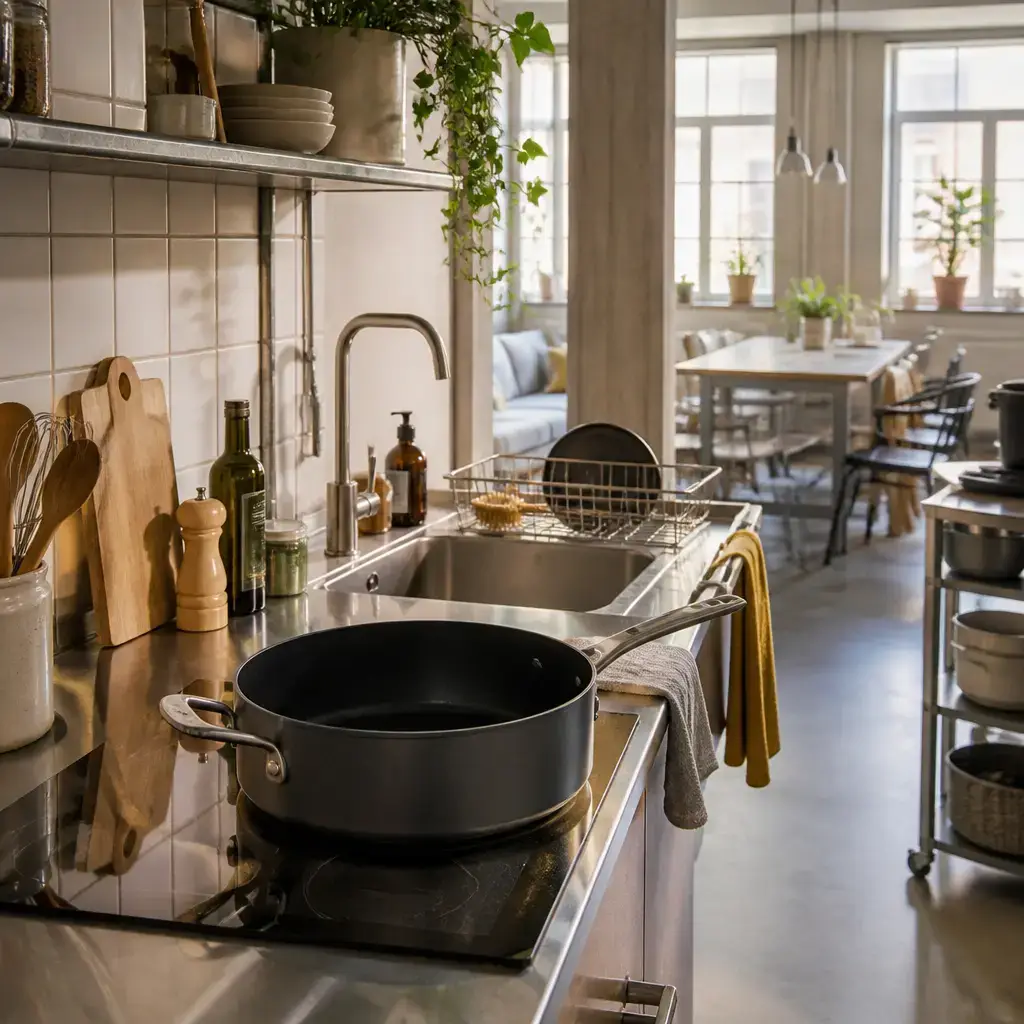
“pande” means “pan” in “din store pande.” It is the object that one person wants to borrow and later return.
i
“i” is part of the time expression “i dag,” meaning “today.” Together with “dag,” it places the borrowing on the current day.
dag
“dag” means “day” in the expression “i dag,” meaning “today.” The expression is used to specify when something happens.
Det
“Det” refers to the proposed borrowing in “Det må du gerne” and helps form the reply granting permission. Here it introduces the situation being accepted rather than naming the pan directly.
du
“du” means “you” in “Det må du gerne.” It identifies the person who is allowed to borrow the pan.
gerne
“gerne” adds a willing, positive meaning to “Det må du gerne,” making the reply a friendly acceptance of the request. It is useful in replies that grant permission willingly.
men
“men” means “but” and introduces the warning in “men pas på håndtaget.” It connects permission with a condition or caution.
pas
“pas” is the command to be careful in “pas på håndtaget.” The reusable pattern is “pas på” followed by the person or thing that needs attention.
på
“på” is part of the caution expression “pas på håndtaget,” meaning “be careful with the handle.” Its meaning here comes from this expression, not from the separate meaning “on.”
håndtaget
“håndtaget” means “the handle” in “pas på håndtaget.” It is the definite form related to “håndtag,” and it names the part that becomes hot.
for
“for” means “because” in “for det bliver varmt” and introduces the reason for the warning. It is followed here by a clause explaining the danger.
bliver
“bliver” means “gets” or “becomes” in “det bliver varmt,” describing a change into a hot state. It is the present form related to “blive.”
varmt
“varmt” means “hot” or “warm” in “det bliver varmt.” It describes the state that the handle reaches during use.
Er
“Er” asks whether something is suitable in “Er det okay at bruge den på dette komfur?” It is the present form related to “være” and begins the question.
okay
“okay” means “all right” or “acceptable” in “Er det okay at bruge den på dette komfur?” It evaluates whether using the pan on the stove is suitable.
at
“at” introduces the action phrase “at bruge den,” meaning “to use it.” A useful pattern is “at” followed by the action being described.
bruge
“bruge” means “use” in “at bruge den.” It names the action being checked in the question about the stove.
den
“den” means “it” in “at bruge den” and refers back to the pan. It is placed after the action “bruge” as its object.
dette
“dette” means “this” in “dette komfur” and identifies the particular stove being discussed. It appears directly before “komfur.”
komfur
“komfur” means “stove” in “dette komfur.” It is the surface on which the speaker asks whether the pan can be used.
burde
“burde” means “should” in “Det burde være fint,” expressing an expectation that the pan will be suitable. It is followed by the action or state expected, here “være fint.”
være
“være” means “be” in “burde være fint.” It follows “burde” and names the expected state.
fint
“fint” means “fine” or “all right” in “Det burde være fint.” It evaluates the use of the pan, provided the heat is kept low.
hvis
“hvis” means “if” in “hvis du holder varmen lav” and introduces the condition for the pan being fine. It is followed by a clause describing that condition.
holder
“holder” means “keep” in “holder varmen lav,” describing maintaining the heat at a low level. It is the present form related to “holde” and takes “varmen” as its object.
varmen
“varmen” means “the heat” in “holder varmen lav.” It is the definite form related to “varme” and names the heat level that should remain low.
lav
“lav” means “low” in “holder varmen lav.” It describes the required level of the heat while the pan is being used.
vasker
“vasker” means “wash” in “Jeg vasker den lige efter aftensmaden,” describing the planned cleaning of the pan. The time phrase explains when this washing will happen.
lige
“lige” means “right” or “just” in “lige efter aftensmaden,” emphasizing that the washing happens immediately after dinner. It strengthens the timing expression that follows.
efter
“efter” means “after” in “lige efter aftensmaden.” It places the washing after the dinner has finished.
aftensmaden
“aftensmaden” means “the dinner” in “lige efter aftensmaden.” It is the definite form related to “aftensmad” and provides the time reference.
Tør
“Tør” is a command meaning “dry” in “Tør den godt.” It tells the other person what to do with the pan before returning it.
godt
“godt” means “well” in “Tør den godt” and describes how thoroughly the pan should be dried. It modifies the drying action.
før
“før” means “before” in “før du kommer med den tilbage.” It introduces the action that must happen earlier than bringing the pan back.
kommer
“kommer” is the present form related to “komme”; in “kommer med den tilbage,” it describes coming while bringing the pan back. The phrase gives the action and direction together.
med
“med” means “with” in “kommer med den tilbage.” It indicates that the pan is brought along during the return.
tilbage
“tilbage” means “back” in “kommer med den tilbage,” showing that the pan is being returned to its previous place or owner. It adds the direction of return.
Har
“Har” begins the question “Har du brug for den igen i morgen?” and forms the expression for asking whether someone needs something. It is the present form related to “have.”
brug
“brug” is part of the expression “har brug for,” meaning “need” in this question. The expression is followed by the thing that is needed, here “den.”
igen
“igen” means “again” in “Har du brug for den igen i morgen?” It shows that the person may need the pan another time.
morgen
“morgen” means “tomorrow” in “i morgen.” In this expression it refers to the next day, not to the time of day called morning.
får
“får” is part of “får ikke brug for den,” meaning that the speaker will not need the pan. In this context it contributes the idea of coming to have a need for something later.
ikke
“ikke” means “not” in “får ikke brug for den.” It negates the need expressed by “får brug for.”
senere
“senere” means “later” in “senere på ugen.” It places the possible need at a time after the current point in the week.
ugen
“ugen” means “the week” in “senere på ugen.” It is the definite form related to “uge” and identifies the current week as the time period.