Batteriet
“Batteriet” means “the battery” here and refers to the laptop battery. The exact form appears in “Batteriet i min laptop”; a reusable pattern is a noun followed by “i” and the thing it belongs to.
i
“i” means “in” in “Batteriet i min laptop” and links the battery with the laptop. A reusable pattern is “X i Y” when something is located in or associated with Y.
min
“min” means “my” and shows that the laptop belongs to the speaker. It appears in “min laptop”; the same form can be used before another owned item when appropriate.
laptop
“laptop” means “laptop” and identifies the computer whose battery is almost empty. It appears in “min laptop” and can be used after a possessive such as “min”.
er
“er” means “is” and links the battery with its condition in “Batteriet i min laptop er næsten tomt.” A reusable pattern is a subject followed by “er” and a description.
næsten
“næsten” means “almost” and shows that the battery is not completely empty yet. It modifies “tomt” in “er næsten tomt”; it can similarly come before a description when something is nearly in a state.
tomt
“tomt” means “empty” here and describes the battery’s remaining charge. In “er næsten tomt,” it completes the description after “er”; use it when describing something as empty in a similar context.
Du
“Du” means “you” and identifies the person who can borrow the charger. It is the subject of “Du kan låne min oplader”; a reusable pattern is “Du kan” followed by an action.
kan
“kan” means “can” and expresses permission or possibility in “Du kan låne min oplader.” It comes before the action form “låne”; a reusable pattern is “kan” plus an action.
låne
“låne” means “borrow” here and describes taking the charger for temporary use. It follows “kan” in “kan låne min oplader”; a reusable pattern is “låne” followed by the borrowed item.
oplader
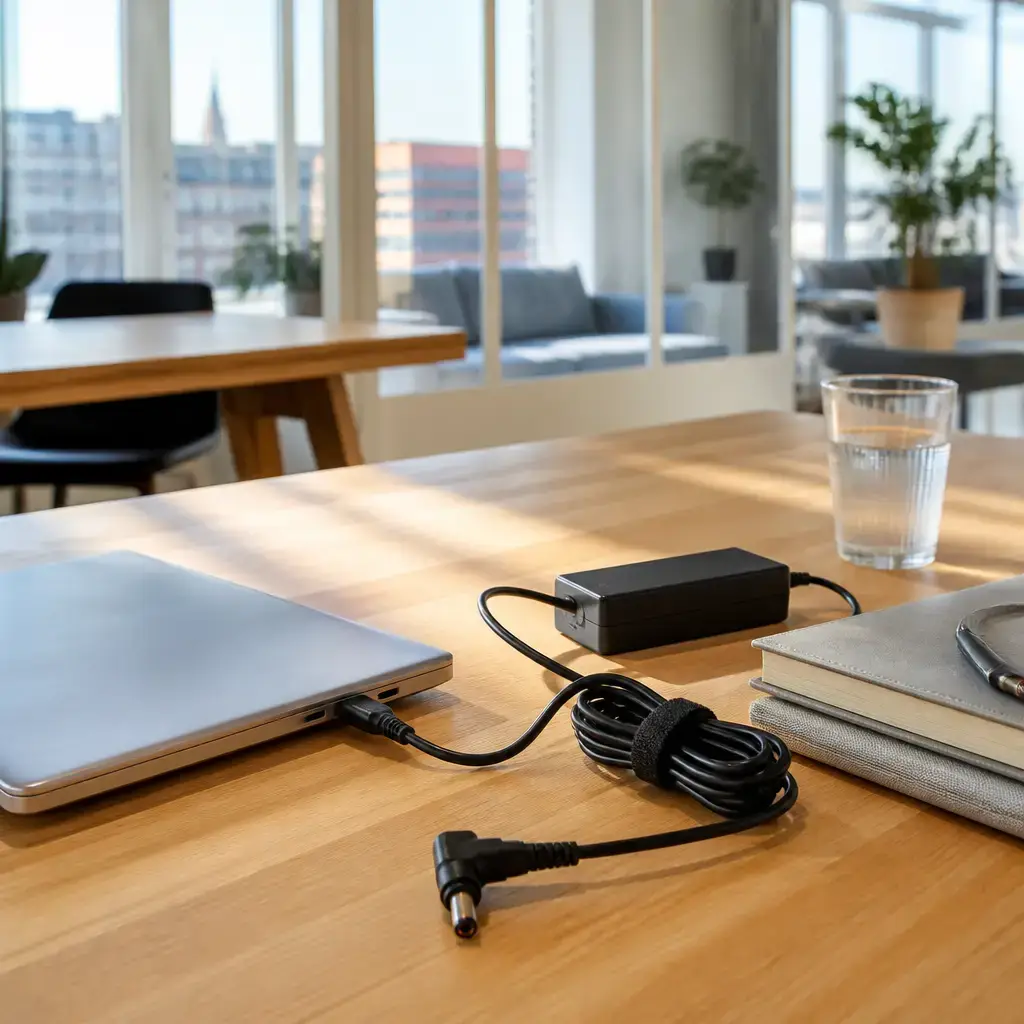
“oplader” means “charger” and refers to the device being offered. It appears in “min oplader”; a reusable pattern is a possessive followed by the item being lent.
indtil
“indtil” means “until” and sets the time limit for borrowing the charger. It appears before the event in “indtil mødet”; use it before a time or event that marks an endpoint.
mødet
“mødet” means “the meeting” and marks the time until which the charger may be borrowed. It appears after “indtil” in “indtil mødet”; this is useful when naming a specific meeting as a time boundary.
den
“den” means “it” in “Er den kompatibel med min laptop?” and refers to the charger. It also appears in “Den passer,” where it remains the subject; use it to refer back to the relevant item.
kompatibel
“kompatibel” means “compatible” and describes whether the charger works with the laptop. It appears in “kompatibel med min laptop”; the reusable pattern is “kompatibel med” followed by the item it works with.
med
“med” means “with” in the expression “kompatibel med min laptop.” It introduces the item with which something is compatible; use the same pattern when describing compatibility.
Det
“Det” starts the reply “Det burde den være” about the charger’s compatibility. Together with “burde den være,” it expresses that the charger is expected to be compatible; use it to refer to the situation or assessment being discussed.
burde
“burde” means “should” here and expresses an expectation rather than certainty. It appears in “burde den være”; a reusable pattern is “burde” followed by an action or description.
være
“være” means “be” and completes “burde den være,” meaning that the charger should be compatible. It follows “burde” in this dialogue; use it after a similar modal expression when describing a state.
men
“men” means “but” and contrasts the expected compatibility with the instruction to check the connector. It joins the two parts of “Det burde den være, men tjek stikket først”; use it to introduce a contrasting point.
tjek
“tjek” means “check” and gives a direct instruction to inspect the connector. It appears in “tjek stikket først”; a reusable pattern is “tjek” followed by the thing to inspect.
stikket
“stikket” means “the connector” and is the item that should be checked. It is the object of “tjek” in “tjek stikket først”; use it when referring to this connector in the borrowing situation.
først
“først” means “first” and tells the listener to check the connector before continuing. It appears at the end of “tjek stikket først”; it can follow an instruction to mark the first step.
passer
“passer” means “fits” here and confirms that the charger’s connector fits the laptop. It appears in “Den passer”; a reusable pattern is an item followed by “passer” when confirming a suitable fit.
og
“og” means “and” and joins the statement that the connector fits with the statement that the battery is charging. It appears in “Den passer, og batteriet lader nu”; use it to connect related facts.
lader
“lader” means “is charging” here and describes what the battery is doing now. It appears in “batteriet lader nu”; a reusable pattern is “batteriet lader” followed by a time expression when useful.
nu
“nu” means “now” and shows that the battery is charging at the moment of speaking. It appears after “lader” in “batteriet lader nu”; place it with an action to specify the current time.
Læg
“Læg” means “put” and gives the instruction to return the charger to the desk. It begins “Læg den tilbage på mit skrivebord”; a reusable pattern is “Læg” plus the object, “tilbage,” and the destination.
tilbage
“tilbage” means “back” and shows that the charger should be returned to its previous place. It appears in “Læg den tilbage” and “lægger den tilbage”; use it with a putting action when something is being returned.
på
“på” means “on” and introduces the surface where the charger should be placed. It appears in “på mit skrivebord”; use it before a surface or location in a similar placement instruction.
mit
“mit” means “my” and shows that the desk belongs to the speaker. It appears in “mit skrivebord”; a reusable pattern is a possessive followed by the owned item.
skrivebord
“skrivebord” means “desk” and identifies the place where the charger should be returned. It appears in “mit skrivebord”; it can follow a possessive when referring to someone’s desk.
når
“når” means “when” and introduces the condition for returning the charger. It appears in “når du er færdig”; use it before a clause describing when an action should happen.
færdig
“færdig” means “finished” and describes the point at which the listener has finished using the charger. It appears in “du er færdig”; a reusable pattern is a person followed by “er færdig” to describe completion.
Jeg
“Jeg” means “I” and identifies the speaker who promises to return the charger. It is the subject of “Jeg lægger den tilbage”; use it at the start of a statement about your own action.
lægger
“lægger” means “put” in “Jeg lægger den tilbage” and describes returning the charger. In this dialogue it states what the speaker will do before the other person leaves; a reusable pattern is “Jeg lægger” followed by an object and “tilbage.”
før
“før” means “before” and places the return action earlier than the other person’s departure. It appears in “før du går”; use it before a clause that marks the later event.
går
“går” means “leave” in “før du går” and refers to the other person leaving work or the place. It follows “du” in that time clause; use the expression to refer to someone’s departure.
Så
“Så” means “so” or “then” and connects the agreed return time with the result that follows. It starts “Så har jeg tid nok”; use it to introduce a consequence or what happens next.
har
“har” means “have” and describes the speaker’s available time in “Så har jeg tid nok.” It combines with “tid nok” to express having enough time; a reusable pattern is “har” followed by a resource or amount.
tid
“tid” means “time” and refers to the time available before the charger is needed again. It appears in “har jeg tid nok”; use it with “have” when talking about available time.
nok
“nok” means “enough” and shows that the available time is sufficient. It follows “tid” in “tid nok”; place it after the amount or resource that is sufficient.
skal
“skal” means “need to” here and indicates a future need in “før jeg skal bruge den igen.” It comes before “bruge”; a reusable pattern is “skal” plus an action when someone needs to do something.
bruge
“bruge” contributes the meaning “use” in “skal bruge den igen,” which together means “need to use it again.” It follows “skal” and takes “den” as the item being used; a reusable pattern is “bruge” followed by the needed object.
igen
“igen” means “again” and shows that the charger will be needed another time. It appears after “bruge den” in “bruge den igen”; use it after an action to indicate repetition.