Må
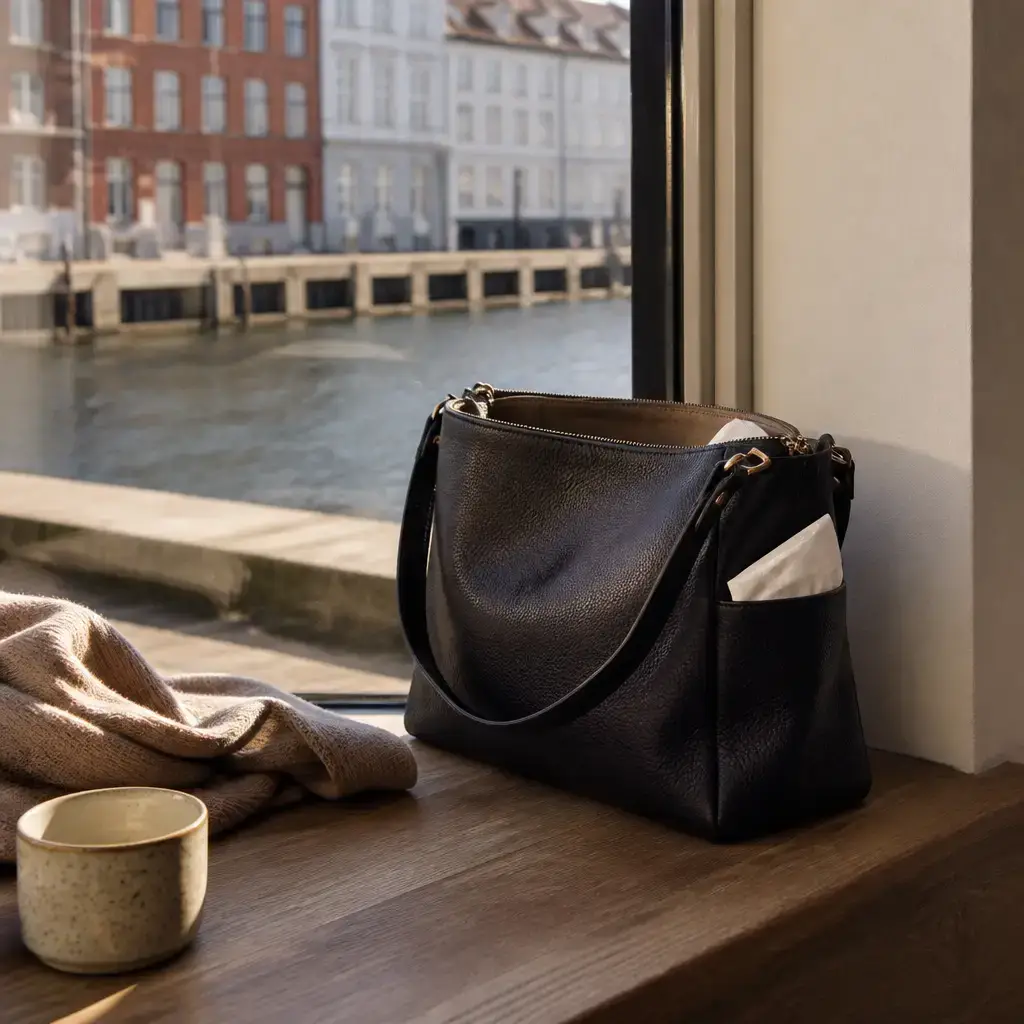
In “Må jeg låne et lommetørklæde fra din taske?” and “Må jeg åbne den?”, “Må” asks for permission: “may I...?”. In “Du må gerne åbne den”, the lowercase form “må” helps grant permission. A reusable permission pattern is “Må jeg” followed by an action.
jeg
“jeg” means “I” and identifies the person asking or acting in the dialogue. It is the subject in “Må jeg låne...” and “Jeg lukker den forsigtigt.” A reliable reuse pattern is “Jeg” followed by an action or possession.
låne
“låne” means “borrow” in “Må jeg låne et lommetørklæde fra din taske?”. It names the action of temporarily using something belonging to another person. It commonly appears after “Må jeg” when asking permission to borrow something.
et
In “et lommetørklæde”, “et” means “a” and introduces the tissue being borrowed. In “hente et” and “Jeg har et nu”, it means “one” and refers back to a tissue. The exact form can therefore introduce an item or stand for an understood item.
lommetørklæde
“lommetørklæde” means “tissue” in “et lommetørklæde”. It is the small item the speaker asks to borrow. A reusable object pattern is “låne et lommetørklæde fra...”.
fra
“fra” means “from” and identifies the source in “fra din taske”: the tissue is to come from the other person’s bag. It commonly introduces where something comes from or is taken from. Here it connects the borrowed item with “din taske”.
din
“din” means “your” in “din taske” and shows that the bag belongs to the person being addressed. It comes directly before the possessed item here. A reusable pattern is “din” followed by a thing belonging to the listener.
taske
“taske” means “bag” in “din taske”. It is the source from which the tissue is borrowed. The exact phrase “fra din taske” is useful when saying that something comes from someone’s bag.
De
“De” means “they” in “De ligger i sidelommen” and refers to the tissues. It is the subject of the sentence describing where they are located. A reusable pattern is “De ligger i...” for several items that are in a place.
ligger
“ligger” describes the tissues as being located or lying in “De ligger i sidelommen”. It focuses on their position in the pocket. The pattern “ligger i” is useful for saying where an item or items are located.
i
“i” means “in” and places the tissues inside “sidelommen” in “De ligger i sidelommen”. It commonly introduces the inside location of an object. Here it forms the exact location phrase “i sidelommen”.
sidelommen
“sidelommen” means “the side pocket” in “De ligger i sidelommen”. It identifies the specific pocket where the tissues are located. The form is useful in a location phrase after “i”.
åbne
“åbne” means “open” in “Må jeg åbne den?”. It names the action the speaker asks permission to perform on the pocket. A reusable pattern is “Må jeg åbne...” when asking to open something.
den
“den” means “it” and refers to the pocket in “Må jeg åbne den?” and “Jeg lukker den forsigtigt.” It keeps the previously mentioned object from being repeated. The dialogue reuses it with both “åbne” and “lukker”.
Vil
In “Vil du hellere hente et?”, “Vil” starts a question about what the other person would prefer to do. Here it helps form the offer or choice about fetching a tissue. A reusable question pattern is “Vil du...” followed by an action.
du
“du” means “you” and refers to the person being addressed. It is the subject in “Vil du hellere hente et?” and “Du må gerne åbne den.” A reusable pattern is “du” followed by a question or permission expression.
hellere
“hellere” means “rather” in “Vil du hellere hente et?”. It presents fetching one as an alternative preference. It commonly appears with “Vil du” when asking whether someone prefers one action over another.
hente
“hente” means “get” or “fetch” in “Vil du hellere hente et?”. It describes going to get one tissue rather than having the speaker open the pocket. A useful action pattern is “hente et” when fetching one understood item.
gerne
In “Du må gerne åbne den”, “gerne” helps make the permission affirmative and welcoming. The permission comes from the whole expression “må gerne”, while “gerne” adds this positive tone. A reusable pattern is “må gerne” followed by an action.
har
“har” means “have” in “Jeg har et nu.” Here the speaker says that they now have one tissue. It commonly appears with an object to say what someone has, as in the exact pattern “Jeg har et nu”.
nu
“nu” means “now” in “Jeg har et nu.” It marks that the speaker has the tissue at this point in the exchange. It can be placed with a statement about a current situation or result.
Luk
“Luk” means “close” in “Luk venligst lommen”. It is a direct request to close the pocket. The reusable request pattern here is an action followed by “venligst” and its object.
venligst
“venligst” means “please” in “Luk venligst lommen” and makes the request polite. It appears directly with the requested action. A reusable pattern is “Luk venligst...” followed by the thing to close.
lommen
“lommen” means “the pocket” in “Luk venligst lommen”. It refers to the specific pocket that was opened to take out the tissue. It is the object of the request to close it.
når
“når” means “when” in “når du er færdig”. It introduces the time at which the pocket should be closed. The exact pattern “når du er færdig” is useful for saying what should happen after someone has finished.
er
In “du er færdig”, “er” links the person to the state of being done. It contributes the meaning “are” within the complete expression “er færdig”. This pattern is used to describe someone’s current state as finished.
færdig
“færdig” means “done” or “finished” in “du er færdig”. It describes the point at which the person has completed what they were doing. The reusable expression is “være færdig”, shown here as “du er færdig”.
lukker
“lukker” expresses the closing action in “Jeg lukker den forsigtigt.” The speaker says they will close the pocket carefully. It is reusable with an object, as in “Jeg lukker den...”.
forsigtigt
“forsigtigt” means “carefully” in “Jeg lukker den forsigtigt.” It describes the manner of closing the pocket. It can be used after an action to explain that the action is done with care.
Hav
“Hav” means “keep” or “have” in the request “Hav et ekstra med dig”. It tells the listener to keep an additional tissue with them. A reusable pattern is “Hav ... med dig” for telling someone to keep something with them.
ekstra
“ekstra” means “extra” in “et ekstra”. It refers to an additional tissue beyond the one already taken. It is useful with “et” when referring to an additional understood item.
med
“med” means “with” in “med dig”. In “Hav et ekstra med dig”, it expresses keeping the extra tissue along with the addressed person. The reusable phrase is “med dig” after an item that someone should carry or keep.
dig
“dig” means “you” in “med dig”. It identifies the person who should keep the extra tissue. Here it follows “med” in the fixed phrase “med dig”.
hvis
“hvis” means “if” in “hvis du får brug for det”. It introduces the condition under which the listener may need the extra tissue. A reusable conditional pattern is “hvis” followed by a situation.
får
In “får brug for det”, “får” is part of the expression for coming to need something. Here the complete phrase means “need it” in the condition about the extra tissue. The reusable expression is “få brug for” followed by the needed item.
brug
“brug” contributes to the meaning “need” in the complete expression “får brug for det”. The meaning comes from the whole expression, not from “brug” alone in this line. A reusable pattern is “brug for” followed by the thing someone needs.
for
In “brug for det”, “for” completes the expression meaning “need it”. It is not simply the separate meaning “for” here. The reusable pattern is “brug for” followed by an object such as “det”.
det
“det” means “it” in “hvis du får brug for det” and refers to the extra tissue. It is the thing the listener may need. The exact pattern “får brug for det” expresses needing that previously mentioned item.