Jeg
“Jeg” means “I” in “Jeg leder efter min taske på hittegodskontoret.” It identifies the speaker as the person looking for the bag. Use “Jeg” at the beginning of a sentence when talking about yourself, for example in “Jeg har en taske” as a new example.
leder
“leder” means “look for” in “Jeg leder efter min taske.” Its meaning here comes from the construction “leder efter,” which is used for searching for something. Use it with “efter” and the thing being sought, as in “Jeg leder efter min taske”.
efter
In “leder efter min taske,” “efter” completes the expression meaning “look for.” It is followed by the thing someone is searching for. A reusable pattern is “leder efter + object,” as in “Jeg leder efter min taske”.
min
“min” means “my” in “min taske.” It shows that the bag belongs to the speaker and comes directly before the noun it describes. Use “min” before a noun when referring to something belonging to yourself, such as “min formular” as a new example.
taske
“taske” means “bag” in “min taske.” It names the lost item being discussed at the lost property office. Use it after a word that identifies the bag, such as “min taske” or “en taske”.
på
“på” means “at” in “på hittegodskontoret,” identifying the place where the speaker is looking for the bag. Here it is part of the location expression “på hittegodskontoret.” Use “på” with a place expression when describing where an activity happens, as in “på kontoret” as a new example.
hittegodskontoret
“hittegodskontoret” means “the lost property office” in “på hittegodskontoret.” It identifies the office where lost items are handled. The word is used after the location word “på” in this dialogue: “på hittegodskontoret”.
Kan
“Kan” means “can” in the question “Kan du beskrive den for mig?” It introduces a request about whether the other person is able to describe the bag. Use “Kan” at the beginning of a question followed by the person and an action, as in “Kan du hjælpe?” as a new example.
du
“du” means “you” in “Kan du beskrive den for mig?” It refers to the person being asked to describe the bag. Use “du” for the person you are addressing, commonly after “Kan” in a request such as “Kan du beskrive den?”.
beskrive
“beskrive” means “describe” in “Kan du beskrive den for mig?” It names the action requested from the person at the desk. After “kan,” use “beskrive” in the pattern “Kan du beskrive + object?” as in “Kan du beskrive den?”.
den
“den” means “it” in “beskrive den” and refers to the bag. It also appears as “Den” at the beginning of “Den har en rød rem,” where it refers to the same bag. Use “den” to refer back to a specific item, as in “Jeg finder den” as a new example.
for
“for” means “for” in “for mig.” Together with “mig,” it shows that the requested description is being given for the speaker. Use the pattern “for + person,” as in “for dig” as a new example.
mig
“mig” means “me” in “for mig.” It identifies the speaker as the person for whom the bag should be described. Use “mig” after “for” when referring to yourself, as in “Det er for mig” as a new example.
har
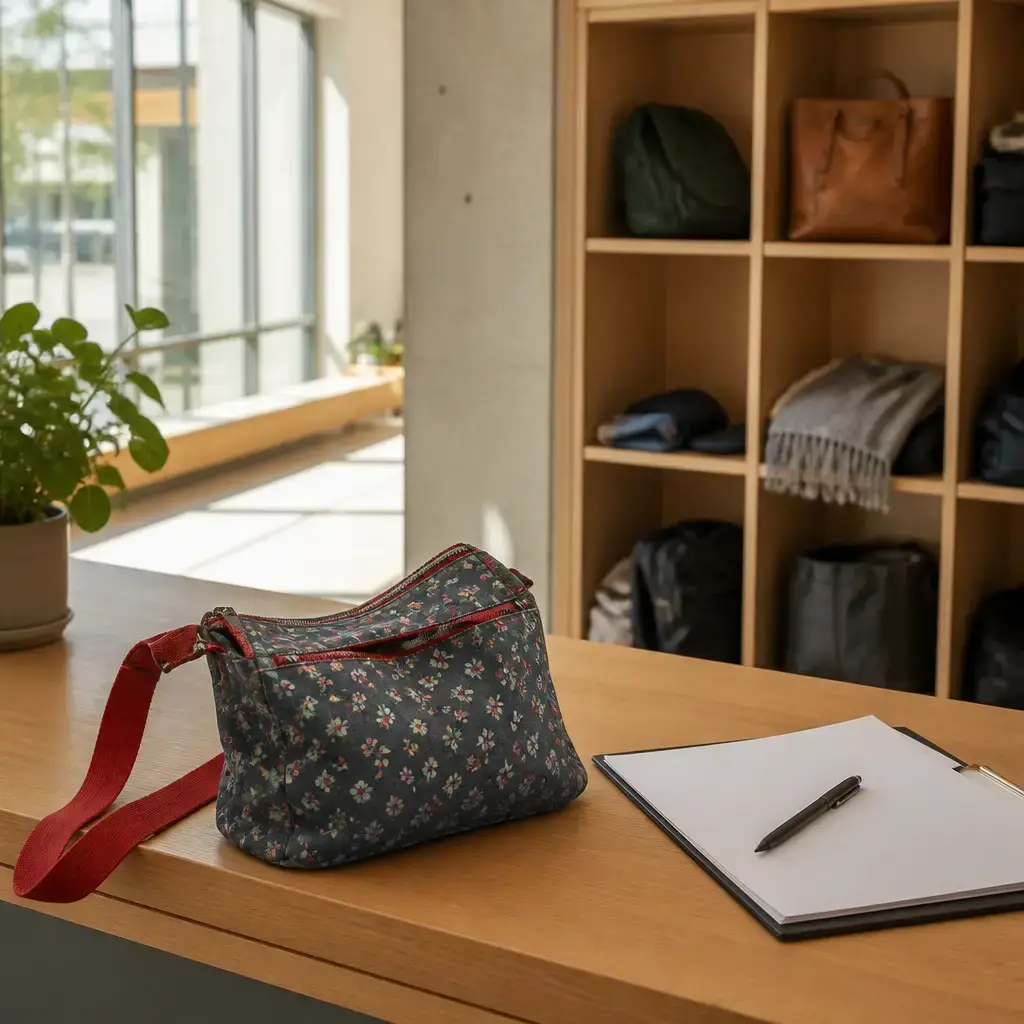
“har” means “has” in “Den har en rød rem og en ødelagt lynlås.” It introduces features that the bag possesses. Use “har” with the item being described and its features, as in “Den har en blomst” as a new example.
en
“en” introduces one unspecified item in “en rød rem.” It comes before “rem” and presents the strap as one feature of the bag. Use “en” before an unspecified noun in a phrase such as “en taske”.
rød
“rød” means “red” in “en rød rem.” It gives the color of the strap and comes before the noun it describes. Use “rød” before a noun when identifying something red, as in “en rød taske” as a new example.
rem
“rem” means “strap” in “en rød rem.” It identifies one of the bag’s physical features. Use it after a color or other description, as in “en rød rem” or “en lang rem” as new examples.
og
“og” means “and” in “en rød rem og en ødelagt lynlås.” It joins the two features being listed. Use “og” to connect words or phrases in a list, such as “en rem og en lynlås” as a new example.
ødelagt
“ødelagt” means “broken” in “en ødelagt lynlås.” It describes the condition of the zipper. Use it before an item that is damaged, as in “en ødelagt taske” as a new example.
lynlås
“lynlås” means “zipper” in “en ødelagt lynlås.” It names the second feature used to identify the bag. Use it with a description of its condition or appearance, such as “en ny lynlås” as a new example.
Er
“Er” means “is” in “Er der et mønster på forsiden?” It begins a question asking whether a pattern exists on the front. Use “Er der ...?” to ask whether something is present, as in “Er der en rem?” as a new example.
der
“der” means “there” in “Er der et mønster på forsiden?” and is part of the expression used to ask whether something exists or is present. In “Der er et lille blomstermønster,” it introduces the statement that a pattern is present. Reuse the patterns “Er der ...?” and “Der er ...”.
et
“et” introduces one unspecified item in “et mønster.” It comes before “mønster” when the person asks whether a pattern is present. Use “et” before an unspecified noun in a phrase such as “et mønster”.
mønster
“mønster” means “pattern” in “et mønster på forsiden.” It identifies the design being asked about on the front of the bag. Use it with a location phrase, as in “et mønster på tasken” as a new example.
forsiden
“forsiden” means “the front” in “på forsiden.” It identifies the front surface of the bag where the pattern may be located. The form used here is the definite form of “forside”; use it after “på” when referring to a specific front, as in “på forsiden”.
lille
“lille” means “small” in “et lille blomstermønster.” It describes the size of the flower pattern and comes before the compound noun. Use “lille” before a noun when describing something small, as in “en lille taske” as a new example.
blomstermønster
“blomstermønster” means “flower pattern” in “et lille blomstermønster.” It names the design on the front of the bag. Use it as a compound word for a pattern made of or showing flowers, as in “et blomstermønster på tasken” as a new example.
være
“være” means “be” in “kan være din.” It completes the possibility expression and links “Den” with “din.” After “kan,” use “være” in a pattern such as “kan være din”.
din
“din” means “yours” in “Den kan være din.” It identifies the person addressed as the possible owner of the bag. Use “din” after a form of “være” when saying that something may belong to the person you are addressing, as in “Den er din” as a new example.
Det
“Det” means “that” or “it” in “Det er helt sikkert min taske.” It refers to the bag that has just been identified. Use “Det er ...” to identify or evaluate something, as in “Det er min taske” as a new example.
helt
“helt” strengthens “sikkert” in “helt sikkert,” making the statement emphatic. Together, “helt sikkert” means “definitely.” Use “helt sikkert” when you want to express strong certainty, as in “Det er helt sikkert rigtigt” as a new example.
sikkert
“sikkert” means “certainly” in the expression “helt sikkert.” With “helt,” it shows that the speaker is certain the bag is theirs. Use the reusable expression “helt sikkert” to state strong certainty in another situation.
Skriv
“Skriv” means “sign” in “Skriv venligst under på denne formular.” The complete expression “skriv under” is the action of signing a document. “Skriv” is used here as a direct request; reuse it in “Skriv under på denne formular”.
venligst
“venligst” means “please” in “Skriv venligst under på denne formular.” It makes the instruction polite. Place “venligst” with a request, as in “Vent venligst” as a new example.
under
“under” contributes to the meaning “sign” in the expression “skriv under.” It does not mean that the signer should write physically underneath the form here. Use the complete pattern “Skriv under på + document,” as in “Skriv under på denne formular”.
denne
“denne” means “this” in “denne formular.” It points to the specific form being presented at the desk. Use “denne” directly before a noun when identifying a particular item, as in “denne taske” as a new example.
formular
“formular” means “form” in “denne formular.” It identifies the document the person must sign before taking the bag. Use it after a word such as “denne,” as in “denne formular” or “en formular”.
før
“før” means “before” in “før du tager den.” It introduces the action that must happen first: signing the form. Use “før” before a clause or action to show order, as in “før du går” as a new example.
tager
“tager” means “take” in “før du tager den.” It describes taking the bag after the form has been signed. Use it with the item being taken, as in “du tager den” or “Jeg tager tasken” as new examples.