Jeg
“Jeg” means “I” here and identifies the person considering the purchase. It is used as the subject before a verb, as in “Jeg overvejer”. A new example is “Jeg kan hjælpe dig” for “I can help you”.
overvejer
“overvejer” means “am considering” in “Jeg overvejer at købe”. The form is used with “at” and an action when someone is thinking about doing it. A new example is “Jeg overvejer at vente” for “I am considering waiting”.
at
In “at købe” and “at virke”, “at” introduces the following action in English “to buy” and “to work”. It is placed directly before the verb form that follows it. A new example is “at læse” for “to read”.
købe
“købe” means “buy” in “at købe denne lille højttaler”. Together with “at”, it expresses the action being considered. A new example is “Jeg vil købe en bog” for “I want to buy a book”.
denne
“denne” means “this” and points to the specific item in “denne lille højttaler”. It comes before the noun phrase it identifies. A new example is “denne taske” for “this bag”.
lille
“lille” means “small” and describes the speaker in “denne lille højttaler”. It is placed before the noun it describes. A new example is “en lille butik” for “a small shop”.
højttaler
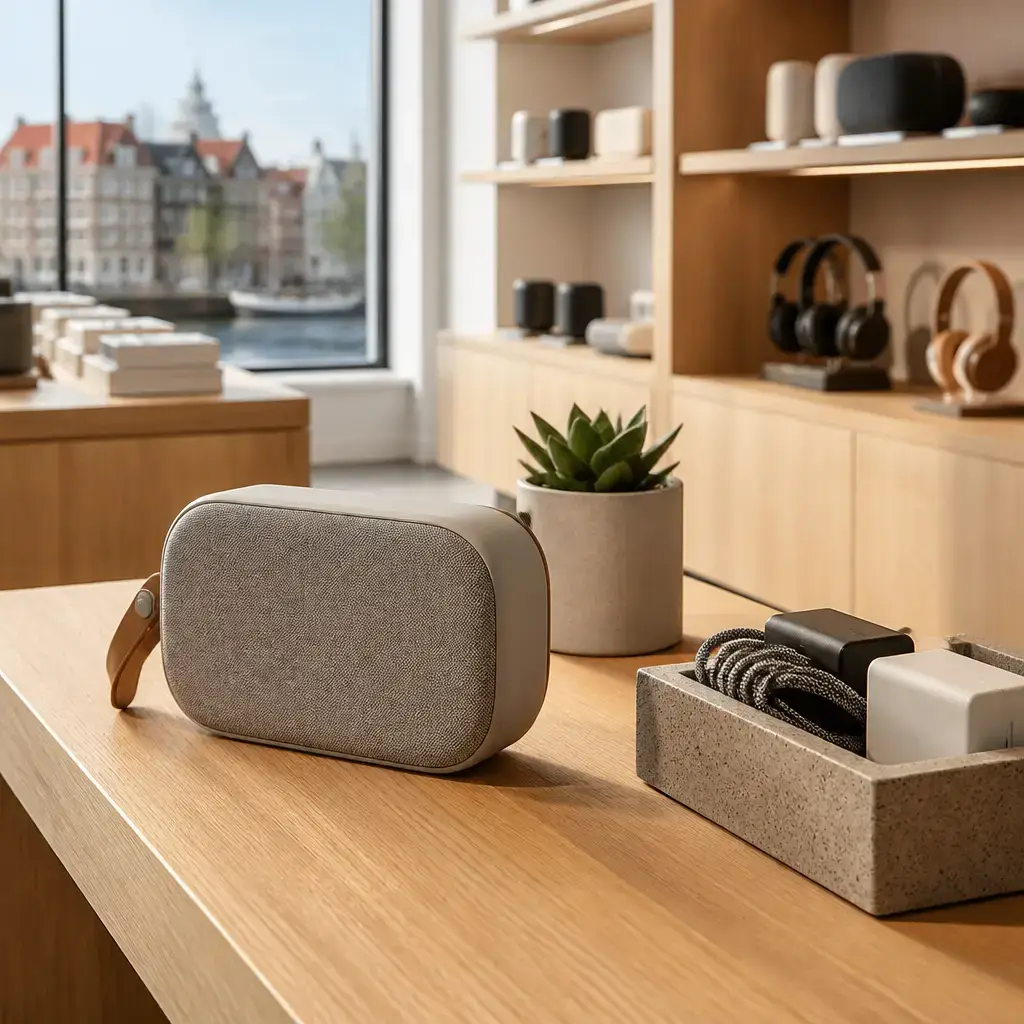
“højttaler” means “speaker”, the product the customer is considering buying. In “denne lille højttaler”, it is the main noun of the product description. A new example is “Jeg bruger en højttaler” for “I use a speaker”.
kan
“kan” means “can” in “Jeg kan forklare garantien” and expresses ability or possibility. It is followed by a verb form such as “forklare”. A new example is “Jeg kan hjælpe” for “I can help”.
forklare
“forklare” means “explain” in “kan forklare garantien”. After “kan”, it states the action the speaker is able to perform. A new example is “Kan du forklare det?” for “Can you explain it?”.
garantien
“garantien” means “the warranty” in “forklare garantien” and “dækker garantien”. The form refers to the specific warranty for the product. A new example is “Garantien gælder i to år” for “The warranty is valid for two years”.
før
“før” means “before” in “før du beslutter dig” and introduces the point that comes earlier. It links the explanation to the customer’s decision. A new example is “før du går” for “before you leave”.
du
“du” means “you” and refers to the customer in “før du beslutter dig”. It is the person who makes the decision. A new example is “Du kan spørge” for “You can ask”.
beslutter
“beslutter” means “decide” in “du beslutter dig”. It is used with “dig” in this expression for making a decision. The citation form is “beslutte”, related to the dialogue form “beslutter”; a new example is “Du beslutter senere” for “You decide later”.
dig
“dig” refers back to “du” in “du beslutter dig”, an expression meaning “you decide”. It is the required pronoun used with “beslutter” in this dialogue. A new example is “Du skal skynde dig” for “You have to hurry”.
Hvad
“Hvad” means “what” in the question “Hvad dækker garantien?”. It asks for information about the thing covered by the warranty. It also begins “Hvad med skader ved et uheld?”, where the whole expression asks about another topic.
dækker
“dækker” means “covers” in “Hvad dækker garantien?” and “Den dækker produktfejl”. Here it describes what the warranty includes. A new example is “Garantien dækker reparationen” for “The warranty covers the repair”.
Den
“Den” means “it” in “Den dækker produktfejl” and refers to the warranty or the relevant product item already being discussed. The lowercase form “den” later refers to the item being checked in “tjekke den”. A new example is “Den virker” for “It works”.
produktfejl
“produktfejl” means “product faults” in “produktfejl ved normal brug”. It names the faults that the warranty covers. A new example is “Der er en produktfejl” for “There is a product fault”.
ved
“ved” means “during” or “in the circumstances of” in “ved normal brug”. It connects the faults with the condition of normal use. A new example is “ved arbejde” for “during work”.
normal
“normal” means “normal” in “normal brug” and describes the usual way the product is used. It comes directly before “brug” in this expression. A new example is “normal drift” for “normal operation”.
brug
“brug” means “use” in “ved normal brug”, referring to ordinary use of the product. Together with “normal”, it describes the conditions under which the warranty covers faults. A new example is “efter brug” for “after use”.
med
In “Hvad med skader ved et uheld?”, “med” is part of the question “what about” and introduces another topic. In “Tag ... med til kundeservice”, it contributes the meaning “along” or “with you”. A new example is “Tag telefonen med” for “Bring the phone along”.
skader
“skader” means “damage” in the question “Hvad med skader ved et uheld?”. It refers to harm caused by an accident, which the dialogue says is not covered. A new example is “Der er skader på æsken” for “There is damage to the box”.
et
“et” is the indefinite article before “uheld” in “et uheld”, giving the meaning “an accident”. It belongs with the noun that follows it. A new example is “et problem” for “a problem”.
uheld
“uheld” means “accident” in “skader ved et uheld”. The expression describes damage caused by an accident. A new example is “Det var et uheld” for “It was an accident”.
Det
“Det” means “it” or “that” in “Det er ikke dækket” and refers to the accidental damage just mentioned. It introduces the statement about whether that damage is covered. A new example is “Det er vigtigt” for “It is important”.
er
“er” means “is” in “Det er ikke dækket”. It connects the subject “Det” with the description that follows. A new example is “Det er klart” for “It is clear”.
ikke
“ikke” means “not” in “Det er ikke dækket” and makes the statement negative. It is placed before “dækket” in this sentence. A new example is “Det er ikke muligt” for “It is not possible”.
dækket
“dækket” means “covered” in “Det er ikke dækket”. With “ikke”, the complete statement says that the accidental damage is not covered. A new example is “Det er dækket af garantien” for “It is covered by the warranty”.
Hvor
“Hvor” means “where” in “Hvor skal jeg gå hen?”. It asks for the place the customer should go if the speaker stops working. A new example is “Hvor er kundeservice?” for “Where is customer service?”.
skal
“skal” expresses where the customer is supposed or expected to go in “Hvor skal jeg gå hen?”. It is followed by the action “gå”. A new example is “Du skal vente” for “You should wait”.
gå
“gå” means “go” in “skal jeg gå hen”. It describes moving to the place being asked about. A new example is “Jeg skal gå til butikken” for “I have to go to the shop”.
hen
“hen” adds a sense of going onward or to a destination in “gå hen”. Together, “gå hen” means go over there or go to the relevant place. A new example is “Gå hen til døren” for “Go over to the door”.
hvis
“hvis” means “if” in “hvis den holder op med at virke”. It introduces the condition under which the customer should go for help. A new example is “Ring, hvis du har et problem” for “Call if you have a problem”.
holder
In “holder op med at virke”, “holder” contributes to the expression meaning “stops” or “ceases”. It is not the whole meaning by itself; the following “op med at virke” completes the idea. A new example is “Hvis regnen holder op” for “If the rain stops”.
op
In “holder op med at virke”, “op” is the particle that helps form the meaning “stop”. The full expression refers to the speaker ceasing to function. A new example is “Han holder op med at tale” for “He stops talking”.
virke
“virke” means “work” or “function” in “at virke”. Together with “holder op med at”, it describes the speaker stopping its operation. A new example is “Den skal virke” for “It must work”.
Tag
“Tag” means “take” or “bring” in the instruction “Tag kvitteringen og æsken med”. It tells the customer to bring both items to customer service. The citation form is “tage”; a new example is “Tag din jakke med” for “Bring your jacket along”.
kvitteringen
“kvitteringen” means “the receipt” in “Tag kvitteringen ... med”. It identifies the purchase document the customer should bring. The citation form is “kvittering”, related to the dialogue form “kvitteringen”; a new example is “Jeg har kvitteringen” for “I have the receipt”.
og
“og” means “and” in “kvitteringen og æsken”. It joins the two things the customer should bring. A new example is “en bog og en pen” for “a book and a pen”.
æsken
“æsken” means “the box” in “Tag ... æsken med”. It is the second item the customer should bring to customer service. The citation form is “æske”, related to the dialogue form “æsken”; a new example is “Læg den i æsken” for “Put it in the box”.
til
“til” means “to” in “til kundeservice” and marks customer service as the destination. It follows “med” in the instruction “Tag ... med til kundeservice”. A new example is “Jeg går til butikken” for “I am going to the shop”.
kundeservice
“kundeservice” means “customer service”, the place or service the customer should contact. In “til kundeservice”, it follows the destination word “til”. A new example is “Spørg kundeservice” for “Ask customer service”.
De
“De” means “they” in “De kan tjekke den” and refers to the customer-service staff. It is the subject of the statement about who can check the item. A new example is “De kan hjælpe dig” for “They can help you”.
tjekke
“tjekke” means “check” in “De kan tjekke den”. After “kan”, it names the action the customer-service staff can perform on the item. A new example is “De kan tjekke kvitteringen” for “They can check the receipt”.