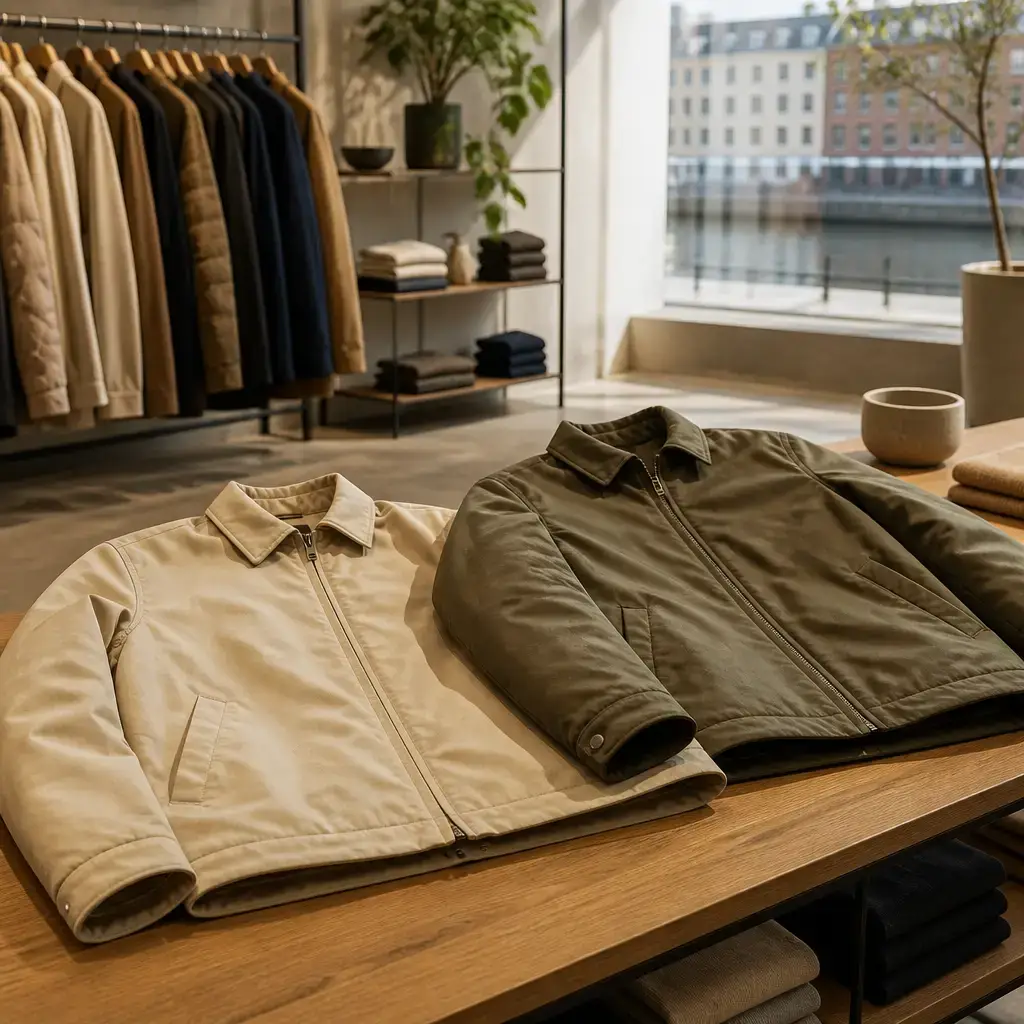
De
In “De to jakker”, “De” means “these” and points to the jackets being discussed. It is used here before the number and noun to identify the two items.
to
In “De to jakker”, “to” means “two” and specifies the number of jackets. Numbers such as this are placed before the noun they describe.
jakker
“jakker” means “jackets” in “De to jakker”. It is the plural form of “jakke”, and here it names the two garments being compared.
ser
In “ser meget ens ud”, “ser” contributes the meaning “look” or “appear”. Together with “ud”, it describes how the jackets appear.
meget
In “ser meget ens ud”, “meget” means “very” and strengthens the description “ens”. It is placed before the word or expression it intensifies.
ens
In “ser meget ens ud”, “ens” means “similar” or “alike”. It describes the two jackets as having a very similar appearance.
ud
In “ser meget ens ud”, “ud” completes the expression meaning “look” or “appear”; it does not mean “out” by itself here. This expression is useful when describing how something looks.
Lad
In “Lad os sammenligne stoffet og pasformen”, “Lad” helps make a suggestion. Together with “os”, it introduces an action that the speakers suggest doing together.
os
In “Lad os sammenligne stoffet og pasformen”, “os” means “us”. With “Lad”, it forms a suggestion meaning “let’s” do the following action.
sammenligne
In “Lad os sammenligne stoffet og pasformen”, “sammenligne” means “compare”. It is used for examining two or more things together, such as “stoffet” and “pasformen”.
stoffet
“stoffet” means “the fabric” in “sammenligne stoffet og pasformen”. It is the definite form of “stof” and names the material being compared.
og
In “stoffet og pasformen”, “og” means “and” and joins the two things being compared. It links items in a list or combination.
pasformen
“pasformen” means “the fit” in “sammenligne stoffet og pasformen”. It is the definite form of “pasform” and refers to how the jacket fits.
Den
In “Den her føles let” and “Den anden føles mere solid og varmere”, “Den” means “this one” or “the other one” and refers to a jacket. Its precise meaning depends on the following word: “Den her” selects one jacket, while “Den anden” contrasts it with the first.
her
In “Den her føles let”, “her” means “here” and helps identify the nearby jacket as “this one”. “Den her” is useful when selecting one item from several visible items.
føles
In “Den her føles let” and “Den anden føles mere solid og varmere”, “føles” describes the sensation or impression produced by a jacket. It is followed by descriptions such as “let” or “mere solid”.
let
In “Den her føles let”, “let” means “light”, referring to the jacket’s weight or feel. It describes the jacket after “føles”.
virker
In “Stoffet virker tyndt”, “virker” means “seems” or “appears”. It presents “tyndt” as an impression about the fabric rather than a confirmed measurement.
tyndt
In “Stoffet virker tyndt”, “tyndt” means “thin” and describes the fabric. It is the form used after “virker” to give the fabric this description.
anden
In “Den anden føles mere solid og varmere”, “anden” means “other” and identifies the second jacket in contrast with the first. “Den anden” is a useful expression for choosing the remaining item in a pair.
mere
In “mere solid”, “mere” means “more” and marks a comparison. It shows that one jacket is sturdier than the other.
solid
In “Den anden føles mere solid”, “solid” means “sturdy” or “solid”. It describes the jacket’s stronger or more substantial feel.
varmere
In “mere solid og varmere”, “varmere” means “warmer” and compares the warmth of the two jackets. It is used here as a description of the other jacket.
Det
In “Det kunne være bedre til hverdagsbrug”, “Det” refers to the jacket or option just discussed and means “that” or “it”. In “Det burde gøre valget lettere”, it refers to the preceding idea of trying both jackets.
kunne
In “Det kunne være bedre til hverdagsbrug”, “kunne” expresses a possibility, meaning “could” or “might”. It is followed by “være” and presents the opinion cautiously.
være
In “Det kunne være bedre til hverdagsbrug”, “være” means “be”. Together with “kunne”, it links the jacket or option to the description “bedre”.
bedre
In “bedre til hverdagsbrug”, “bedre” means “better” and compares this option with the other one. It can be used with “til” to describe what something is better for.
til
In “bedre til hverdagsbrug”, “til” means “for” and connects the jacket with its intended use. The pattern “til” followed by a use or purpose is common in this meaning.
hverdagsbrug
“hverdagsbrug” means “everyday use” in “til hverdagsbrug”. It names the practical purpose for which the jacket may be suitable.
Prøv
In “Prøv den først”, “Prøv” means “try” and gives a direct suggestion or instruction. It is followed by the item to be tried, “den”.
først
In “Prøv den først”, “først” means “first” and says that trying the jacket should happen before the next action. It can indicate the order of actions.
se
In “se, hvordan den føles”, “se” means “see” or “find out”. It introduces the information the speaker wants the listener to observe, namely how the jacket feels.
hvordan
In “se, hvordan den føles”, “hvordan” means “how” and introduces a clause describing the jacket’s feel. It is used before the situation or quality the listener should check.
Jeg
In “Jeg vil prøve dem begge”, “Jeg” means “I” and identifies the speaker as the person who will try the jackets. It is the subject placed before “vil”.
vil
In “Jeg vil prøve dem begge”, “vil” expresses the speaker’s intention, meaning “will” or “want to”. It is followed by the action “prøve”.
prøve
In “Jeg vil prøve dem begge”, “prøve” means “try”. It follows “vil” and takes the objects “dem begge”, meaning both jackets.
dem
In “prøve dem begge”, “dem” means “them” and refers to the two jackets. It is the object of “prøve”.
begge
In “prøve dem begge”, “begge” means “both” and emphasizes that the speaker will try the two jackets together as a complete pair. It follows the object “dem” here.
før
In “før jeg beslutter mig”, “før” means “before” and introduces the action that must happen first. It connects the decision with the earlier action of trying both jackets.
beslutter
In “før jeg beslutter mig”, “beslutter” contributes the meaning “decide”. Together with “mig”, the expression means that the speaker makes a decision.
mig
In “beslutter mig”, “mig” refers back to the speaker, “I”. It is part of the expression used here for deciding.
burde
In “Det burde gøre valget lettere”, “burde” means “should” and expresses an expected result. It is followed by “gøre” to say what the earlier action is expected to achieve.
gøre
In “gøre valget lettere”, “gøre” means “make” and describes causing a change in the choice. The pattern places the affected object, “valget”, after “gøre”, followed by its new description.
valget
“valget” means “the choice” in “gøre valget lettere”. It is the definite form of “valg” and refers to the decision between the jackets.
lettere
In “gøre valget lettere”, “lettere” means “easier”. It describes the result that the choice is expected to have after trying both jackets.