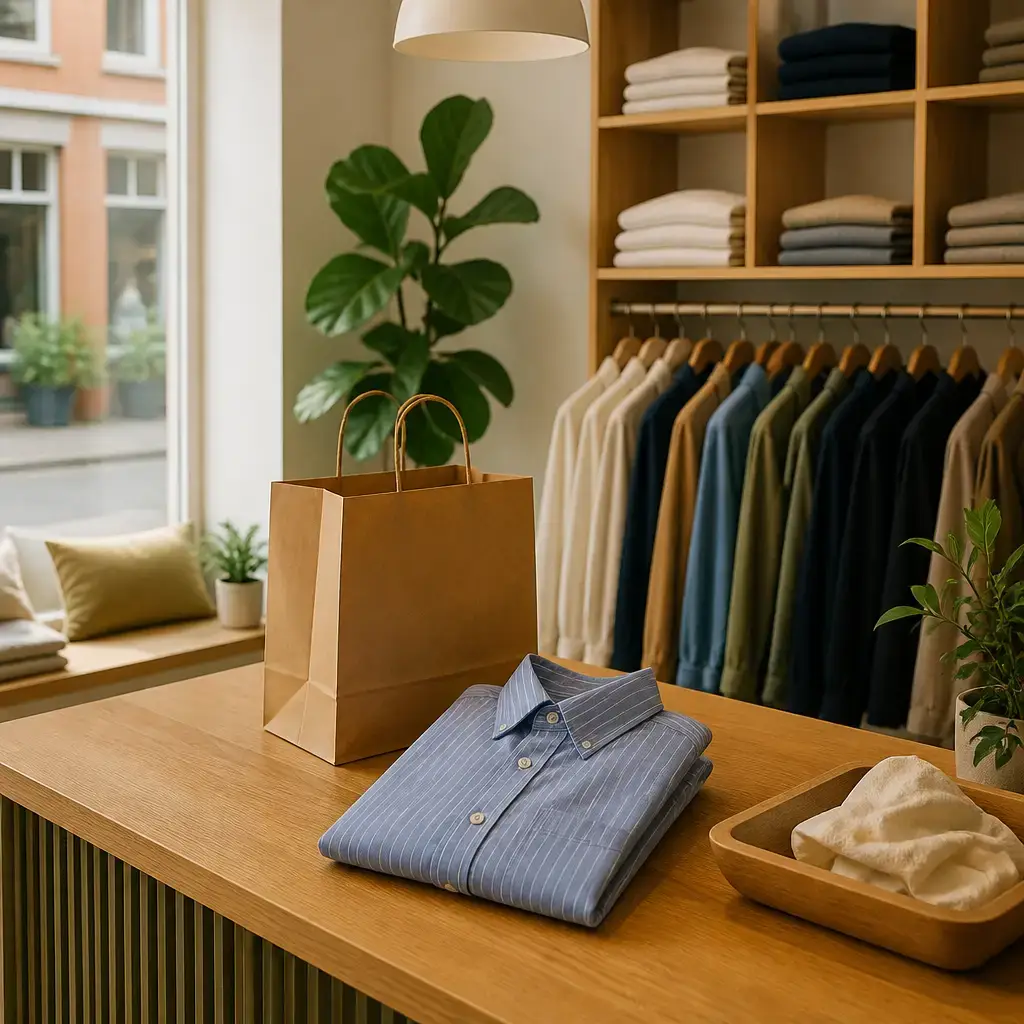
Jeg
“Jeg” means “I” and identifies the speaker in “Jeg købte denne skjorte.” It can be reused before a verb when talking about your own action, as in “Jeg købte ...”.
købte
“Købte” means “bought” and says that the purchase happened before the current conversation. In “Jeg købte denne skjorte,” it is followed by the object “denne skjorte”.
denne
“Denne” means “this” and points to a specific shirt near the speaker or already under discussion. It is used directly before the noun in “denne skjorte”.
skjorte
“Skjorte” means “shirt,” the item the customer wants to exchange. In the dialogue it appears in the noun phrase “denne skjorte”.
Den
“Den” means “it” here and refers back to the shirt. In “Den passer ikke,” it is the item being described as not fitting.
passer
“Passer” means “fits” when describing whether clothing is the right size. The reusable pattern in the dialogue is “Den passer ikke,” with the clothing item as the subject.
ikke
“Ikke” means “not” and makes the statement negative. In “Den passer ikke,” it changes “fits” into “does not fit”.
Har
“Har” means “have” and starts the question “Har du stadig kvitteringen og mærket?” In a question, it comes before the subject “du”.
du
“Du” means “you,” referring to the customer being addressed. It follows “Har” in the question pattern “Har du ...?”.
stadig
“Stadig” means “still,” asking whether something remains true or available now. In “Har du stadig kvitteringen og mærket?”, it asks whether the customer still has both items.
kvitteringen
“Kvitteringen” means “the receipt,” specifically the receipt for the purchase. It is one of the two items named in “kvitteringen og mærket”.
og
“Og” means “and” and joins the receipt and the tag in “kvitteringen og mærket.” Use it to connect two items or pieces of information.
mærket
“Mærket” means “the tag,” referring to the clothing tag that the shop wants to see. In the dialogue it is joined to “kvitteringen” with “og”.
beholdt
“Beholdt” means “kept” or “held on to” and describes what the customer did with the receipt and tag. In “Jeg beholdt begge dele i posen,” it is followed by the things kept and their location.
begge
“Begge” means “both” and refers jointly to the receipt and the tag. It appears in the expression “begge dele,” meaning the two items together.
dele
In “begge dele,” “dele” refers to the two items or things mentioned immediately before. The full expression “begge dele” is used when referring back to both items together.
i
“I” means “in” and shows that something is inside a place or container. In “i posen,” it places the receipt and tag inside the bag.
posen
“Posen” means “the bag,” the container where the customer kept both items. It follows “i” in the location phrase “i posen”.
Så
“Så” means “then” and connects the customer’s information about keeping the receipt and tag with the shop assistant’s offer. The dialogue uses it in “Så kan jeg hjælpe dig ...”.
kan
“Kan” means “can” and expresses ability or possibility in “Så kan jeg hjælpe dig ...” It is followed by a subject and another verb, as in “kan jeg hjælpe”.
hjælpe
“Hjælpe” means “help” and describes the assistance the shop employee can provide. The dialogue uses the pattern “hjælpe dig med ...” for helping someone with a task.
dig
“Dig” means “you” as the person receiving the help. It appears after “hjælpe” in “hjælpe dig med at returnere den eller bytte den.”
med
“Med” means “with” and introduces the task or matter involved in the help. In “hjælpe dig med at returnere den,” it connects the person helped with the action.
at
“At” introduces the infinitive in “at returnere den,” meaning “to return it.” It comes directly before the verb form “returnere”.
returnere
“Returnere” means “return” in the context of bringing the shirt back to the shop. The reusable expression from the dialogue is “at returnere den,” with the item included as the object.
eller
“Eller” means “or” and presents an alternative between returning the shirt and exchanging it. It joins the two options in “returnere den eller bytte den.”
bytte
“Bytte” means “exchange” and refers to replacing the shirt with another one. The dialogue uses “bytte den” and the fuller pattern “bytte den til en større størrelse”.
vil
In “Jeg vil helst bytte den ...”, “vil” contributes the speaker’s wish or intention. Together with “helst,” the phrase expresses which option the speaker prefers.
helst
“Helst” means “rather” or “preferably” and marks the preferred choice. It is used after “vil” in the reusable pattern “vil helst + verb,” here “vil helst bytte”.
til
“Til” means “to” or “for” and introduces what the shirt will be exchanged for. The dialogue uses the pattern “bytte den til en større størrelse”.
en
“En” means “a” and introduces the size noun in “en større størrelse.” Here it is part of the noun phrase describing the requested replacement.
større
“Større” means “larger” and describes the requested size as bigger than the current one. It appears directly before “størrelse” in “en større størrelse.”
størrelse
“Størrelse” means “size,” the property the customer wants to change. In the dialogue it appears in “en større størrelse,” referring to a larger clothing size.
Det
“Det” means “that” or “it” and refers back to the proposed return or exchange. In “Det burde være muligt,” it is the subject of the statement about whether this can be done.
burde
“Burde” means “should” and expresses a likely or expected possibility rather than an absolute guarantee. The dialogue uses it in “Det burde være muligt”.
være
“Være” means “be” and follows “burde” in “burde være muligt.” It links the subject “Det” with the description “muligt”.
muligt
“Muligt” means “possible” and describes the return or exchange as something that can probably be done. It appears after “være” in “være muligt”.
hvis
“Hvis” means “if” and introduces the condition for the exchange being possible. The dialogue uses it in “hvis skjorten ikke er brugt”.
skjorten
“Skjorten” means “the shirt” and refers to the specific shirt being returned or exchanged. It is the subject of the condition “hvis skjorten ikke er brugt.”
brugt
“Brugt” means “used” in the condition “skjorten ikke er brugt,” which says that the shirt must be unused. It describes the shirt after “er”.
Hvor
“Hvor” means “where” and asks for a location. It starts the question “Hvor kan jeg prøve den i en større størrelse?”.
prøve
“Prøve” means “try on” in the clothing-shop context. The dialogue uses it with the clothing item in “prøve den i en større størrelse.”
Prøverummene
“Prøverummene” means “the fitting rooms,” where the customer can try on clothing. It is the subject in the location statement “Prøverummene er bag den udstilling.”
er
“Er” means “are” and states the location of the fitting rooms. In “Prøverummene er bag den udstilling,” it links the rooms with their location.
bag
“Bag” means “behind” and describes the position of the fitting rooms relative to the display. It is followed by “den udstilling” in the dialogue.
udstillingen
“Udstillingen” means “the display,” but the dialogue’s exact phrase is “den udstilling,” not “udstillingen.” In that phrase, the display is the reference point for the fitting rooms’ location.