Må
In “Må jeg spørge om ingredienserne i denne sauce?”, “Må” asks for permission and corresponds to “may” or polite “could.” It is useful in the pattern “Må jeg spørge om …?” when asking permission to ask something.
jeg
“jeg” means “I” and refers to the person speaking. Here it is the subject of “Må jeg spørge om ingredienserne i denne sauce?” and “Jeg tåler ikke mælk.”
spørge
“spørge” means “ask” in “Må jeg spørge om ingredienserne i denne sauce?” It follows “Må jeg” and is commonly used with “spørge om” when asking about something.
om
In “spørge om ingredienserne”, “om” means “about” and introduces the subject of the question. The reusable pattern is “spørge om” followed by the thing you want information about.
ingredienserne
“ingredienserne” means “the ingredients” in “ingredienserne i denne sauce.” The ending makes this the definite form referring to the specific ingredients, and it can be used with “i” to identify what they belong to.
i
“i” means “in” and links “ingredienserne” to “denne sauce” in “ingredienserne i denne sauce.” It is useful for describing something contained in or associated with a place, container, or food.
denne
“denne” means “this” and points to the sauce being discussed in “denne sauce.” It is placed directly before the noun to identify a particular nearby or relevant thing.
sauce
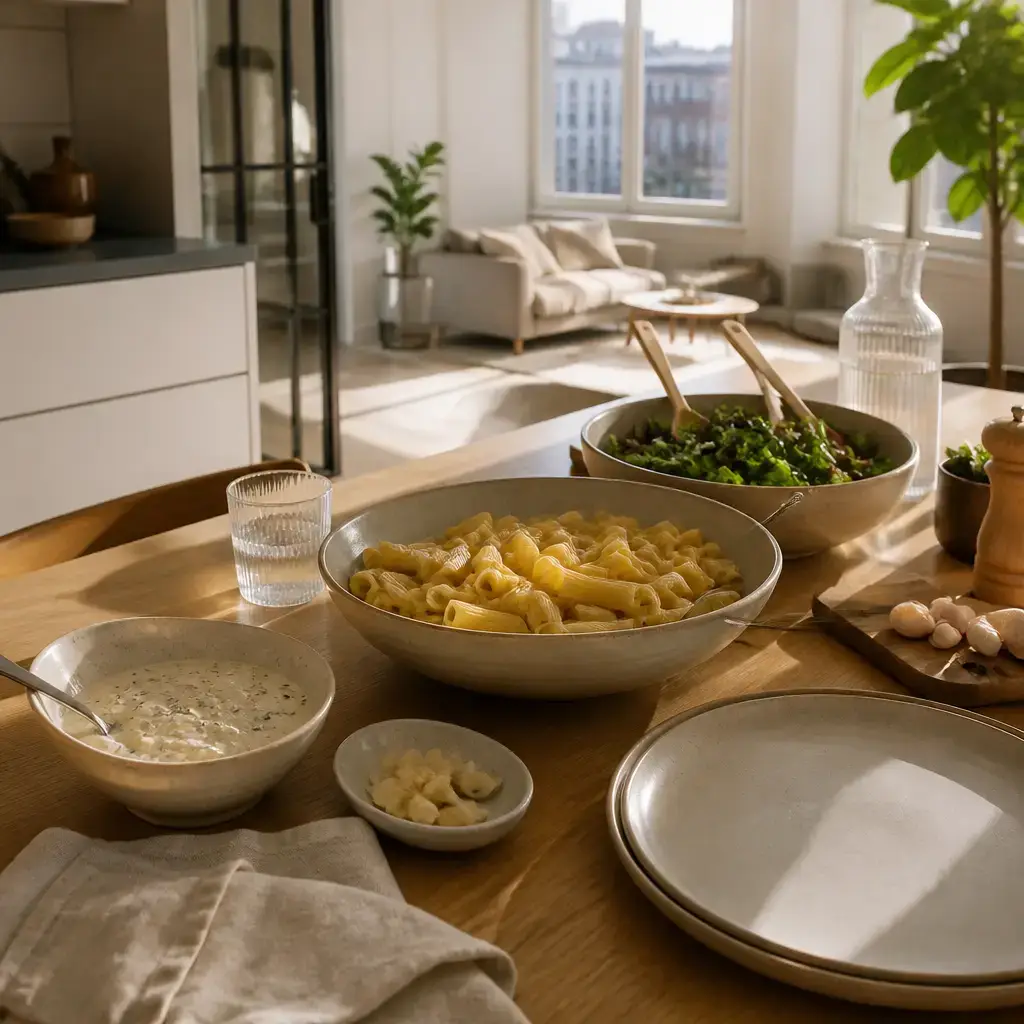
“sauce” means “sauce” in “denne sauce.” Here it is the food whose ingredients are being asked about, and it also provides the reference for “Den” and “saucen” later.
Den
“Den” means “it” here and refers back to “denne sauce” in “Den indeholder mælk og lidt hvidløg.” It is the subject of the sentence describing what the sauce contains.
indeholder
“indeholder” means “contains” in “Den indeholder mælk og lidt hvidløg.” It takes the contents as its object, as in the reusable pattern “indeholder mælk” or “indeholder …” followed by ingredients.
mælk
“mælk” means “milk” in both “indeholder mælk” and “tåler ikke mælk.” It names the ingredient that the speaker cannot tolerate, and it can follow verbs describing contents or tolerance.
og
“og” means “and” and joins “mælk” with “lidt hvidløg” in “mælk og lidt hvidløg.” Use it to connect two ingredients or other items in one statement.
lidt
“lidt” means “a little” in “lidt hvidløg,” indicating a small amount of garlic. It is placed before the noun or substance whose quantity it describes.
hvidløg
“hvidløg” means “garlic” in “lidt hvidløg” and “Hvidløg er okay.” It is the ingredient that is acceptable to the speaker in this dialogue.
tåler
“tåler” means “can tolerate” in “Jeg tåler ikke mælk.” The form “tåler” is used with the person who can or cannot tolerate something, followed by the substance or food.
ikke
“ikke” means “not” and negates “tåler” in “tåler ikke mælk.” It is placed after the verb here to say that the speaker cannot tolerate milk.
kan
“kan” means “can” in “Jeg kan sætte saucen ved siden af.” It expresses the speaker’s ability or willingness to carry out the action that follows.
sætte
“sætte” means “put” or “place” in “kan sætte saucen ved siden af.” It follows “kan” and takes the thing being placed, here “saucen,” followed by its location.
saucen
“saucen” means “the sauce” in “sætte saucen ved siden af.” The ending marks the specific sauce already mentioned, and the sauce is the object being placed.
ved siden af
The whole expression “ved siden af” means “beside” or “on the side” and describes where the sauce will be placed. In this expression, “ved” contributes the location relation, “siden” refers to the side, and “af” completes the expression; learn them together as “ved siden af.”
Det
“Det” means “that” in “Det vil fungere bedre for mig” and refers to the proposed arrangement of keeping the sauce on the side. It is used here as the subject of the speaker’s response about that arrangement.
vil
“vil” presents the proposed arrangement as something expected to work in “Det vil fungere bedre for mig.” Together with “fungere,” it gives the sense “will” or “would” in this context.
fungere
“fungere” means “work” or “function” in “vil fungere bedre.” It follows “vil” and describes whether the proposed arrangement will be suitable or effective.
bedre
“bedre” means “better” in “fungere bedre for mig,” comparing this arrangement with the earlier possibility of having sauce on the plate. It commonly appears before “for” when describing what works better for someone.
for
“for” means “for” in “bedre for mig” and introduces the person for whom the arrangement is more suitable. The reusable expression is “fungere bedre for” followed by a person.
mig
“mig” means “me” in “bedre for mig” and identifies the person affected by the arrangement. It follows “for” in this expression.
Er
“Er” begins the question “Er der andre madvarer, du skal undgå?” and helps ask whether something exists or applies. The same form appears as “er” in “Hvidløg er okay,” where it links garlic with its evaluation.
der
“der” means “there” in the existence question “Er der andre madvarer, du skal undgå?” It works with “Er” to ask whether any such food items are present or relevant.
andre
“andre” means “other” in “andre madvarer,” referring to food items besides the milk already mentioned. It is placed before the noun it describes.
madvarer
“madvarer” means “food items” in “andre madvarer, du skal undgå.” It names the foods that may need to be avoided and appears here after “andre.”
du
“du” means “you” and refers to the person being asked in “du skal undgå.” It is the subject of the clause describing which foods the person needs to avoid.
skal
“skal” means “need to” or “must” in “du skal undgå,” expressing a requirement to avoid certain foods. It is followed by the action, here “undgå.”
undgå
“undgå” means “avoid” in “du skal undgå.” It follows “skal” and takes the food or other thing that the person needs to avoid.
okay
“okay” means “acceptable” or “fine” in “Hvidløg er okay.” The reusable pattern “er okay” can state that a food, option, or situation is acceptable.
gør
“gør” means “make” or “prepare” as part of “gør din tallerken klar.” It describes preparing the plate so that it is ready, with the object placed between “gør” and “klar.”
din
“din” means “your” in “din tallerken” and shows that the plate belongs to or is intended for the person being addressed. It comes directly before the noun it describes.
tallerken
“tallerken” means “plate” in “din tallerken.” It is the object being prepared, and the common phrase here is “din tallerken” for “your plate.”
klar
“klar” means “ready” in “gør din tallerken klar.” Together with “gør,” it describes making the plate ready; the exact construction is “gør din tallerken klar.”
uden
“uden” means “without” in “uden saucen,” showing that the sauce is left off the plate. It is commonly followed by the thing that is absent or excluded.