Der
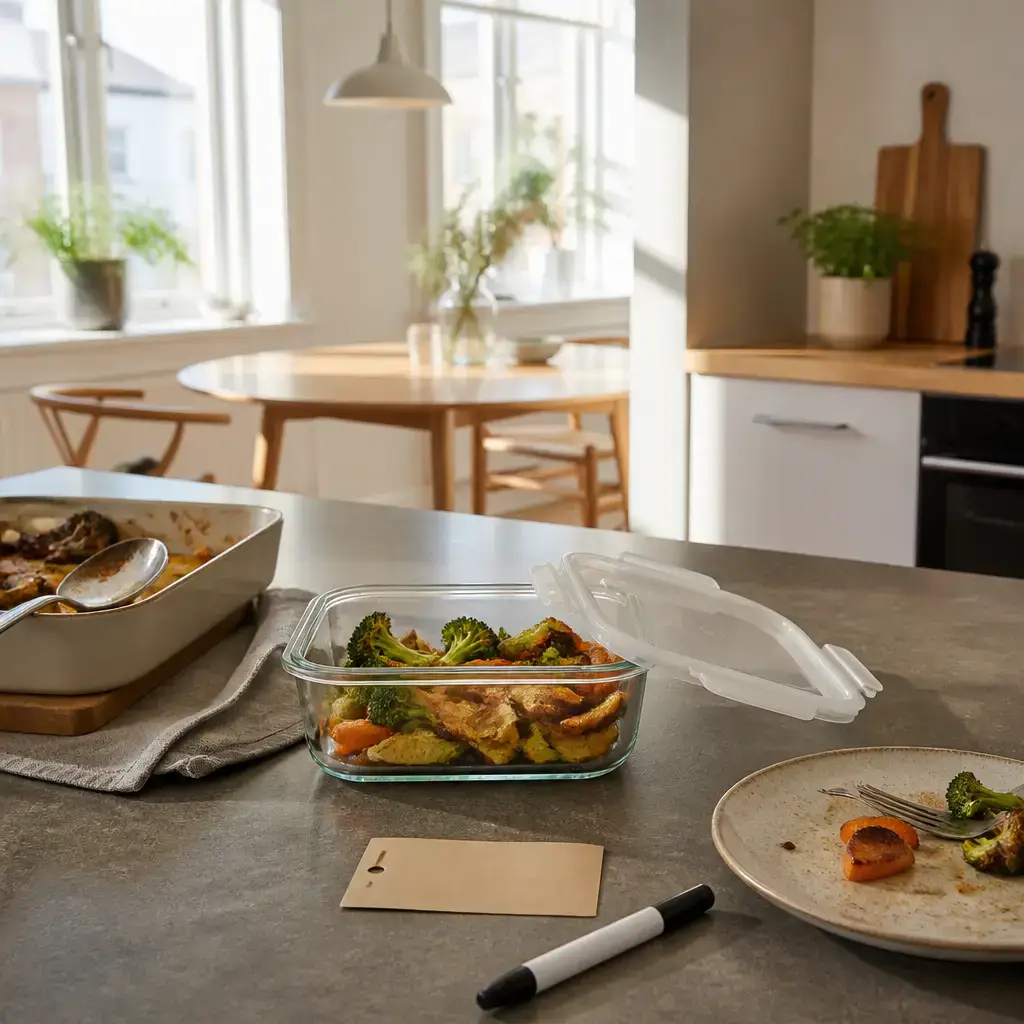
“Der” introduces the existential phrase “Der er”, meaning that something exists or is present. This pattern is used before the thing being mentioned, as in “Der er mange rester”.
er
“Er” means “is” or “are” here and completes the existential phrase “Der er”. It is the present form of “at være”; use “Der er” to say that something is present or exists.
mange
“Mange” means “many” in “mange rester”, referring to a large number of countable leftovers. It comes before the plural noun; for example, the new example “mange bøger” means “many books”.
rester
“Rester” means “leftovers” here, specifically food remaining after dinner. It is the plural form used for more than one leftover portion or item; the new example “rester fra frokosten” means “leftovers from lunch”.
fra
“Fra” means “from” and shows the source of the leftovers in “rester fra aftensmaden”. It is commonly placed before the source, as in the new example “fra køkkenet”, meaning “from the kitchen”.
aftensmaden
“Aftensmaden” means “the dinner” or “the evening meal” in “rester fra aftensmaden”. It is the definite form of “aftensmad”, used here because the meal is a specific dinner; the new example “Jeg laver aftensmaden” means “I am making dinner”.
Lad
“Lad” helps form the suggestion “Lad os komme dem i en ren beholder”, meaning “Let’s put them in a clean container”. Together with “os”, “Lad os” is used to suggest an action that the speaker and listener will do together.
os
“Os” means “us” in the suggestion “Lad os komme dem i en ren beholder”. It identifies the people included in the proposed action; “Lad os” is a reusable way to say “let’s” before an action.
komme
“Komme” means “put” or “place” in “Lad os komme dem i en ren beholder”. After “Lad os”, it names the action being suggested; the new example “Lad os komme maden på bordet” means “Let’s put the food on the table”.
dem
“Dem” means “them” and refers to the leftovers in “komme dem i en ren beholder”. It is placed before the location phrase “i en ren beholder”; use it when the object is the group of things being put somewhere.
i
“I” means “in” and shows that the leftovers go inside the container in “i en ren beholder”. It is used before the container or place that receives something, as in the new example “i køleskabet”, meaning “in the fridge”.
en
“En” means “a” or “an” before the common-gender noun “beholder” in “en ren beholder”. It introduces one non-specific container; the new example “en ren skål” means “a clean bowl”.
ren
“Ren” means “clean” and describes the container in “en ren beholder”. It comes before the noun it describes; the new example “en ren tallerken” means “a clean plate”.
beholder
“Beholder” means “container” in “en ren beholder”. It is used after the article and adjective in “en ren beholder”; the new example “en beholder med suppe” means “a container with soup”.
Må
“Må” asks for permission in “Må jeg varme dem op”, meaning “May I reheat them”. It is followed by the subject “jeg” and the action in the infinitive; the new example “Må jeg åbne vinduet?” means “May I open the window?”
jeg
“Jeg” means “I” and identifies the speaker in “Må jeg varme dem op” and “Jeg sætter en tydelig etiket på den”. It normally comes before the verb in a statement and after “Må” in this permission question.
varme
“Varme” means “heat” in the expression “varme dem op”, which means “reheat them”. The object “dem” comes before the verb and “op” completes this expression; the new example “varme maden op” means “reheat the food”.
op
“Op” is the particle that completes “varme dem op”, giving the meaning “reheat them”. Keep “op” after the object in this sentence pattern; the new example “varme suppen op” means “reheat the soup”.
til
“Til” means “for” in “til frokost” and shows the meal for which the leftovers will be reheated. It commonly comes before a meal or purpose, as in the new example “mad til morgenmad”, meaning “food for breakfast”.
frokost
“Frokost” means “lunch” in “til frokost”. After “til”, it names the meal the reheated leftovers are intended for; the new example “Jeg spiser frokost” means “I eat lunch”.
morgen
“Morgen” means “tomorrow” in the time expression “i morgen”. The full expression “i morgen” is used for the day after today; the new example “Vi ses i morgen” means “See you tomorrow”.
Du
“Du” means “you” and refers to the person being addressed in “Du kan”. It is the subject before the modal verb here; the new example “Du kommer i morgen” means “You are coming tomorrow”.
kan
“Kan” means “can” in “Du kan” and expresses that the person is allowed or able to reheat the leftovers. It is followed by the action understood from the question; the new example “Du kan spise nu” means “You can eat now”.
hvis
“Hvis” means “if” and introduces the condition in “hvis vi opbevarer dem i køleskabet indtil da”. It comes before the condition that must be true; the new example “hvis du har tid” means “if you have time”.
vi
“Vi” means “we” and identifies the speaker and another person in “hvis vi opbevarer dem”. It is the subject of the conditional clause; the new example “Vi gemmer maden” means “We save the food”.
opbevarer
“Opbevarer” means “keep” or “store” in “opbevarer dem i køleskabet”. It is the present form of “at opbevare” and is used with the stored object and its location; the new example “Vi opbevarer brødet i skabet” means “We store the bread in the cupboard”.
køleskabet
“Køleskabet” means “the fridge” in “i køleskabet”. It is the definite form of “køleskab”, used for a specific fridge; the new example “Maden står i køleskabet” means “The food is in the fridge”.
indtil
“Indtil” means “until” and sets the endpoint in “indtil da”. It is followed here by “da”, referring to the previously mentioned time; the new example “indtil i morgen” means “until tomorrow”.
da
“Da” means “then” in “indtil da”, referring back to the time when the leftovers will be used for lunch. The phrase “indtil da” means “until then”; use it when the endpoint has already been mentioned or is understood.
Skal
“Skal” asks whether the speaker should do something in “Skal jeg sætte en etiket på beholderen?”. It is followed by the subject “jeg” and the infinitive “sætte”; the new example “Skal jeg hente maden?” means “Should I get the food?”
sætte
“Sætte” means “put” or “place” in “sætte en etiket på beholderen”. It is the action after “Skal jeg”; the reusable pattern “sætte noget på noget” means “put something on something”.
etiket
“Etiket” means “label” in “en etiket” and refers to the label placed on the container. It is used after the indefinite article “en”; the new example “en etiket på glasset” means “a label on the jar”.
på
“På” means “on” in “på beholderen” and “på den”. It shows the surface or object where the label is placed; the reusable pattern “sætte en etiket på noget” means “put a label on something”.
den
“Den” means “it” in “på den” and refers back to the container. It replaces the already mentioned noun so it does not need to be repeated; the new example “Jeg lægger låget på den” means “I put the lid on it”.
måde
“Måde” means “way” in the expression “På den måde”, meaning “That way” or “In that way”. The full expression explains the result of an action; the new example “På den måde sparer vi tid” means “That way, we save time”.
ved
“Ved” means “know” in “ved vi”, referring to knowing what is inside the container. It is the present form of “at vide”; the new example “Jeg ved det” means “I know it”.
hvad
“Hvad” means “what” in “hvad der er i den”, introducing the information that they will know. It begins the embedded question about the contents; the new example “Jeg ved, hvad du mener” means “I know what you mean”.
sætter
“Sætter” means “put” or “place” in “Jeg sætter en tydelig etiket på den”. It is the present form of “at sætte” and is used with the thing placed and the surface or object receiving it; the new example “Jeg sætter koppen på bordet” means “I put the cup on the table”.
tydelig
“Tydelig” means “clear” in “en tydelig etiket”, describing a label that can be understood easily. It comes before the noun it describes; the new example “en tydelig besked” means “a clear message”.
Det
“Det” means “that” or “it” in “Det vil gøre frokosten nemmere” and refers to the labeling action just mentioned. It is the subject of the statement about the result; the new example “Det hjælper meget” means “That helps a lot”.
vil
“Vil” means “will” in “Det vil gøre frokosten nemmere” and presents the expected result. It is followed by the infinitive “gøre”; the new example “Det vil hjælpe” means “It will help”.
gøre
“Gøre” means “make” in “gøre frokosten nemmere”, describing the effect of the clear label on lunch. It follows “vil” in the infinitive; the reusable pattern “gøre noget nemmere” means “make something easier”.
frokosten
“Frokosten” means “the lunch” in “gøre frokosten nemmere”. It is the definite form of “frokost”, referring to the specific lunch being prepared for tomorrow; the new example “Frokosten er klar” means “Lunch is ready”.
nemmere
“Nemmere” means “easier” in “gøre frokosten nemmere”. It compares the planned lunch with a less easy alternative; the reusable pattern “gøre noget nemmere” means “make something easier”.