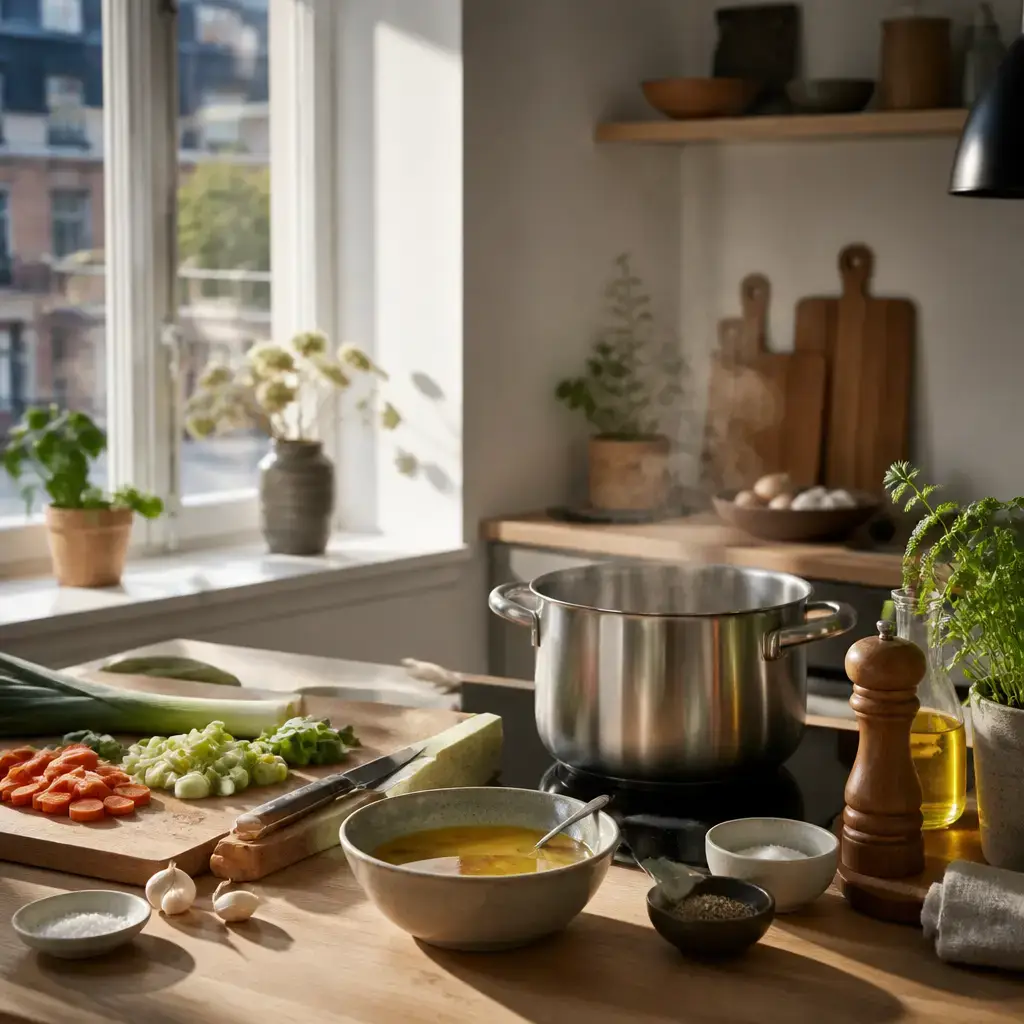
Denne
Denne means “this” here and points to the recipe being discussed. It is used directly before the noun in “Denne opskrift” to identify one specific recipe.
opskrift
opskrift means “recipe” in “Denne opskrift”. It names the instructions being used for cooking, and it commonly appears with a dish or meal, such as “opskrift til aftensmaden” in a new example.
ser
ser means “looks” here. In the expression “ser enkel nok ud”, ser contributes the idea of appearance, while ud completes the meaning “looks” or “appears”; the expression describes how the recipe seems.
enkel
enkel means “simple” and describes the recipe in “enkel nok”. It is used before nok to say that the recipe has a sufficient level of simplicity for the meal.
nok
nok means “enough” in “enkel nok”. After an adjective, it indicates that the described quality reaches a sufficient degree; a new example is “stor nok” for “big enough”.
ud
ud means “out” in other contexts, but in “ser enkel nok ud” it is part of the expression that means “looks simple enough”. It completes the appearance expression with ser rather than independently meaning “out” here.
til
til means “for” in “til aftensmaden”. It marks the meal that the recipe is intended for, and it commonly comes before a noun naming a destination, purpose, or occasion.
aftensmaden
aftensmaden means “the dinner” or “the evening meal” here. In “til aftensmaden”, it identifies the meal for which the recipe is suitable; the same phrase can be used when planning what to make for dinner.
Jeg
Jeg means “I” and identifies the person who can chop the vegetables. It is used as the subject in “Jeg kan hakke”, before kan and the following action.
kan
kan means “can” here and expresses ability or possibility. In “Jeg kan hakke”, it is followed by the action hakke; the same pattern can be reused with another action after kan.
hakke
hakke means “chop” in “Jeg kan hakke grøntsagerne”. It names the cooking action and follows kan in this sentence; a new example is “Jeg kan hakke løget” for “I can chop the onion”.
grøntsagerne
grøntsagerne means “the vegetables” and refers to the vegetables being prepared for the soup. In “hakke grøntsagerne”, it is the thing being chopped; it can follow a cooking verb when referring to specific vegetables.
mens
mens means “while” and connects two actions happening at the same time: “Jeg kan hakke grøntsagerne, mens du koger vand”. It introduces the action that takes place during the other action.
du
du means “you” and identifies the person boiling the water. In “mens du koger vand”, it comes before the action and names the person responsible for it.
koger
koger means “boil” in “du koger vand”. It describes the action performed on the water; it is used here with water as the object of the cooking action.
vand
vand means “water” in “koger vand”. It names the liquid being boiled and is used directly after the cooking verb in this sentence.
Hvor
Hvor contributes “how” to the question “Hvor længe”. Together, the two words ask about the duration of the cooking rather than asking about a place.
længe
længe means “long” when asking about duration in “Hvor længe”. It combines with Hvor to ask how much time the soup should cook.
skal
skal asks what is required or expected in “Hvor længe skal suppen koge?”. It is followed by the subject suppen and the action koge, forming a question about the cooking time.
suppen
suppen means “the soup” in “Hvor længe skal suppen koge?”. It refers to the dish being cooked; at the start of the later sentence, the same form appears as “Suppen” with a capital letter.
koge
koge means “cook” or “boil” in the soup context. In “skal suppen koge” it names what the soup should do, and in “Lad den koge” it describes continuing the same cooking process.
Lad
Lad means “let” in “Lad den koge”. The expression tells someone to allow the soup to continue cooking, and den identifies what is being allowed to cook.
den
den means “it” here and refers back to the soup. It is used as the object in “Lad den koge”, “smage på den”, and “krydre den”, so the listener knows which dish is meant.
er
er means “are” in “grøntsagerne er bløde”. It links the vegetables with the description bløde and states their condition.
bløde
bløde means “soft” and describes the vegetables in “grøntsagerne er bløde”. It is used after er to state the texture the vegetables should reach.
vi
vi means “we” and includes both people cooking together. In “Skal vi smage” it introduces a suggestion for a shared action, and it is also used in “kan vi krydre” and “kan vi komme”.
smage
smage means “taste” in “Skal vi smage på den?”. It names the action of checking the soup’s flavor and follows skal; with på den, it refers to tasting the soup.
på
på is part of the expression “smage på den”, which means “taste it” in this dialogue. It connects the tasting action with the food being tasted and should be kept with smage in this use.
før
før means “before” and introduces the action that must happen first in “før vi kommer mere salt i”. It links tasting the soup with the later action of adding salt.
kommer
kommer means “put” or “add” in the expression “kommer mere salt i”. Here, it describes placing an ingredient into the dish; the reusable pattern is komme [noget] i, with the ingredient after komme and i marking what it is put into.
mere
mere means “more” and specifies an additional amount in “mere salt”. It is used before the ingredient whose quantity is being increased.
salt
salt means “salt” and names the seasoning in “kommer mere salt i”. It is the ingredient being added to the soup, and it can follow mere when a larger amount is meant.
i
i means “in” in “kommer mere salt i”. It completes the add-or-put-in expression by indicating that the salt goes into the dish or cooking container, whose destination is understood from the context.
Smag
Smag means “taste” in the instruction “Smag på den først”. It tells the listener to check the soup’s flavor before taking the next seasoning step, and it is used with på den here.
først
først means “first” and sets the order of actions in “Smag på den først”. It tells the listener to taste the soup before seasoning it further.
Så
Så means “then” in “Så kan vi krydre den forsigtigt”. It connects the next action to the completed tasting step and signals that seasoning can follow.
krydre
krydre means “season” in “kan vi krydre den forsigtigt”. It names the action of adding seasoning to the soup and follows kan; den is the dish being seasoned.
forsigtigt
forsigtigt means “carefully” and describes how the soup should be seasoned. In “krydre den forsigtigt”, it advises adding the seasoning with care, which is useful when adjusting flavor gradually.
smager
smager means “tastes” in “Suppen smager bedre nu”. Here it describes the soup’s flavor as perceived after seasoning, rather than the action of tasting it with smage på den.
bedre
bedre means “better” in “Suppen smager bedre nu”. It compares the soup’s current taste with its earlier taste and is used after smager to describe the improvement.
nu
nu means “now” and places the improved taste in the present moment in “Suppen smager bedre nu”. It is useful when describing a change that is true at the current time.
Næste
Næste means “next” in “Næste gang”. Together with gang, it refers to the following occasion when the soup or recipe is prepared.
gang
gang means “time” or “occasion” in the expression “Næste gang”, meaning “next time”. This expression is used when referring to a future occasion on which an action may be repeated.
flere
flere means “more” or “several” before the plural noun “flere krydderurter”. Here it indicates a larger number or amount of herbs to be added next time.
krydderurter
krydderurter means “herbs” in “komme flere krydderurter i”. It refers to culinary herbs used as seasoning, and it follows flere when talking about adding more herbs.