Jeg
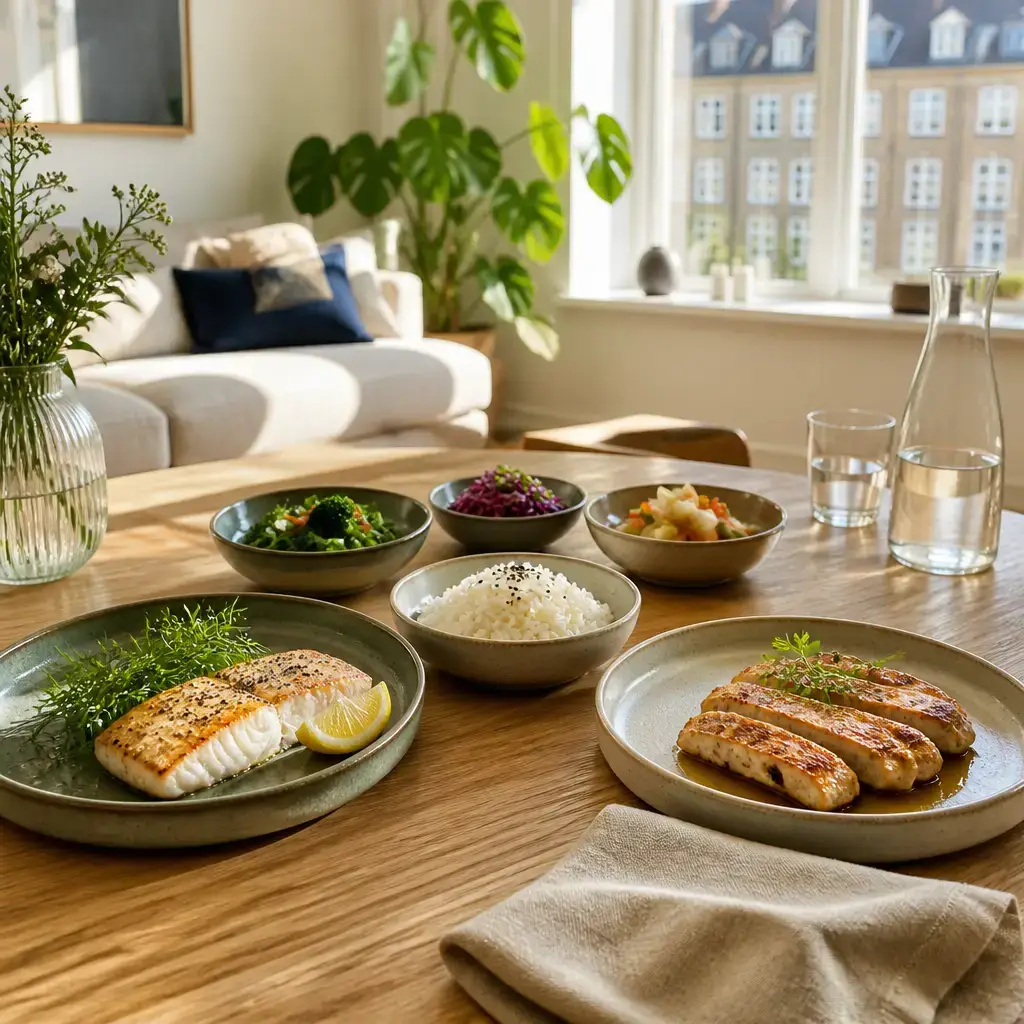
“Jeg” means “I” here: the speaker says “Jeg vil bestille en frokostmenu til os.” It is used as the subject when the speaker describes their own wish or action.
vil
“vil” expresses “want to” in “Jeg vil bestille en frokostmenu til os.” It also appears as “Vil” at the start of the question “Vil du helst have kylling eller fisk?”, where it helps ask what the other person would prefer.
bestille
“bestille” means “to order” in “Jeg vil bestille en frokostmenu til os.” After “vil”, it names the action the speaker wants to carry out; the same word is used in “Jeg kan bestille nu” for placing the order.
en
“en” means “a” or “one” before “frokostmenu” in “en frokostmenu.” It introduces one unspecified lunch set, and it comes directly before the noun.
frokostmenu
“frokostmenu” means “lunch set” or “lunch menu” in “en frokostmenu.” It names the meal being ordered, and it is used after “bestille” as the thing being ordered.
til
“til” means “for” in “til os,” identifying who the lunch set is intended for. The reusable expression in this dialogue is “en frokostmenu til os.”
os
“os” means “us” in “til os.” It refers to the speaker and the other adult together, and it follows “til” to show the intended recipients.
du
“du” means “you” in “Vil du helst have kylling eller fisk?” It addresses the other person directly as the person choosing between the two options.
helst
“helst” means “preferably” or “rather” in “Vil du helst have kylling eller fisk?” Together with “have”, it asks which option the other person would prefer.
have
“have” means “have” in “Vil du helst have kylling eller fisk?”, where it refers to choosing one of the food options. The reusable construction in this dialogue is “helst have” followed by the choices.
kylling
“kylling” means “chicken” in “Vil du helst have kylling eller fisk?” It is one of the two main food choices presented in the question.
eller
“eller” means “or” in “kylling eller fisk.” It connects two alternatives when asking the other person to choose between them.
fisk
“fisk” means “fish” in both “kylling eller fisk” and “Fisk lyder bedre for mig i dag.” It is first offered as an option and then selected as the speaker’s preferred choice for today.
lyder
“lyder” means “sounds” in “Fisk lyder bedre for mig i dag.” With “bedre”, it presents fish as seeming more appealing to the speaker.
bedre
“bedre” means “better” in “Fisk lyder bedre for mig i dag.” It compares the chosen fish option with the alternative mentioned in the previous question.
for
“for” means “for” in “bedre for mig,” marking the speaker’s personal perspective. The expression “bedre for mig” says that something seems better to that person.
mig
“mig” means “me” in “bedre for mig.” It identifies whose perspective is being described, and it follows “for” in this expression.
i
“i” means “in” as part of the time expression “i dag.” Together, “i dag” specifies when the speaker prefers fish.
dag
“dag” means “day” in the expression “i dag,” which means “today” here. This expression is used to attach the preference specifically to the current day.
Den
“Den” means “it” or “that one” in “Den kommer med ris og et lille tilbehør.” It refers back to the lunch item being discussed and begins the sentence describing what comes with it.
kommer
“kommer” means “comes” in “Den kommer med ris og et lille tilbehør.” With “med”, it describes what is included with the lunch item.
med
“med” means “with” in “kommer med ris og et lille tilbehør.” It introduces the items that accompany or are included with the lunch item.
ris
“ris” means “rice” in “med ris og et lille tilbehør.” It is one of the items included with the lunch set and follows “med”.
og
“og” means “and” in “ris og et lille tilbehør.” It joins the rice and the side dish as two included items.
et
“et” means “a” or “one” before “lille tilbehør” in “et lille tilbehør.” It introduces one unspecified side dish.
lille
“lille” means “small” in “et lille tilbehør.” It describes the side dish and appears directly before “tilbehør”.
tilbehør
“tilbehør” means “side dish” in “et lille tilbehør.” It names the additional food item included with the rice and is then discussed in “Hvilket tilbehør ser bedst ud?”.
Hvilket
“Hvilket” means “which” in “Hvilket tilbehør ser bedst ud?” It asks the other person to identify one side dish from the available options and comes before “tilbehør”.
ser
“ser” means “looks” in “ser bedst ud” and “ser friske og enkle ud.” With “ud”, it describes how the side dish or vegetables appear.
bedst
“bedst” means “best” in “Hvilket tilbehør ser bedst ud?” It asks which side appears most appealing among the choices.
ud
“ud” is the particle in the expression “ser bedst ud” or “ser friske og enkle ud.” Together with “ser”, it gives the meaning “looks” or “appears”, so it should be understood as part of the whole expression.
Grøntsagerne
“Grøntsagerne” means “the vegetables” in “Grøntsagerne ser friske og enkle ud.” The ending marks the vegetables as the specific ones being considered as the side dish.
friske
“friske” means “fresh” in “ser friske og enkle ud.” It describes how the vegetables appear in the speaker’s evaluation.
enkle
“enkle” means “simple” in “ser friske og enkle ud.” It gives a second description of the vegetables together with “friske”.
Lad
“Lad” begins the invitation “Lad os vælge grøntsagerne.” In this expression, it helps the speaker suggest that the two people make the choice together.
vælge
“vælge” means “to choose” in “Lad os vælge grøntsagerne.” It names the proposed action and follows “Lad os” in the suggestion.
kan
“kan” means “can” or “be able to” in “Jeg kan bestille nu.” It expresses that the speaker is ready and able to place the order now.
nu
“nu” means “now” in “Jeg kan bestille nu.” It marks the time when the speaker can place the order.